
For Hanoi to Huu Lien or the Huu Lung climbing area, choose your accommodation before choosing the bus. A private car to the named homestay is the simplest arrival; a host-confirmed shared shuttle can cost less. A general ticket toward Lang Son may leave you on the main road with a substantial local journey still to arrange.
The essential distinction is your final destination. Dong Lam visitors usually want the Huu Lien village area, while climbers may need a particular base around Yen Thinh. These names belong to the same wider region but do not identify one interchangeable drop-off.
Put the correct destination on the booking
- Huu Lien village stay: send the homestay name, village and map pin. Lang Ben and Doan Ket are useful village names, but the property’s entrance remains the destination.
- Dong Lam landscape visit: agree on the accessible parking or meeting area and any final local transfer. A grassland pin is not necessarily a place your hired car can reach.
- Huu Lung rock climbing: use the named homestay or the climbing operator’s meeting point around Yen Thinh, rather than simply requesting “Huu Lung.”
- Lang Son city: this is a different destination. Do not book a city arrival and expect it to deliver you to Huu Lien’s rural accommodation.
If you are still deciding between a village stay and climbing, compare the Huu Lien and Dong Lam guide with the Huu Lung climbing guide first. The activity determines the most useful base and the transport you need after arrival.
Private car: easiest for a first visit or a family
A car with driver removes the bus-stop handover and lets you travel directly from your Hanoi address to the agreed village entrance. For planning, allow roughly two to three hours to the Huu Lung climbing bases, and around three hours for a Huu Lien village arrival. Pickup location, traffic, stops and the final lane can extend either estimate.
For Huu Lien, the journey leaves the Hanoi–Lang Son road corridor and continues inland along DT243. That rural approach is a meaningful part of the trip. A quote only to Huu Lung town or a highway junction should not be compared directly with a homestay-to-hotel price.
Confirm the largest vehicle that can reach your accommodation. Mao Homestay, for example, lists access for cars up to seven seats. That is an access limit, not a recommendation to fill every seat with passengers and then add climbing bags. Larger parties need the host to identify an appropriate parking and luggage-transfer arrangement.
Book the right service format:
- One-way transfer: the driver leaves after dropping you off. Local outings and the return are separate.
- Return day hire: agree on the destination stops, waiting period and latest return departure.
- Overnight trip: specify whether the same driver stays locally, returns to Hanoi or is replaced for collection. Ask how driver accommodation, extra hours and route changes affect the total.
For a Dong Lam day trip, waiting transport is usually more useful than a cheap one-way ride followed by an uncertain search for a return vehicle.
Shared transport: ask the host to match the service to the house
For Mao Homestay and the climbing area
Mao Homestay’s arrival arrangements include a shared shuttle from the Minh Khai area of Hanoi with a homestay drop-off, and a Gia Lam departure that stops at a market roughly 2.5 kilometers from the house. These are different services with different final connections.
Have VietClimb or your host reconfirm the actual departure point, time and fare for your date. A ticket to the market still needs a local pickup, particularly with rope bags, suitcases or rain. The driver may not speak English, so ask your Hanoi accommodation and receiving host to coordinate the meeting details before you leave.
Do not apply these Mao Homestay arrangements to another property without checking. A shuttle reaching one climbing base may not continue to your Huu Lien village, a different valley or a particular crag.
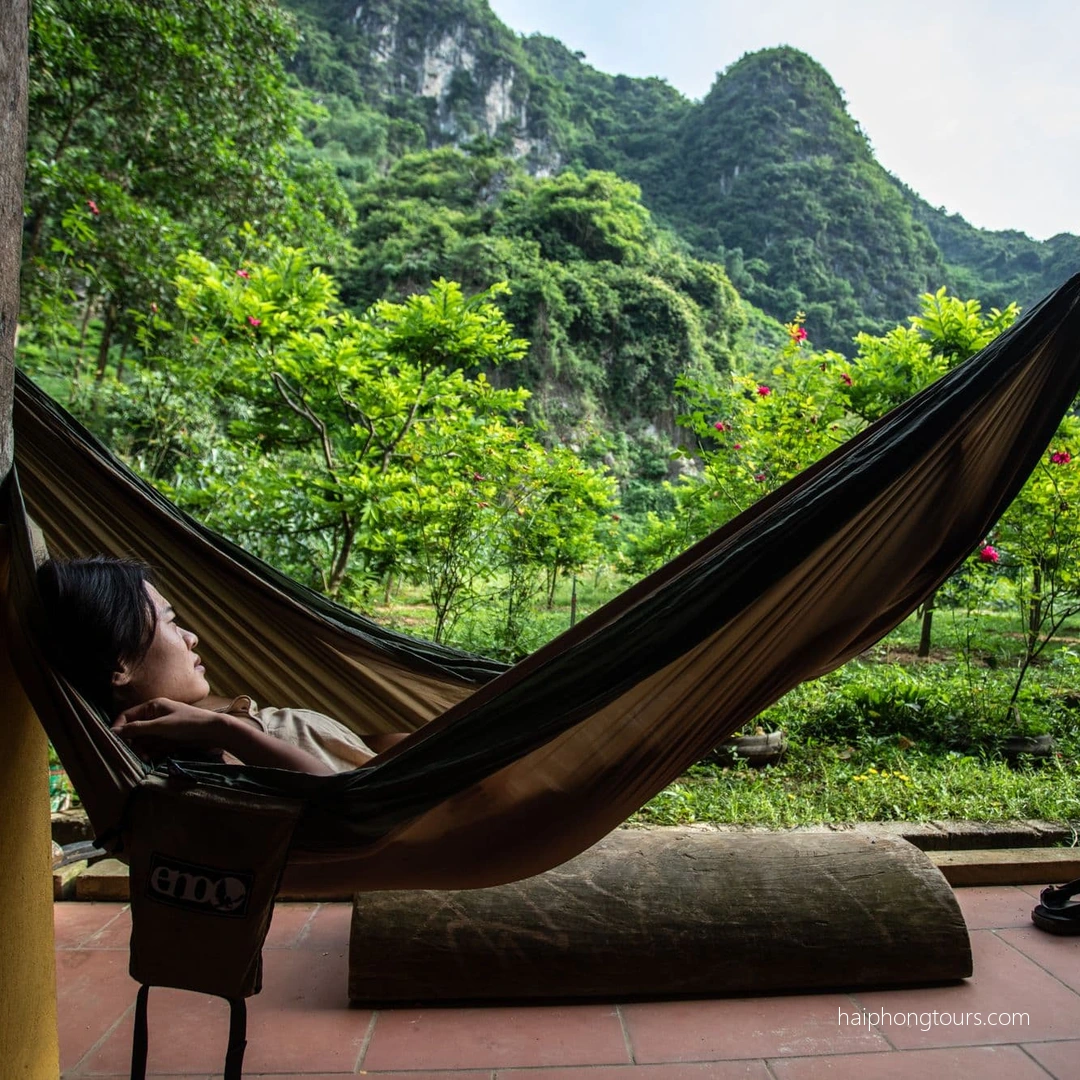
For Huu Lien and Dong Lam
Ask your Huu Lien host about a service that reaches their village first. Some local accommodation providers can advise on shared arrivals from Hanoi, while other journeys use a main-road drop-off followed by a taxi or local pickup.
If the proposed ticket ends at the Yen Vuong/Yen Son junction, have the host identify the precise stop and arrange the remaining drive before you buy. Do not assume every Hanoi–Lang Son bus calls there: an expressway service may use a different route or decline an intermediate stop.
Send the ticket seller and your host the same destination message. Get both confirmations, including who contacts whom if the bus is early, late or drops you on the opposite side of the road. A map pin and a photograph of the meeting place can prevent confusion more effectively than an English spelling alone.
A climbing package can solve a different transport problem
If your purpose is a first outdoor climbing trip, compare the complete guided package before arranging an independent transfer. A group departure can combine Hanoi transport with the guide, equipment and accommodation, whereas private instruction may quote the car separately.
Check where you meet the group and whether you return to the same place. Hotel pickup, shoe fitting and the rural climbing meeting point are separate details; do not assume that booking a climbing day includes all three journeys.
For independent climbers, transport to a homestay does not include a lift to every climbing sector. Ask about the approaches from your chosen base, equipment storage and locally agreed access. Arrange technical instruction and climbing partners separately from the car booking.
Plan the last kilometer at Dong Lam
At Dong Lam, the accessible landscape changes with water levels. Your driver may reach the local parking or meeting area without being able to drive onto the valley floor. Ask the host what the final approach involves that day: walking, an available local ride or a separately arranged water activity.
Hai Phong Tours recommends deciding this before booking the vehicle if someone has limited mobility or cannot ride on the back of a motorbike. A car transfer to the village does not guarantee a step-free route across grass, mud or a boat landing.
Arrange where large bags stay while you visit, and confirm the return pickup point. Do not leave the driver guessing whether you will finish at Dong Lam, Nong Dung Lake or your accommodation. These are separate stops even if a day-out description groups them together.
Costs worth comparing before paying
For shared transport, add the fare to the Hanoi boarding point, the main ticket, the local arrival ride and any return pickup. For two or more travelers, compare that complete total with a direct car rather than comparing only the bus fare.
For a private vehicle, request a written total covering the exact destination, tolls, parking, passenger and luggage capacity, planned waiting and return arrangement. Visitor activities, meals, climbing instruction and accommodation should be itemized if included. Do not infer them from the words “day trip.”
For an overnight stay, agree on arrival meals in advance. A late bus and a rural dinner arrangement need coordination; reaching the village is not the same as finding an open restaurant whenever you want.
Return to Hanoi with the connection already arranged
Reserve the return while confirming your outward journey, especially if you rely on a shared vehicle. Ask whether collection is at the house, a village meeting point or the main road, and who handles the local ride to it.
If returning after climbing, leave time to walk out, clean up, pack equipment and collect stored luggage. If returning after Dong Lam, allow for the final walk or local transfer. A pickup scheduled for the moment an activity finishes is unnecessarily fragile.
For a flight, ask for a direct quote to the correct Noi Bai terminal and build in the airline’s airport-arrival requirement as well as the road buffer. A shared bus returning to Hanoi city does not automatically pass the airport or provide an airport drop-off.
Details to send when arranging transport
- Your Hanoi pickup address or acceptable shared departure area.
- The full homestay name, village and reception pin.
- Travel date, number of passengers, children’s ages and luggage.
- Whether you need a one-way drop-off, a waiting car or an overnight return.
- Any mobility needs, child-seat request or bulky climbing equipment.
- The exact local outings or onward flight that affect your timing.
The most reliable booking is the one whose final drop-off your host has confirmed. Once that is settled, you can compare shared transport and a private car without confusing a main-road ticket with arrival at the place you actually want to stay.