
For a first taste of Hoa Binh food, start with grilled Da River fish, pork with hạt dổi seasoning, or buffalo stewed with sour lá lồm leaves. Add bamboo-cooked rice and vegetables for a shared meal. Pomelo-leaf pork rolls offer another distinctive flavor without needing to order a large banquet.
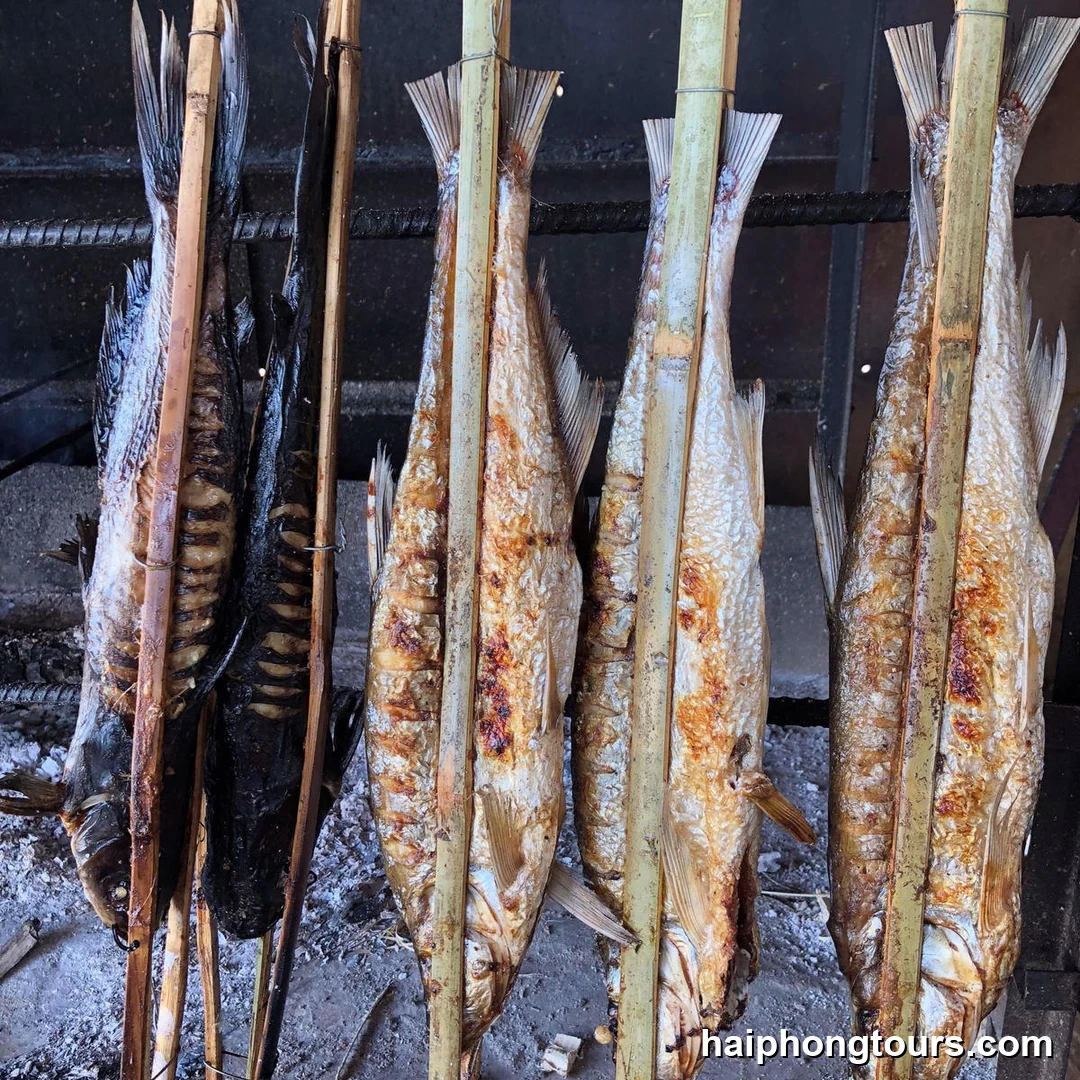 Charcoal-grilled Đà River fish is a signature food around Hòa Bình Lake.
The Hoa Binh area includes several different food stops, from the lake and surrounding Muong communities to the Thai villages of Mai Chau. Plan meals around where you are staying. Fermented pork and seasonal insect dishes are optional specialties, with ingredients and availability worth understanding before you order.

Grilled Da River fish
Cá nướng sông Đà is a natural choice on a Hoa Binh Lake trip. A traditional preparation grills fish held in bamboo clamps; some versions are then wrapped in banana leaves and steamed. Restaurants also serve larger fish in grilled portions, soups, or hotpots.
Choose by fish type, size, and preparation rather than assuming every fish is wild-caught or every serving is boneless. For a whole fish, agree on its weight, price, and any cooking charge before it goes to the kitchen. Small grilled fish still need care around the bones.
If lunch forms part of a lake outing, settle the menu with your host or boat operator beforehand. A boat booking alone does not tell you whether a meal is included.
Lợn thui luộc: singed and boiled pork
Lợn thui luộc is pork whose skin is singed before the meat is boiled, sliced, and served. A traditional accompaniment is salt seasoned with roasted hạt dổi, an aromatic local spice. The plate may include skin and fat as well as lean meat.
This is different from a roast suckling pig. On menus, lợn bản or lợn mán refers to local-style pork, but those names do not guarantee a particular cut or cooking method. For a small group, order a plate rather than committing to a whole-pig meal.
Buffalo stewed with lá lồm
Thịt trâu nấu lá lồm is associated with Muong cooking. Buffalo meat is simmered with sour lá lồm leaves, sometimes with broken rice that thickens the broth. The result is a tangy stew to eat with rice.
Lá lồm is not bamboo leaf. If you want this dish, use its Vietnamese name rather than asking for “buffalo with bamboo.” Because the meat needs slow cooking, include it when arranging a homestay dinner in advance instead of assuming it can be prepared quickly on arrival.
Chả cuốn lá bưởi: pork in pomelo leaves
These small grilled parcels wrap seasoned pork in pomelo leaves. The leaf adds a citrus aroma and a slightly bitter edge to the meat. Traditional versions use pieces of pork belly, although the filling can vary.
Despite sometimes being translated as “spring rolls,” they have no rice-paper wrapper. They work well as a shared extra beside rice, vegetables, and soup. Order them freshly grilled and check the filling if you avoid fatty pork.
Thịt lợn muối chua: fermented pork
Thịt lợn muối chua is pork preserved with salt, roasted rice, and seasonings, developing a sour flavor through fermentation. It may be served with leaves or herbs for wrapping. It is different from the boiled pork dish above.
Do not assume that fermentation means the meat has been cooked. Ask how that particular product is prepared and served; choose a thoroughly cooked pork dish if you avoid raw or undercooked meat. For takeaway purchases, use a labeled product with clear storage and serving instructions.
Nhộng ong xào măng: an optional seasonal dish
In Mai Chau, nhộng ong xào măng combines immature insects, commonly described as young bees, with bamboo shoots. The insects have a soft, rich texture, while the bamboo shoots provide a contrasting bite; versions made with fermented shoots also taste sour.
Availability depends on seasonal supply. Ask about it before visiting specifically for this dish, and make sure everyone sharing the meal understands the ingredients. If insects are not for you, order bamboo shoots or another vegetable dish separately and specify that you want it without insects or meat.
Cơm lam and sticky rice for the table
Cơm lam is glutinous rice cooked inside a bamboo tube, then peeled out for eating. It makes a useful accompaniment to grilled pork or fish. Xôi nếp nương, steamed upland sticky rice, is another option; some meals feature colored sticky rice.
One rice dish is usually enough alongside several shared specialties. If you need a vegetarian meal, request plain rice, vegetables cooked without animal fat, and suitable dipping sauces; a vegetable dish or a bowl of soup may otherwise contain meat, fish sauce, or meat stock.
Visit the source of Cao Phong oranges
For a food experience beyond a restaurant meal, arrange a grower visit in Cao Phong during the citrus harvest. The Cao Phong orange-orchard guide explains how to choose a garden, distinguish picking from fruit purchases and arrange a visit through a local cooperative.
Where to plan a regional meal
- Hoa Binh Lake and Thac Bo outings: prioritize fish, rice, and vegetables. Arrange the meal around your boat route and return time.
- A Muong community stay: ask the host for a local menu including cooked pork, lá lồm buffalo stew, or pomelo-leaf rolls. Agree on dishes and portions before arrival.
- Mai Chau: homestays around Ban Lac provide a base for village meals. Mai Chau Ecolodge also has a restaurant serving regional food; its menu includes options such as pomelo-leaf pork, Da River fish with bamboo shoots, and local rice dishes. If staying elsewhere, confirm a dining reservation and the day’s menu directly.
If your overnight base is Mai Chau, the private transfer from Hanoi to Mai Chau can take you to your accommodation. Provide the exact hotel or homestay location when booking, and arrange dinner with the host separately. A lake resort elsewhere in the Hoa Binh area may require a different destination arrangement.

How to order without overdoing the meal
For two people, begin with one main protein, a vegetable dish, and rice, adding soup or a second specialty according to portion size. Larger groups can share more variety. Request a written total for a set menu and clarify whether drinks, rice, and extra dishes are included.
Tell the kitchen about dietary restrictions before it starts cooking, including whether you avoid offal, insects, raw meat, or fish sauce. The most useful local meal is one that suits your group and your route; there is no need to try every specialty in a single sitting.
Would you like to include local food in a city visit? Contact us with your destination, date, group size and dietary needs to discuss a suitable tour or private itinerary.