
Hon Dau Island (Hòn Dấu, often called Dau Island) is a small, forested island off the Do Son peninsula in Hai Phong. Visitors come for a shaded walk beneath old banyan trees, Nam Hai Than Vuong Temple and the historic Hon Dau Lighthouse. It is better suited to a relaxed half-day than a beach-island holiday, although it can fill a full day when combined with other places in Do Son.
The island covers nearly 13 hectares and has been recognized as a national historical and scenic site since 2009. Its compact size makes the route simple, but the boat crossing, weather and last return sailing still need to be checked before departure.
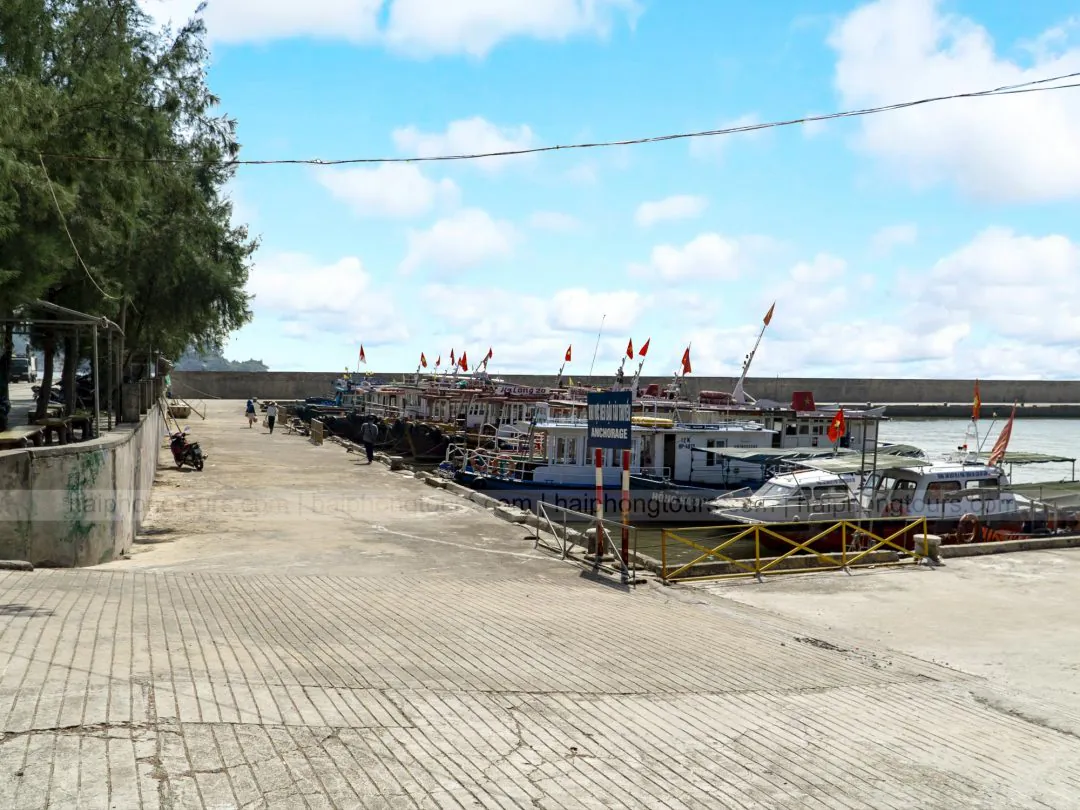
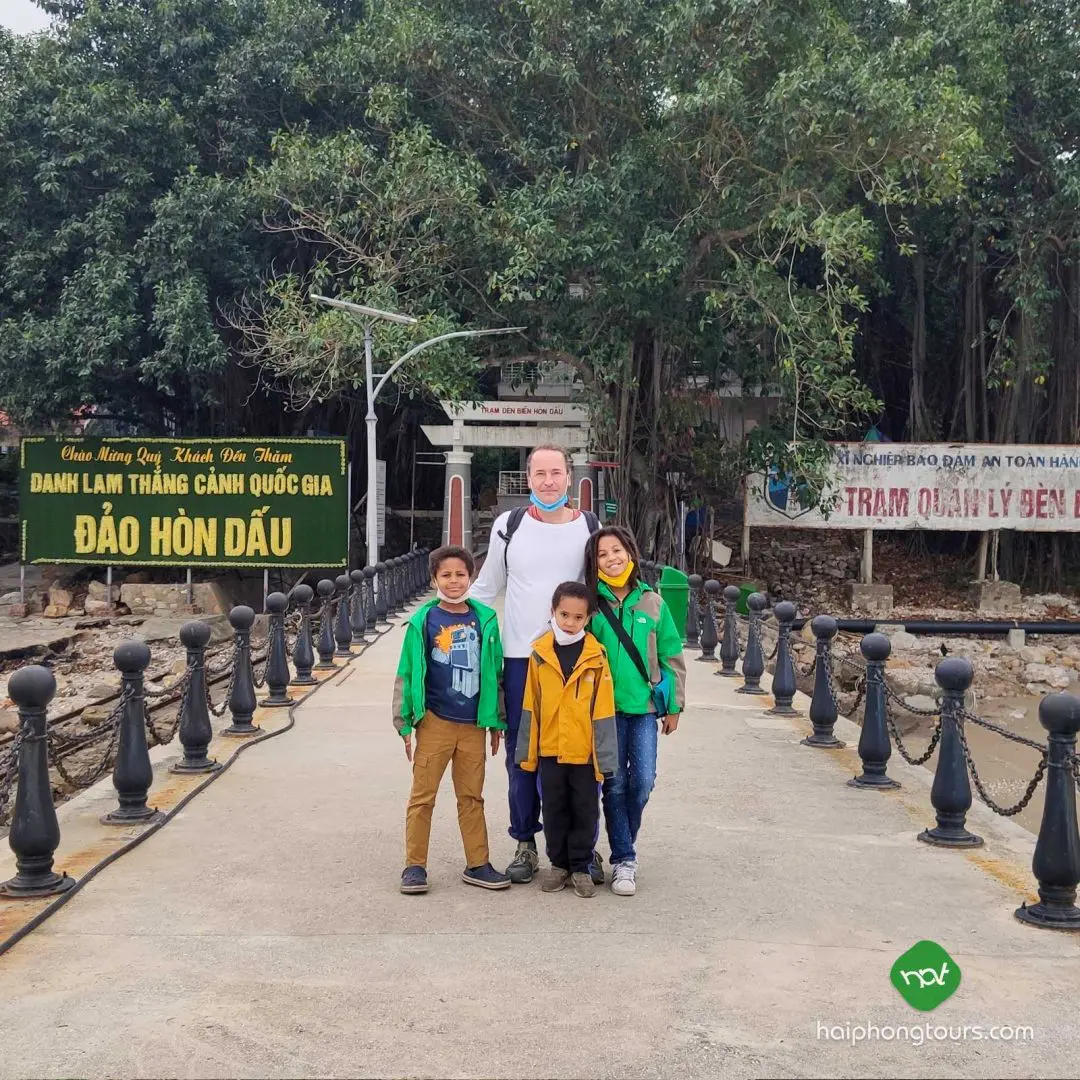
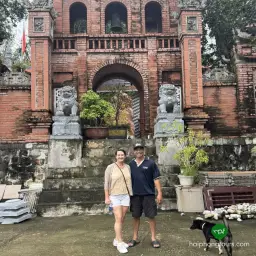
The island landing area and entrance to Hon Dau.
Map: Hon Dau Island. Video: watch Hon Dau Island in Hai Phong.
Hon Dau Island at a glance
- Best for: a quiet forest walk, lighthouse history and local maritime culture.
- Departure point: Ben Nam Do Son, inside the Hon Dau tourist area in Zone 3 of Do Son.
- Suggested time: allow about 3–4 hours from the mainland pier, including waiting and the return crossing.
- Boat service: departures depend on weather and operating conditions; confirm the last return before boarding.
- Terrain: shaded paths, tree roots, uneven ground, a working pier and a long staircase inside the lighthouse.
- Good combination: Hon Dau in the morning, followed by lunch and one or two stops around Do Son.
Hon Dau Island and Hon Dau Resort are different places
The forest, temple and lighthouse are on the island offshore. Hon Dau Resort is on the mainland, with its own accommodation, swimming pools and leisure facilities. Reaching the resort entrance does not mean you have reached the island.
The passenger pier is inside the resort area. Tell your driver you need the boat pier for Dao Dau or Dao Hon Dau, and ask which entrance to use. Before buying a resort package, check whether it includes the island crossing and admission; a pool ticket or hotel booking should not be treated as a boat ticket.
How to get to Hon Dau Island
Do Son is about 30–45 minutes by car from central Hai Phong, depending on traffic. Follow the road toward Zone 3 and the Hon Dau tourist area, then continue to Ben Nam Do Son for the passenger boat.
Many older articles still direct visitors to Ben Nghieng. Passenger departures were moved to Ben Nam Do Son, so do not rely on an old pin without checking the actual ticket pier. The crossing is short, but this is an exposed coastal route and boats may stop when sea conditions are unsafe.
Ask the resort for directions to the island pier. Say that you want to visit the island and ask for the current boarding-point pin and boat-ticket contact. Confirm the sailing and return arrangement with the boat staff before paying.
What to confirm at the pier
- Ask whether passenger boats are operating that day.
- Confirm the complete round-trip cost, island admission and any separate lighthouse ticket.
- Ask for the last return time and whether the return boat requires a minimum number of passengers.
- Keep your ticket and follow the crew’s life-jacket instructions.
There is no dependable year-round public timetable that travelers should treat as guaranteed. A weekday visit can therefore require more waiting than a busy weekend or festival day. Leave a generous buffer and do not schedule the island immediately before a flight, train or fixed transfer.
Hon Dau Island ticket prices
A price notice published for the 2026 island festival listed VND 68,730 per person for the round-trip boat and VND 20,000 for island admission, making VND 88,730 before lighthouse entry. A separate VND 6,000 lighthouse ticket was sold at the lighthouse station.
These figures are a dated reference, not a guaranteed future price. Normal-day arrangements, concession rules and special-event operations can change. Check the posted tariff before paying, especially when traveling outside the festival period or arranging a private boat for a group.
What to see on Hon Dau Island
1. The forest path and heritage banyan trees
The first impression is not a sandy beach but a dense canopy. Old banyan and ficus trees shade much of the route between the pier, temple and lighthouse. A group of 35 red-bud banyan trees on the island has been recognized as Vietnam Heritage Trees, and many of the trees are centuries old.
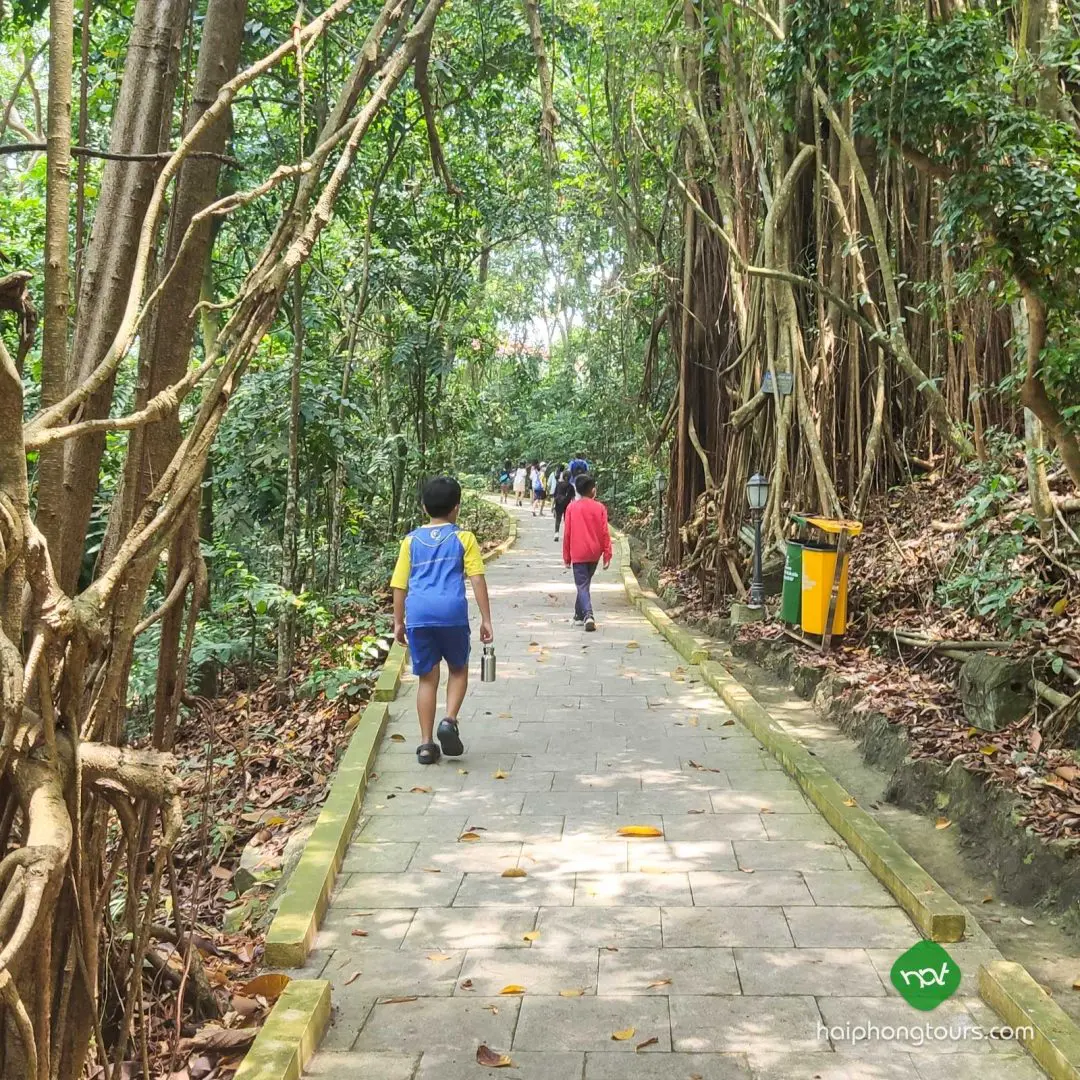
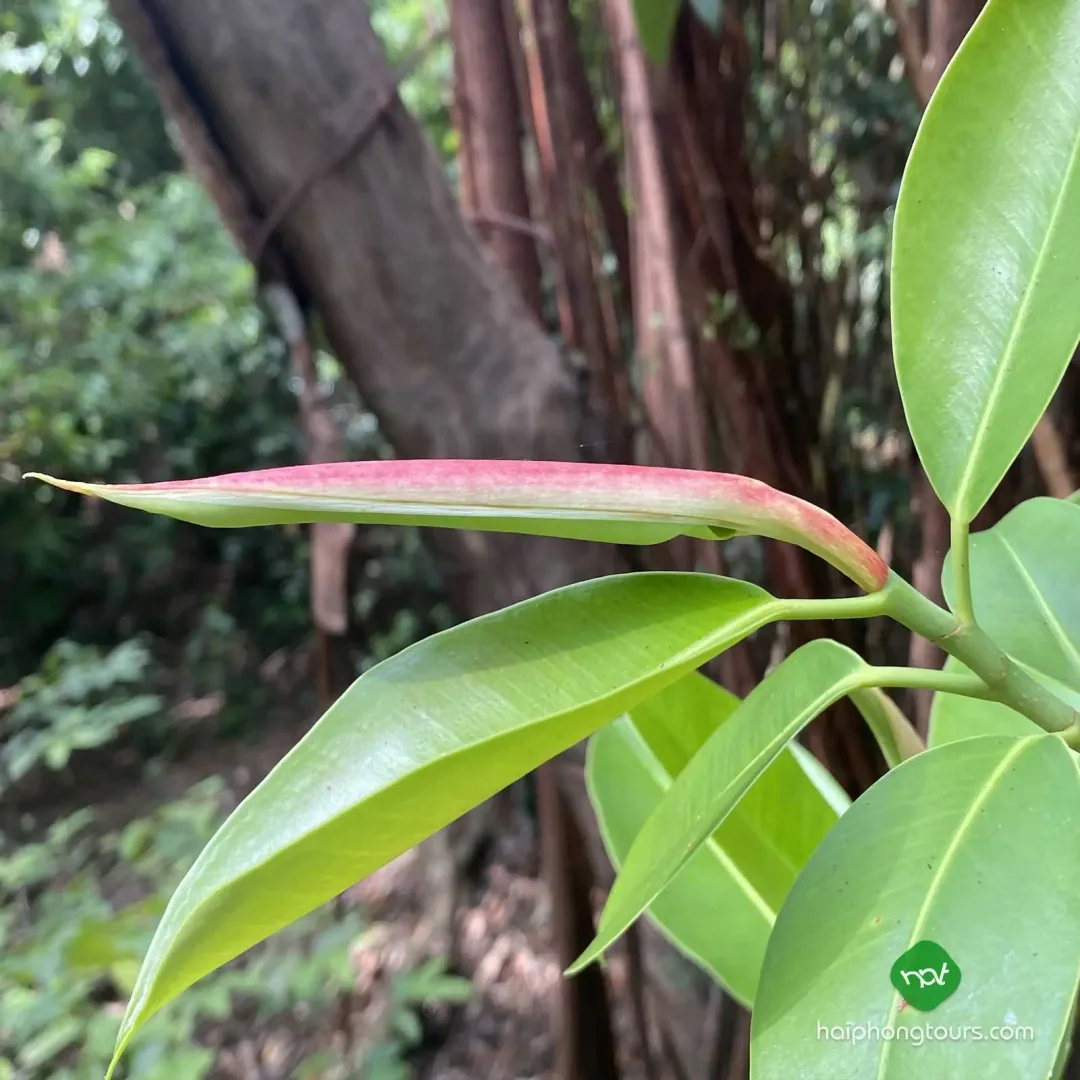
The shaded forest path and a close view of Hon Dau’s foliage.
Stay on the established path, particularly after rain. Do not carve trunks, break branches or remove plants, stones or other natural objects. The island’s quiet character has survived because local residents and site managers have treated it as a protected and sacred place.
2. Nam Hai Than Vuong Temple
Nam Hai Than Vuong Temple stands close to the shore and is closely connected with the spiritual life of Do Son’s fishing community. Local tradition tells of a Tran-dynasty general whose body was found at sea and buried on the island. He was later worshipped as the island’s protective deity. Stories about royal titles and storms form part of the local legend and should be understood as religious tradition rather than documented biography.
This remains an active place of worship. Wear clothing that covers shoulders and knees, speak quietly, avoid blocking worshippers and ask before photographing ceremonies or people at prayer.
3. Hon Dau Lighthouse
The lighthouse is reached by a shaded walk through the island’s interior. Archival records show that the rebuilt light entered service in July 1898 and continued guiding vessels toward Hai Phong’s maritime approaches. The structure was heavily damaged during the war, then rebuilt on its old foundation in 1986 and restored again in 1995.
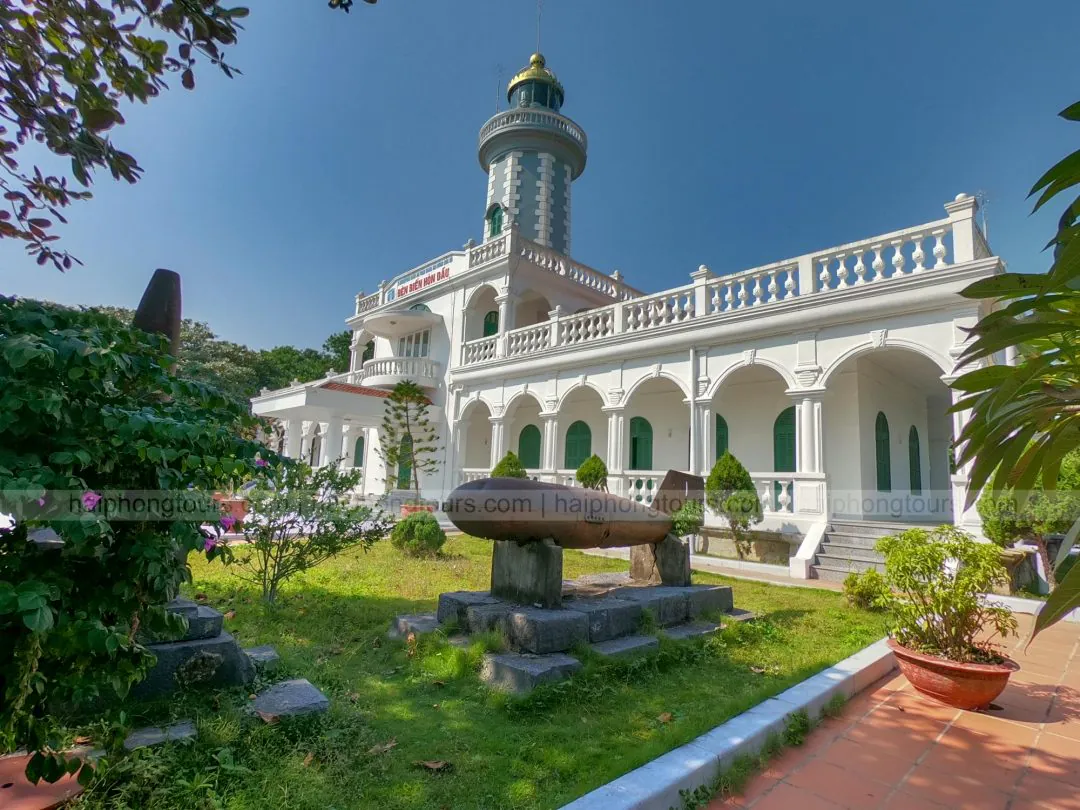
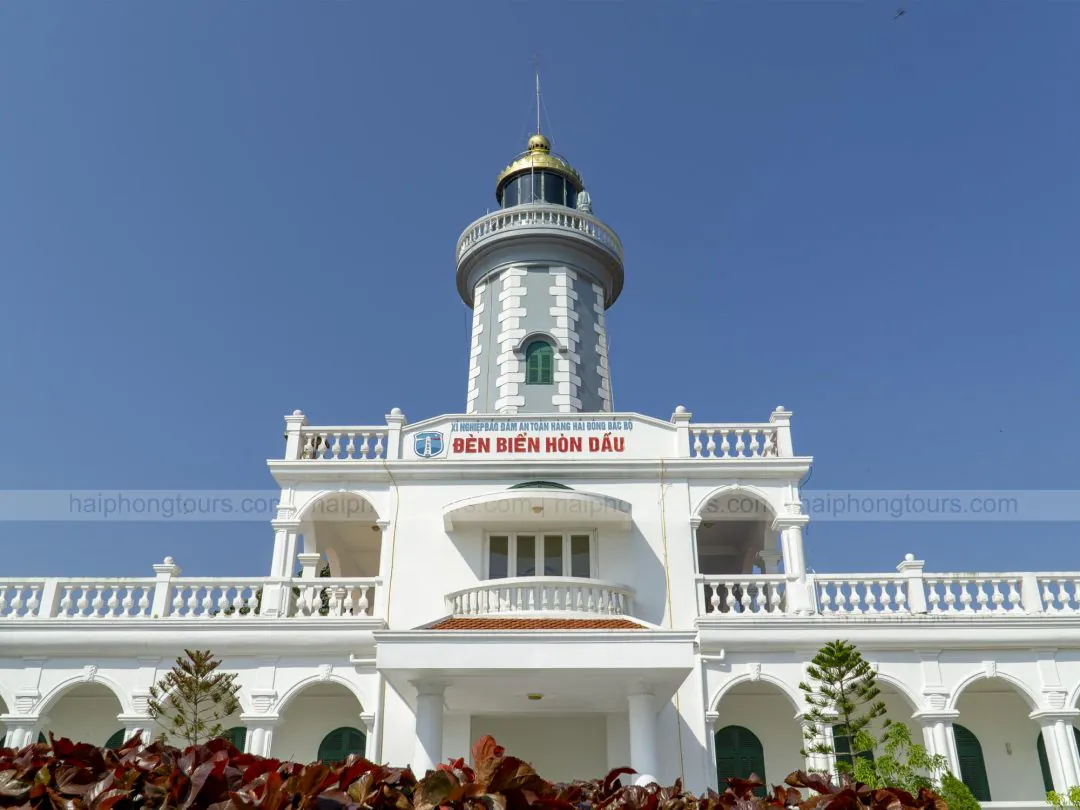
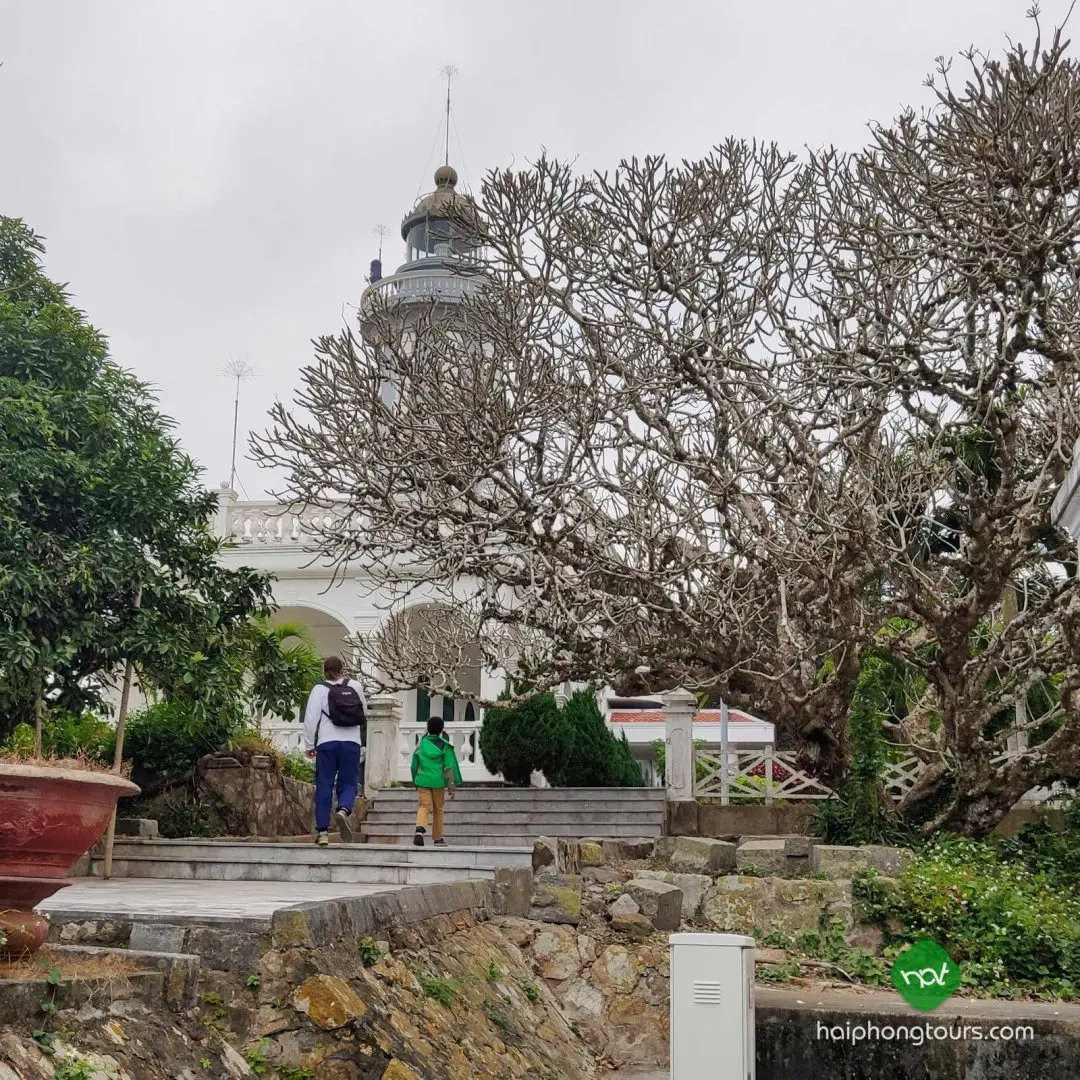
Hon Dau Lighthouse and the stepped approach to its grounds.
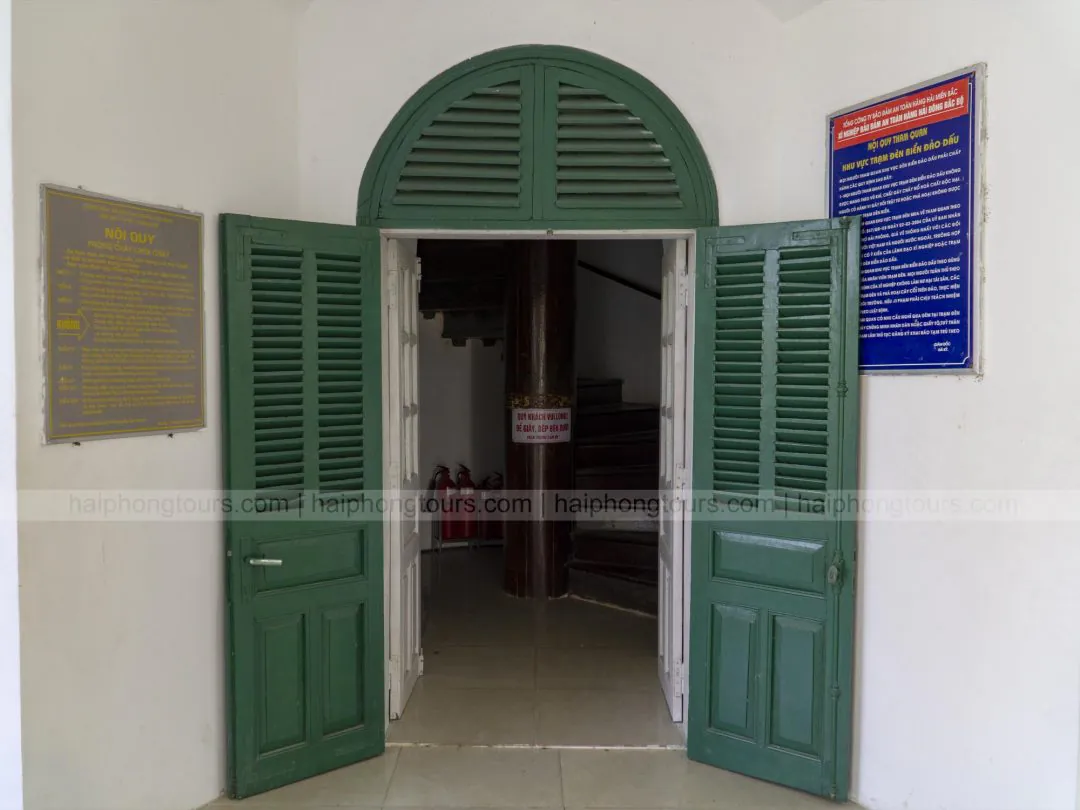
Inside, a wooden spiral staircase leads toward the lantern level and sea views. Hon Dau remains an operational maritime site, so visitor access to the tower can be limited without notice. Follow staff instructions and do not assume that the upper level will be open on every visit.
4. Rocky shoreline and coastal views
Rocky edges surround much of the island and offer views back toward the Do Son peninsula. These areas can be wet, uneven and slippery. Hon Dau is not the best choice for casual swimming; use a monitored section of Do Son Beach when swimming is part of the plan.
Hon Dau Island Festival
The annual Dao Dau Festival is held during the second lunar month at Nam Hai Than Vuong Temple. The main traditional days are usually the 8th, 9th and 10th days of the lunar month, with an important late-night ceremony on the 9th. The wider program and Gregorian-calendar dates are announced separately each year.
Festival days bring a very different experience: more boats, larger crowds, incense ceremonies and late-night ritual activity. Travelers interested mainly in the forest and lighthouse may prefer an ordinary weekday. Those attending the festival should check the current official notice, arrive early and expect transport arrangements to differ from normal days.
A practical half-day itinerary
- Travel from central Hai Phong to Do Son: leave after breakfast and keep the morning flexible.
- Check the return boat before boarding: record the last sailing and allow time to walk back to the pier.
- Visit Nam Hai Than Vuong Temple: begin near the waterfront and observe temple etiquette.
- Walk through the forest to the lighthouse: allow extra time for photographs, rest and any access queue.
- Return to the mainland for lunch: Do Son has far more reliable food and restroom options than the island.
For a full coastal day, continue with a beach walk, Tuong Long Tower or another heritage stop on the peninsula. Do not pack every attraction into the same afternoon. One island visit and one mainland stop usually make a more comfortable plan.
For a planned mainland alternative, Hai Phong Tours offers a private Hai Phong City Tour through Do Son, with Hai Phong hotel pickup and stops including Ba De Temple, Bao Dai Villa, K15 and Tuong Long. Its listed morning and afternoon itineraries stay on the mainland and do not include Hon Dau Island or the boat crossing. Choose it as a separate coastal sightseeing plan rather than assuming it transports you to the island.
Best time to visit
A weekday morning in dry weather gives the best chance of a quiet path and enough time to handle an uncertain return schedule. Late spring and summer bring greener scenery but also heat, humidity and the risk of rough weather. Storms and strong coastal conditions are more likely in summer and early autumn, and boat service may be suspended.
The second lunar month is culturally interesting because of the festival, but it is also one of the busiest periods. Check the local forecast on the morning of travel rather than relying only on a general seasonal guide.
What to bring
- Closed shoes or sandals with good grip.
- Drinking water, a small amount of cash and a bag for personal waste.
- Sun protection, light rain protection and insect repellent.
- Modest clothing for the temple.
- Any essential medication, since services on the island are limited.
Avoid open flames and do not leave food packaging behind. If carrying a picnic, keep it simple and take every item back to the mainland.
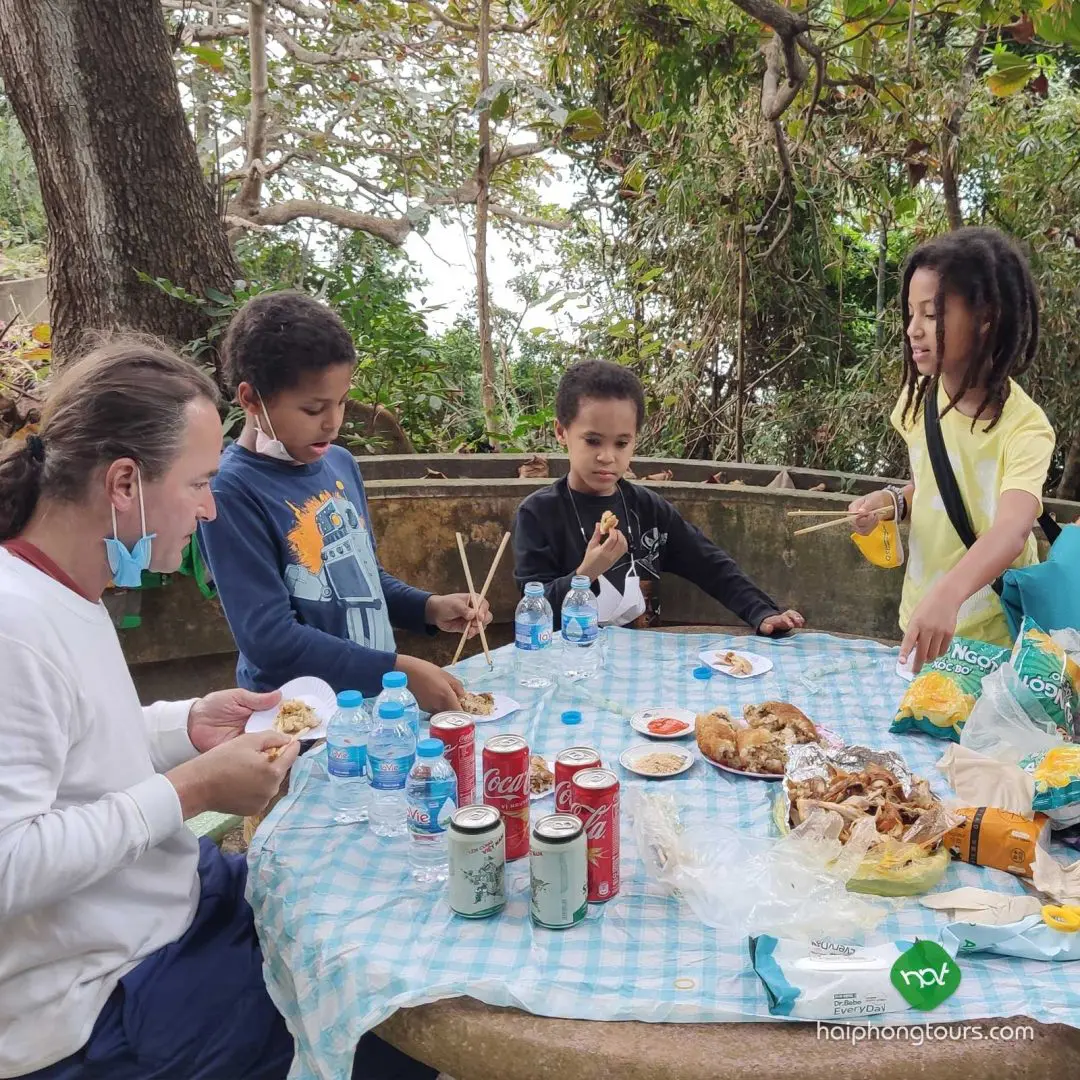
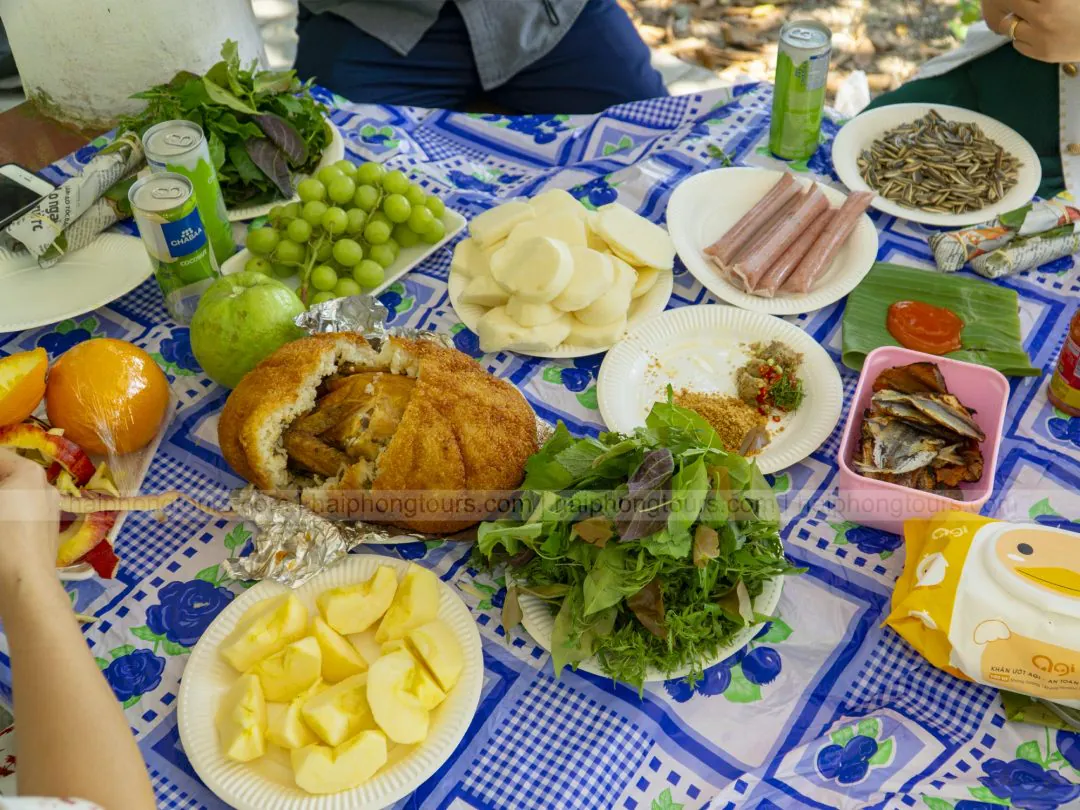
Earlier picnic photographs on Hon Dau, not a promise of food service.
Families, older travelers and accessibility
The short crossing and shaded route can work well for families, but the trip is not step-free. Boarding may involve a moving boat and pier steps, while the forest path includes roots and uneven surfaces. The lighthouse staircase is narrow and demanding.
Young children should remain beside an adult at the pier and rocky shore. Older travelers can enjoy the temple and lower forest route without climbing the lighthouse. Wheelchair users and travelers with limited mobility should obtain current information about the boat, pier and path before committing to the crossing.
Food and overnight stays
Do not depend on finding a full meal, convenience store or permanent visitor service on the island. Eat before boarding, carry water and plan lunch after returning to Do Son. The mainland is also the sensible base for an overnight stay; old online references to rooms or restaurant arrangements on the island may no longer describe a bookable service.
Frequently asked questions
Is Hon Dau Island a full-day trip?
The island itself normally fits into a half-day. Make it a full-day outing by adding lunch, Do Son Beach or one nearby historical site.
Can you swim on Hon Dau Island?
Swimming is not the main reason to visit. The shoreline is rocky and exposed, so use an officially monitored beach on the mainland instead.
Is the lighthouse always open to visitors?
No opening should be assumed. It is a working maritime facility, and tower access may change for operations, maintenance or weather.
What happens in bad weather?
Passenger boats may be delayed or suspended. Follow the pier operator’s decision and postpone the trip when the sea is rough.
Is Hon Dau Island worth visiting?
Hon Dau is worthwhile for travelers who prefer local history, spiritual culture and a quiet forest walk to resort entertainment. Its strongest features are close together, but the visit still needs sensible planning around the boat and weather.
For a wider route, read the Hai Phong travel guide and the current list of things to do in Hai Phong.
Useful guides for your trip
Would you like help fitting this experience into your trip? Contact us with your travel dates, starting point, available time and group size. Tell us about walking limits or special interests so we can suggest a practical itinerary.