
Allow at least seven full days for a first trip to North Vietnam. Ten to fourteen days is the most balanced range because it fits Hanoi, one karst or coastal destination and one mountain area without turning every second day into a transfer. Five days can work for a compact Hanoi–Ninh Binh–Ha Long route, while three weeks supports slower mountain travel and weather buffers.
Count nights, travel time and usable days separately. A “10-day trip” that lands late on day one and departs early on day ten gives you only eight useful days. Your best duration also depends on whether Ha Long Bay, Ha Giang, Sapa or a quiet village is the main reason for traveling.
Quick duration guide
- 3–4 days: Hanoi plus one day trip, or one focused destination.
- 5–6 days: Hanoi, Ninh Binh and a day cruise or compact overnight cruise.
- 7–9 days: Hanoi, Ninh Binh, one bay and a short mountain or countryside stay.
- 10–14 days: the strongest first-trip range, with three or four distinct regions and a buffer.
- 15–21 days: enough for Ha Giang or Cao Bang without dropping the classic lowland route.
- One month: suitable for slow travel, several two- or three-night bases and deeper regional exploration.
Start with the destinations that consume the most time
Hanoi, Ninh Binh and the bays are relatively easy to combine. Remote mountains change the calculation. Ha Giang, Cao Bang, Mu Cang Chai, Y Ty and Hoang Su Phi need long road journeys, and weather can slow them further. Add those blocks first, then see what remains for the coast.
A useful planning rule is one main mountain region per two-week first trip. Sapa plus Ha Giang plus Cao Bang may look possible on a map, but the transfers can dominate the experience. Choose the mountain destination that best matches your purpose: established visitor services in Sapa, a road journey in Ha Giang, waterfalls and geopark landscapes in Cao Bang, or seasonal rice terraces in Mu Cang Chai.
What each trip length can realistically include
Three or four days
Stay in Hanoi and take one well-chosen day trip, or dedicate the whole visit to a single destination. A compact plan might use two Hanoi days and one Ninh Binh day. If the bay is the priority, travel directly to Ha Long, take a cruise with verified arrival timing and return to Hanoi before the flight.
Do not add Sapa or Ha Giang to this length unless the entire trip centers on that destination. An overnight ride does not create an extra day; it exchanges sleep and recovery for travel.
Five or six days
A practical first route is two nights in Hanoi, two in Ninh Binh and one or two allocated to Ha Long or Lan Ha Bay. If you choose an overnight cruise, remember that boarding and disembarkation times divide two calendar days. Keep the final night near the airport if your departure is early.
Compare the active cruise options by bay and duration. Ha Long and Lan Ha have day choices. Bai Tu Long requires an overnight program in the HPT catalogue because it is too far for a one-day itinerary.

Seven to nine days
This range allows three distinct settings: Hanoi, Ninh Binh and a bay, with either a countryside extension or a short mountain stay. A reasonable version is:
- Hanoi: 2 or 3 nights
- Ninh Binh: 2 nights
- Bay cruise: 1 night
- Hanoi or a nearby buffer: 1 night
- Optional remaining nights: Mai Chau, Sapa or Hai Phong according to pace and route
If you add Sapa, remove another stop rather than compressing all stays. Two nights in a mountain destination usually provide one genuinely usable day after transport.
Ten to fourteen days
This is the best range for most first-time visitors. You can spend three nights in Hanoi, two in Ninh Binh, two or three in a mountain region, one or two on the coast, and still keep a transfer or weather buffer.
The order should follow transport logic. For example, Hanoi to Ninh Binh to Ha Long avoids returning to the capital between every stop. If you need direct intercity connections, check the exact direction in the current transfer directory; do not assume the reverse service, pickup area or departure time is identical.
Fifteen to twenty-one days
Use the extra time to deepen the route rather than adding a new place every day. You could combine Hanoi, Ninh Binh, a bay and one four- or five-night mountain circuit. Alternatively, take two slower mountain bases such as Sapa and Bac Ha, or Mai Chau and Pu Luong, with rest days between them.
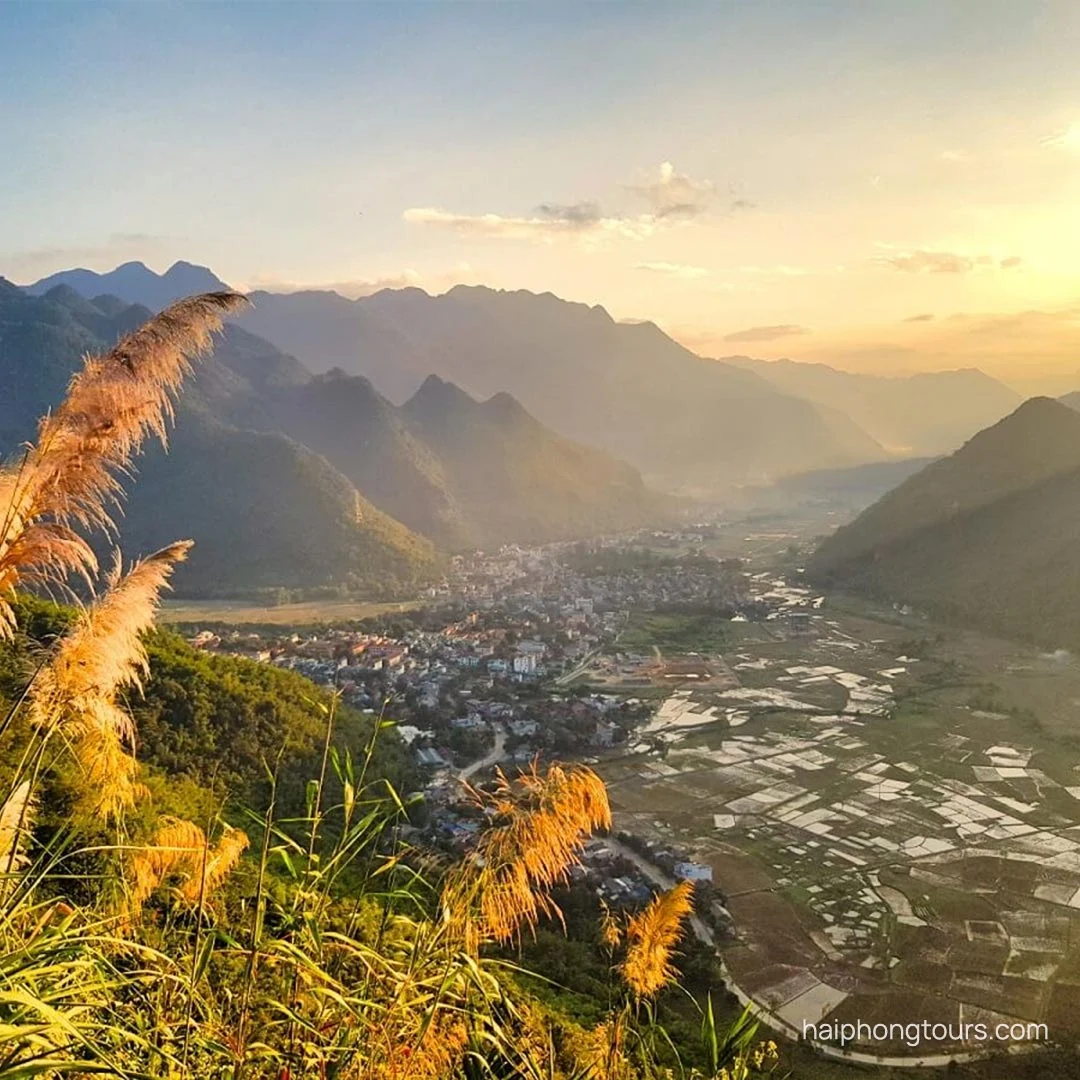
Three weeks also makes a community-based stay more practical. Remote villages often require a dedicated transfer and are most rewarding when you stay long enough for a walk, meal and conversation instead of treating the community as a photo stop.
One month
A month supports slow travel: weekly or multi-night bases, laundry days, poor-weather alternatives and time to revisit Hanoi between regions. The one-month North Vietnam itinerary gives a complete structure with fewer bases and daytime transfers.
How many days for each major destination?
Hanoi: 2–4 nights
Two nights cover a compact introduction. Three or four allow recovery from the flight, neighborhoods, museums, food and a day trip. Hanoi also works as the buffer before an international departure.
Ninh Binh: 2 nights
One day trip shows a headline boat route and one additional site, but two nights let you choose the better weather window and experience early morning or evening outside the day-trip rush.
Ha Long, Lan Ha or Bai Tu Long Bay: 1–2 nights
A day cruise suits limited time. A two-day, one-night cruise adds sunset, evening and morning aboard, although the “two days” are partial boarding and disembarkation days. A three-day, two-night program is valuable when the second day reaches a wider area and you want a less compressed pace.
Sapa: 2–4 nights
Two nights provide one full day. Three or four allow a village stay, a weather alternative and a less rushed return. Add another night if you arrive after an overnight bus and know you will need recovery.
Ha Giang: 4–6 nights including access
A loop itself commonly occupies several days, but the journey from Hanoi and a safety buffer also need time. Do not start a demanding road itinerary immediately after a sleepless bus if you can avoid it.
Cao Bang: 3–5 nights including access
Ban Gioc Waterfall is not the only reason to go. A longer stay allows caves, geopark landscapes and villages, while also accounting for the long road from Hanoi.
Mai Chau or Pu Luong: 2–4 nights
These destinations work best as slower countryside stays. Two nights give one full day; three or four suit walking, cycling, a rest day or a combined valley route.

Cat Ba: 2–4 nights
Two nights fit one boat or national-park day. Additional time helps when ferry, cable-car, weather or island transport conditions change. Cat Ba is more than a substitute port for Ha Long; it can be a separate island stay.
Five questions that determine your number
1. How many full days do you actually have?
Subtract arrival day, departure day and recovery after long overnight travel. Count a long intercity transfer as a travel day even if an evening meal remains possible.
2. Is the trip about variety or depth?
For variety, combine a city, lowland karst, coast and one mountain base. For depth, stay longer in one region and use day trips. Slow travel usually produces more useful local understanding and less transport risk.
3. What weather risk does the route carry?
Mountain and marine plans need more flexibility in stormy periods. Add a buffer rather than assuming every road, trail and cruise will operate exactly as scheduled. Consult the monthly weather guide, then use local short-range information near departure.
4. How much overnight transport can you tolerate?
A night bus may look efficient but can reduce the next day through fatigue and early arrival. Travelers who sleep poorly on vehicles should plan daytime journeys and fewer stops.
5. Do you need a guaranteed flight buffer?
Place the final night in Hanoi or near the departure airport. Do not count on reaching an international flight directly from Ha Giang, Cao Bang, Sapa or a cruise.
Signs that the itinerary is too full
- More than half the accommodation stays are one night.
- You need two unrelated tickets to connect perfectly on the same day.
- A delayed cruise or mountain road would cause a missed flight.
- You have added both a day trip and a long transfer to the same date.
- You describe every destination as “just one night.”
- You rely on overnight transport several times despite sleeping poorly.
- There is no free half-day for weather, laundry, illness or rest.
When two or more signs appear, remove the least distinctive stop. The North Vietnam transport guide can help you compare realistic route types before finalizing the order.
Frequently asked questions
Is seven days enough for North Vietnam?
Yes, for a focused first route. Choose Hanoi, Ninh Binh and one bay, or Hanoi plus one mountain region. Seven days is not enough for every famous northern destination at a comfortable pace.
Is two weeks too long?
No. Two weeks is a strong duration because road travel and weather buffers use real time. It supports three or four regions without sacrificing every morning to checkout.
Should I spend more time in Sapa or Ha Giang?
Sapa can fit a shorter visit because the town has established services and concentrated attractions. Ha Giang is a moving road journey and deserves a larger block plus access time. Choose based on experience, not only on the number of nights.
Can I visit Ninh Binh and Ha Long Bay in two days?
You can connect them, but a one-night-each plan is compressed and sensitive to pickup timing. Three or four days for the pair is more realistic, especially with an overnight cruise.
Best answer for most travelers
Plan ten to fourteen days if this is your first North Vietnam trip. Use three nights in Hanoi, two in Ninh Binh, one or two for a bay experience, three or four for one mountain region and at least one buffer. Shorter trips should remove regions; longer trips should deepen them. The right duration is the one that protects the experiences you value from being consumed by transfers.
Would you like help fitting this experience into your trip? Contact us with your travel dates, starting point, available time and group size. Tell us about walking limits or special interests so we can suggest a practical itinerary.