
To make bun oc, cook rice vermicelli separately, prepare a light tomato broth with a little rice vinegar or giấm bỗng, and add thoroughly cooked snail meat, tofu and herbs. The result should be gently sour and savory, with the snails providing the main texture. Pork can enrich the stock or appear as an extra topping, but it is not essential to every bowl.
Bun oc is closely associated with Hanoi and is also eaten in Hai Phong, where shops offer their own combinations of snails, meat and accompaniments. This is a home version of the hot noodle soup. It uses cleaned, shell-free snail meat so you can concentrate on the broth and cooking rather than identifying and preparing live snails.

For eating out, see the Hanoi bún ốc guide.
Ingredients for four bowls
Use the following quantities as a starting point. Adjust the final seasoning to the saltiness of your stock and fish sauce.
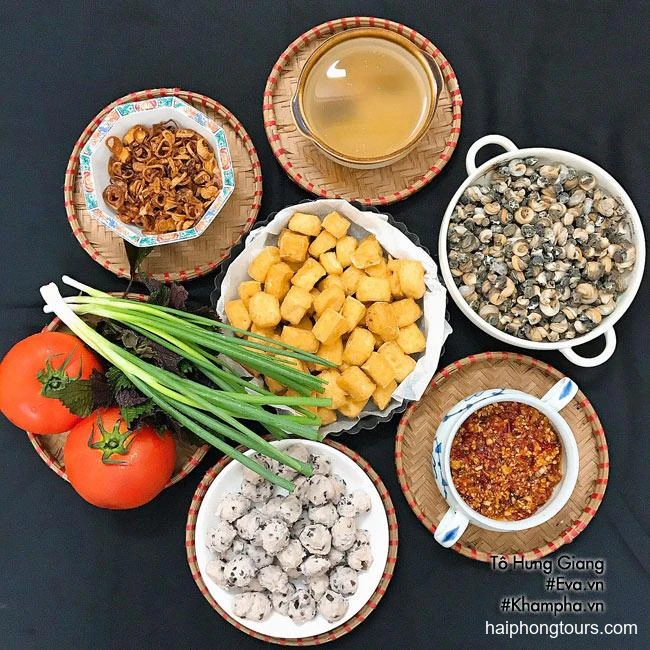
- 300–400 g cleaned edible freshwater snail meat, weighed without shells: buy from a food supplier who can identify the product and explain whether it is raw or fully cooked.
- 600 g fresh rice vermicelli, or about 250 g dried rice vermicelli: choose thin noodles labeled bún.
- 1.5 liters unsalted or lightly salted stock: pork stock gives a fuller flavor; chicken stock is a practical alternative.
- 3 medium tomatoes: cut into wedges.
- 150 g plain fried tofu: cut into bite-size pieces.
- 3 small shallots: finely sliced.
- 2 tablespoons neutral cooking oil.
- 1 tablespoon fish sauce to start, with more for final seasoning if needed.
- 2 tablespoons giấm bỗng or unseasoned rice vinegar to start: add gradually and adjust to taste.
- Optional: 1/2 teaspoon fermented shrimp paste, plus a little sugar if the tomatoes are sharply acidic.
- To finish: 3 sliced scallions, a small handful of perilla leaves and, if available, Vietnamese balm called kinh giới.
- At the table: chili or chili oil, lime wedges and extra fish sauce.
Giấm bỗng is a sour, aromatic ingredient associated with fermented rice and rice-wine making. Plain rice vinegar is a useful substitution, although it gives a different aroma. Avoid sweetened sushi vinegar, which changes both the sweetness and salt level.
For a Hai Phong connection, use Cat Hai fish sauce if you have it. Add it by taste; you do not need a specific brand to make the soup work.
Before you start: check the snails
Use snails sold for human consumption, not animals collected from a garden, ditch or pond. A package labeled “cleaned” or “frozen” does not necessarily mean the meat has been cooked. If the seller cannot explain the product and its preparation, choose another supplier.
For frozen snail meat, thaw it in the refrigerator according to the package directions. Keep raw meat and its utensils away from the herbs and cooked noodles. Wash your hands and clean equipment after handling it.
Soaking in salt water, rice water or vinegar does not replace thorough cooking. Do not taste raw or partly cooked snails, and do not treat a brief blanch as the finished cooking step.
How to cook the soup
1. Prepare the noodles and herbs
Cook dried rice vermicelli according to the package directions, then drain. Prepare fresh noodles as directed by the supplier, warming them separately before serving. Keeping noodles out of the main soup pot prevents them from absorbing the broth while you finish cooking.
Inspect the herbs and rinse the leaves individually under running drinking-quality water. Drain and slice them. If you prefer cooked herbs, add them to the hot broth near the end instead of using them raw.
2. Cook the snail meat thoroughly
Bring the stock to a full boil. If using raw cleaned snail meat, add it, let the liquid return to the boil, and boil for at least five minutes. Follow any longer cooking instruction for the specific product, and make sure the meat is cooked throughout. Lift the cooked snails out with a clean slotted spoon and set them aside briefly while you finish the broth.
If using commercially fully cooked snail meat, follow its reheating instructions and add it later, after the tomato broth is ready. Do not use this shorter route for a product that is only cleaned, blanched or of uncertain cooking status.
3. Build the tomato broth
Heat the oil in a separate pan over medium heat. Soften the shallots, then add the tomato wedges and cook until they begin to release their juices. If using shrimp paste, stir it into the tomatoes and cook it through.
Tip the tomatoes and their juices into the stock. Add the tofu and simmer until the tomatoes soften and the tofu is hot throughout. Start with the measured fish sauce, using less if your stock is already salty.
4. Balance the flavor
Add the giấm bỗng or rice vinegar gradually, tasting as you go. Aim for a light sourness rather than a sharply vinegary broth. If necessary, add a small pinch of sugar to soften the acidity, or a little more fish sauce for savory depth.
If the stock has reduced too far, top it up with a little hot water or unsalted stock before making the final seasoning adjustment. Return the cooked snails to the pot and heat through. For a chilled, fully cooked product, reheat to 74°C/165°F throughout, or follow a stricter package instruction.
5. Assemble and serve
Divide the noodles among four bowls. Add snails, tofu and tomato wedges, then ladle over the hot broth. Finish with scallions and the prepared herbs.
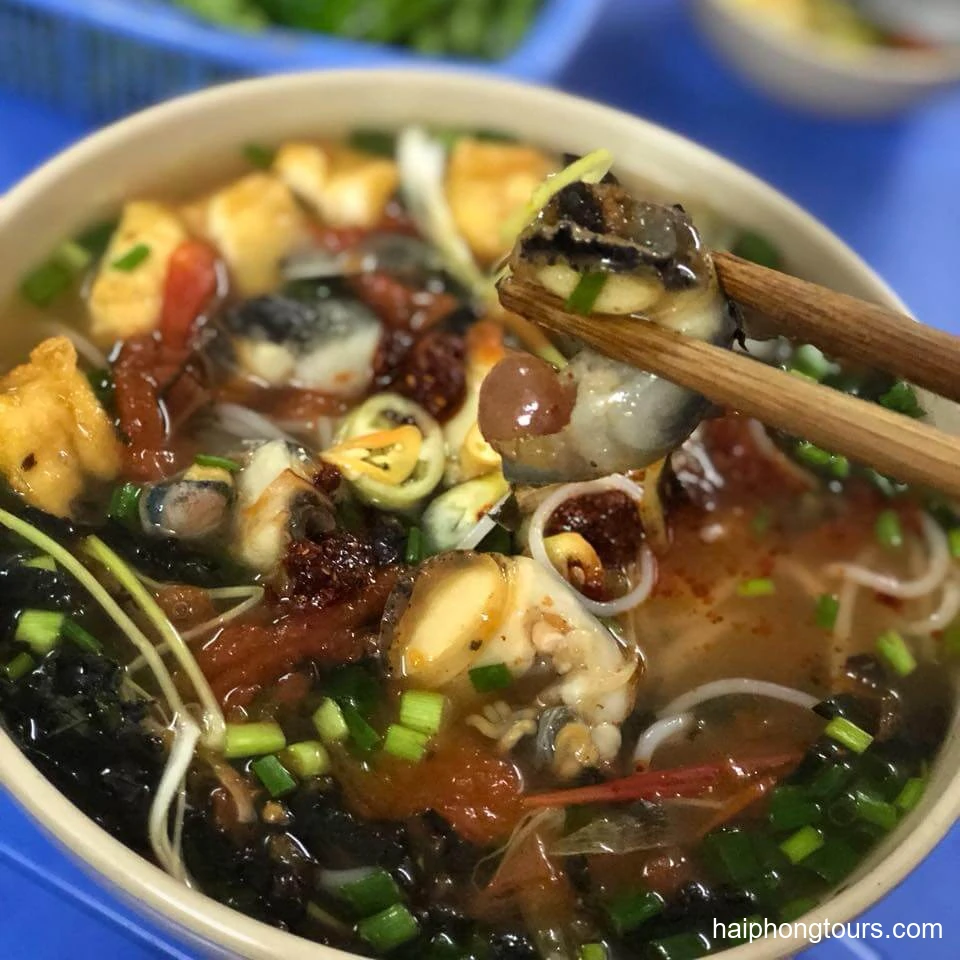
Serve chili, lime and extra fish sauce separately so each diner can adjust their bowl. Start with a spoonful of broth before adding lime: the soup already contains a sour ingredient.
Optional toppings and ingredient substitutions
If you want a more substantial bowl, add fully cooked pork slices or pork sausage, warmed thoroughly before serving. These are additions, not replacements for cooking the snail meat correctly. You can also keep the bowl focused on snails and tofu.
Perilla gives the soup a distinctive herbal aroma. If you cannot find it, use scallions and the herbs available to you, while expecting a different flavor. Likewise, ordinary rice vinegar is a workable home substitution for giấm bỗng, not an identical ingredient.
This soup contains mollusks, and fish sauce adds fish. Shrimp paste adds crustaceans, while tofu contains soy. Check the labels on stock, sauces and prepared toppings if anyone has an allergy or dietary restriction.
Fixing the broth and storing leftovers
- Too sour: dilute with a little unsalted stock, then rebalance the seasoning. Do not keep adding sugar until the soup becomes sweet.
- Too salty: add unsalted stock or water. Extra noodles may make a bowl less intense, but they do not remove salt from the pot.
- Mushy noodles: cook and store noodles separately; add broth only when serving.
- Tough snails: next time, heat only as long as needed after they have been thoroughly cooked. Do not shorten the essential cooking step to preserve crunch.
Put leftovers into shallow containers and refrigerate within two hours, or within one hour when the surrounding temperature is above 32°C/90°F. Store noodles and herbs separately from the soup. Use refrigerated leftovers within three to four days, following any shorter product instruction, and reheat the portion you need to 74°C/165°F.
For the clearest flavor, keep your first batch simple: snails, tomato broth, tofu, noodles and herbs. Once the balance of sourness and fish sauce suits you, adjust the toppings to recreate the kind of bowl you enjoyed in Hai Phong.
Useful guides for your trip
Would you like to include local food in a city visit? Contact us with your destination, date, group size and dietary needs to discuss a suitable tour or private itinerary.