
To travel from Hanoi to Cat Ba, you need a road journey, an island crossing and a final road connection to your accommodation. A coordinated tourist-bus ticket can arrange those legs together; a private transfer gives you more control over the road pickup, while traveling via Hai Phong independently suits a planned city stop.
Check the whole journey, not just the vehicle leaving Hanoi. “Direct” may mean one booking that coordinates several vehicles. Ask which crossing is used, whether you change vehicles or carry luggage, and where the trip ends on Cat Ba.
Understand the route before choosing a ticket
The road from Hanoi runs through Hai Phong to Cat Hai, which is connected to the mainland by road. Cat Hai and Cat Ba are separate islands, so reaching Cat Hai does not mean you have reached your Cat Ba hotel.
- Vehicle ferry: Dong Bai on the Cat Hai side to Cai Vieng on Cat Ba, followed by the road journey into Cat Ba town.
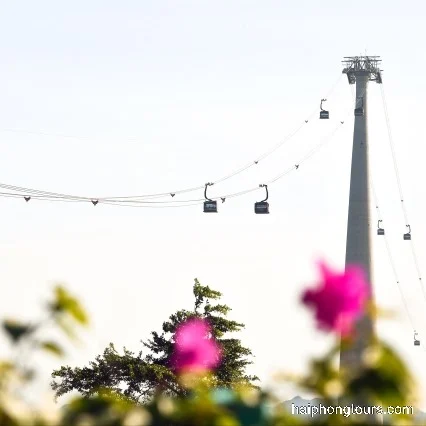
- Cable car: Cat Hai to Phu Long on the western side of Cat Ba, with onward road transport still needed.
- Passenger-boat package: some tourist services coordinate a boat crossing between two road vehicles. Confirm the actual piers and luggage arrangements with the operator.
Dong Bai replaced Got as the public vehicle-ferry departure in 2024. Follow the pier named for your particular service rather than an old instruction that sends every traveler to Got.
A coordinated tourist bus for a shared journey
A through-ticket tourist service is a practical option when its departure time and pickup area fit your plans. The ticket can combine the Hanoi road leg, the crossing and an island vehicle, so you are not arranging each connection separately.
Some shared packages take the vehicle across on the ferry. Others use a passenger boat or cable car between two road vehicles, and the arrangement can change during disruption. Confirm which format you are buying; neither “bus” nor “limousine” tells you that by itself.
- Pickup: check whether your Hanoi hotel is covered or whether you need to reach a meeting point.
- Crossing: confirm the mode, whether the ticket includes it, and the alternative if it cannot operate.
- Luggage: ask when bags stay with the vehicle and when you must take them through a transfer.
- Drop-off: confirm your Cat Ba address. A town-center stop may still leave another journey to a remote hotel or cruise pier.
Compare the full ticket and connection arrangements rather than choosing only by an advertised seat price or the fastest quoted journey time.
Connecting in Hanoi after an overnight bus from Sapa
If a Sapa-to-Cat-Ba ticket changes vehicles in Hanoi, ask for the connection details before treating it as one continuous ride. The first bus’s arrival point may differ from the Cat Ba departure office, and a dawn arrival does not mean that the next office is already open.
Have the seller write down the arrival address, onward meeting point, walking or vehicle transfer between them, and the next check-in time. Confirm where you can wait, whether seating and a toilet are available at that hour, who keeps your bags and which contact answers before normal office hours. Ask who arranges the next available departure if the first bus is late and whether a new ticket or extra transfer would cost more.
Keep both tickets and contacts accessible during the overnight journey. Before the first bus leaves you, confirm the actual drop-off and any updated connection instruction. If the office is closed, contact the seller from a safe, open location rather than assuming an unlocked waiting room will be provided. Tell the onward operator if you move from the agreed point.
If that wait would leave your family exhausted, compare a Hanoi hotel night with a daytime journey. A private Sapa to Cat Ba transfer is another route option: HPT describes a road leg to Dong Bai, a foot-passenger ferry and an island vehicle. Confirm the complete timing, rest stops and crossing; private service still involves a long journey and an island handoff.
A private transfer for a specific pickup and party
A private arrangement can suit a family, a group with luggage or travelers who need a particular hotel pickup. Check the passenger and baggage space together, especially when a vehicle is described by its registered seating capacity.

A private trip does not necessarily stay in one car. A two-vehicle arrangement may take you to Dong Bai, have you cross as a foot passenger, then meet you with another vehicle on Cat Ba. Ask who helps with bags and whether the walking and boarding sections fit your mobility needs.
Crossing on foot can avoid the queue for loading a car, but it does not remove passenger waiting, weather interruptions or traffic on the island. A flexible road departure still needs to connect with a crossing that is operating.
Agree the luggage handoff before the first driver leaves
For a two-vehicle journey, ask who coordinates the complete booking while you are between drivers. Save that contact as well as the next meeting point. Send the number and approximate size of all bags; acceptance on the road vehicle does not automatically establish what can be carried on a passenger boat or cable car.
- Before unloading: identify whether your bags cross with you or with staff, where you collect them and how to recognize the next driver.
- At each change: count the same bags off the first vehicle and onto the next stage. If staff take custody, ask for the luggage tag or receipt they use and keep a photo of your bags.
- If the next vehicle is missing: remain at the agreed staffed meeting area when available, contact the journey coordinator and send your location. Do not leave bags with an unidentified person offering to find the driver.
If nobody in your party can carry the suitcases over the boarding route, arrange and price the assistance before booking. Keep passports, medication and valuables in a manageable bag with you. A change from a vehicle ferry to a walk-on crossing also changes the luggage task, so reconfirm help when the operator changes the route.
Check the final town stop for a larger vehicle
If your island vehicle has 16 seats or more, confirm its stopping and waiting arrangements in Cat Ba town. These vehicles cannot park on several central roads, including Cat Ba Street, formerly 1 April Road, Tung Dinh and Nui Ngoc. Designated parking includes Ang Soi in Hung Son and the Ben Beo parking area.
This parking restriction does not mean that every larger vehicle is banned from entering town. Drivers are directed to move to an authorized parking area after dropping passengers. Ask the provider and hotel to agree on a permitted unloading point, then confirm how you will reach reception with your luggage. Do not expect a coach to wait outside while the group checks in or has lunch.
For collection, settle the exact meeting pin and when the driver should return from parking. Tell the provider if anyone cannot manage a walk or needs help with bags; any smaller connecting vehicle, assistance or extra waiting should be included in the written plan.
Fixed-route intercity coaches are directed to use the Ang Soi interchange for passenger boarding and drop-off. The parking rule has an exception for public buses commissioned by Hai Phong, but an ordinary tourist-bus ticket does not establish that exception. Ask which service you are buying and whether a connection from the terminal to your hotel is included.
The cable car is one crossing option, not the complete trip
The Cat Hai–Phu Long cable car brings passengers to the western side of Cat Ba near Cai Vieng. It does not finish in Cat Ba town, and a road vehicle cannot travel with you in the cabin.

Before choosing this option, confirm operation on your travel date, the last useful crossing and the vehicle from Phu Long to your destination. Check baggage and assistance arrangements if needed. If you book the cable car separately, do not assume that a town transfer is included.
From Noi Bai Airport to Cat Ba after landing
You can arrange a private pickup at Noi Bai Airport (HAN) and continue toward Cat Ba without first traveling into the Hanoi Old Quarter. The Hanoi Airport to Cat Ba transfer uses an airport vehicle to Dong Bai, a foot-passenger ferry crossing and a second vehicle on the island. The ferry ticket is included; confirm your Cat Ba hotel or Ben Beo drop-off when requesting the journey.
Build the plan around when you can leave the terminal, not the aircraft’s landing time. International arrivals use Terminal 2 and domestic arrivals use Terminal 1; check the terminal shown for your flight and send it with the flight number and local arrival date. Allow for immigration where applicable, baggage collection and finding the agreed meeting point.
A private pickup gives you control over the road departure, but the island crossing still needs to be operating. Keep roughly half a day available after leaving the airport as a planning allowance, with additional margin for a slow arrival, traffic or ferry waiting. Do not book a fixed island activity immediately after the estimated arrival.
- Before payment: agree on the meeting point, contact method, included waiting time and any charge if the flight or baggage is delayed.
- Before the crossing: confirm who carries the bags and how to identify the island driver. Arrange any help needed with walking or boarding before booking.
- For an afternoon or evening landing: ask the coordinator to check the last usable Dong Bai departure for your date and work backward to the latest workable airport pickup, allowing a buffer.
If that plan depends on catching the final sailing, compare a night near the airport or in mainland Hai Phong with continuing immediately. Agree on the fallback before setting off; an available car does not guarantee a late ferry.
For a boat connection, send the cruise’s exact embarkation pier and check-in deadline. Ben Beo on Cat Ba and Tuan Chau in Ha Long require different road-and-crossing plans, so a booking labeled only “Lan Ha Bay cruise” is not enough to choose the correct transfer.
Train or coach to Hai Phong, then continue to Cat Ba
The train from Hanoi ends in Hai Phong, not on Cat Ba. This route is useful if you want to spend time in Hai Phong before heading to the island, but it adds a separately planned connection.
Check the departure and arrival stations on your train ticket, then arrange transport from the arrival station to the crossing and onward on Cat Ba. If using a coach instead, check its actual Hai Phong terminal rather than assuming every service arrives beside the railway station.
For the separate island leg, the Hai Phong to Cat Ba transfer uses two road vehicles with a foot-passenger crossing at Dong Bai. The ferry ticket is included; your Hanoi–Hai Phong rail or coach ticket is separate. Confirm the station pickup and arrival time when arranging this connection.
Choose the train around the island crossing
For a same-day island arrival, Hai Phong Tours recommends matching the train to the complete onward transfer before buying it. Work backward from the crossing, allowing for leaving the station, road traffic, ticketing and boarding.
- Cable car: the current pattern has short operating sessions, with the final session at 15:30–15:45, and a Tuesday closure. It is not a continuous late-afternoon service. Reconfirm the calendar for your date; a train arriving in Hai Phong after that final session cannot connect to the cable car the same day.
- Ferry: confirm the last usable departure from Dong Bai, rather than a time for the opposite direction. Extra evening operation depends on weather and passenger demand. Do not buy a late train on the assumption that an extra sailing will run.
Send the onward driver your train number, arrival date, ticketed station, passenger and bag counts, and final Cat Ba address. Agree on a meeting point at Hai Phong railway station and who to contact if the train is late. Ask whether waiting or changing the pickup adds a charge; the rail ticket and island transfer are separate arrangements.
If the plan only works by catching the final crossing, choose an earlier train or spend the night in Hai Phong. A city dinner and a next-morning transfer are easier to plan than reaching a closed terminal. Keep the first island activity flexible until the complete connection is settled.
How much time should you leave?
As a planning allowance, keep roughly half a day available for the Hanoi-to-Cat-Ba journey, with additional margin on busy dates or when using separate tickets. This is not a guaranteed travel time: hotel collection, road traffic, boarding waits and the final island drive all contribute.
Ferry frequency and last departures can change by season. Cars and trucks can also face direction-specific restrictions during busy periods, while passenger services may follow different arrangements. Check the rules for your vehicle and date instead of assuming that an early departure removes every delay.
Avoid building a tight cruise check-in or fixed activity immediately after the advertised arrival. Give the transport provider the exact pier and deadline if you need a connection. A Hanoi Old Quarter pickup also does not automatically include Noi Bai Airport pickup.
Choose a coordinated ticket when you want the connections arranged together, a private trip when the confirmed pickup and vehicle suit your party, or the Hai Phong route when the stop itself is part of your plans. In each case, settle the crossing, luggage handover and final drop-off before paying.
Useful guides for your trip
Would a private transfer make this journey easier? Contact us with your travel date, exact pickup and drop-off, number of travelers and bags. Include any flight, train or cruise deadline so we can assess a suitable plan and quotation.