
A Halong Bay cruise can be a reasonable choice, but no vessel or operator can promise a risk-free trip. The practical decision is whether your exact vessel, its crew procedures, the weather and every small-boat transfer meet a standard you accept. If a seller will not identify the vessel or answer basic safety questions, choose another departure.
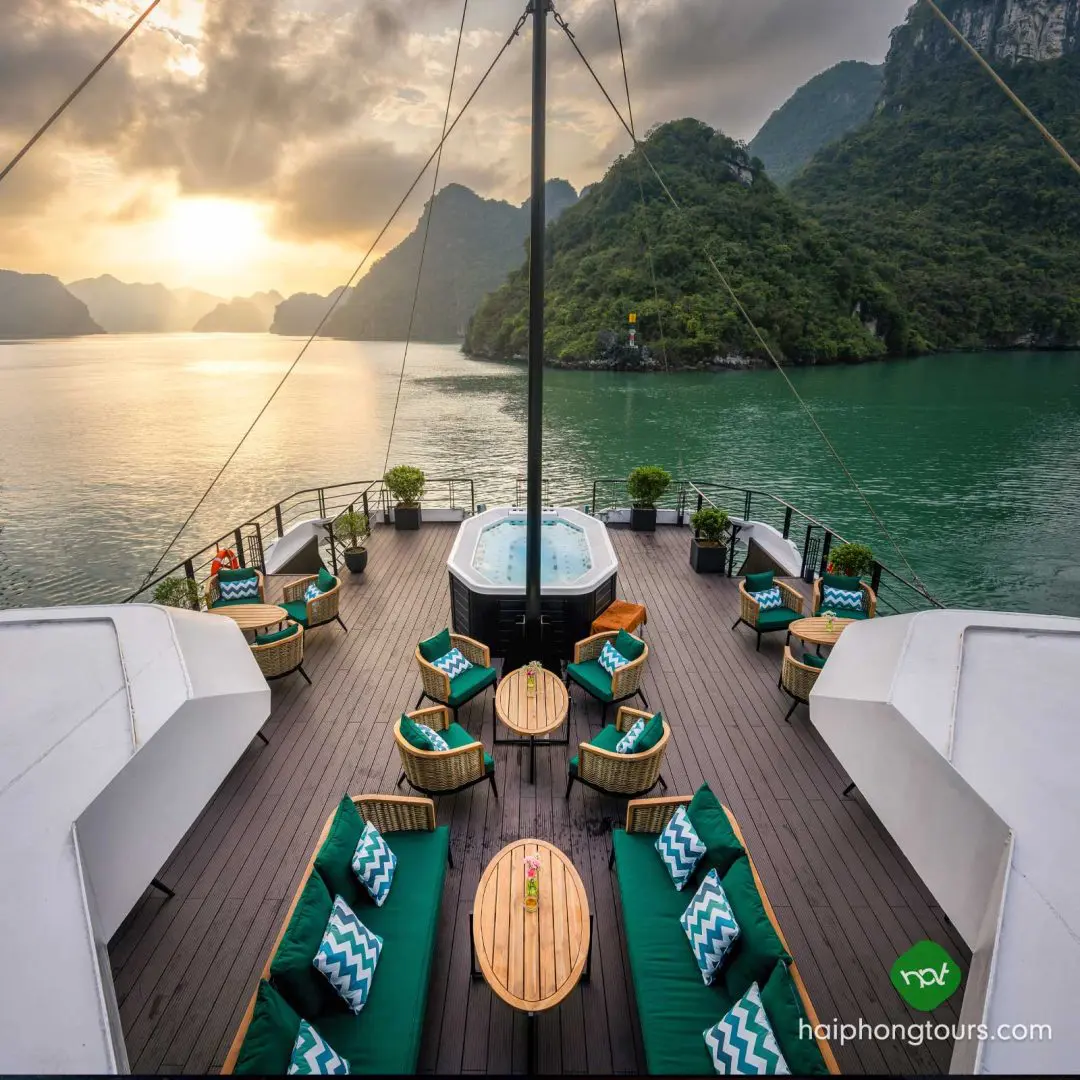
Check the vessel before paying, repeat the weather and departure checks on the travel day, and inspect your life jacket and escape routes after boarding. These steps cannot remove every risk, but they help you avoid trips where the most important controls are unclear or missing.
Quick rule: verify the exact boat, keep flexible cancellation terms, listen to the safety briefing, and be ready to postpone when the port suspends departures or a critical safety answer remains unclear.
Halong Bay cruise safety checklist
- Exact vessel: obtain its full operating name, QN registration number, operator and departure port.
- Current status: ask the operator to confirm that registration, inspection and required operating documents remain valid for your date.
- Departure control: confirm at the port that the vessel has been cleared to leave that day.
- Life jackets: locate an accessible, wearable jacket for every traveler, including a correctly sized child jacket where needed.
- Briefing: understand the alarm, assembly point, life-jacket procedure and evacuation instructions.
- Escape routes: identify the normal exit and one alternative from your cabin and the main indoor area.
- Small craft: reassess the tender, speedboat, sampan or kayak instead of assuming the main vessel’s standards apply to it.
- Weather: check official warnings again on the morning of travel and follow any suspension issued by the port.
- Insurance: confirm medical, evacuation and planned water-activity cover in your own policy.
Verify the vessel, not only the cruise brand
A cruise brand may operate several vessels, while an agent may sell a cabin before naming the boat that will actually carry you. Ask for the full vessel name and its QN registration number before the free-cancellation deadline. Also confirm the legal operator, intended departure port and whether your trip is licensed as a day cruise or an overnight cruise.
The official Halong Bay website publishes lists of daytime and overnight tourist vessels. Use the list as a useful cross-check, then ask the operator to explain any mismatch or recent vessel change. An online directory can lag behind an operational update, so an unexplained absence is a reason to investigate rather than proof on its own.
Ask the operator to confirm that the vessel’s registration and technical safety and environmental inspection are current for your travel date. You do not need to interpret every certificate yourself. You do need a clear vessel identity, readable validity details and a seller willing to put the answer in writing.
Booking red flags
- The seller provides a marketing brand but refuses to name the vessel.
- A substitute boat is described as equivalent without its registration or cabin details.
- A certificate image is cropped so the vessel name or validity date cannot be read.
- The departure port remains vague close to the travel date.
- A heavily discounted offer requires payment outside the seller’s normal booking process.
Understand what the port check does
Tourist vessels use controlled ports and must complete procedures for entering and leaving the port. Authorities can also suspend departures when weather or operating conditions require it. Treat same-day clearance as an essential control, while remembering that it cannot predict every sudden squall or eliminate every human and mechanical risk.
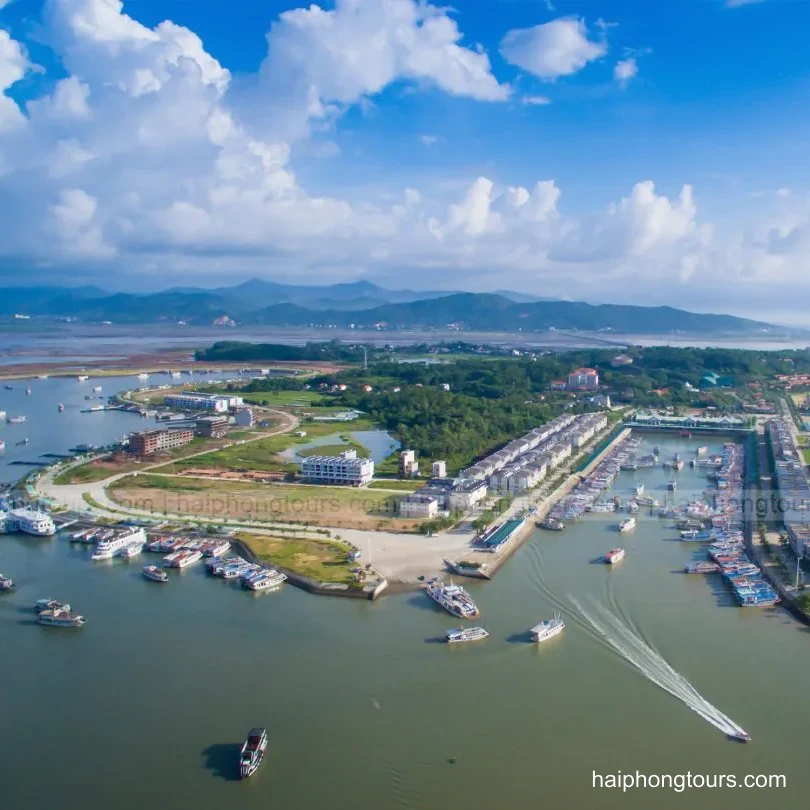
At check-in, confirm that the vessel name matches your booking and ask whether it has been cleared to depart. Do not accept boarding from an informal jetty or transfer to an unnamed substitute vessel without repeating your checks. If the port suspends departures, wait for the official decision to change; do not switch to an informal boat.
Current fleet controls include technical, fire-safety and rescue-equipment inspections, plus communications and voyage monitoring. These systems support the crew and authorities. They do not replace a passenger’s need to understand the briefing, locate equipment and make a fresh decision when conditions change.
Check the life jacket before departure
Locate your own life jacket after boarding. Check that you can reach it quickly, put it on and secure every strap. Ask a crew member for a demonstration if the fastening system is unfamiliar.
Children need jackets that fit their size. Travelers with a larger chest, reduced hand strength, limited shoulder movement or another mobility constraint should test the fit while the vessel is still at the port. A loose jacket, an inaccessible jacket or an adult jacket placed on a small child is not an acceptable substitute.
Follow the crew’s instructions on when to wear the jacket. Use a suitable jacket for tenders, kayaks and other small craft whenever required, and request one before boarding if none is offered. A life ring is rescue equipment; it does not replace a wearable jacket assigned to you.
Use the safety briefing as a practical test
A useful briefing should happen before or soon after departure, while conditions are calm. It should show where jackets are stored, how to wear them, what the alarm means, where passengers assemble, and how to leave cabins and public rooms. It should also explain how the crew will help children, older travelers and people with limited mobility.
If the briefing is not in a language you understand, request an English explanation or a visual demonstration. Ask the crew to repeat any unclear jacket or exit instruction. A welcome speech, cabin tour or dining announcement is not an emergency briefing.
Find two usable ways out
From your cabin and the main lounge or dining room, identify the normal exit and one alternative. Check that corridors, stairs and doors are not blocked by luggage, furniture or service equipment. Notice the emergency lighting, exit signs and any glass-breaking tools.
An exit counts only if the traveler can use it. A narrow stair, high sill or overhead hatch may not be realistic for a young child or someone with limited mobility. Ask which crew member would assist and where the most accessible assembly area is.
Knowing the layout helps you respond faster, but do not choose an evacuation route independently during an emergency. Fire, flooding, wind or vessel position can make one side unsafe. Follow the crew’s current instructions.
Reassess every tender and activity boat
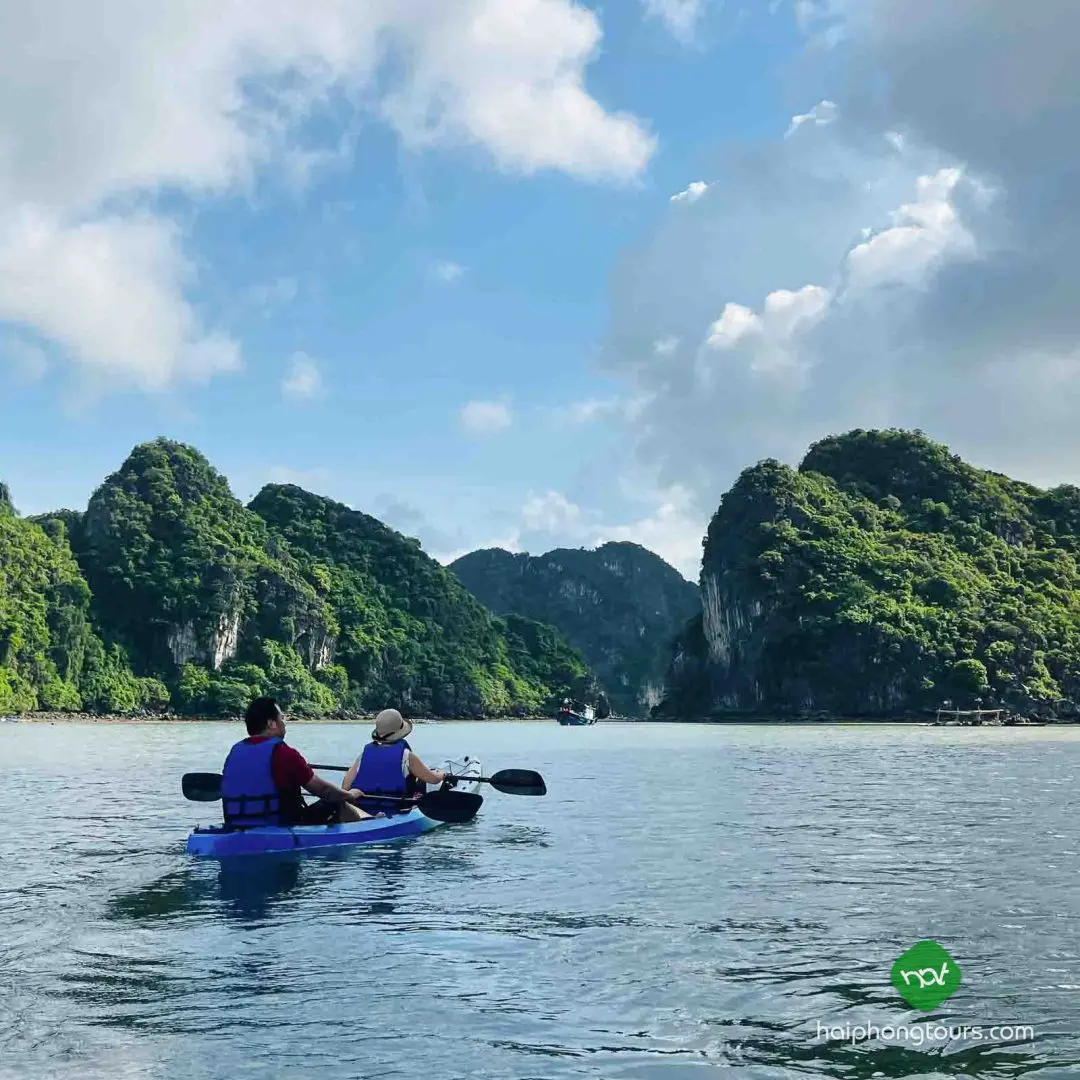
The main cruise ship may pass your checks while a tender, speedboat, sampan or kayak does not. Treat every transfer as a new decision. Look for suitable life jackets, a stable boarding point, controlled passenger numbers and a crew member managing the sequence.
- Put on the life jacket before boarding when instructed.
- Keep both hands available and pass bags separately.
- Use the handrail or crew assistance and remain seated as directed.
- Do not carry a child across an unstable gap between moving vessels.
- Skip the transfer if wind, waves, crowding or the step exceeds your ability.
Before booking, ask whether guests board the main vessel directly or use a tender, and whether each excursion can be skipped while remaining safely on the main ship. This matters for families, nonswimmers and travelers with balance or mobility limitations.
Make weather a same-day decision
Check the official forecast for Quang Ninh and the Gulf of Tonkin on the morning of travel. A rain icon is not enough. Pay attention to thunderstorm, lightning, squall, strong-wind, tropical-cyclone, wave and visibility warnings.
Ask whether the port has issued departure clearance and how the captain receives later updates. Tourist vessels use radio and voyage-monitoring systems to maintain contact, but localized weather can change quickly. A bright sky at check-in does not cancel an official warning.
Get weather cancellation and refund terms in writing before payment. Avoid a tight connection to a flight or other costly onward booking after the cruise. If authorities delay or suspend departures, accept the schedule change and use your written terms to resolve the booking.
Responding to sudden bad weather
If thunder, strong wind or heavy rain develops while you are aboard, stop optional deck and water activities and follow crew instructions immediately. Move away from open edges and unsecured objects, put on a life jacket when directed, and help children without blocking passageways. Do not go onto an exposed deck to film the weather.
If you are in a tender or kayak, follow the guide’s return or shelter instruction rather than choosing a route yourself. After reaching land, call Vietnam’s contact the relevant service if there is an immediate disaster, accident or rescue need and local staff have not already coordinated help.
Plan for medical and mobility needs
Tell the operator before payment about limited mobility, serious allergies, pregnancy, respiratory or cardiac conditions, or any need for refrigerated medication. Ask specifically about stairs, cabin thresholds, tender boarding, distance from the cabin to the assembly point and whether the planned activities can be skipped.
A description such as accessible or senior-friendly is too broad. Ask for measurements or clear photographs when a doorway, stair or bathroom layout will determine whether the trip is workable. Keep essential medication and identification with you rather than in luggage that may be difficult to reach.
Check your own travel insurance
Insurance included with a ticket may have different limits and covered events from your personal travel policy. Ask your insurer whether your plan covers tourist-boat travel in Vietnam, emergency treatment, rescue, evacuation and repatriation.
Confirm coverage for kayaking, swimming, tender transfers and any other planned activity. Also check trip cancellation, curtailment, delay and missed onward transport caused by severe weather. Keep the policy number and 24-hour assistance contact available offline.
Questions to send before booking
Please confirm the exact vessel name, QN registration number, legal operator, departure port and licensed passenger capacity for my date. Are its registration and technical safety and environmental inspection current through that date? Does boarding use a tender? Please explain the safety briefing, life-jacket arrangements for adults and children, alternative exits from the cabin area, weather-monitoring procedure, and the refund or date-change policy if the port suspends departures. Please also confirm which small-boat activities are optional.
Save the reply with your booking. If the vessel changes, repeat the questions for the replacement instead of assuming the previous answers apply.
When to decline the trip
- The vessel differs from the booking and its identity cannot be verified.
- The operator cannot confirm departure clearance.
- Passenger numbers appear uncontrolled or the boat appears overcrowded.
- There is no suitable life jacket for everyone in your group.
- Exits are locked, obstructed or not explained.
- No understandable safety briefing is provided after you request one.
- A tender or activity boat lacks jackets, appears unstable or is overloaded.
- The crew ignores an official weather suspension.
Choosing a cruise without using price as a shortcut
A larger, newer or more expensive vessel is not automatically safer. Construction, maintenance, loading, watertight integrity, communications, escape design, crew decisions and weather response all matter. Day cruises reduce your time on the water; overnight cruises add cabin and nighttime procedures. Neither label proves the result.
Use the current Halong Bay cruise comparison to narrow the itinerary and duration, then apply this checklist to the exact vessel assigned. Keep flexible terms, verify the boat before payment, check again at the port and postpone when a critical control is missing.
Frequently asked questions
Are Halong Bay cruises generally safe?
Licensed tourist cruises operate within port, vessel, crew and weather controls, but no trip is risk-free. The best decision depends on the exact boat and the conditions on your date. Vessel identity, current documents, departure clearance, equipment, briefing and weather response are more useful than a general claim about the destination.
Is a day cruise safer than an overnight cruise?
Duration alone does not determine safety. A day cruise limits time aboard, while an overnight cruise requires you to understand cabin exits and nighttime procedures. For either format, check the exact vessel, small-boat transfers and same-day weather decision.
Should I wear a life jacket for the entire cruise?
Follow the crew’s instructions and the guidance for that jacket type. At minimum, know where your jacket is, make sure it fits and understand how to put it on. Wear a suitable jacket for small-craft transfers and water activities whenever required.
Useful guides for your trip
- Ha Long, Lan Ha and Bai Tu Long Cruise Itineraries
- Halong Attractions: Bay Cruises, Museum, Beaches and Parks
Need help choosing the cruise or coordinating the shore transfer? Contact us with your date, preferred route, group size and starting point. Tell us about any dietary, mobility or onward-connection needs before booking.