
Lang Pagoda is a worthwhile stop in western Hanoi if you enjoy temple architecture and want to understand a living place of worship beyond the Old Quarter. Its sequence of gates, shaded approach and octagonal pavilion gives a short visit a clear focus. Allow roughly 45–60 minutes on site as a planning estimate, with separate time for the journey from your hotel.
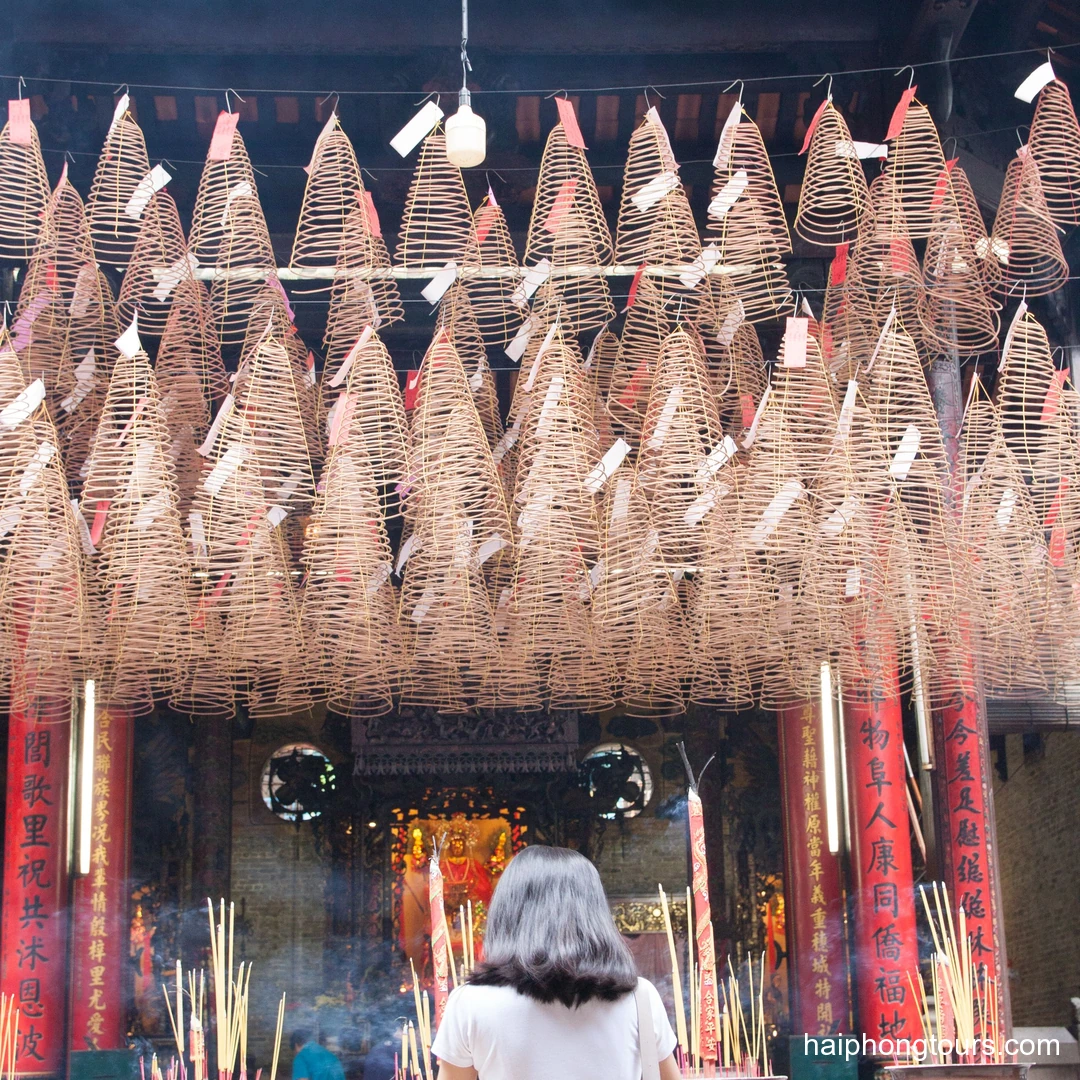
Look for Chùa Láng, also called Chiêu Thiền Tự, at 116 Chùa Láng Street. This is an urban pagoda in Lang ward, not Thay Pagoda in the countryside. Both honor the monk Tu Dao Hanh, but they offer different visits: Lang is compact and architectural, while Thay adds a lake, covered bridges and an optional mountain walk.
Find the pagoda rather than just the street
Chua Lang is also the name of the surrounding street. Give your driver the full pagoda name and number 116, then check that the map pin identifies the religious complex rather than a cafe or shop. Older addresses use Lang Thuong ward and Dong Da district; the current ward name is Lang.

Check the journey from your actual starting point before leaving. A short visit inside the grounds can still require a substantial cross-city journey in traffic. Lang makes more sense when you already have time in western Hanoi than as a hurried diversion between tightly booked Old Quarter activities.
Ask your accommodation to help confirm visitor access for the intended day, especially if a particular hall or sacred object is your reason for coming. For a local administrative referral, contact Lang ward; this is a ward office, not a pagoda ticket desk or an English-language tour service.
Read the architecture in sequence
Start with the gates and shaded approach
The outer gate has four square pillars and three small curved roofs, with the middle roof higher than the sides. Continue through the successive entrances rather than treating the first gateway as the entire attraction. The approach leads along a brick path beneath mature trees toward the main courtyard.
Pause at each transition and look back. The changing view from street to entrance, path and courtyard is part of the architectural experience. Keep the central passage open for worshippers; a photograph from one side usually allows you to study the same composition without blocking movement.
Look closely at the octagonal pavilion
The eight-sided pavilion is known as the nhà Bát Giác or nhà Bảo Cái. Its stacked tiled roofs and upward-curving corners make it the most distinctive structure in the courtyard. Dragons decorate the upper roof, with phoenix imagery at the top. It has a ceremonial role connected with the sacred palanquin before the festival.
Walk around only where visitor access permits. Compare the roof silhouette from different angles, then look at the relationship between the pavilion and the halls behind it. Treat the structure and its contents as ceremonial objects; do not climb onto a platform or move something to improve a photograph.
Understand why the halls contain more than Buddha images
Lang combines Buddhist worship with reverence for Từ Đạo Hạnh and King Lý Thần Tông. Tradition connects the monk and the king through a story of rebirth. That sacred narrative helps explain their presence together; it should be understood as religious tradition rather than a literal historical account.
The complex is associated with foundations under King Ly Anh Tong, but it has undergone repeated restoration. Read it as a place shaped across centuries, not a collection of buildings and statues all surviving unchanged from the Ly dynasty.
One notable object is the Tu Dao Hanh image, whose construction includes lacquered rattan. The pagoda also preserves a wooden image of Ly Than Tong and historic stone inscriptions. Their interest lies in material, religious meaning and craftsmanship, rather than simply counting how many statues there are.
If these details are important to you, arrange someone who can explain them in your language and confirm which areas you may enter. Do not assume that every sanctuary is open, that you can approach each object closely or that English interpretation will be available on arrival.
Choose an ordinary visit or the lunar festival
The traditional festival centers on the seventh day of the third lunar month. The Gregorian date changes each year. Opening rites, offerings and other activities follow that year’s program, so obtain the current schedule before choosing a travel date around a particular event.
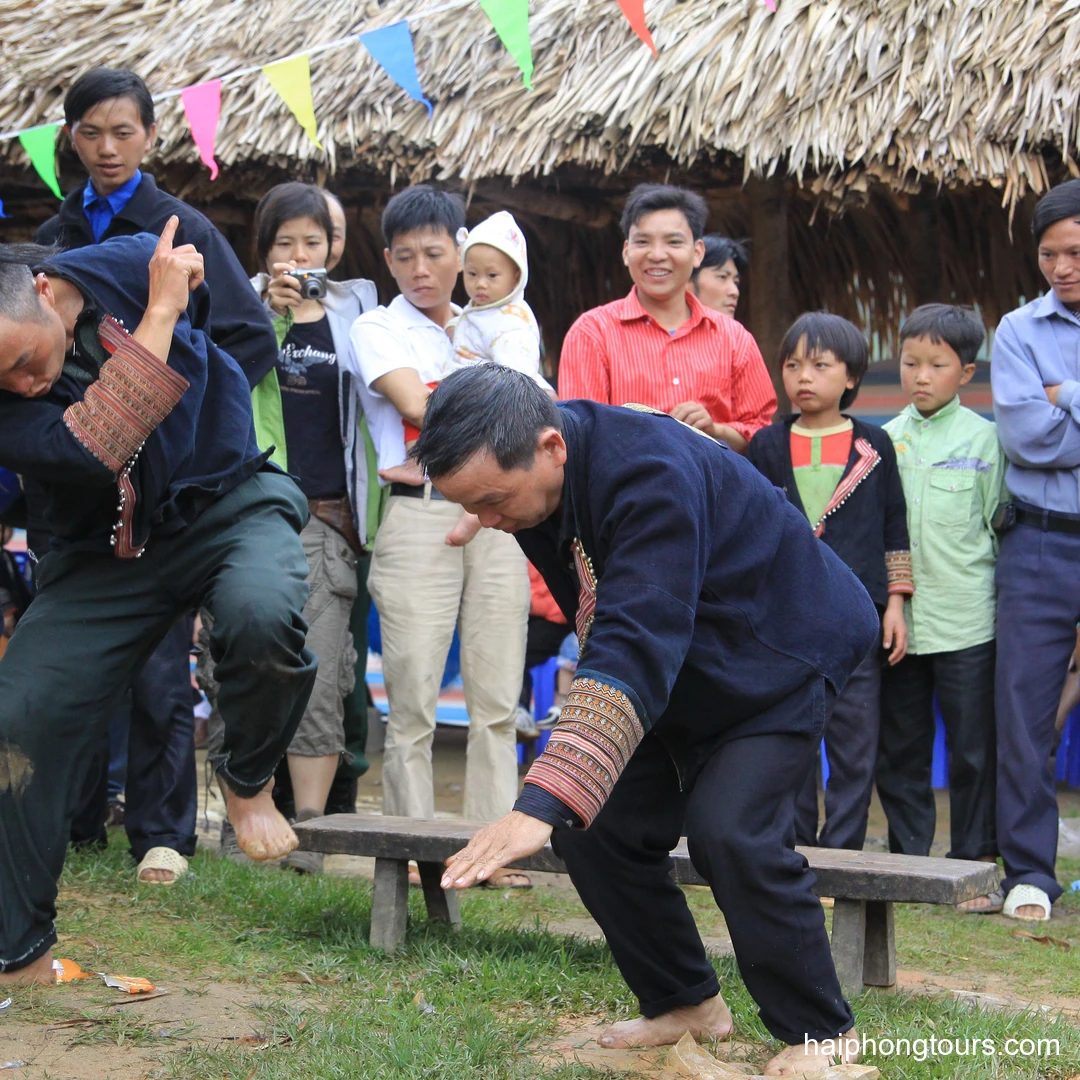
Choose the festival when communal worship is the main interest and you are comfortable letting ceremonies determine your movement. Allow additional time for the approach and crowds, keep processional routes clear and photograph people only with permission. A ceremony is not a performance arranged around a visitor’s timetable.
Choose an ordinary day for a slower architectural visit. Even then, the grounds serve worshippers and the local community; quiet conditions are not guaranteed. If a hall is busy with prayer, spend time at another permitted part of the complex and return later.
Prepare for a respectful, comfortable visit
- Dress for worship: cover shoulders and knees, remove hats inside and follow local instructions about shoes.
- Plan for thresholds: ask about the route from the street through the courtyard to the specific halls if steps or uneven paving are difficult. An urban location does not establish access throughout.
- Keep photography selective: check permission inside each hall, avoid flash around sacred objects and leave worshippers space.
- Separate payments: clarify any parking, guiding or other service charge before accepting it. A voluntary donation is different from a required charge; use the designated donation place if you choose to contribute.
- Keep the outing flexible: prioritize the gates, pavilion and permitted halls instead of arriving with a long list of objects that must be accessible.
The North Vietnam temples and pagodas guide explains the differences between Buddhist, historical and other sacred sites. It is useful context when Lang is one of several religious places on your route.
Lang or Thay: choose by the experience you want
Choose Lang for a focused city visit built around the courtyard, roof forms and the relationship between Buddhist and local sacred traditions. Choose Thay Pagoda for a longer countryside outing with a lake and bridges, and a separate decision about climbing the hill. A water-puppet performance at Thay needs its own confirmation.
Seeing both can be meaningful if Tu Dao Hanh and northern religious architecture are particular interests. Give each place enough time instead of treating them as interchangeable stops. For a first visit to Lang, a confirmed daytime visit and an unhurried hour are a more useful starting point than an ambitious cross-city checklist.
Useful guides for your trip
Would you like help fitting this experience into your trip? Contact us with your travel dates, starting point, available time and group size. Tell us about walking limits or special interests so we can suggest a practical itinerary.