
A few hours in Lao Cai can be worthwhile if you enjoy local markets, riverside city life and temples. Use the time for Coc Leu Market and the Den Thuong–Den Mau area, with a meal between sightseeing and your train or onward drive. Lao Cai is a trading city beside the Chinese border; the experience is different from Sapa’s mountain scenery.
For a first visit, allow roughly three to four hours for a compact city outing, including short vehicle transfers. An overnight stay is useful when it simplifies an early departure or gives you time to rest, but you do not need an extra night just to see the main stops below.
First, distinguish Lao Cai city from Sapa
Trains advertised for a Sapa trip arrive at Lao Cai Railway Station. Sapa is a separate destination reached by road, so a hotel booking marked “Lao Cai Province” does not tell you whether the property is near the station or up in the mountains.
Check the exact hotel location and pickup point before committing to a stopover. If you already have a shared transfer from the station, it will not automatically wait while you explore the city. A sightseeing break needs its own transport arrangement and a confirmed onward journey.
Older maps and addresses use Lao Cai city and Coc Leu ward. The main market and border-temple area now sit within Lao Cai ward. For navigation, send the actual attraction names and pins rather than relying on a province or former district label.
The Hanoi to Sapa transport guide explains the wider choice between traveling by train, bus and car. Choose that journey first, then fit Lao Cai sightseeing around the connection you have booked.
Coc Leu Market: everyday trade rather than a weekly highland fair
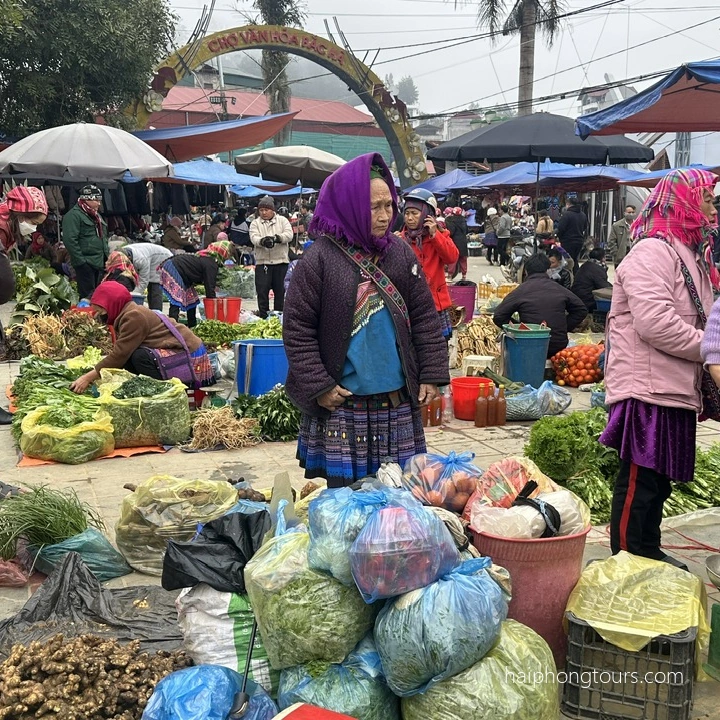
Cho Coc Leu is an established urban shopping market, with permanent stalls selling clothing, household goods, food and other merchandise. It suits a browse through commercial life in a border city. Expect an active place of business rather than a market assembled for visitors.
The market is organized into different trading areas. Look for food and household sections if you want to see ordinary purchases; clothing and general goods occupy other parts. Dried mushrooms, nuts and packaged products can be more practical souvenirs than a large item chosen simply because it looks inexpensive.
Ask the price for the exact quantity you want, especially when buying loose goods by weight. For packaged food, check the ingredients, producer and expiry date. A regional-looking label or embroidered pattern does not establish that an item was made locally; ask about origin if that matters to your purchase.
Some traders accept local QR payments, but carrying Vietnamese dong is simpler than assuming a foreign banking app will work with every code. Ask before photographing a stallholder or a customer, and leave aisles clear while browsing.
Give the market around 45–60 minutes as a starting allowance. Visit during normal daytime trading rather than building the plan around every stall being ready just after an early train arrival.
For a weekly gathering of highland communities, plan a separate Bac Ha Sunday market visit. Coc Leu fills a different role and is not a substitute for that journey.
Den Thuong: a temple above the riverfront
Den Thuong honors Tran Hung Dao, the military leader associated with Vietnam’s resistance to the Mongol-led Yuan invasions in the 13th century. The temple’s hill setting gives this stop a different feel from the busy market and streets below.
Allow time for the approach, the courtyards and the worship spaces rather than treating the temple as a single photo location. Notice how the buildings, gate and surrounding trees create a sequence of spaces. The site remains a place of worship, so wait for a clear moment before approaching an altar or taking a picture.
Wear clothing covering your shoulders and knees, follow any instructions about shoes and photography, and keep a respectful distance from people praying. You can observe without buying an offering or taking part in a ritual.
The climb and changes in level matter if someone in your party has difficulty with steps. Discuss the closest practical drop-off and how much of the approach they want to attempt. “A city temple visit” does not necessarily mean a flat route throughout.
Den Mau and the meeting of the rivers
Den Mau is another active worship site near the international border gate and the Nam Thi River, close to its meeting with the Red River. Its Mother Goddess traditions and riverside position give you a second perspective on Lao Cai’s spiritual and trading history.
Pair it with Den Thuong instead of adding a long list of scattered temples. Around 60–90 minutes for the two sites and the nearby public riverfront is a useful initial allowance, with longer needed for worship, photography or a festival crowd.
Use public streets and designated viewing areas to appreciate the river setting. The city view is an experience in its own right; there is no need to enter border-control facilities to make the stop worthwhile. Follow signs and staff instructions near controlled areas, and ask before photographing official facilities.
Hekou, across the border in China, is a separate international journey. Do not insert a crossing into a short Vietnamese city stopover without arranging that trip independently. Likewise, the Lung Po viewpoint farther upstream is a different excursion, not the river junction beside these temples.
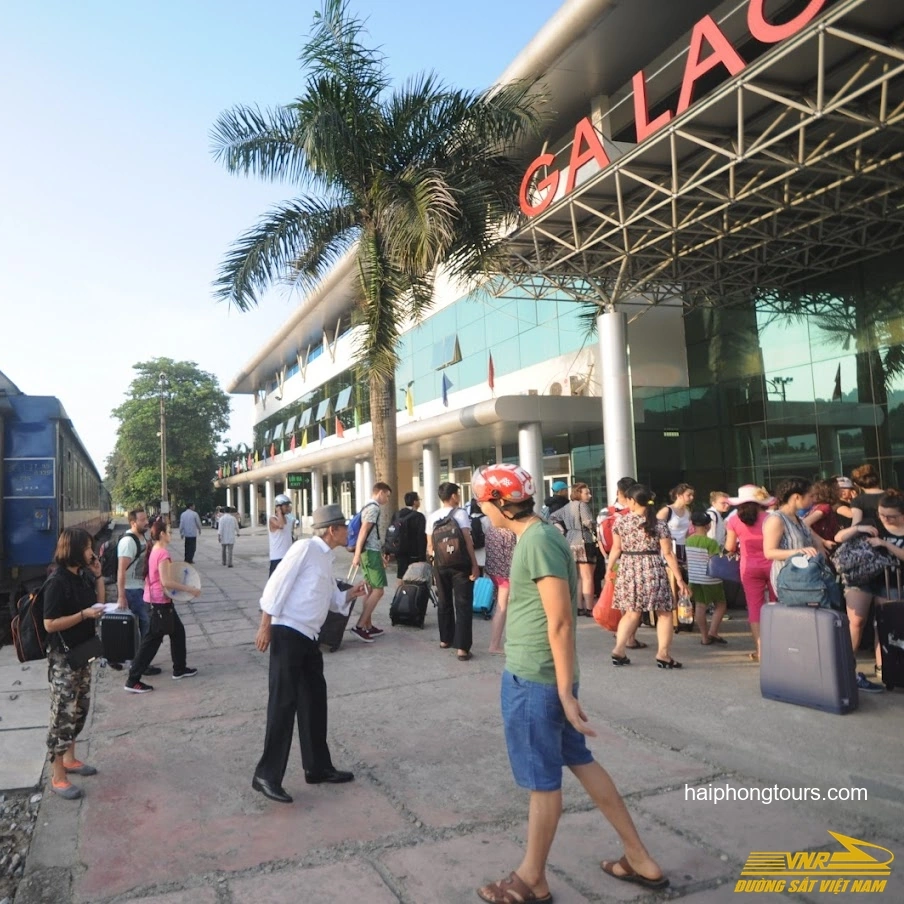 Lao Cai railway station, the starting point for daytime and overnight trains to Hanoi.
Three ways to fit Lao Cai into your journey
After arriving on an overnight train
Start with breakfast and a rest rather than a race around the city. Once shops and visitor areas are active, choose the market or the temples as your priority. Add the second only if you have the energy and have arranged a later departure for Sapa.
Settle luggage storage before walking away from the station. Ask a booked hotel or transport provider what they can hold and until when; do not assume the station has a suitable staffed storage service for your dates.
Before a daytime or overnight train to Hanoi
Choose the return train before allocating sightseeing time. The SP8 daytime train from Lao Cai to Hanoi leaves around lunchtime and reaches Hanoi the same evening; check the exact times and available accommodation for your date. This suits travelers who prefer to stay awake for the journey and sleep in a hotel that night.
If you are descending from Sapa that morning, allow for the mountain-road transfer and boarding formalities before adding a city visit. Do not try to fit the full three-to-four-hour outing into a short connection. Staying in Lao Cai the preceding night gives you more usable morning time before SP8.
SP16 and SP4 provide overnight return options, reaching Hanoi early the following morning. These leave room for an afternoon in Lao Cai: browse Coc Leu, visit the temple area and eat before returning to the station. Arrange any early-morning hotel reception in Hanoi separately, and confirm which train carries your chosen private sleeper cabin rather than assuming every departure has the same carriages.
For Laman Express passengers returning to Hanoi, check in at Terminus Restaurant, 342 Nguyen Hue, opposite Lao Cai station. Bring your boarding voucher and passport and arrive at least 30 minutes before departure. Give this meeting point to your driver instead of treating every carriage operator’s reception as the same station counter.

Hai Phong Tours recommends fixing the final pickup before starting your city walk: agree where you will collect your bags and allow time for that stop before check-in.
Keep the sightseeing plan flexible if road delays reduce the available time. A relaxed meal and one stop are more useful than rushing through both temples and the market while watching the clock.
With only an hour or so to spare
Choose one stop close to your next pickup, or stay near the station for a meal. Do not spend most of a short connection moving between sights. The three-to-four-hour city plan is for usable leisure time, separate from boarding formalities and the onward mountain drive.
What makes the stop comfortable
A taxi or car with agreed waiting time makes the market and temple pairing straightforward. Agree on the stops, final destination and total arrangement before leaving, then walk within each area. The station, market and temple cluster should not be treated as one compact pedestrian precinct.
Lao Cai’s river city can feel warmer than Sapa. Keep drinking water handy and use a meal or cafe break to avoid spending the entire hottest part of the day outdoors. During heavy rain or high river levels, keep to open public areas and follow local closures rather than seeking a lower viewpoint.
Early-year temple festivals bring a different atmosphere, with more worshippers and additional activities. If your main aim is a quiet look around, choose a normal day. If the festival is the reason for coming, check that year’s program and allow more time for traffic and access.
Lao Cai works best as a deliberate short visit: an urban market, two contrasting temples and time by the rivers. Build it around an onward journey that is already settled, and it adds a useful change of scene between the train and the mountains.
Would you like help fitting this experience into your trip? Contact us with your travel dates, starting point, available time and group size. Tell us about walking limits or special interests so we can suggest a practical itinerary.