
A Hanoi train after Le Theatre Cruise requires the exact station and booked train, plus a margin calculated from actual road-ready time at Tuan Chau. Le Theatre publishes 09:00 checkout, 09:30 brunch during the return and 11:00 disembarkation, but the timing is relative and can change.
Do not use a generic “Hanoi station,” promise one road time or treat 11:00 as guaranteed car departure. Recheck the same-day voucher and official rail booking, and prepare a missed-train fallback.
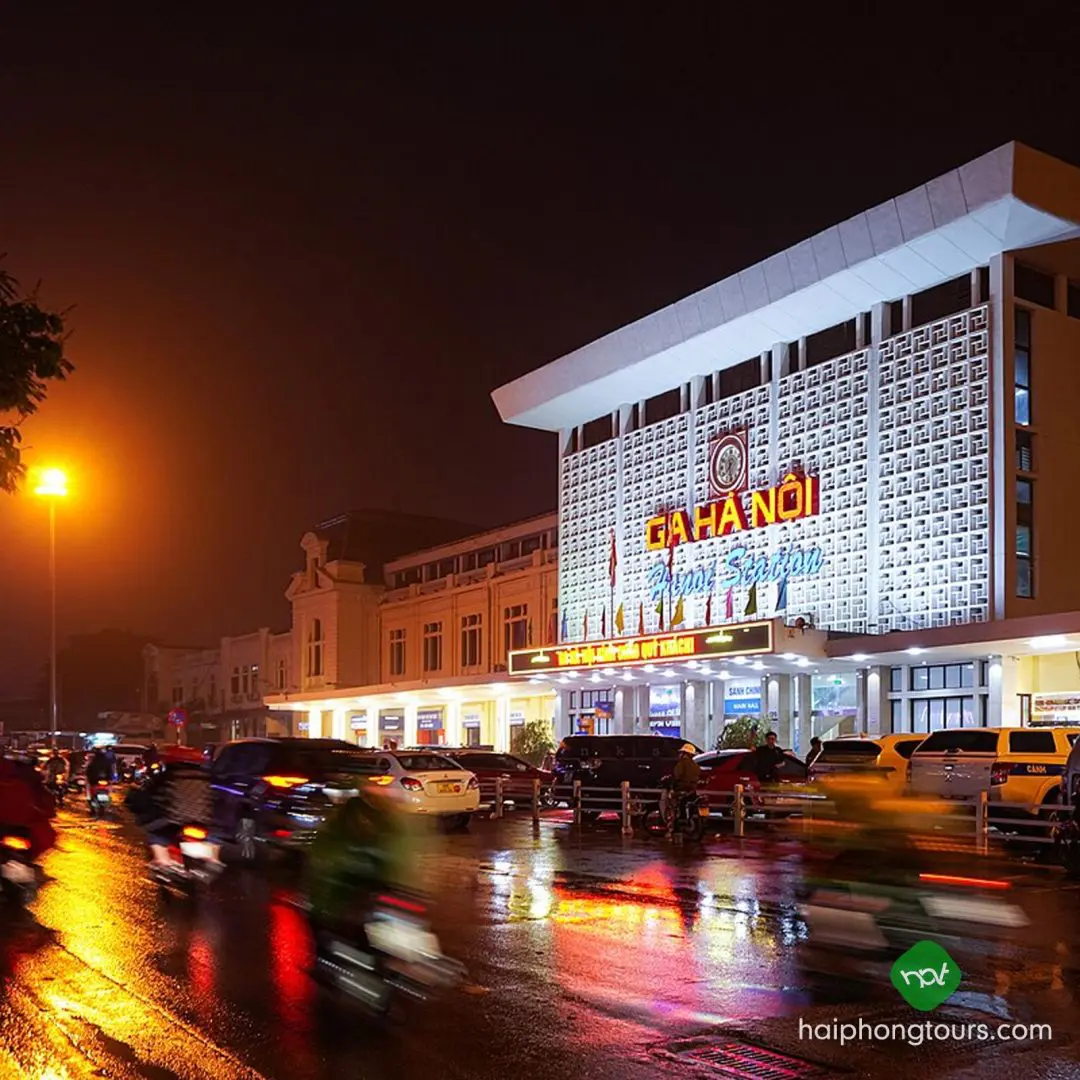
Keep the return milestones separate
- 09:00: cabin checkout.
- 09:30: brunch while the vessel continues its return.
- 11:00: published Tuan Chau disembarkation stage.
- After shore arrival: recover luggage and exit to the agreed car pin.
- After loading: begin the journey to the ticketed station.
The operator does not publish a fixed road-ready minute. Any change in vessel timing, luggage release or vehicle access reduces the train margin.
Confirm the road pickup point
Ask Le Theatre or the current voucher contact where an independent vehicle may meet passengers at Tuan Chau. Send the same pin to the driver and group.
Use one lead contact. Message after disembarkation, after every case is present and when walking to the vehicle. Confirm waiting rules before travel.
Booking details to provide
- Le Theatre Cruise and return date.
- Confirmed Tuan Chau road-vehicle pin.
- Passenger count and complete luggage inventory.
- Exact railway station printed on the ticket.
- Train number, departure time and booking reference.
- Missed-train contact and fallback.
Use the station on the booking
The word “Hanoi” does not select a railway building. Copy the station name, train number and date from the official booking record and send them to the driver without replacing them with a familiar city label.
Save the ticket offline and retain any identification or original document required for boarding. If passengers have different bookings, resolve the station and train difference before the cruise returns.
Build the train clock backward
Start with the boarding margin required for the booked train. Work backward for station entry, moving luggage, road variability, vehicle loading, terminal exit and the unknown baggage-release interval.
This creates the latest acceptable road-ready time. Compare it with the actual cruise return rather than the 09:00 checkout. A plan with no allowance for a timing change is not a protected connection.
At the station, confirm the name and train before unloading every bag. Ask railway staff about any discrepancy rather than redirecting based on a guess.
Protect luggage and rail documents
Keep passports, medication, phones, booking documents and valuables with you. Count every suitcase at Tuan Chau before leaving Le Theatre’s team.
For several large cases or reduced mobility, add time at both the cruise terminal and rail station. Do not assume the driver provides porter service.
Confirm the transfer booking scope
The current HPT catalogue does not list an exact Le Theatre-to-Hanoi-railway-station product. Hai Phong Tours can explain the information a private handoff needs, but travelers must confirm another provider instead of converting a general route into an unlisted service.
Prepare the missed-train plan
Review the ticket’s change and refund terms and identify a later train or overnight option. If the cruise return changes, contact the official booking channel early.
The fallback protects safety and luggage. Do not ask the driver to recover a port delay through unsafe driving.
We finish Le Theatre Cruise on [date]. The itinerary shows 09:00 checkout, 09:30 brunch and relative 11:00 Tuan Chau disembarkation. Our train is [number] from [exact station] at [time]. We have [passengers] and [bags]. Please confirm the vehicle pin, road-ready window, capacity and waiting terms.
- Recheck cruise and rail records.
- Use the exact station.
- Confirm the car pin.
- Count luggage.
- Build from actual road-ready time.
- Keep a later-train fallback.
Check the station handoff before departure
Ask where the vehicle can stop at the ticketed station and how far travelers must move their cases. A central map pin may not identify the practical unloading point.
On arrival, compare the station name and train number with the official booking before unloading. Ask railway staff about any discrepancy rather than guessing another station.
Allow extra time for large luggage, children or limited mobility. The road booking should not be assumed to include porter help, ticket collection or movement through boarding control.
Keep the driver contact until the correct entrance is confirmed, but use railway staff for platform and boarding questions. This preserves the boundary between road and rail.
If the train is missed, follow the ticket conditions and official channel. Use a valid later booking or overnight plan rather than an informal seat suggestion.
Keep the road booking aligned with the rail ticket
Send the official station wording to the provider before the cruise. If the ticket is changed, update the driver immediately; a saved old screenshot can direct the vehicle to the wrong departure point.
Keep each passenger’s booking reference and identification accessible. When several tickets are held under one booking, choose one person to manage them so the group does not separate at the entrance.
Ask the station or official seller about ticket collection requirements if the booking is not fully electronic. Collection time belongs inside the rail margin, not outside it.
A later train may depart from a different station or use different conditions. The fallback must be checked as a new booking rather than assumed to copy the original journey.
Count every bag before the road vehicle leaves the station.

Useful guides for your trip
- Ha Long, Lan Ha and Bai Tu Long Cruise Itineraries
- Best Places to Visit in Hanoi: A First-Time 2-Day Plan
Would a private transfer make this journey easier? Contact us with your travel date, exact pickup and drop-off, number of travelers and bags. Include any flight, train or cruise deadline so we can assess a suitable plan and quotation.
