
Le Van Thinh Temple in Bac Ninh suits travelers interested in Vietnamese history and unusual religious sculpture. Its small hillside complex brings together a scholar’s memorial, Thien Thu Pagoda and a shrine sheltering a stone creature that bites its own body. Give the visit some historical context; a quick photograph alone misses much of its interest.
Hai Phong Tours suggests allowing about an hour on site as a planning estimate, plus your road journey. Arrange English interpretation beforehand if you want the political history explained in depth. Keep some flexibility around the visit rather than scheduling a tight onward connection.
Find the Bao Thap temple complex
Save Đền thờ Lê Văn Thịnh, thôn Bảo Tháp, xã Đông Cứu, Bắc Ninh for your driver. The complex lies on the southern slope of Thien Thai Hill. Older addresses include Gia Binh; the village and temple name help distinguish the destination from other memorials to the same scholar.
Steps lead up toward the entrance. Wear shoes with grip and allow extra care after rain. If anyone needs step-free access, have your organizer establish the actual approach before setting off rather than assuming that a vehicle can reach every part of the compound.
Who Le Van Thinh was
Le Van Thinh topped the royal examination of 1075, taught Emperor Ly Nhan Tong and rose to the senior position of Thai su. His career also included negotiations with the Song court over frontier territory. These achievements explain why the memorial belongs to Bac Ninh’s scholarly heritage, beyond the dramatic story attached to its stone dragon.
The present buildings reflect later repairs and reconstruction. Treat the temple as a continuing place of commemoration, not as an untouched eleventh-century home. The adjoining Buddhist pagoda and the scholar’s memorial have different devotional purposes even though they share the same visit.
Look at the stone dragon before interpreting it
The sculpture, also called Xa Than, has national-treasure status. Follow its coiled body to the raised head and the mouth gripping its own side. The scales and clawed limbs contrast with its snake-like form; it lacks the flowing mane and beard familiar from many Vietnamese dragon images.
The figure came to light during work around the monument in the early 1990s. Its discovery is much more recent than the traditions attached to the site. Do not confuse the modern discovery with the date when the stone was carved.
A familiar interpretation connects the creature’s apparent anguish with Le Van Thinh’s downfall. The story involves an accusation that he transformed into a tiger to threaten the emperor. Hear this as part of the site’s historical storytelling: a supernatural transformation is not an established event, and the carving does not prove a particular account of the political case.
Look also at the unequal ears, one open and one closed. They have prompted different explanations about listening, injustice and withdrawal from public life. Separating the details you can see from the meaning assigned to them makes this a more rewarding stop than trying to settle the entire legend.
Visit the memorial and pagoda respectfully
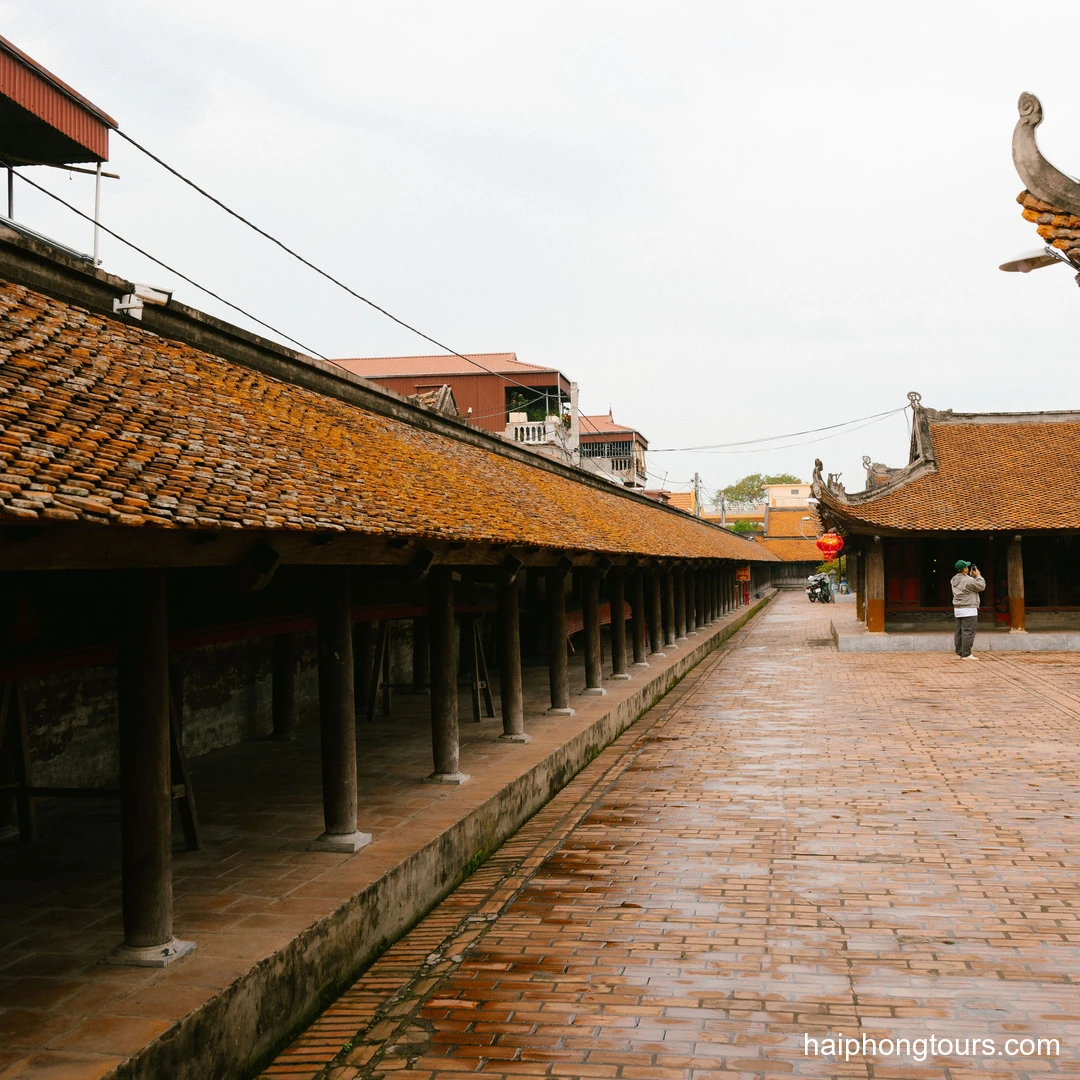
Alongside the covered dragon shrine, look for the memorial hall, its timber structure and the stone chime among the compound’s older objects. Enter the pagoda’s public worship spaces only when open. Let ceremonies determine where you stand, and ask before photographing an altar or approaching the sculpture closely.

If the shrine is closed, ask locally whether access can be arranged during your visit. Allow for a short wait without assuming that every room will open on request. When the sculpture is your main reason for coming, establish access before beginning the rest of your circuit. Leave carvings, inscriptions and ritual objects untouched.
Give the visit a useful place in your itinerary
For a day about education and public memory, combine the temple with Bac Ninh Temple of Literature. The latter’s scholar steles provide a broader regional perspective, while Bao Thap focuses attention on one person’s reputation. Have the driver plan the order from your actual starting point.

If your interests are more material than biographical, an arranged visit to Dai Bai’s metalworking workshops can provide a different kind of encounter with religious objects and craftsmanship. Confirm the receiving artisan first and fit the temple around that appointment. Agree a return pickup and leave time for lunch rather than filling the day with additional unplanned stops.
Would you like help fitting this experience into your trip? Contact us with your travel dates, starting point, available time and group size. Tell us about walking limits or special interests so we can suggest a practical itinerary.