
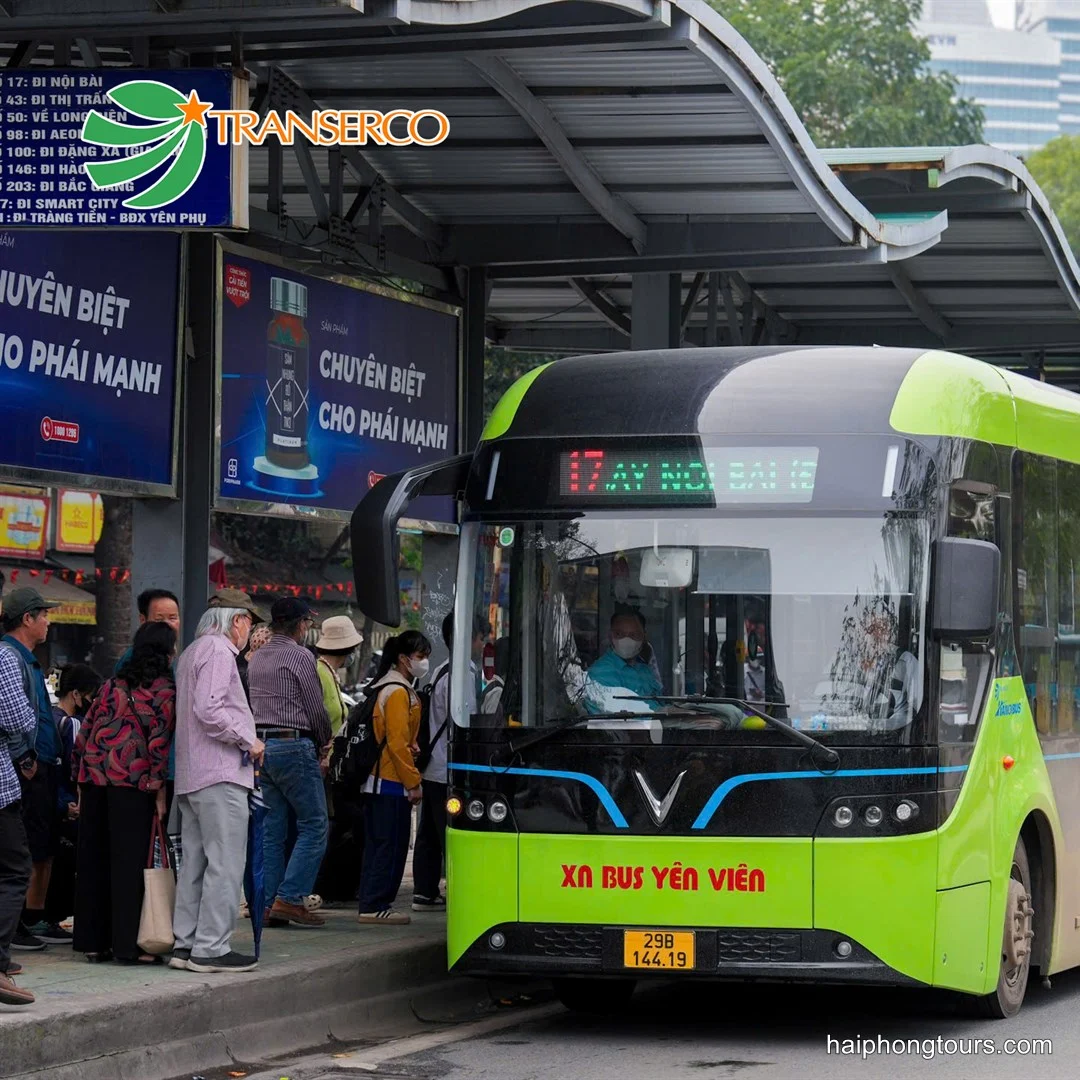
Bus 17 is the direct public-bus option from the Long Bien transport area to Noi Bai Airport. From Long Bien Railway Station, you must first leave the station and reach the nearby Long Bien bus interchange; a taxi or ride-hailing car is the simpler choice when you have heavy luggage, limited mobility or a flight with little delay tolerance.
Check the station name before planning the connection. Long Bien Railway Station is at Gam Cau in Dong Xuan, on the Old Quarter side of the Red River; it is not a station in Long Bien district. Hanoi Railway Station on Le Duan and Gia Lam Railway Station are different places with different airport connections.
Long Bien station to Noi Bai at a glance
- Lowest-complexity public transport: Bus 17 from the Long Bien interchange to Noi Bai Airport.
- Best with luggage or a tight flight: a direct taxi or app-based car from the station exit.
- Important station check: your rail ticket must show Long Bien, not Hanoi or Gia Lam.
- Current route status: Transerco retained route 17 as Long Bien-Noi Bai and introduced electric buses on the route in April 2026.
- No protected connection: a late train does not require the bus operator or airline to hold your departure.
First confirm that you are at Long Bien Railway Station
Vietnam Railways lists Long Bien station at Gam Cau, Dong Xuan, Hoan Kiem. The station sits above the streets near the western end of Long Bien Bridge and has more limited passenger space than Hanoi’s main station.
Do not search only for “Long Bien” and accept a pin across the river. Show your driver or map app Ga Long Bien, Gam Cau, Dong Xuan. If your ticket shows Ga Ha Noi, use the separate Hanoi Railway Station to Noi Bai Airport Bus 86 guide instead.
Option 1: Bus 17 from Long Bien to Noi Bai
Route 17 links Long Bien and Noi Bai directly. Transerco’s April 2026 operating update confirms that the route uses medium-size electric buses and has a service target of 160 route trips per day. That figure is a network operating target, not a promise that a bus will leave immediately after your train arrives.
How to make the transfer
- Leave Long Bien Railway Station with all luggage and follow the street exit toward the Long Bien public-transport interchange.
- Use the signed pedestrian route and crossings rather than walking in the traffic lane below the railway structure.
- At the interchange, look for route number 17 and confirm that the front display says Noi Bai.
- Tell the conductor which terminal you need before paying or settling into a seat.
- At the airport, follow terminal signs and allow extra time if the bus stop is not beside your airline’s check-in area.
The interchange and station are close within the same transport area, but they are not one enclosed terminal. Stairs, busy pavements, weather and road crossings can make this short transfer awkward with a large suitcase. Ask station staff for the safest current exit if construction or traffic control changes the pedestrian path.
Check the live departure, fare and terminal stop
Bus operating hours, fares and airport stopping arrangements can change. Check Transerco’s live journey planner, the posted information at the interchange or the route display on the day you travel. Do not rely on an old screenshot for the last departure.
Noi Bai has domestic Terminal 1 and international Terminal 2. Route information may use only “Noi Bai” even when the physical stop is closer to one terminal. Confirm the terminal printed on your flight booking and ask whether you need an additional airport transfer between stops.

Who should use Bus 17
Bus 17 suits a traveler with manageable luggage, a generous flight buffer and no problem walking from the rail station to the interchange. It is less suitable after a delayed train, near the final service of the day, or when stairs and crowded boarding create an accessibility problem.
Option 2: Taxi or ride-hailing car
A direct car removes the interchange and terminal uncertainty. This is usually the better decision for two or more travelers, several suitcases, young children, limited mobility or an early flight.

Set the pickup pin at the station exit where the driver can legally stop. Send a short message stating Long Bien Railway Station, Gam Cau, Dong Xuan; otherwise a driver may interpret “Long Bien” as the district on the opposite side of the river.
Before moving, confirm the airport terminal and whether the displayed or quoted amount includes road and airport charges. Use the app price or meter rather than accepting an unclear verbal fare. Keep the vehicle plate and driver details visible until the correct car arrives.
How much connection time to allow
Build the plan backward from your airline’s required check-in time, then add the ground journey and a separate contingency for a late train, walking out of the station, waiting for Bus 17 and Hanoi traffic. A train arrival shown on the timetable is not a safe airport departure time.
For Bus 17, leave enough margin to abandon the bus plan and take a car if the wait becomes too long. For a taxi, keep a traffic buffer even though the trip is direct. If missing the flight would be costly, an overnight stay near the airport or an earlier train is safer than a same-day connection with no recovery time.
Luggage and accessibility
Long Bien is a compact railway station with constrained access compared with a large terminal. Expect steps and a street-level transfer rather than a seamless platform-to-bus connection. Travelers who cannot carry their own bag on stairs should arrange help or choose a direct car.
Public buses are not dedicated airport luggage coaches. Keep bags out of the aisle, do not block doors and stay with valuables. Oversize luggage, bicycles and boxed items may be difficult to board when the bus is busy.
Common mistakes to avoid
- Using the wrong station: Long Bien, Hanoi and Gia Lam railway stations are separate.
- Assuming Bus 86 serves Long Bien station: Bus 86 is the direct airport route associated with Hanoi Railway Station on Le Duan.
- Searching for Long Bien district: the railway station is in Dong Xuan on the Old Quarter side of the river.
- Planning around the last bus without a backup: verify the live final departure and keep a car option.
- Ignoring the flight terminal: check T1 or T2 before boarding any vehicle.
- Treating a timetable arrival as guaranteed: rail and road delays are not protected connections.
A practical decision
Choose Bus 17 when your luggage is light, your flight buffer is generous and the live route information fits your arrival. Choose a direct car when timing, luggage or mobility matters more than the lowest fare.
Hai Phong Tours recommends saving the exact station exit and flight terminal on your phone before the train arrives. Recheck Bus 17 on the day of travel, and switch to a direct car early if a delay starts consuming your airport buffer.
Would a private transfer make this journey easier? Contact us with your travel date, exact pickup and drop-off, number of travelers and bags. Include any flight, train or cruise deadline so we can assess a suitable plan and quotation.