
Long Tien Pagoda is a worthwhile short cultural stop in Ha Long’s Hon Gai area, especially if you want to understand something of the city beyond its bay scenery. Allow roughly 30–60 minutes for the gate, courtyards and accessible worship halls, then continue to the nearby market or waterfront. This is an active religious site at the foot of Bai Tho Mountain, with steps between levels.
The main reasons to visit are its layered Buddhist and Vietnamese devotional traditions, Nguyen-style architecture, and an intricate nine-dragon carving that predates the pagoda’s 1941 construction. A visit here fits a relaxed city outing; reaching the pagoda does not provide permission to climb the mountain above it.
Where Long Tien Pagoda is and how to get there
Search for Chùa Long Tiên, Hạ Long and check that the pin is at the foot of Bai Tho Mountain, in the Long Tien–Le Quy Don street area. The current administrative address is Hong Gai Ward, Quang Ninh Province. Older directions may say Bach Dang Ward, Ha Long City; the pagoda has not moved.
If you are staying around Bai Chay’s hotels or Tuan Chau, arrange a road journey to the Hon Gai side rather than treating the temple as a short walk from your hotel. Show the Vietnamese name and map pin to your driver. Ha Long covers several distinct visitor areas; the Ha Long travel guide helps you group stops on the same side of the city.
From the surrounding Hon Gai streets, approach on foot where practical and agree on a recognizable pickup point if your driver is waiting. For a visit with suitcases, leave them with your accommodation or arrange a secure storage solution before entering the worship areas.

What to look for inside
The three-entrance gate and roof details
Pause at the tam quan, the gateway with three entrances. Look up for the seated Amitabha figure and the bell chamber below, then notice the upturned roof corners and decorative dragons. The words Long Tiên Tự identify the pagoda.
Use whichever side entrance is open and follow the attendants’ directions. Beyond the gate, the rooflines and timber structure reward a slower look. The building belongs to the twentieth century, but its decorative vocabulary continues older Vietnamese temple traditions.
Buddhist worship alongside Tran figures and Mother Goddesses
The complex includes Buddhist altars, worship of Tran Hung Dao and other Tran dynasty figures, and Mother Goddess worship. These different devotional spaces explain why you may see images that do not all resemble the Buddha. Give each occupied worship area room, and follow local guidance rather than assuming every altar follows the same ritual.
Long Tien forms part of the nationally listed Bai Tho heritage complex with the mountain and Duc Ong Temple. Duc Ong Temple is a separate site associated with Tran Quoc Nghien; visiting the pagoda alone does not mean you have visited every part of that complex.
The nine-dragon Cuu Long carving
One detail worth asking an attendant about is Tòa Cửu Long, also called Thích Ca sơ sinh: the infant Buddha surrounded by nine dragons. The jackfruit-wood composition stands about 1.2 meters tall and is associated with Le-period carving of the seventeenth to eighteenth centuries, considerably older than the present pagoda.
Look for the small standing Buddha within the larger arrangement, with one arm raised, and the dragon heads emerging among clouds and smaller figures. The nine dragons relate to the Buddhist story of the Buddha’s birth and bathing. The surface has been repainted over earlier lacquer and gilding, so its present gold color should not be mistaken for an untouched original finish.
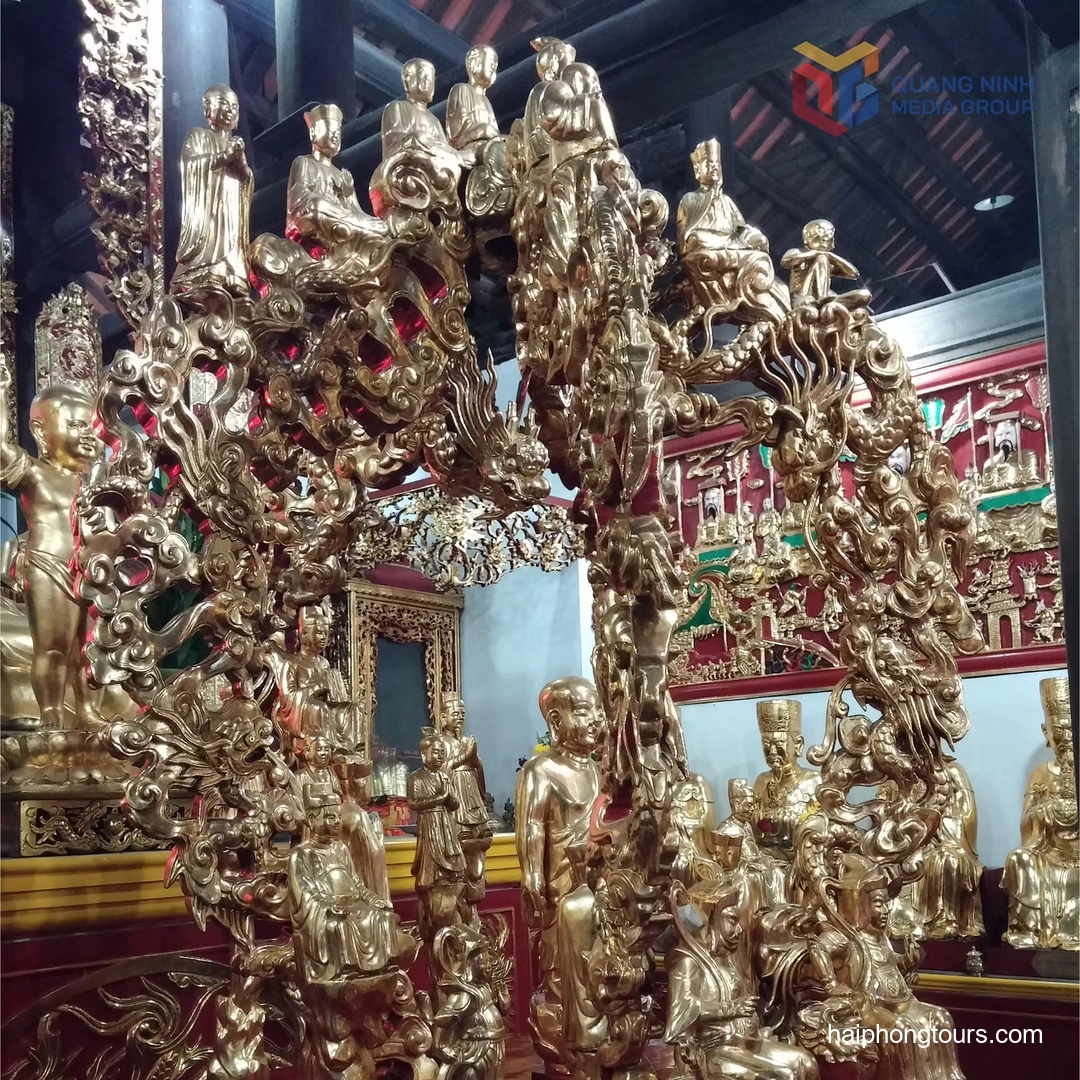 Detail of the Cuu Long carving at Long Tien Pagoda.
Ask where you may stand to see it without entering restricted altar space. Photograph it only if permitted, without flash or touching the woodwork.
Choose the visit you actually want
For architecture and a quiet look at the carvings, choose an ordinary daytime visit and keep your schedule flexible around worship. Morning is a useful planning choice if you also want to browse the surrounding market before lunch. Allow longer if a ceremony is taking place, or return later if the accessible space is crowded.
The traditional festival falls on the 24th day of the third lunar month, which is not March 24 on the international calendar. Check that year’s local program before arranging a journey specifically for processions or performances. Tet worship and Buddha’s Birthday celebrations are separate occasions; a festival description is not a promise of activities on an ordinary visit.
If you are coming solely to enter a particular hall or see the carving, have your accommodation check access that day. A gate being open does not guarantee every interior is available during your visit.
A manageable Hon Gai outing
Hai Phong Tours recommends pairing Long Tien with nearby Hon Gai street life rather than filling the same short outing with stops scattered across Ha Long. As a flexible plan, allow 30–60 minutes at the pagoda and another hour for Ha Long Market 1 and a waterfront pause. Add time for a meal, shopping or a slower walking pace.
At the market, browse the food and local products at your own pace; if buying fresh food to eat, agree on the portion and price before ordering. Keep the temple visit separate from eating and drinking, and finish refreshments before returning to a worship hall.
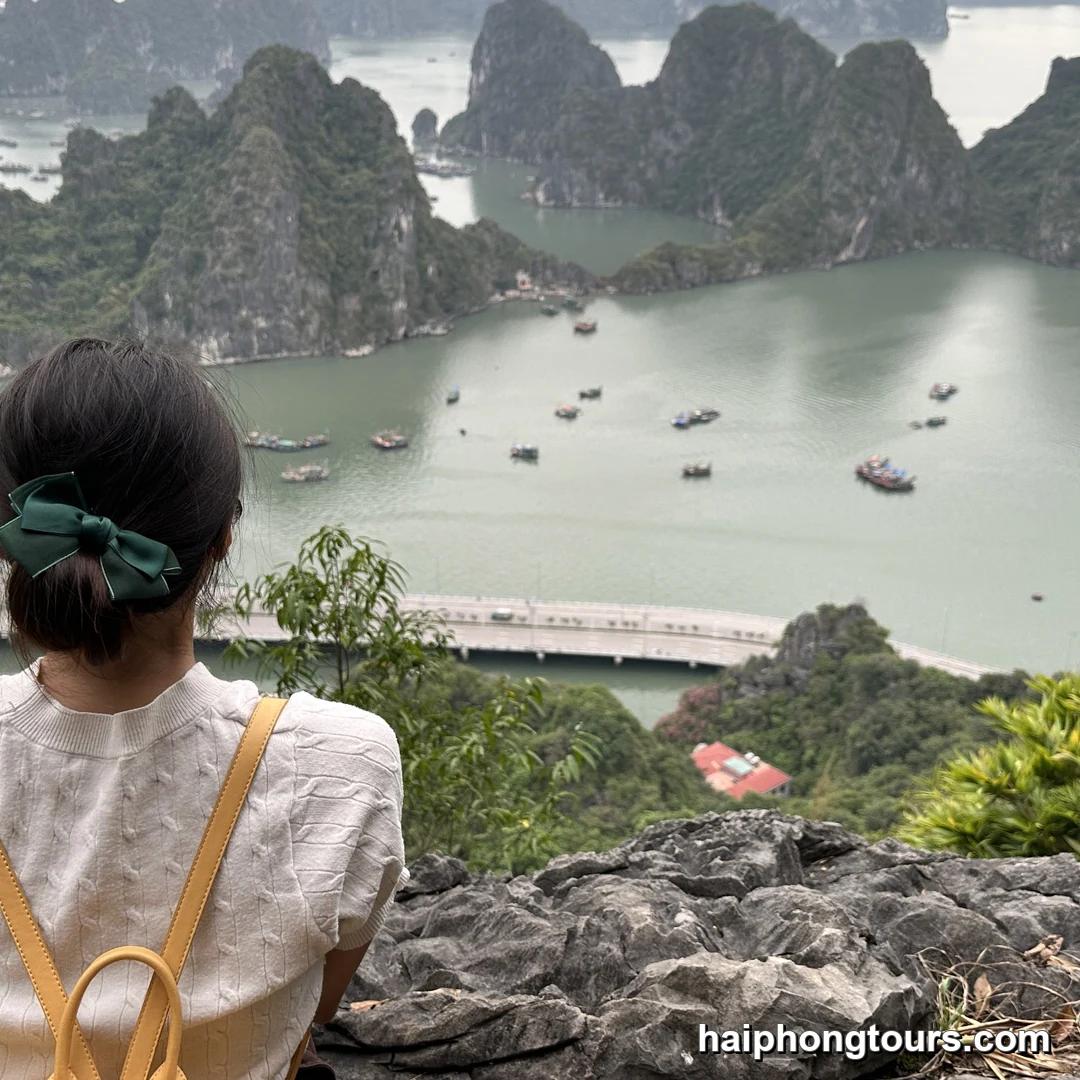
Bai Tho Mountain’s summit is a separate access decision. Read the Bai Tho Mountain access guide and confirm current official arrangements before planning a climb. The pagoda, market and waterfront can fill this outing without a summit attempt.
Dress, steps and photography
- Dress for worship: cover shoulders and knees, keep your voice low and follow any footwear instructions at each hall.
- Expect changes in level: the courtyards and halls have steps. If step-free access is essential, ask about the exact route before traveling; do not assume the entire complex is accessible.
- Keep ceremonies moving: avoid standing in front of worshippers, blocking doorways or arranging portraits around an occupied altar.
- Ask before indoor photographs: follow signs and attendants, avoid flash on the carvings and obtain permission before photographing people at prayer.
- Make offerings thoughtfully: ask an attendant where donations belong and follow the temple’s incense instructions rather than placing money or objects on statues.
Long Tien suits travelers who enjoy understanding a small place in detail. Bring the Vietnamese name, leave time for the surrounding neighborhood, and approach the halls as shared religious spaces where local worship takes priority.
Useful guides for your trip
Would you like help fitting this experience into your trip? Contact us with your travel dates, starting point, available time and group size. Tell us about walking limits or special interests so we can suggest a practical itinerary.