
Plan travel during perimenopause or menopause around the comfort requirements that matter to you: sleep, room temperature, toilet access, manageable transfers and familiar treatment. Choose fewer accommodation changes and keep one activity movable each day. A practical itinerary gives you room to respond to a poor night’s sleep without losing the rest of the trip.
Start with your symptoms and the actual journey
Experiences vary widely. Possible symptoms include changing periods, hot flushes, night sweats, sleep difficulties, concentration problems, vaginal discomfort and joint pain. You may have only a few of these, or hardly any. Use your own experience to decide which arrangements deserve attention.
If symptoms are affecting daily life or your bleeding pattern has become heavier, seek medical advice before a demanding itinerary. Bring the proposed travel days and any treatment you use to that discussion.
Then translate the important points into booking requests: a bathroom close to the bed, a vehicle with agreed stops, a day without repeated stairs or room access after an early arrival. You can communicate these requirements without sharing private medical details with every hotel or driver.
Make cooling and sleep part of the room booking
NHS guidance suggests lightweight clothing, a cool bedroom, a fan or cool shower and a regular sleep routine. Some people find spicy food, caffeine, hot drinks or alcohol aggravate hot flushes; use your known pattern when choosing meals.
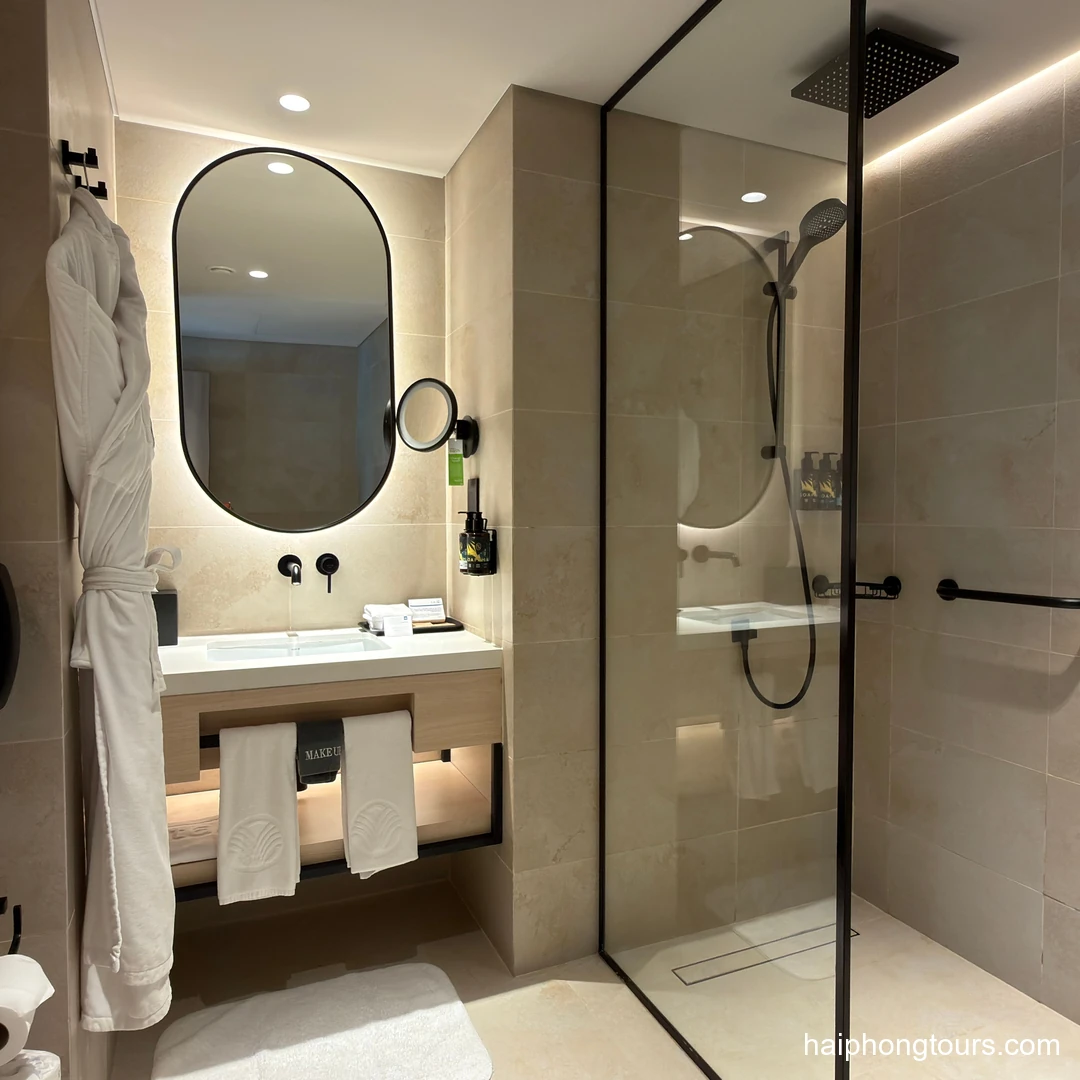
For the room, specify temperature controls you can operate yourself, bedding that can be adjusted and a location away from loud common areas. If you need the bathroom at night, review the route from the bed, including steps and lighting. A photograph of a large bathroom does not establish easy access.
Keep a clean top, small fan and the items you use for night sweats in your day bag until you have the room. On arrival, try the controls before unpacking. Schedule the first morning lightly after a late flight, and leave the next evening free if the previous night’s sleep was poor.
Build toilet stops and personal comfort into the day
Carry the menstrual or continence products you already trust, spare underwear, tissues and a discreet disposal bag. Keep this kit beside you during transfers. Before a long road or boat segment, establish where the next usable toilet will be and whether reaching it involves steps. The North Vietnam public-toilet guide helps plan facilities along the route.
Useful Vietnamese for a driver is “Xin dừng ở nơi có nhà vệ sinh”, meaning “Please stop somewhere with a toilet.” Agree that a stop may be needed before the journey starts.
Do not deliberately avoid drinking or repeatedly hold urine simply to remove stops from the schedule. For vaginal dryness, use products intended for that purpose rather than ordinary body lotion. NHS guidance advises avoiding perfumed washes and douches; persistent discomfort, unusual discharge or bleeding needs assessment. Pack a familiar suitable product instead of making an unfamiliar purchase under time pressure.
Allow movement during long journeys
Long periods sitting still can increase blood-clot risk during flights, road travel or train journeys. For most travelers the risk remains small, but previous clots, recent surgery and other personal factors matter. Move your legs regularly and take opportunities to walk when it is safe. Discuss additional precautions with your clinician if you have increased risk.
HRT type matters in that discussion. NICE distinguishes oral HRT, which increases venous blood-clot risk, from transdermal HRT, which does not increase that risk. This is not a reason to switch or stop treatment yourself before travel; have the clinician assess your own situation.
When arranging a private transfer, put rest stops into the journey plan. For a shared service, find out the planned breaks before buying. An aisle seat may make moving easier on suitable transport, but you should remain seated whenever the crew or road conditions require it.
Keep treatment arrangements specific to your prescription
Menopause care can include hormonal or non-hormonal options. The appropriate choice depends on your symptoms and medical circumstances. Travel planning should accommodate the treatment agreed with your clinician, rather than introduce a new regimen because a holiday is approaching.
Keep medicine labelled, bring the prescription and follow its storage instructions during transfers.
Before departure, resolve practical questions about your particular product: what happens if a dose is delayed, whether a patch needs special care when bathing and how to handle a time-zone change. Keep the manufacturer’s leaflet accessible. Use the instructions for your actual medicine rather than advice about a different patch, gel or tablet.
HRT is not contraception. If pregnancy remains possible, include contraception in the pre-travel discussion. For general medicine replacement and medical contacts in the capital, use the Hanoi medical and pharmacy guide.
Recognize changes that need medical attention
Bleeding after menopause needs assessment even if it happens only once or is a small amount. There are several possible causes, and it should not be dismissed as a consequence of travel. Tell the clinician about any HRT and when the bleeding started.
Seek emergency care for very heavy bleeding accompanied by faintness, chest pain or breathlessness. ACOG specifically flags soaking pads or tampons hourly for more than two hours with these symptoms; do not wait to meet that description if you are becoming seriously unwell.
Burning or painful urination should not automatically be attributed to menopause. Urinary symptoms with fever, shivering, blood in the urine or back pain below the ribs require urgent assessment. New unexplained limb swelling or pain also warrants prompt medical help; sudden breathlessness, chest pain or coughing blood is an emergency.
Record symptom timing and medicines already taken, and arrange help before continuing to a remote overnight stop. Keep your accommodation address and a working contact number available offline.
Give a one-week trip room to change
A simple first trip can use Hanoi and one second base, with a final buffer near the departure point. Choose the second base around your interests and tolerance for transfers. This example leaves the main sightseeing choice until you know how you have slept.
 Day Tour
Hanoi
Private Hanoi City Tour: Full-Day Highlights
 Day Tour
Hanoi
Hanoi City Group Tour
| Days | Suggested rhythm | Arrangement that helps |
|---|---|---|
| 1–3 | One Hanoi hotel, with one main outing each day. | Keep lunch and an optional afternoon break within an easy return journey. |
| 4 | Transfer to a second base such as Ninh Binh. | Agree toilet and movement breaks; keep arrival sightseeing optional. |
| 5–6 | A chosen visit on the day that suits your energy and conditions. | Use a shorter route or a rest morning when needed. |
| 7 | Buffer before the next long journey. | Prepare medicines and personal supplies without another full sightseeing day. |
The guide to North Vietnam without hiking helps distinguish an outing from its optional climb. Keep only the active booking details on one daily note so changes do not require searching through many messages.
Know where to ask for help in Hanoi
Hanoi French Hospital’s Obstetrics and Gynecology department lists care for perimenopausal disorders, menstrual problems and uterine bleeding. Contact the booking team for the relevant clinic and appointment availability; an emergency department’s opening hours do not establish a routine specialist’s schedule.
Hanoi French Hospital: 1 Phuong Mai Street, Kim Lien, Hanoi. Appointments: 024 3577 1100. Emergency service, 24/7: 024 3574 1111.
For a consultation, prepare a short account of the symptoms, your current treatment and the trip’s next destinations. Explain if you are due to travel somewhere with limited access to follow-up, so the clinician can factor that into advice. Do not put off urgent symptoms to preserve a booking.
For help arranging a shorter private itinerary, fewer hotel moves and transfers with planned stops, contact Hai Phong Tours with your dates and practical requirements. Specify the room access, walking or toilet arrangements that would make the trip comfortable for you.