
Moc Chau is best as a two- or three-night plateau trip from Hanoi, with one nature area, one agricultural landscape and enough time for seasonal conditions. It is not only a blossom destination. Tea fields, villages, waterfalls, caves and cooler highland weather give the trip value in several parts of the year.
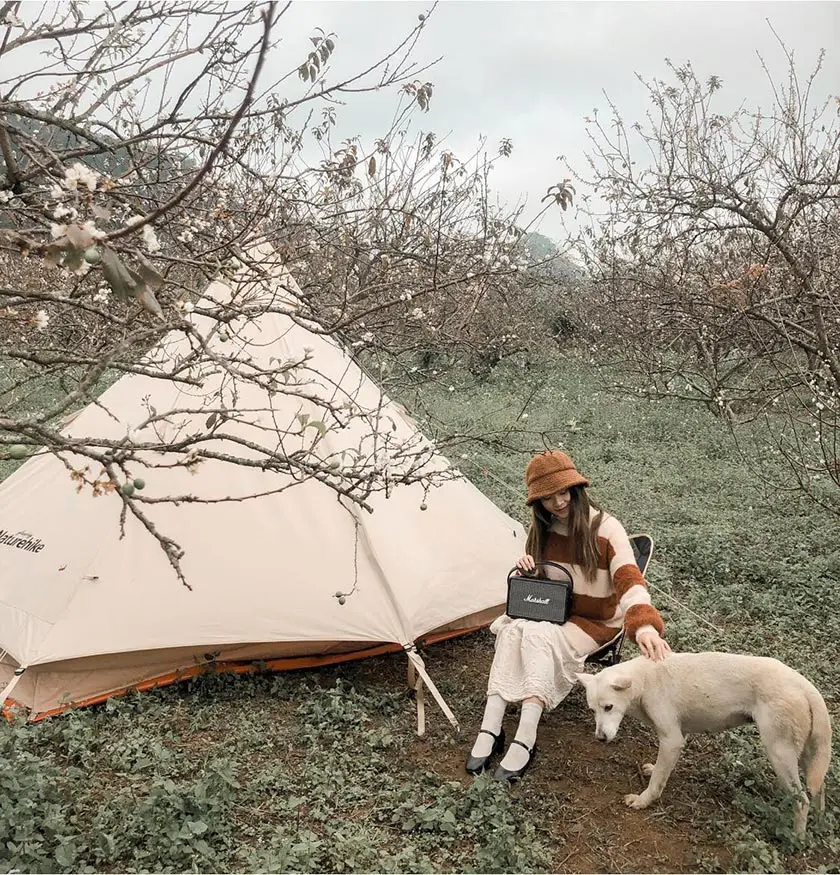
For a first visit, base yourself near central Moc Chau or Ban Ang, then choose between Dai Yem Waterfall, a tea-growing area and a confirmed orchard. Add a commercial attraction such as Moc Chau Island only if its facilities suit your group; it is not required to understand the plateau.
Moc Chau at a glance
- Best for: a short mountain break, agricultural landscapes, flowers, tea, waterfalls and family road trips.
- Distance: roughly 200 kilometers by road from Hanoi.
- Allow: three days and two nights for a balanced first trip.
- Main bases: central Moc Chau for convenience, Ban Ang for village and pine-forest access, or an orchard stay for a specific seasonal trip.
- Best-known areas: Ban Ang, Dai Yem, Na Ka, Mu Nau, tea hills and Moc Chau Island.
- Main limitation: attractions are spread across the plateau, and blossom, fruit, waterfall and field conditions change by season.
Why visit Moc Chau?
Moc Chau sits on a broad plateau more than 1,000 meters above sea level in Son La Province. Its elevation creates cooler conditions than the Red River Delta and supports tea, dairy farming, fruit orchards and mountain vegetation.
The area was formally recognized as Moc Chau National Tourist Area in 2024. That designation covers a wider tourism region rather than one ticketed park. Villages, farms, waterfalls, hotels and private attractions operate under different access and pricing arrangements.
Moc Chau’s strength is variety within a relatively manageable journey from Hanoi. Its weakness is the temptation to collect map pins. A well-planned trip connects three or four places in the same direction and leaves room for weather and current farm access.
Who should choose Moc Chau?
Choose Moc Chau if you want a northern mountain landscape without committing to the longer journeys required for Ha Giang, Cao Bang or Mu Cang Chai. It suits couples, families, small groups and travelers who prefer short walks to a multi-day trek.
It is less suitable if you expect the dramatic high passes of the far north or a single old town that can be explored entirely on foot. The plateau is dispersed, and a vehicle is useful for almost every itinerary.
How many days do you need?
Two days and one night
This works for a focused weekend from Hanoi. Choose Ban Ang and one nearby attraction, or build the trip around one confirmed blossom valley. Expect a long transfer on each day and little margin for traffic or weather.
Three days and two nights
This is the best first visit. You can use one day for the plateau’s central attractions, one for tea or orchards and still keep the arrival and departure realistic.
Four days and three nights
Add a night if you want a slower village stay, an advanced hike, or a connection with nearby Van Ho or Mai Chau. The extra day should reduce driving rather than add distant attractions in opposite directions.
For a trip built around riding, compare the Moc Chau cycling formats before choosing a sightseeing base. Decide whether you want a plateau stay or a journey through several destinations.
For a hosted stay in the Van Ho area, the Chiềng Yên and Tạt Nàng village guide explains Bướt forest outings, Phụ Mẫu hot-spring stays and the narrow final approach. Reserve a separate night or local day instead of treating these villages as quick plateau photo stops.
A realistic three-day itinerary
Day 1: Hanoi to Moc Chau and Ban Ang
Leave Hanoi in the morning and treat the transfer as half a day. Stop only at safe pull-offs and reach the plateau with daylight. Check in, then use the afternoon for Ban Ang village and the pine-forest lake area.
Ban Ang is convenient for a gentle first walk, but individual activities, vehicle entry and lakeside development can change. Ask your accommodation which entrance currently works best.
Day 2: waterfall, cave and one agricultural area
Visit Dai Yem Waterfall when water level and weather make it worthwhile. Continue to Son Moc Huong Cave, also called Bat Cave, if everyone is comfortable with steps and damp surfaces.
Use the second half of the day for either a tea-growing area or a confirmed orchard. Do not schedule Na Ka, Mu Nau and several tea hills simply because they appear as separate pins. Travel time, narrow farm roads and photography stops add up.
Day 3: seasonal landscape and return
Use the morning for the landscape most important to your trip: blossoms, fruit, tea or a village route. Begin the return early enough to avoid turning the final mountain section into a night drive.
If you want a Hmong farming-valley outing, the Hang Tau village guide explains the rough final approach, local transport and a realistic half-day. Keep this visit flexible after rain and confirm your return before entering the valley.
If heavy rain affects a waterfall or farm road, replace it with a lower-risk central stop. Seasonal attractions should remain interchangeable until conditions are confirmed.
Best time to visit Moc Chau
Winter and early spring: blossoms
Plum, peach and other flowers are associated with winter and early spring, but bloom dates move with temperature. Different valleys can flower at different times, and wind or rain can shorten the best period.
Our detailed Moc Chau plum blossom season guide explains the difference between Na Ka, Mu Nau and easier alternatives, and why current orchard photographs matter more than last year’s calendar.
Cold spells, mist and light rain are possible. Confirm heating and hot water if you book a rural homestay.
Spring and early summer: fruit and stronger waterfalls
Plum harvest experiences are generally associated with spring and early summer. Fruit availability, picking rules and admission are set by individual orchards. A blossom trip and a ripe-fruit trip do not happen at the same time.
Waterfalls usually become stronger as rainfall increases, but heavy rain can make paths slippery and swimming unsafe. Water level should guide the plan more than a promotional season label.
Summer: green plateau
Summer brings green fields and a cooler setting than Hanoi, but midday sun and humidity can still be strong. Showers and storms may affect farm tracks, caves and exposed viewpoints.
Tea landscapes remain visually useful because cultivation and harvesting create changing textures across the fields. Ask before walking between rows; a tea hill is working farmland.
Autumn: clear road-trip weather and agricultural scenery
Autumn can provide comfortable road-trip conditions and open views. Flower fields promoted by individual attractions may appear, but planted displays and dates change. Verify the exact site rather than treating “Moc Chau flower season” as one natural event across the plateau.
The Ta Phinh seasonal lake guide explains when a local boat outing fits the trip and why current water conditions matter.
For an autumn fruit outing, the Moc Chau persimmon guide explains the difference between picking crisp fruit and visiting an orchard for photographs.
For a specific planted garden, the Loi Tuoi Farm guide explains the Van Son location, seasonal mustard flowers and how to arrange a visit. Check the current planting before adding it to your route; the garden and the plum-blossom valleys have different growing cycles.
Ban Ang village and pine forest
Ban Ang combines Thai community life with a lake, pine trees and tourism services. It is one of the easiest areas to include on arrival day because it sits close to central accommodation and does not require a long remote drive.
Some parts feel like a working village, while others have developed around recreation and visitor facilities. Ask whether a homestay experience includes meals, cultural activities or only a room. Do not assume residents in traditional houses are open to unarranged visits.
The lakeside can suit families and gentle walkers, but surfaces, traffic and activity rules vary. Check bicycle, electric-cart, horse-riding or other offers on the day and assess the operator before paying.
The Ban Ang Pine Forest visitor guide separates the Phoenix lake-and-recreation grounds from village craft visits, explains walking and cart choices, and covers the production-only restriction at Chimi Farm 1.
Dai Yem Waterfall
Dai Yem is a multi-level waterfall and one of Moc Chau’s best-known natural stops. Flow is generally stronger in the wetter months and weaker during dry periods. The sound and spray can be impressive at high water, but that is also when rocks and steps become more slippery.
Admission, bridge access and swimming restrictions can change. Follow signs and staff instructions; do not enter pools simply because an old travel article describes swimming. Keep children away from unprotected edges and fast water.
If recent rain has made access unsafe, view the falls only from managed areas or choose another stop. A waterfall visit is optional, not a reason to ignore a closure.
The Dai Yem Waterfall and Love Bridge visitor guide explains the walking route, ticket choices, Thai craft stops and the distinction from Bach Long. Choose one nearby pairing rather than rushing through several distant plateau attractions.
For a more active waterfall outing toward Van Ho, the Nang Tien Waterfall guide explains the three-tier walk, access from the parking area and optional arranged SUP activity. Use the Na Cha entrance pin: Nang Tien and the nearby seven-tier Chieng Khoa falls are different sites.
Son Moc Huong Cave
Son Moc Huong, commonly called Bat Cave, is a large limestone cave near central Moc Chau. Reaching the entrance involves a substantial flight of steps, and the interior can be damp or uneven.
Wear shoes with grip and use handrails where available. Cave lighting, open sections and admission arrangements may change. Do not touch formations or leave the marked visitor route.
The cave is a practical bad-weather alternative only when authorities keep it open. Heavy rain can affect underground spaces, so a rainy day does not automatically make every cave safe.
For a choice between the town-side staircase and a longer forest outing, the Moc Chau cave comparison explains Son Moc Huong and Ngu Dong Ban On, including timing, walking demands and guiding.
Tea hills
Tea is one of the plateau’s defining agricultural landscapes. Different plantations and viewpoints are promoted under names such as heart-shaped tea hills, but ownership, access roads and visitor arrangements vary.
Before driving to a pin, confirm the current entrance and whether visitors may walk among the rows. Keep off young plants, leave equipment clear of workers and do not photograph people at close range without permission.
A tea-processing or tasting visit can add more context than another viewpoint. Ask whether the facility is operating that day and what language is available.
Plum valleys and orchards
Na Ka is the clearest first choice for a broad plum-growing landscape. Mu Nau offers a higher and more rugged setting, with access that can be difficult in poor weather. Smaller orchards around the plateau may have better flowers or fruit on your date.
Do not enter an orchard without permission. Ask for the entrance, current condition, fee, parking location and whether fruit picking is included. If a property sends a recent image, check when and where it was taken.
Orchards are working farms. Stay on indicated paths, do not break branches and pay for picked fruit under the farm’s current rules.
Moc Chau Island and Bach Long glass bridge
Moc Chau Island is a developed tourism complex with Bach Long glass bridge, landscaped areas, activities, food and accommodation. It can be useful for families who want organized facilities or for travelers specifically interested in the bridge.
It is a commercial attraction rather than the whole Moc Chau experience. Ticket types, operating hours, weather closures, footwear rules and activity limits can change. Check the official operator on the day you plan to visit.
If the glass walk is a priority, the Bach Long Glass Bridge visit guide explains ticket choices, the cliffside route and planning for companions who prefer not to cross.
Travelers uncomfortable with height should not be pressured to cross. A tea hill, village route or orchard can provide a more locally grounded alternative.
Pha Luong and advanced outdoor routes
Pha Luong is a high trekking objective near the Vietnam–Laos border. It requires more preparation than a normal plateau walk. Border-area rules, local registration, trail access and guide requirements must be confirmed before departure.
Do not add Pha Luong to a two-night itinerary unless the trek is the main purpose. Use an experienced local organizer, carry original documents and ask what emergency support, food, water and weather cancellation terms are included.
The exposed rock ledge seen in many photographs is not a controlled studio platform. Wind, wet rock and crowd behavior can create serious risk. A photo is never a reason to move beyond the guide’s safe limit.
Where to stay
Central Moc Chau
Choose the central area for restaurants, shops, straightforward vehicle access and the broadest room selection. It is the easiest base for a first visit and for travelers who arrive late.
Ban Ang
Choose Ban Ang for a village setting close to the pine forest. Check whether the room is private, whether the bathroom is shared and how much evening noise comes from nearby tourism activity.
Orchard or farm stay
Choose a rural stay only when its exact location helps the seasonal plan. A property described as “in Moc Chau” can be far from restaurants and other attractions. Confirm road surface, parking, meals, heating, hot water and mobile coverage.
Do not book from a view photo alone. Ask whether the room itself faces the landscape and whether the visible crop will be in season.
Getting from Hanoi to Moc Chau
Coach or limousine
Shared road transport is usually the lowest-cost choice. Ask for the exact Hanoi pickup, Moc Chau drop-off, luggage allowance, rest stops and vehicle type. A town drop-off may still be many kilometers from an orchard or resort.
Arrange local taxis or a driver before arrival if the property is outside the center. Very early or late transfers can be difficult in rural areas.
Private car
A private car gives families and small groups the most control over stops and seasonal adjustments. Confirm whether the quote covers only Hanoi–Moc Chau or also includes sightseeing, driver waiting time, overnight expenses and the final return.
Send the actual attraction list before booking. Plateau driving can be much longer than a simple city transfer.
Motorcycle
The main route is popular with riders but includes mountain traffic, curves, fog and changing weather. Ride only with legally recognized licence documents, correct insurance and protective equipment.
A scooter rental does not remove the need for experience. Avoid night riding and reconsider remote farm roads after heavy rain.
Train
There is no train to Moc Chau. Rail does not offer a practical final approach; the destination is reached by road.
Food and dietary planning
Moc Chau is associated with fried veal, stream fish, dairy products, seasonal fruit and several dishes that may contain offal or strong local alcohol. Our Moc Chau food guide explains what to order, which items travel well and which ingredients to ask about.
Check menus before committing to an isolated stay, especially if you need vegetarian food, avoid pork or have allergies. “Local set menu” is not a complete ingredient description.
For milk and packaged gifts, inspect the producer, date, seal and storage condition. Do not assume every dairy product sold beside the road was made by the same local company.
Family travel and accessibility
Moc Chau works well for families when travel days are short and the vehicle has suitable child restraints. Ban Ang, tea viewpoints and organized attractions can be easier than advanced hikes or steep orchard tracks.
Travelers with limited mobility should verify every stop separately. Dai Yem and Bat Cave involve steps and damp surfaces, rural orchards can be muddy, and some “viewpoints” require a motorcycle or uphill walk.
A scenic car route, accessible tea stop and central hotel can still create a useful trip. Ask for exact walking distance, gradient, stairs and bathroom access rather than a general claim that a site is easy.
Road and weather safety
- Check the forecast and current road information before leaving Hanoi.
- Keep remote orchard and waterfall visits flexible after heavy rain.
- Travel in daylight and allow more time than a navigation estimate.
- Carry rain protection, a warm layer, cash and offline maps.
- Use established parking and avoid roadside photography on blind bends.
- Follow closures at waterfalls, caves, bridges and border routes.
Common planning mistakes
Using one “best season” for every attraction
Blossoms, ripe fruit, waterfall flow and tea landscapes have different timing. Decide which experience matters most.
Booking an orchard from last year’s photo
Ask for a current image from the exact property. Weather can move flowering and harvest dates.
Trying to visit every famous pin
Na Ka, Mu Nau, tea areas, Ban Ang and Dai Yem are not one compact walking zone. Group stops by direction.
Assuming every homestay has the same comfort
Confirm room privacy, bathroom, heating, hot water, meals and road access before paying.
Treating farms as public photo sets
Orchards and tea hills are workplaces. Use the entrance, pay the stated fee and follow farm rules.
Frequently asked questions
Is Moc Chau worth visiting without blossoms?
Yes. Tea fields, Ban Ang, caves, waterfalls and plateau scenery support a useful trip outside blossom season. Choose activities that match current weather.
Can Moc Chau be a day trip from Hanoi?
A long day is possible, but road time leaves little useful exploration. One night is the minimum; two nights provide a much better pace.
When are Moc Chau’s plum blossoms?
They commonly appear from winter into early spring, but the strongest week changes with weather and location. Verify current orchard conditions before travel.
Can you combine Moc Chau and Mai Chau?
Yes. They sit on the same broad northwest road corridor and offer different experiences: Moc Chau for the higher agricultural plateau, Mai Chau for a compact valley and village stay. Allow at least three or four nights for the combination.
Do you need a private car?
No, but shared transport only solves the intercity leg. You still need local taxis, a driver or an organized route to reach dispersed attractions.
Build the trip around one season
Choose the main reason for visiting, verify its current condition and book a base close enough to reduce daily driving. Add Ban Ang, one nature stop and one agricultural area around that decision.
Moc Chau is most rewarding when the plateau has room to breathe. Two or three carefully connected days provide more value than a rushed circuit of orchards, waterfalls and ticketed attractions.