
For a standard day trip or overnight cruise in Halong Bay, Bai Tu Long Bay or Lan Ha Bay, no vaccine is recommended solely because you are visiting the bay, and malaria tablets are not normally advised for the cruise route alone. You should still protect yourself from bites during the day and evening because dengue occurs in Vietnam, and mosquitoes or other small biting insects can be encountered on outdoor decks, at ports and during shore activities.
This guide assumes a short cruise using screened or air-conditioned accommodation. If the rest of your Vietnam trip includes remote rural or forested stays, long periods outdoors, animal contact, pregnancy or a medical condition that affects vaccination, arrange personalized travel-health advice ideally four to six weeks before departure. A later appointment is still worthwhile.
If you are still choosing a route, you can compare current day and overnight cruises across all three bays. Check the exact itinerary before deciding what to pack, because time at beaches, islands, villages and other onshore stops changes your exposure more than the name of the bay.

Quick answers for a bay cruise
- Should you bring insect repellent? Yes. Use it for daytime excursions as well as around dawn, dusk and evening.
- Do you normally need malaria tablets? No, not for a standard coastal bay cruise or day trip alone. Rural or forested extensions need a separate assessment.
- Is there a special Halong Bay vaccine? No. Vaccine decisions should cover your complete Vietnam itinerary and personal health history.
- What are dĩn? The word is often used loosely for tiny biting flies or midges rather than one precisely identified insect.
Where mosquitoes and other biting insects may occur
A well-screened, air-conditioned cabin reduces exposure, but it does not guarantee a bite-free trip. Conditions vary between vessels, and day boats may have mostly open seating. Outdoor decks, boarding areas, island paths, cave entrances, beaches, village visits, kayaking stops and land-based accommodation can all bring you closer to insects.
Do not limit bite prevention to the evening. Mosquito species that can spread dengue and Zika are active mainly during daylight hours, with activity often higher after sunrise and toward sunset. Other mosquitoes feed later in the evening or at night, so protection is useful whenever biting insects are present.
A mosquito net is usually unnecessary inside a properly screened or air-conditioned cabin. It becomes useful if you sleep in a homestay or other accommodation that is open to the outdoors. Confirm the room setup before bringing a net specifically for the cruise.
Sandflies, biting midges and dĩn
Travelers and local operators may use dĩn, “sandfly” or “no-see-um” for several kinds of very small biting flies or midges. The name does not reliably identify one species, and it is not possible to predict their presence at every swimming or kayaking stop.
These insects can be small enough to pass through ordinary mosquito screens. If you are sensitive to bites, cover exposed skin and choose a repellent whose label includes flies, biting flies, midges or no-see-ums. Do not assume that every product sold for mosquitoes works equally well against tiny biting flies.
Mosquito-borne disease risk on the three bays
Dengue
Dengue is endemic in Vietnam. Risk exists throughout the year and often increases during wetter months, but there is no reliable bay-specific rate that justifies calling a cruise route risk-free or assigning it a precise risk level. The practical response is consistent bite prevention, especially during daytime activities.
Zika and chikungunya
Vietnam has reported risk of both Zika and chikungunya. Bite prevention is the main protection. Zika deserves particular attention during pregnancy because it can affect an unborn baby and can also spread through sex. Travelers who are pregnant, have a pregnant partner or are planning pregnancy should obtain current advice before the trip, including any precautions needed after returning home.
Malaria
Malaria prevention tablets are not normally recommended for a standard cruise or day trip limited to these northern coastal bays and their usual ports. That advice should not be extended automatically to the rest of Vietnam. A remote rural or forested stay, particularly outside the coastal cruise route, can change the recommendation, so give a travel-health professional the complete itinerary.
Vaccines to review for your complete Vietnam trip
No vaccine is specific to Halong Bay, Bai Tu Long Bay or Lan Ha Bay. Ideally, review the following with a clinician four to six weeks before travel:
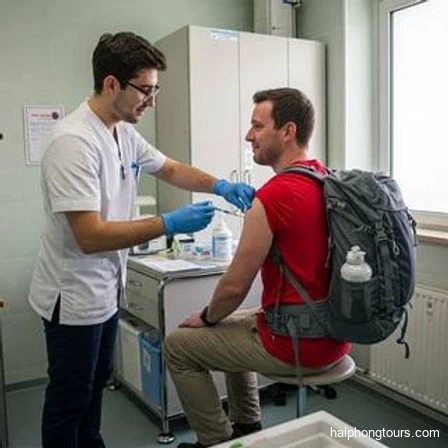
- Routine vaccines: make sure age-appropriate protection such as measles-mumps-rubella, diphtheria-tetanus-pertussis, polio, influenza, chickenpox and COVID-19 is current under your home-country schedule.
- Hepatitis A: recommended for previously unvaccinated travelers to Vietnam.
- Hepatitis B: recommended for unvaccinated travelers of all ages. Medical or dental care, sexual contact, tattoos, piercings and blood exposure can increase its relevance.
- Typhoid: commonly recommended for travel to Vietnam, particularly for longer trips, smaller cities, rural areas or places where food and water hygiene may be uncertain. Vaccination does not replace safe food and water habits.
- Japanese encephalitis: generally recommended for stays of a month or more or frequent travel, and considered for shorter trips with substantial rural outdoor exposure or accommodation without effective screens or air conditioning. It is not normally needed solely for a short, screened cruise.
- Rabies: consider pre-exposure vaccination if your activities involve animals, you will stay for an extended period or prompt treatment may be difficult to reach. Any mammal bite or scratch still needs urgent medical assessment, even if you were vaccinated before travel.
Dengue vaccination is not a routine first-trip vaccine for most visitors. Eligibility and availability vary, and some guidance considers it only for selected travelers with evidence of a previous dengue infection. Discuss it with a travel-medicine specialist rather than treating it as a standard cruise requirement.
How to prevent bites
- Pack repellent before boarding: choose a product registered by the relevant regulator with a proven active ingredient such as DEET, picaridin or icaridin, IR3535, oil of lemon eucalyptus or PMD, or 2-undecanone. Follow the product label.
- Use it at the right times: apply repellent for daytime shore activities and reapply as the label directs, including after swimming or heavy sweating when required.
- Apply sunscreen first: allow it to settle, then apply insect repellent as a separate product.
- Reduce exposed skin: loose long sleeves, long trousers, socks and closed shoes add protection around vegetation, at shore stops and in the evening.
- Check your sleeping space: keep doors and windows closed when air conditioning is running. Use a net if the accommodation is open to the outdoors.
- Use treated clothing correctly: permethrin-treated clothing can add protection during longer outdoor exposure, but permethrin must not be applied directly to skin.
Repellent directions can differ for babies, children and particular formulations. Follow the age restrictions on the label, and ask a pharmacist or clinician if you are pregnant, breastfeeding or choosing a product for a young child.

What to do after a bite or if you become ill
For an ordinary itchy bite, wash the area with soap and water, use a cool compress and avoid scratching. A pharmacist can advise whether an anti-itch treatment such as calamine, hydrocortisone or an oral antihistamine is suitable for you. Bring a familiar product if you already know that you react strongly to bites.
Seek urgent help for difficulty breathing or sudden swelling of the lips, mouth, tongue or throat. Get medical advice if redness, pain or swelling is worsening, the skin becomes hot, or pus develops.
Fever, severe headache, marked body aches, rash, unusual bleeding or persistent vomiting during or after the trip needs prompt medical assessment. Tell the clinician that you traveled in Vietnam and describe every place you visited. If dengue is possible, health authorities advise avoiding aspirin and ibuprofen until you have been assessed because they can increase bleeding risk.
For most cruise travelers, the practical plan is simple: review routine and Vietnam travel vaccines, pack a proven repellent, use it during both daytime and evening exposure, and check whether the wider itinerary adds rural, animal or pregnancy-related considerations. This is general planning information and does not replace advice based on your medical history.
Useful guides for your trip
- Lan Ha Bay Travel Guide: Cruises, Kayaking and Cat Ba
- Halong Attractions: Bay Cruises, Museum, Beaches and Parks
Need help choosing the cruise or coordinating the shore transfer? Contact us with your date, preferred route, group size and starting point. Tell us about any dietary, mobility or onward-connection needs before booking.