
Mu Cang Chai to Sapa is a long mountain-road journey, even though the two destinations look close on a regional map. Current direct bus listings usually show about four to six hours, but the complete trip can take longer when your Mu Cang Chai accommodation is outside town or your Sapa hotel is in Ta Van, Lao Chai or another valley village.
Choose a direct bus only after the seller confirms both ends of the trip. A private car is more practical when you are staying down a narrow village road, carrying large luggage, traveling with children or planning an exact arrival at a remote Sapa property.
Start with the actual Mu Cang Chai pickup
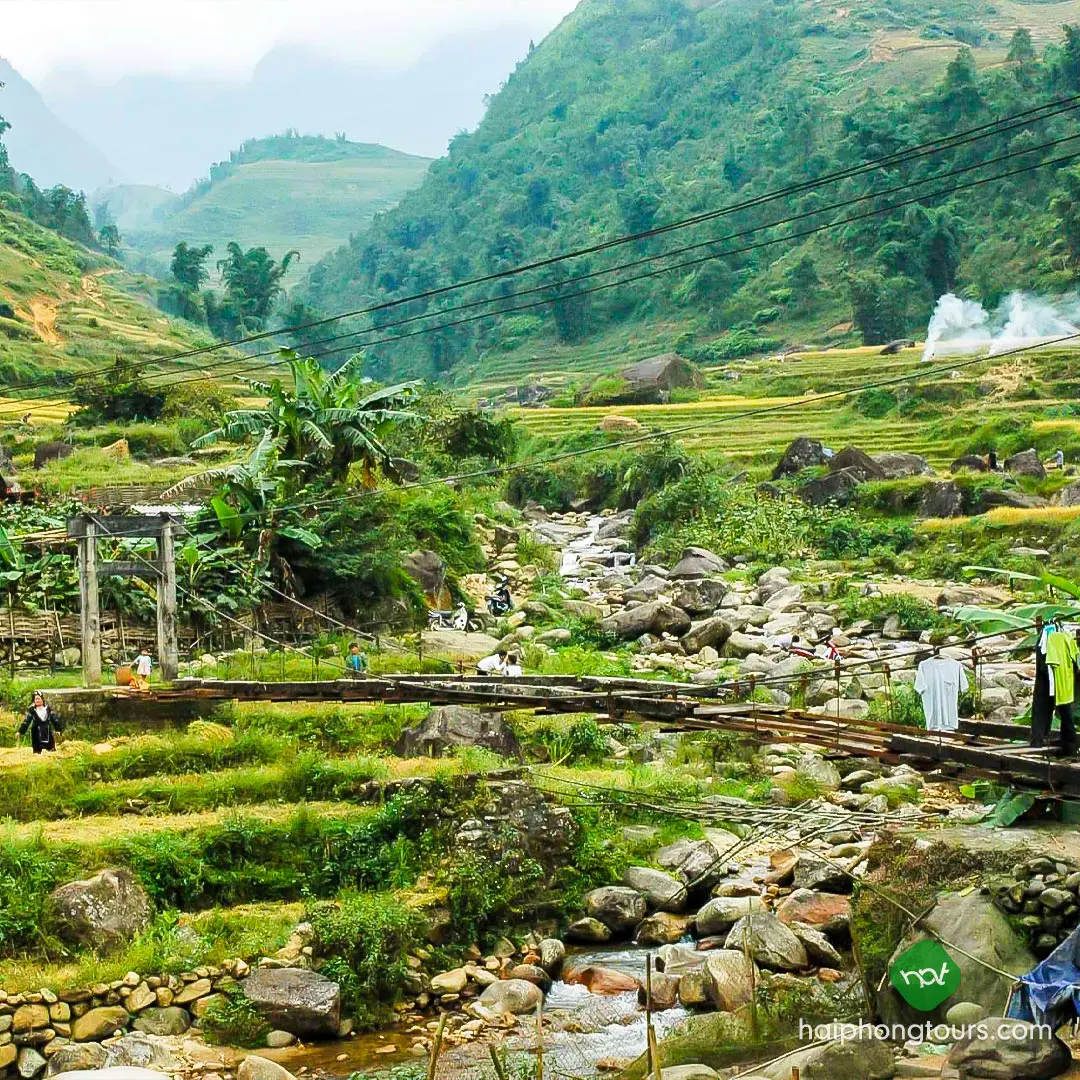
Mu Cang Chai Town, Tu Le, La Pan Tan, Che Cu Nha and a terrace-view homestay can be far apart in practical transport terms. Many coaches use the QL32 corridor or a town meeting point and do not enter steep or narrow village roads. A booking that says only “Mu Cang Chai” is incomplete.
Send the accommodation pin to the operator before choosing a departure. Ask whether the vehicle reaches the property, a feeder collects you, or the host must take you to the main road. If the last option applies, agree on the local vehicle, pickup time and luggage method with the host the previous day.
The Mu Cang Chai travel guide explains the difference between the town, Tu Le and the terrace villages. Use that geography when comparing tickets; the cheapest seat can become inconvenient if it requires a dawn motorcycle ride with a suitcase.
What a direct bus listing proves
Current booking inventories show a limited number of buses or shuttles sold from Mu Cang Chai toward Sapa, with broadly four-to-six-hour journey estimates. This confirms that a direct connection can be available. It does not guarantee daily operation from every village, a specific vehicle or a hotel-to-hotel journey.
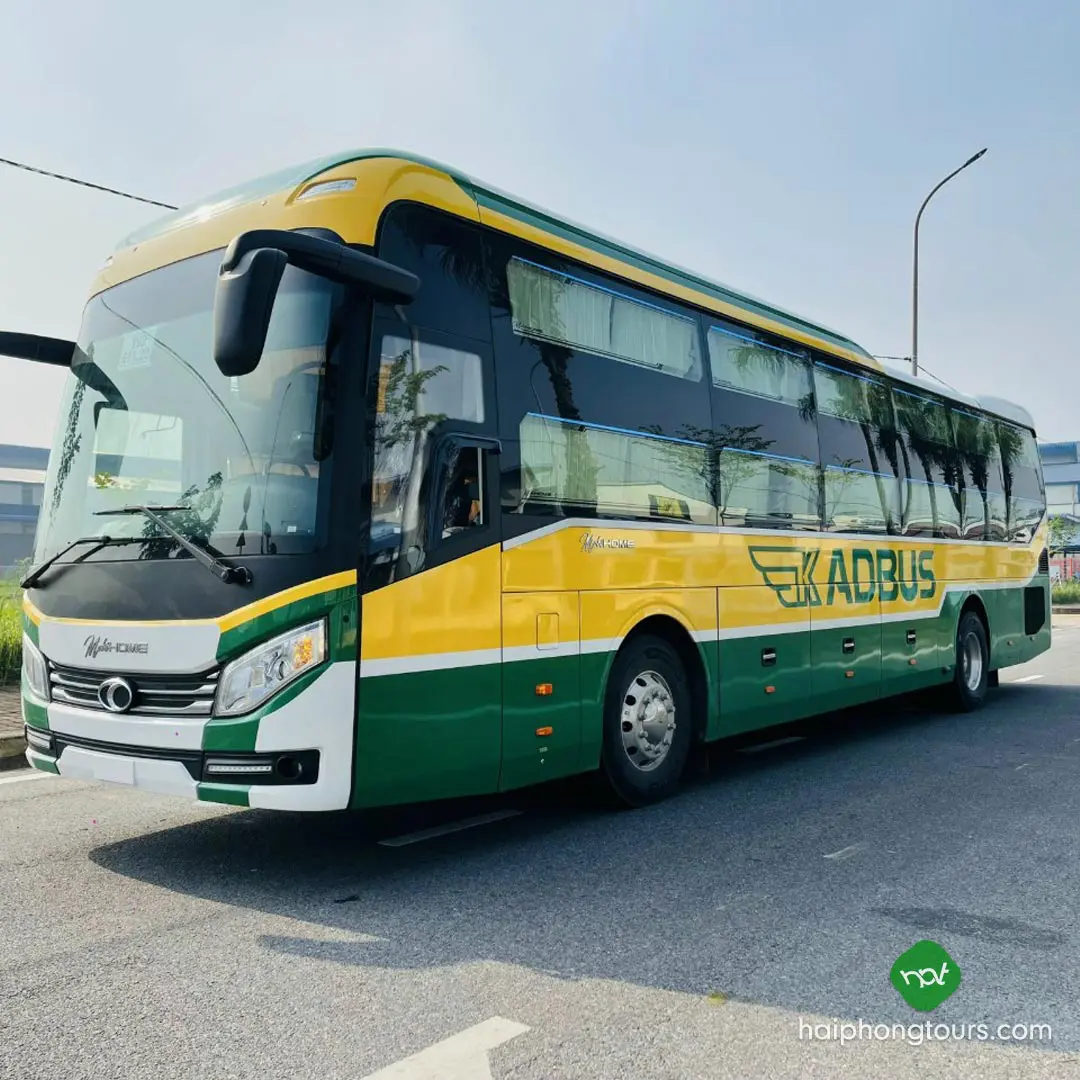
Ask for the operating company’s name, not only the marketplace. Confirm the date, reporting time, pickup pin, vehicle type and Sapa drop-off. “Limousine,” “shuttle” and “bus” are sales labels; they do not tell you whether you receive a normal seat, reclining seat or sleeper berth.
A direct service may still collect passengers at several points or move them between a feeder and the main vehicle. Ask whether you change vehicles and whether the connection is protected if the feeder is late.
Choose among three workable travel plans
Confirmed direct bus or shuttle
This is the lowest-effort public option when you can reach the stated pickup and the Sapa stop works for your hotel. It suits a solo traveler or couple with ordinary luggage and a flexible arrival. Build time for passenger collection, rest stops and mountain traffic rather than relying on the fastest displayed duration.
Private car
A private car is useful when the origin is a remote homestay, the destination is a valley property, or several travelers can share the cost. It also allows planned meal or photo stops. A private transfer is transportation, however, not an unlimited sightseeing day: agree in advance on the route, stops, waiting and final access road.
Connection through a regional hub
If no direct service operates on your date, a connection around Than Uyen or another regional point may be possible. This is a local transport fallback, not a simple guaranteed itinerary. Vehicle frequency, boarding points and onward seats can be difficult to confirm in English.
Use this plan only with daylight, light luggage and enough time to stay overnight if the second vehicle is missed. Ask the Mu Cang Chai host to verify the current local boarding point on the travel day. Do not assemble a tight same-day chain from old online schedules.
Understand the road to Sapa
The practical route runs across mountain districts toward Lai Chau province and approaches Sapa through the high pass area. Travel time changes with fog, heavy rain, road work, slow trucks and passenger stops. A map estimate based on continuous driving is not a coach timetable.
A scheduled coach normally does not stop at scenic viewpoints on request. If O Quy Ho Pass or a waterfall is part of your plan, book a private vehicle and agree on safe stops before departure. Roadside stopping can be unsuitable in fog or traffic, and an attraction detour may require additional time or entrance arrangements.

In wet weather, ask whether the vehicle can reach both accommodation entrances. Rural access roads can be more limiting than the main interprovincial road. If the host recommends meeting on the highway, clarify how you and the luggage will make that last section safely.
Sapa Town and Sapa valley villages are not one endpoint
Sapa Town is the normal transport hub. Many buses finish at an office, roadside stop or central station area. Ta Van, Lao Chai, Hau Thao and other villages lie outside the town and may require a separate taxi, local car or hotel pickup.
Send the destination pin before you travel and ask whether the road reaches the reception entrance. Some properties use “Sapa” in their name while being well outside town. If a local handover is needed, ask who meets you, where bags move between vehicles and what happens if the main bus is late.
Arriving after dark makes a valley transfer harder. A town hotel for the first night can be the better choice after a late bus, especially in fog or rain. Move to the village in daylight when the property cannot guarantee collection.
Seasonal planning for terrace country
Rice season, weekends and Vietnamese holidays can increase demand for both destinations. Book earlier when accommodation dates are fixed, but reconfirm close to departure because limited services can change their vehicle or pickup plan.
During heavy rain, allow more time and avoid placing a nonrefundable activity immediately after arrival. In cooler months, keep a warm layer accessible inside the vehicle; do not pack it under the bus. Motion-sensitive travelers should choose a forward-facing seat where possible, eat lightly and keep medication in the day bag.
Hai Phong Tours recommends treating the first Sapa evening as flexible. A delayed mountain journey is easier to absorb when dinner and hotel check-in are the only commitments.
Luggage, families and accessibility
Tell the operator about large suitcases, strollers or trekking equipment. A small feeder may have less luggage space than the main coach. Keep passports, money, electronics and medicine with you, and count bags at every vehicle change.
For a family, ask about seat belts, child seating and toilet stops before choosing the cheapest bus. Do not assume a child seat is supplied. Travelers with limited mobility should check the step height, ability to enter a sleeper berth and the walking surface at roadside pickup points.
A private vehicle can reduce transfers but does not automatically solve accessibility. Confirm that the luggage and any mobility equipment fit while all passenger seats remain usable, and send photographs or dimensions when necessary.
Send one complete booking request
“We are traveling from [Mu Cang Chai property and map pin] to [Sapa property and map pin] on [date], with [passengers] and [bags]. Please confirm the operating company, pickup point and time, any feeder, vehicle and seat type, journey estimate, every vehicle change, exact Sapa drop-off and the plan for our final hotel road.”
The best option is the one that completes both last-mile sections. A four-hour ticket between vague destination names is less useful than a slightly longer plan with confirmed pickups, safe luggage handling and a clear arrival.
Useful guides for your trip
Would a private transfer make this journey easier? Contact us with your travel date, exact pickup and drop-off, number of travelers and bags. Include any flight, train or cruise deadline so we can assess a suitable plan and quotation.