
Muong Hum Market is a Sunday-morning choice for travelers who want regional food, Red Dao silverwork and a working mountain market on the Sapa–Y Ty side of Lao Cai. Give the market an unhurried morning and arrange the road journey around it. It fits this western route more naturally than a detour to Bac Ha.
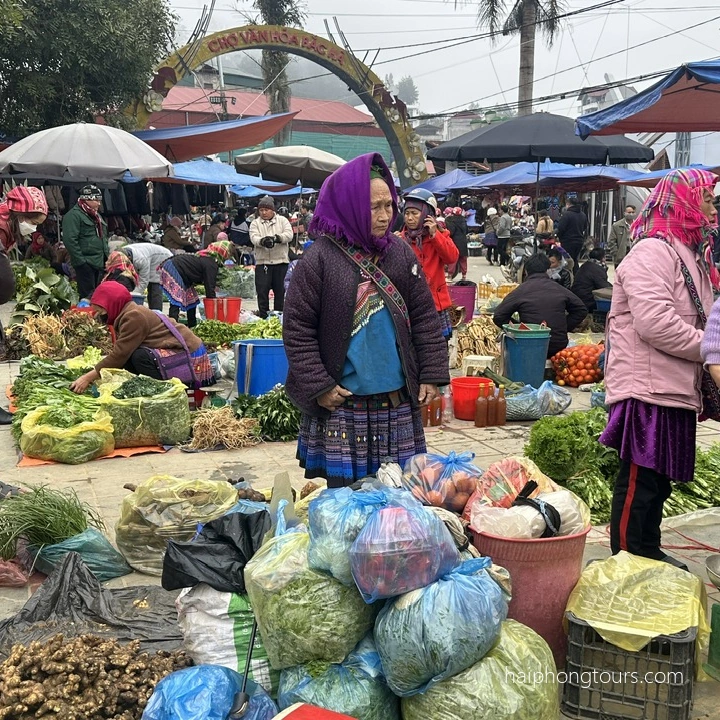
Use the full destination name, Chợ Mường Hum, xã Mường Hum, Lào Cai, when arranging transport. Older directions place it in Bat Xat district. The main weekly gathering is on Sunday; a weekday visit to the settlement will not reproduce the same trading and social occasion.
Choose the market that fits your route
Muong Hum sits in a mountain valley beside a stream. The weekly gathering brings together residents from surrounding communities, including Dao, Hmong, Ha Nhi and Giay people. Produce, food, clothing and silver jewelry give you several reasons to look beyond a quick photograph of the main aisle.
Choose Muong Hum if your plans already include Sapa or the road toward Y Ty and you can protect Sunday morning. Choose Bac Ha Market if you are building a stay around Bac Ha town, its palace and nearby villages. Both main markets fall on Sunday, so trying to collect both on the same morning sacrifices the useful part of each visit.
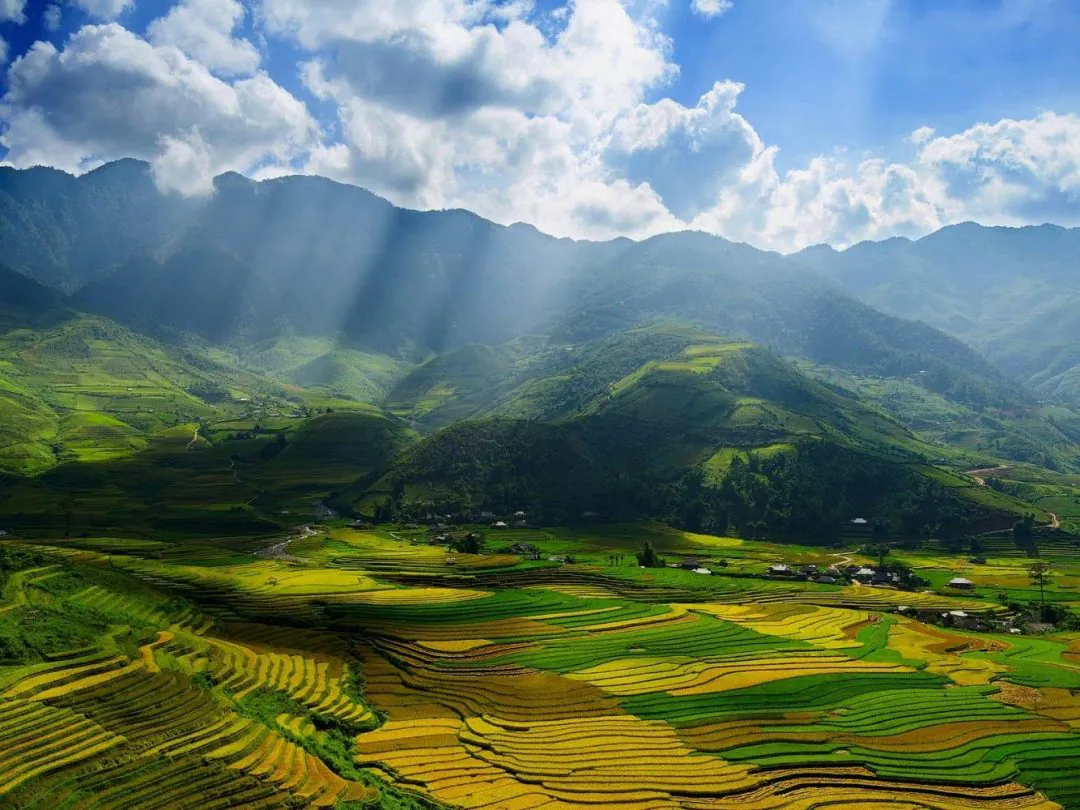
If you want only an easy evening browse after trekking, remain in Sapa. Muong Hum involves a separate mountain-road excursion. Its appeal is the combination of local trade and the journey through the surrounding area, not a promise of empty aisles or an absence of other visitors.
Spend the morning in three different parts of the market
Start with breakfast
Look for pho, local black-pig dishes and thang co. The latter can contain horse or pork meat and offal, so identify the particular pot before ordering. A dish name alone is not enough if you avoid a type of meat.
For a smaller breakfast, look for banh ran, banh chung gu or banh te. Giay vendors also sell banh phong, a lightly sweet rice-flour cake. Ask about the filling as well as the wrapper, and agree on the portion and price before sitting down.
A guide is useful here for more than navigation: they can distinguish the food in front of you, explain unfamiliar ingredients and help you order a small serving. You can enjoy the food area without accepting alcohol or eating something outside your comfort level.
Walk through the everyday trade
The produce stalls can include rice, corn, vegetables, honey and livestock-related trade. Look at what people are buying for their households rather than treating every stall as a souvenir opportunity. Seasonal availability changes the display.
Give sellers room to weigh, carry and load goods. A useful approach is to walk through once, then return to the food or craft section that interests you. If an aisle becomes congested, step aside before stopping to take a photograph.
Look closely at the silver
Silverwork has a strong local connection with the Red Dao community of Séo Pờ Hồ. Necklaces, bracelets, earrings and decorative buttons belong to a tradition of making jewelry and adornments for clothing. Small fittings can be as revealing as a large necklace: look at how they fasten and how the pattern is worked into the surface.
Separate appreciation from a purchase decision. Ask who made an item, what metal it contains, whether it is new or previously worn, and what the quoted price covers. A stall’s location does not authenticate every object on it. For an expensive purchase, obtain clear written details rather than relying on appearance or a casual verbal assurance.
If watching a silversmith work is your main interest, arrange a separate visit in Séo Pờ Hồ before traveling. Not every household works every day, and a craft village is not a public workshop with a continuous demonstration. Settle whether the visit is observation, a conversation through a guide or an actual practical session; these are different experiences.
Plan a market morning, then choose one onward direction
Return to Sapa
A return trip keeps the day focused. Leave Sapa early, aim to be at the market during the morning and allow roughly two hours there as a planning allowance. Add time if you want a relaxed meal or a prearranged craft visit.
The Sapa approach can pass the Ban Khoang and Ta Giang Phinh area. Mountain bends and stopping time matter more than a short-looking map distance. Agree on a return journey with waiting time, rather than buying a one-way drop-off and hoping to find the same transport afterward.
Continue toward Y Ty
Sapa O’Chau advertises a Sunday program combining Muong Hum Market with Y Ty, then continuing to Lao Cai, with a return to Sapa available by arrangement. It is a concrete option for travelers who want a driver and English-speaking guide. Ask for the itinerary and destination of your particular departure; do not assume that every booking finishes where it started.
Give your date, pickup place, intended endpoint and nationality. Clarify the current price, included meals, village visits and any procedures for the proposed border-area extension.
A brief Y Ty stop within a long road day is different from staying for terraces and village walks. Use the Y Ty travel guide if you want that slower trip. Arrange any required border-area access and accommodation registration for the exact route in advance; a market visit does not establish permission to continue to every border location.
Finish in Lao Cai
If you have an onward train or coach, specify the actual station or pickup point when booking the excursion. Market time, lunch, luggage collection and mountain-road delays all have to fit before that departure. Keep a substantial buffer and do not add a distant scenic stop merely because the road appears to form a loop.
For a simpler outing from Lao Cai, arrange a direct market visit and return. A driver can assess the suitable approach for the day. A route used from Sapa is not automatically the best route from Lao Cai.
Make the visit comfortable and respectful
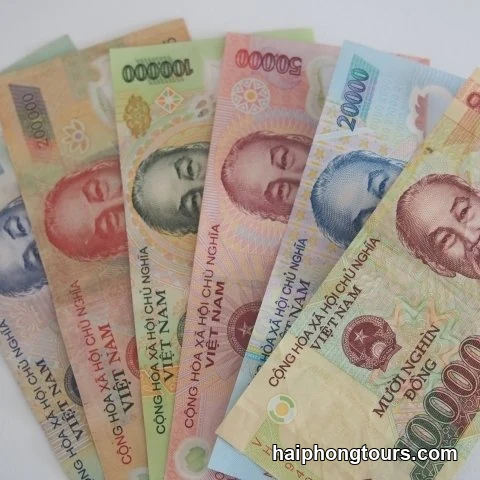
Wear shoes with grip and carry a warm or waterproof layer suitable for the morning forecast. Keep small Vietnamese-dong notes accessible for food and purchases. Crowded aisles and loading areas make a large stroller or bulky luggage awkward, so leave travel bags secured with your accommodation or agreed transport.
Ask before close portraits, particularly of children, and accept a refusal immediately. Clothing, jewelry and household shopping are parts of people’s lives. A purchase is not permission to keep photographing someone.
For limited mobility, arrange a drop-off near a suitable entrance and a shorter visit centered on one section. Do not assume the market has a continuous step-free route or that the vehicle can wait beside the busiest entrance.
After heavy rain or in dense fog, let current road conditions decide whether the excursion goes ahead. Protect the market morning by simplifying the rest of the day, not by asking a driver to recover lost time. For a broader itinerary, the North Vietnam markets guide helps you choose gatherings with different purposes and schedules.
Useful guides for your trip
Would you like help fitting this experience into your trip? Contact us with your travel dates, starting point, available time and group size. Tell us about walking limits or special interests so we can suggest a practical itinerary.