
Muslim travel in North Vietnam is easiest when Hanoi is the food and prayer anchor. The capital has established halal dining and Al-Noor Mosque in the Old Quarter area. Ha Long, Ninh Binh, Hai Phong, Sapa, Ha Giang and Cao Bang have fewer dependable choices, so meals should be confirmed in writing before leaving Hanoi.
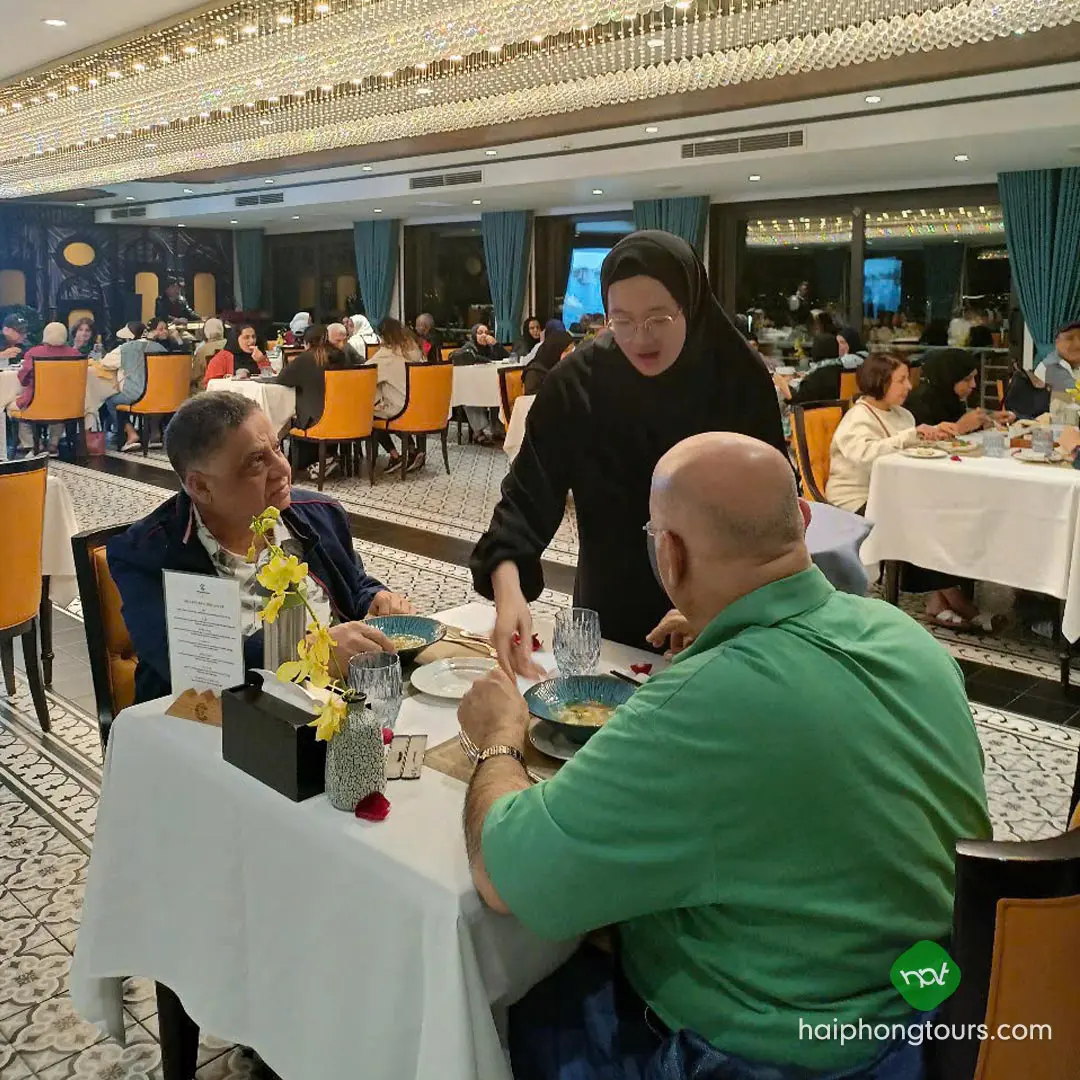
Do not treat “no pork,” “vegetarian” or “Muslim-friendly” as the same as halal certification. Ask who certified the kitchen, whether meat is halal, whether alcohol enters sauces and whether cookware or oil is shared. On cruises and remote routes, carry sealed backup food and give the operator a clear requirement before payment.
Quick planning decisions
- Best base: Hanoi, for the strongest combination of halal dining, a mosque and international hotels.
- Best route style: return to Hanoi between difficult regions or use a private vehicle carrying suitable food.
- Best proof for a restaurant: a current halal certificate whose issuing body and scope can be identified.
- Best fallback: sealed food with readable ingredients, plus simple plant-based dishes after checking alcohol and shared preparation.
- Best cruise approach: written confirmation from the actual vessel, including meat, kitchen separation and prayer arrangements.
- Most difficult destinations: remote mountain towns, homestays and multi-day road sections.
- Most important distinction: pork-free reduces one concern but does not establish halal sourcing or preparation.
Four food descriptions that mean different things
Halal-certified
A certified restaurant or product should be able to show a current certificate, the issuing organization, the certified business or kitchen and the covered period. Check that the name and address match the place where you are eating. A certificate displayed for one product or supplier may not cover the entire menu.
Muslim-owned or self-declared halal
A Muslim owner may provide valuable assurance and understand the questions, but ownership and formal certification are different evidence. Ask how meat is sourced and how the kitchen handles alcohol, pork and shared equipment. Travelers can then decide according to their own standard.
Muslim-friendly or halal-friendly
This can mean anything from pork-free options to a separate halal menu, prayer space or certified ingredients. The term has no useful meaning until the business explains the practice. Ask which dishes qualify and why.
Vegetarian or vegan
Plant-based food removes meat but may still include alcohol, ingredients of uncertain origin or shared cookware. It is a possible fallback for some travelers, not proof of halal preparation. The North Vietnam vegan and vegetarian guide helps identify animal-derived ingredients, but each traveler must apply their own halal requirements.
How to verify a halal restaurant
Restaurant status, ownership and certificates can change. Check close to the meal rather than saving an old list. Contact the venue through its current official channel and ask specific questions.
- Ask whether the whole kitchen is halal. If not, identify the separate menu, preparation area and utensils.
- Ask for certificate details. Check the name, address, issuing body, scope and validity.
- Ask about meat. Confirm the supplier or documented halal status.
- Ask about alcohol. Include cooking wine, marinades, sauces and desserts.
- Ask about shared preparation. Fryers, grills, pans, knives, chopping boards and serving utensils matter.
- Ask about advance booking. A halal meal may require notice even when the restaurant normally accepts walk-ins.
A confident but vague answer is weaker than a clear explanation. If staff cannot verify the kitchen, choose a product or venue whose ingredients and process you can assess.
Hanoi: the practical halal base
Hanoi has the north’s most useful concentration of halal-certified and Muslim-operated dining. International hotels and restaurants serving South Asian, Malaysian or Middle Eastern food may be easier to verify than a Vietnamese menu adapted only on request.
Choose accommodation within a manageable journey of the restaurant cluster or mosque that matters to you. Old Quarter traffic and pedestrian restrictions can lengthen short map distances, especially around weekend evenings. Confirm breakfast separately; a hotel near a halal restaurant does not mean its own kitchen is halal.
Use Hanoi to prepare for remote travel. Buy sealed food, write dietary instructions in Vietnamese and ask the next hotel or cruise to confirm meal arrangements while you still have alternatives.
Al-Noor Mosque in Hanoi
Al-Noor Mosque, also known as Masjid Al-Noor, is at 12 Hang Luoc Street in Hanoi’s Hoan Kiem District. Its official website describes it as the mosque serving northern Vietnam. Because access, prayer arrangements and community events can change, check the mosque’s current information before making a special journey.
Dress appropriately, keep the entrance clear and follow the congregation’s guidance on shoes, ablution and prayer areas. Friday and Ramadan arrangements may create different access or crowd patterns. Do not treat the mosque as a casual photo attraction during worship.
The location can help structure a Hanoi stay, but it does not solve prayer in every northern destination. Prepare for prayer in a clean private space when traveling beyond the capital.
Prayer on the road
Prayer times change by date and location. Save an offline method that uses the correct location and your preferred calculation settings. Mountain valleys, boats and poor mobile coverage make a fully online plan unreliable.
Ask hotels for a quiet, clean space and enough time before departure. A room, meeting room or discreet private area may be possible even when there is no labeled prayer room. Carry a compact prayer mat and a qibla tool that works offline.
On a day tour, tell the guide before the itinerary begins. A fixed cruise excursion, cave visit or long mountain stage cannot always stop at any moment. Agree on realistic windows and clean locations rather than raising the need after the group has departed.
Halal food on a Ha Long or Lan Ha cruise
A cruise prepares meals in a compact kitchen and may provision food before passengers board. Ask before booking, not at the port. Send the requirements to the cruise operator or booking agent and request a written reply tied to the actual ship and sailing.
- Is the meat halal-certified, and can the source be identified?
- Is pork stored or prepared in the same kitchen?
- Are cooking wine and alcohol-based sauces used?
- Can cookware, knives, boards, fryers and serving utensils be separated?
- Is a seafood or plant-based menu available if the halal process cannot be verified?
- Can sealed food be brought on board?
- Where can passengers pray privately, and what excursion times affect prayer?
“Seafood menu” still needs questions about sauce, stock, oil and shared surfaces. Personal interpretations of seafood differ, so state the requirement rather than asking the operator to decide the religious ruling.
Bai Tu Long is too far for a practical one-day Hai Phong Tours program. If the quieter Bai Tu Long route is the goal, allow at least a two-day, one-night cruise and confirm halal catering with the selected overnight vessel.
Ninh Binh
Ninh Binh’s tourism areas have growing international food options, but halal certification is less dependable than in Hanoi. A day trip can carry a pre-arranged lunch from a verified provider or use a restaurant confirmed specifically for the group.
For an overnight stay, choose accommodation with a refrigerator and staff willing to communicate with restaurants. Send meal requirements in advance and keep one sealed meal or substantial snack for a missed delivery.
Do not assume goat, chicken or beef is acceptable because pork is absent from the dish name. The meat source, broth, seasoning and cooking surface still require verification.
Hai Phong and Cat Ba
Hai Phong and Cat Ba offer abundant seafood, but a seafood restaurant is not automatically halal. Shared grills, fish sauce blends, cooking alcohol and pork dishes are common questions. A simple grilled or steamed item can be easier to discuss, but the kitchen process still matters.
Arrange meals through a hotel or known restaurant before a Cat Ba transfer. Ferry delays, island travel and seasonal restaurant operation make spontaneous searching harder. Carry sealed food on the travel day.
Sapa, Ha Giang and the northern mountains
Remote mountain routes have the least reliable halal infrastructure. Hotels may understand “no pork” without having certified meat or separate cookware. Homestays often prepare shared family meals in one kitchen.
Use vegetarian dishes only after checking stock, sauce, cooking wine and shared preparation. Plain rice, fruit, packaged nuts and sealed foods can provide a backup, but they may not form a complete multi-day diet. Plan adequate meals in advance.
A private car allows the group to carry food, stop at known shops and return to larger towns. On the Ha Giang Loop, confirm each overnight property because the next meal may be several hours away by mountain road.
Vietnamese dishes that need more questions
Phở
Beef or chicken in the name does not establish halal meat. Broth may be prepared from bones and seasonings whose source differs from the visible topping. Choose a verified halal kitchen rather than asking a general pho shop only to remove pork.
Bánh mì
Bread can contain ingredients that vary by bakery, while fillings may include pork, pâté, mayonnaise and sauces. Shared knives and preparation boards are common. A vegetarian filling does not resolve every concern.
Hotpot
Hotpot broth, meat, fish balls, sauces and shared utensils all need checking. Price and ingredient confusion also increase with a large group. A certified venue or a fully specified advance order is the practical choice.
Seafood
Ask how it is marinated and cooked. Grills, oil, pans and dipping sauces may be shared with pork or alcohol-containing recipes. Apply your own interpretation to shellfish and other seafood categories.
Vegetarian temple-style food
Vietnamese vegetarian food can avoid meat and fish, but restaurant practice varies. Ask about alcohol and shared cooking, and distinguish a plant-based menu from halal certification.
Ingredients that are easy to overlook
- Meat stock in soup, sauce, rice or vegetables
- Lard used for frying or pastry
- Pork floss, pâté, sausage or small minced toppings
- Cooking wine in marinades and stir-fries
- Gelatin in desserts, yoghurt or sweets
- Shared frying oil and grill surfaces
- Flavor packets or premixed sauces with unclear ingredients
- Unlabeled meat in skewers, dumplings and spring rolls
Fish sauce itself is a normal fermented seasoning, but prepared dipping sauces can contain additional ingredients. Ask about the completed sauce, not only its main name.
Useful Vietnamese food questions
- Tôi cần đồ ăn halal. I need halal food.
- Nhà hàng có chứng nhận halal không? Does the restaurant have halal certification?
- Tôi không ăn thịt lợn hoặc mỡ lợn. I do not eat pork or lard.
- Thịt này có chứng nhận halal không? Is this meat halal-certified?
- Món này có rượu không? Does this dish contain alcohol?
- Nước dùng nấu từ gì? What is the broth made from?
- Có dùng chung chảo, dao hoặc dầu chiên không? Are the pan, knife or frying oil shared?
- Xin cho xem thành phần. Please show me the ingredients.
Save the Vietnamese text with diacritics so staff can read it. A translated card is more reliable than pronunciation in a noisy restaurant. For cross-contact communication, the North Vietnam food allergy guide provides a useful question structure, although halal requirements are religious rather than an allergy.
Breakfast and hotels
A hotel buffet may place pork, eggs, noodles, fruit and bread on the same service line. Ask whether utensils, grills and pans are shared. Choose sealed products, whole fruit or food prepared separately when that meets your standard.
Send the request before arrival and ask the hotel to repeat what it can provide. “Muslim-friendly breakfast” should become an item list and a preparation description. Keep written confirmation with the booking.
Ramadan travel
Prayer and fasting times change through the year. Confirm local times for each destination. Mountain roads and cruises may begin before normal hotel breakfast or finish after limited restaurants close.
Ask the hotel whether it can prepare a suitable early meal or store sealed food. Carry water and food for breaking the fast according to your practice, while considering food safety in heat. Build rest into hot afternoons and tell the driver or guide the expected meal and prayer windows.
In Hanoi, staying near the mosque or verified restaurants can simplify the day. In remote regions, use a private itinerary and written meal plan rather than assuming food will be found at the necessary hour.
Modesty and cultural travel
Modest clothing is compatible with most northern cultural sites. Temples and pagodas commonly expect covered shoulders and legs around the knee. Head-covering practice is a personal religious choice; follow posted security rules while explaining the need calmly if a question arises.
For spa, swimming and cruise activities, ask about private changing areas, therapist gender and session privacy before booking. A women-only or private time should be confirmed, not inferred from marketing photographs.
The North Vietnam culture and etiquette guide covers homes, religious sites, photography and respectful problem-solving.
A practical seven-day Muslim-friendly route
Days 1–3: Hanoi
Stay near verified dining and within a manageable journey of Al-Noor Mosque. Use the first day to confirm restaurants, buy sealed food and send requirements to the next hotels. Keep one flexible city day for Friday or Ramadan needs.
Days 4–5: Ninh Binh
Use a private transfer or a clearly timed train plus final car. Pre-arrange the main meals and carry backup food for the travel day. Choose a hotel with a refrigerator and enough space for prayer.
Days 6–7: Ha Long or Lan Ha Bay
Select a cruise only after receiving written answers about halal food and prayer. Keep sealed food if permitted and confirm the return transfer. Return to Hanoi or Hai Phong with enough time before the next flight.
For a longer journey, add Sapa or Ha Giang after returning to Hanoi to restock. Do not add both mountains and a cruise to one short week.
Pre-booking checklist
- Locate current certified or Muslim-operated restaurants in Hanoi.
- Check Al-Noor Mosque information for the relevant date.
- Ask each hotel about breakfast, refrigerator and prayer space.
- Send exact halal requirements to tours and cruises before payment.
- Request certificate and kitchen-separation details.
- Prepare Vietnamese food questions and save them offline.
- Carry sealed backup meals for remote transfers.
- Build prayer and meal windows into the daily route.
- Reconfirm the plan shortly before departure.
Use evidence, then keep a fallback
A workable Muslim trip in North Vietnam begins in Hanoi, where food and prayer choices are strongest. Outside the capital, written preparation matters more than a long restaurant list. Ask what “halal” means for the actual kitchen, and keep sealed food for missed connections or unclear meals.
Plan prayer space and timing with the same care as transport. One well-prepared mountain or cruise extension is more reliable than a rushed circuit that depends on unverified food at every stop.