
My Thuan Tea Hill is a countryside stop in Phu Tho for views of cultivated tea slopes and a short walk among the surrounding rural landscape. It is most useful as part of a journey through the Tan Son area toward Xuan Son National Park, rather than the sole reason for a long day trip.
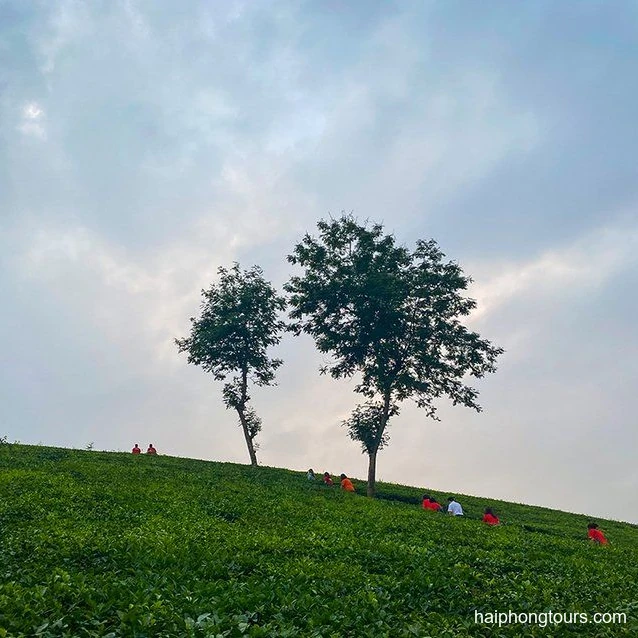
Expect a working agricultural landscape. Arrange access with a local host or grower if you want to walk between the tea rows, learn about production, or organize a tasting. Tea picking and factory visits are activities to request in advance, not automatic parts of a sightseeing stop.
Where My Thuan Tea Hill is
The tea hills are in the former My Thuan commune of Tan Son, Phu Tho. My Thuan is now part of Minh Dai commune, so both names may appear in directions and accommodation information.
Use the full destination name Doi che My Thuan, Phu Tho when discussing the stop with a driver. Ask for the particular hillside or access point you will visit, especially if the plan comes from a photograph. The local tea-growing area is more extensive than a single viewpoint with one entrance.
Confirm the stop before setting out from Viet Tri or your overnight base, including where the vehicle can park without blocking farm access. Bring the contact details of your driver or host and agree on a return meeting point.
What makes the visit worthwhile
Tea bushes follow the contours of the hills, creating repeated rows and changes of light across the slopes. The surrounding fields, paths, and mountain backdrop give the stop its character. Allow time to look around rather than treating a photograph of the tea rows as the only goal.

For a simple visit, leave around an hour in your itinerary for a short walk and photographs, with driving time separate. That is a flexible planning allowance; the route and access you arrange determine how much ground you can cover.
If a grower is available, a conversation about harvesting and processing can add more value than a longer unguided walk. Ask your host to arrange this beforehand, including language support if needed. Avoid interrupting people while they are working or assuming they are available to pose for photographs.
When to visit for photographs
Early morning and late afternoon often give softer light across the rows. Leave enough daylight for your return, and check the forecast before planning a sunrise outing. Mist is possible but should not be the reason you are promised a particular view.
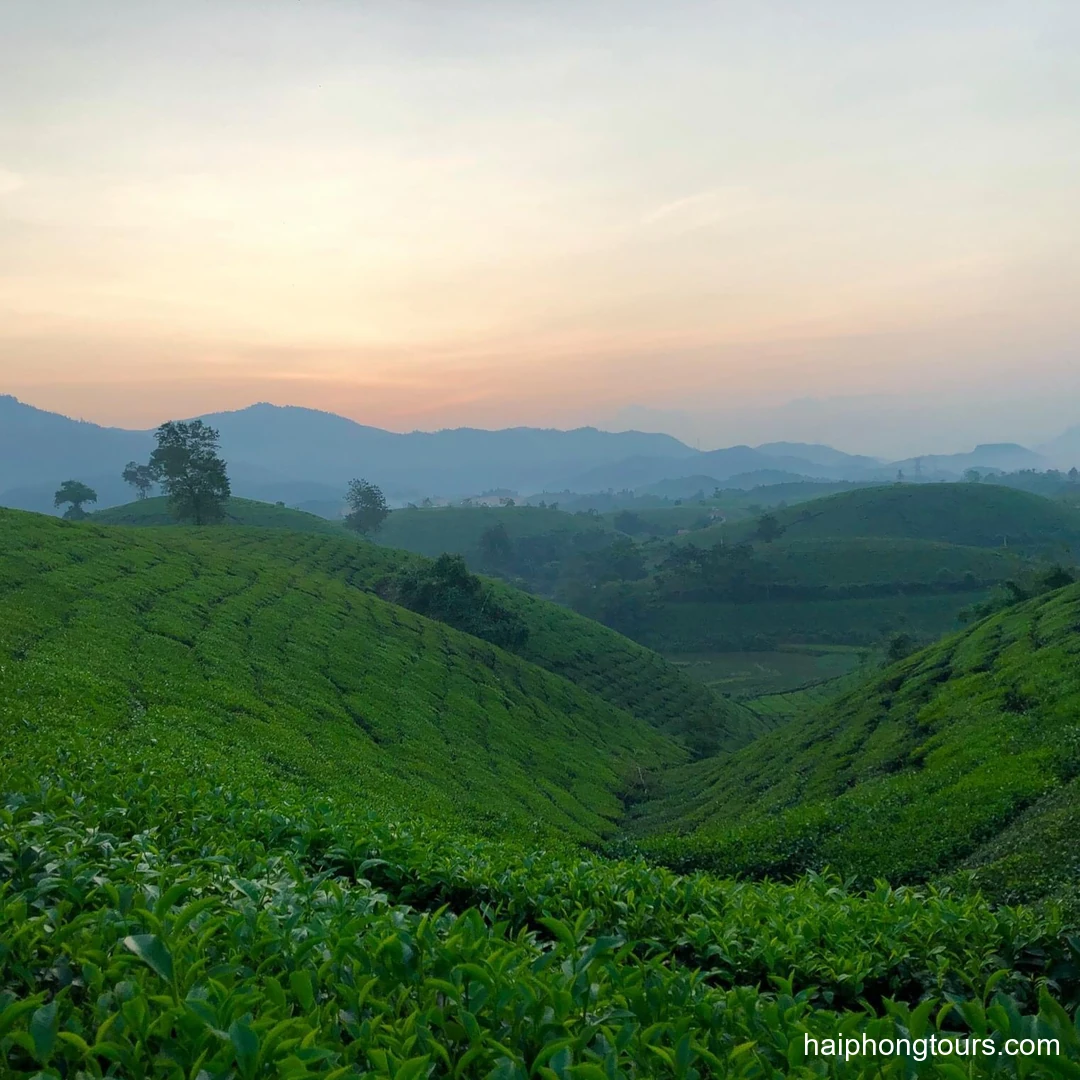
The appearance of the hills depends on growth, harvesting, and pruning. Fresh green shoots do not cover every plot at the same time. Winter pruning can leave more visible branches and sharper outlines instead of a continuous green surface.
If lush tea is your priority, ask a local contact about the condition of the exact plot shortly before visiting. After rain, paths between rows may be muddy or slippery even when the wider landscape looks attractive.
Walk without damaging the crop
- Ask which paths are open to visitors and stay on those routes.
- Do not step across tea bushes, pull branches aside, or pick leaves without the grower’s permission.
- Keep vehicles off farm tracks unless access has been agreed, and leave space for workers and equipment.
- Ask permission before photographing people, entering buildings, or setting up a larger photo session.
- Take food packaging and other rubbish away with you.
Wear shoes with grip, carry water, and bring a hat or rain protection according to the weather. If someone in your group needs an easy route, request a roadside viewing stop instead of assuming the paths across the slopes are suitable.
Fees, tea tastings, and purchases
Agree on any access, parking, guiding, or photography charge before starting. A view from a public road and a hosted visit on a grower’s land are different arrangements, so do not assume that every activity is free.
If you want to taste or buy tea, ask the host to identify the producer and explain what is being offered. Check the tea type, package weight, packing date, and price before purchasing. A tasting or processing demonstration should be confirmed in advance rather than expected at every hillside.
Bring your own drinking water and plan meals and toilet stops with your driver or accommodation. Do not rely on a dedicated visitor center or a cafe being available beside the particular field you visit.
Combining My Thuan with Xuan Son or Long Coc
My Thuan can work as a brief tea-landscape stop on a journey between the Viet Tri area and Xuan Son National Park. Ask your driver to place it on the actual route, leaving the main part of the day for the park or your overnight destination.
Long Coc is a separate tea-growing destination known for numerous rounded hills. If your priority is a particular photograph of those hills, specify Long Coc when planning the trip rather than assuming My Thuan is the same place.
Choose one tea stop if you are also planning a substantial park walk. Visiting both areas makes more sense when tea scenery is a main interest and your schedule allows the extra driving.
Is My Thuan worth a dedicated detour?
It is a useful stop for travelers already exploring rural Phu Tho who enjoy photography and everyday agricultural landscapes. A long detour is harder to justify if you need organized activities, reliable on-site facilities, or a guaranteed harvesting experience.
For a more meaningful visit, arrange a suitable access point and time with a local host. That gives you a clearer plan while respecting the people whose livelihoods depend on the tea hills.
Would you like help fitting this experience into your trip? Contact us with your travel dates, starting point, available time and group size. Tell us about walking limits or special interests so we can suggest a practical itinerary.