
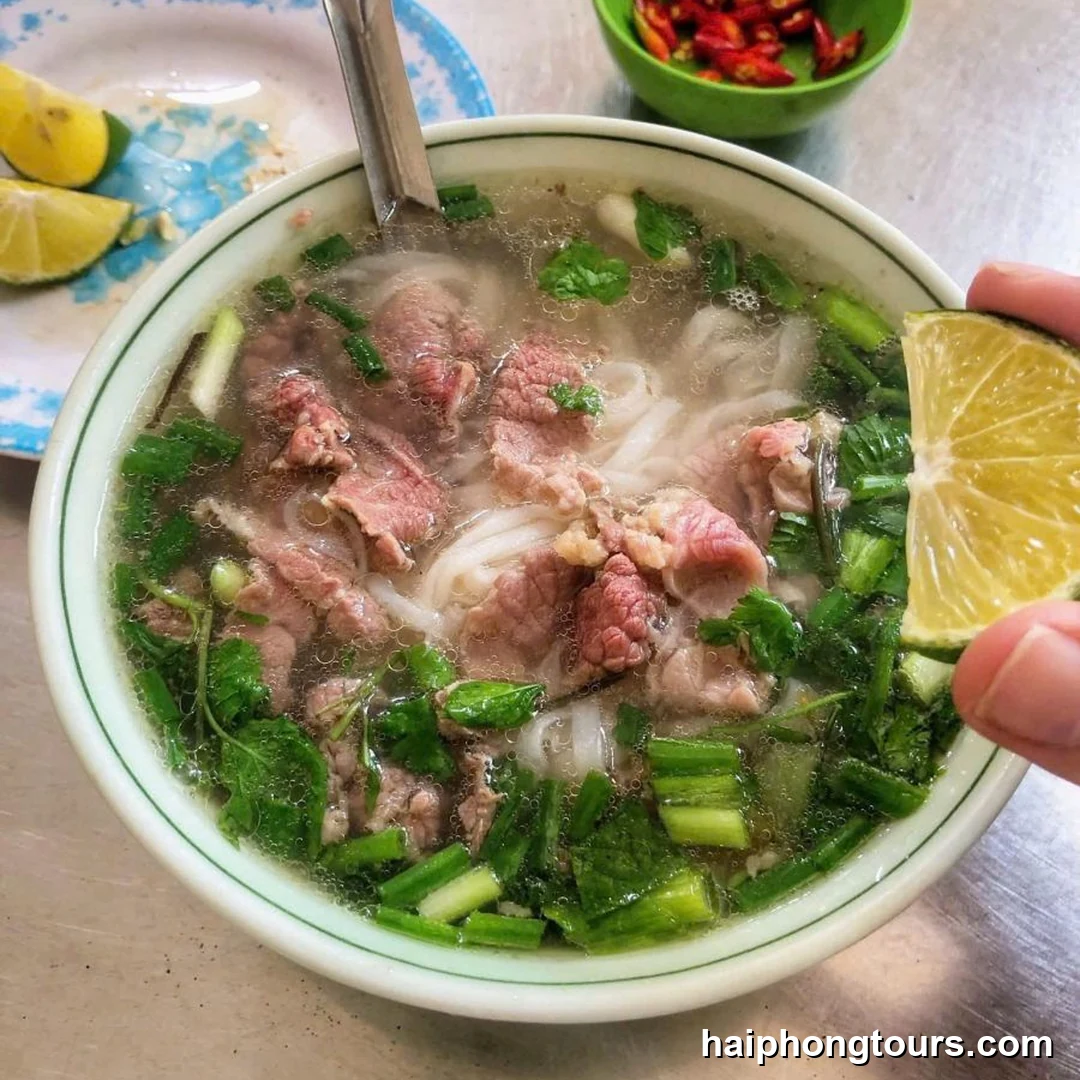
For a first taste of Nam Dinh, start with pho bo, the local beef noodle soup, or bun dua, thick rice noodles in crab broth. Add a warm xiu pao pastry or a plate of banh cuon, then choose peanut candy or Hai Hau rice-flour sweets to take away.
The food traditions extend beyond central Nam Dinh to places such as Giao Thuy, Hai Hau, and Truc Ninh. You can try several everyday dishes in town, while a particular village specialty or a slow-cooked fish meal may need advance arrangements. Choose a few contrasting dishes rather than trying to fit every specialty into one sitting.
Choose what to eat and what to take home
- For a noodle meal: pho bo for beef broth, or bun dua for crab and seasonal greens.
- For a filling breakfast or lunch: xoi xiu with pork, or freshly steamed banh cuon.
- For a warm snack: xiu pao, a savory baked pastry.
- For gifts: packaged siu chau, keo doi, and banh nhan, selected by ingredients, packing date, and storage instructions.
Noodles, rice, and savory pastries
Pho bo: Nam Dinh beef noodle soup
Nam Dinh pho combines rice noodles with beef and a broth simmered from bones and aromatic spices. The noodles are generally slender and soft, while seasoning and beef preparation vary between shops. Try the broth before adding chili or other condiments so you can decide how much it needs.
Pho chin uses cooked beef; pho tai uses beef that is briefly cooked or served rare in the hot broth. Ask for the meat to be thoroughly cooked if that is your preference.
Pho Dan is an option at 117 Bac Ninh Street, with contact number 0944 618 115. Confirm the location and serving hours before a special trip, particularly if following an older map listing.
Bun dua: thick rice noodles with crab broth
The name refers to the noodles’ chopstick-like thickness. They are round rice noodles served with freshwater-crab broth, tomato, and seasonal vegetables such as water spinach or mustard greens. The result is a different texture and flavor from beef pho.
Additional toppings depend on the stall and can include fried tofu, pork sausage, or minced meat. Ask what comes in the bowl before ordering, and keep chili or spicy vinegar separate if you prefer a milder meal. The crab broth means this is not a vegetarian noodle dish.
Xoi xiu: sticky rice with pork and sauce
Xoi xiu is a substantial bowl of sticky rice topped with char siu-style pork, Chinese-style sausage, and a thick savory sauce. Mixing the sauce through the rice spreads the flavor; it is a full meal rather than a small plain-rice side.
It is useful when you want something filling without soup. If trying several dishes with a companion, share a portion first and order more if needed.
Banh cuon lang Kenh: thin steamed rice sheets
Kenh village’s banh cuon are delicate sheets of steamed rice batter, served with accompaniments such as fried shallots, wood-ear mushrooms, pork sausage, and a seasoned fish-sauce dip. Their soft texture makes a lighter contrast to sticky rice or a baked pastry.
Ask for a freshly prepared serving. Even when the rice sheets look plain, the toppings, cooking fat, and dipping sauce may contain animal ingredients, so explain dietary requirements before the plate is assembled.
Xiu pao: a flaky savory pastry
Xiu pao has a baked, layered wheat-flour crust and a savory filling that commonly includes seasoned pork, egg, and wood-ear mushrooms. It is a useful snack between sightseeing stops. Eat it warm to enjoy the contrast between the pastry and the filling.
Xiu Pao Hanh Phuc sells these pastries at 28 Nguyen Trai Street. Its contacts are 0948 200 694 and 0398 200 694. For takeaway quantities, ask when the next batch will be ready and how to transport and store the meat-and-egg filling.
Regional dishes to arrange around your trip
Nem nam Giao Thuy: pork with toasted rice powder
Nem nam combines pork, finely sliced pork skin, and thinh, toasted rice powder. It is pressed into a rounded bundle, then loosened into small portions for eating with fig leaves, herbs, garlic, chili, and fish sauce. It is not a fried spring roll.
Preparation varies, and some versions use raw or only lightly cooked pork. Ask how the meat is prepared; if you cannot establish that it is thoroughly cooked, choose another cooked dish. For takeaway, follow the maker’s refrigeration and use-by instructions rather than treating the leaf wrapping as long-term preservation.
Ca nuong up chau: fish roasted beneath an inverted basin
Associated with Truc Ninh, this dish uses a metal basin placed over seasoned fish, with heat from smoldering straw and rice husks cooking it indirectly. The method takes hours and produces firm flesh with a browned exterior.
Arrange this meal in advance with a restaurant or local host instead of expecting it as a quick walk-in order. Confirm the fish variety, portion size, price, and what will accompany it. It suits a shared lunch or dinner, especially when you are already visiting the surrounding countryside.
Sweets and food gifts
Sa Chau fish sauce: a savory food gift
Sa Chau, in coastal Giao Hung, is known for fermented fish sauce. Makers use fish or small shrimp with salt, so check the bottle’s ingredients instead of choosing by the village name alone. Ask whether it is intended for cooking or serving as a dipping condiment.
For a town purchase, the regional-food shop at 12 Vo Nguyen Giap Street, Nam Dinh, sells Sa Chau fish sauce. It is run by Công ty CP Hiệp hội Nông nghiệp sạch Nam Định; call 0976 399 808 for stock and opening times.
Hai Phong Tours suggests choosing a small, securely sealed bottle over a bulky gift set when you still have several transfers ahead. Protect it from breakage and keep the original ingredient and storage label for the recipient.
If you want to understand the craft at its source, use the Sa Chau village and buying guide to contact a producer and arrange a receiving time. A bottle purchase does not automatically include access to a production yard, so confirm the visit before adding the coastal drive.
Siu chau: peanut and sesame candy
Siu chau is a brittle-style candy made with ingredients such as roasted peanuts, sesame, sugar, and malt syrup. A dusting of rice flour is characteristic of some versions. Small pieces work well with unsweetened tea.
Siu Chau Nguyen Huong is at 12 Hang Sat Street. Check the specific variety and package label, especially for peanut or sesame allergies. Buy a sealed pack with a clear date rather than assuming every producer’s candy has the same shelf life.
Keo doi: peanut-filled sugar candy
Keo doi has a pale, crisp sugar shell surrounding roasted peanuts; some versions also contain sesame. Its name refers to the filled, sausage-like shape. It is a confection, not a meat product or an animal-shaped rice candy.
The shell can break in a soft bag, so choose a protective box for travel. Keep the candy sealed and dry according to the label, and try a small amount before buying a large pack: it is distinctly sweet.
Banh nhan Hai Hau: crisp rice-flour balls
Despite the name, banh nhan does not contain longan fruit. These small round sweets are made with glutinous rice flour and egg, fried, then coated with sugar. Their resemblance to longans gives them their name.
They are associated with Hai Hau and make a compact tea-time gift. Traditional recipes use pork fat, so anyone avoiding pork should check the maker’s ingredients rather than assuming a sweet snack is vegetarian.
For time with a receiving family, a Hai Hau countryside stay can combine a reserved meal with the Luong covered bridge and an arranged local craft visit. Confirm cooking or cake-making separately from the room; you do not need to book a class simply to taste the local sweets.
Banh gai and che kho
Banh gai is a dark, chewy glutinous-rice cake colored and flavored with gai leaves, usually filled with sweet mung bean. Nam Dinh versions may also contain coconut, lotus-seed preserve, or pork fat. The banana-leaf wrapping and soft filling call for the seller’s specific storage advice.
Che kho is a dense mung-bean sweet, often shaped on a plate and associated with Tet and ceremonial meals. Unlike a bowl of sweet soup, it has a firm, concentrated texture. Try a small portion with tea when it is available.
For an architectural stop alongside a meal, the Co Le Pagoda visitor guide explains its Buddhist sanctuary, bridges and bronze bell. It belongs to the former Nam Dinh area, so do not confuse its current Ninh Binh address with a location beside Tam Coc.
Plan a food stop without overcomplicating the day
For a full day around those food stops, the Nam Dinh city itinerary combines a choice of museums, the old commercial streets and Vi Xuyen Lake. Keep the countryside villages separate if you have a fixed return train.
For a short visit, choose one noodle or rice meal, one pastry stop, and one gift shop. Leave regional dishes such as basin-roasted fish for a meal booked around your countryside route. A food name associated with a village does not mean you must visit that village to find it in town. If your city stay includes football, the Thien Truong Stadium ticket guide explains home fixtures, payment and entry before you plan a pre-match meal.
Ask the price before ordering, including extra meat, sausage, drinks, or takeaway packaging. For gifts, compare pack weight as well as price and follow the actual label for storage. Meat-filled pastries and fresh pork dishes need different handling from sealed dry candy.
If taking food abroad, check your destination’s rules before buying products containing meat or other animal ingredients. For allergies or dietary restrictions, show the seller a clear written request in Vietnamese; fish sauce, crab broth, peanuts, sesame, egg, wheat, and pork fat can appear in dishes where they are not obvious from the English name.