
Ngu Dong Thi Son combines five connected cave chambers with Den Truc, a riverside temple near Phu Ly. It suits travelers who want a smaller cultural stop with an optional cave walk in the former Ha Nam area. The useful distinction is between visiting the temple and entering the caves: confirm that the cave route is receiving visitors before making it the reason for a long journey.
Allow around 90 minutes to two hours on site as a flexible planning estimate, rather than a guaranteed tour duration. You reach the temple by road and approach the caves on foot; this is not a rowboat journey through limestone tunnels. Arrange your return transport before arriving.
Find Den Truc near Phu Ly, not the Tam Coc sightseeing area
Show your driver the full name Đền Trúc – Ngũ Động Thi Sơn, phường Lý Thường Kiệt, Ninh Bình. Older maps and descriptions use Thi Son, Kim Bang and Ha Nam. The temple is beside the Day River near Quyen Son village, west of Phu Ly.
The Ninh Binh address covers a much wider province than the familiar Tam Coc and Trang An visitor area. Send the actual entrance pin when requesting a car, particularly if you are changing hotels. A transfer to a Ninh Binh hotel does not automatically include sightseeing, cave access or a driver waiting at Den Truc.
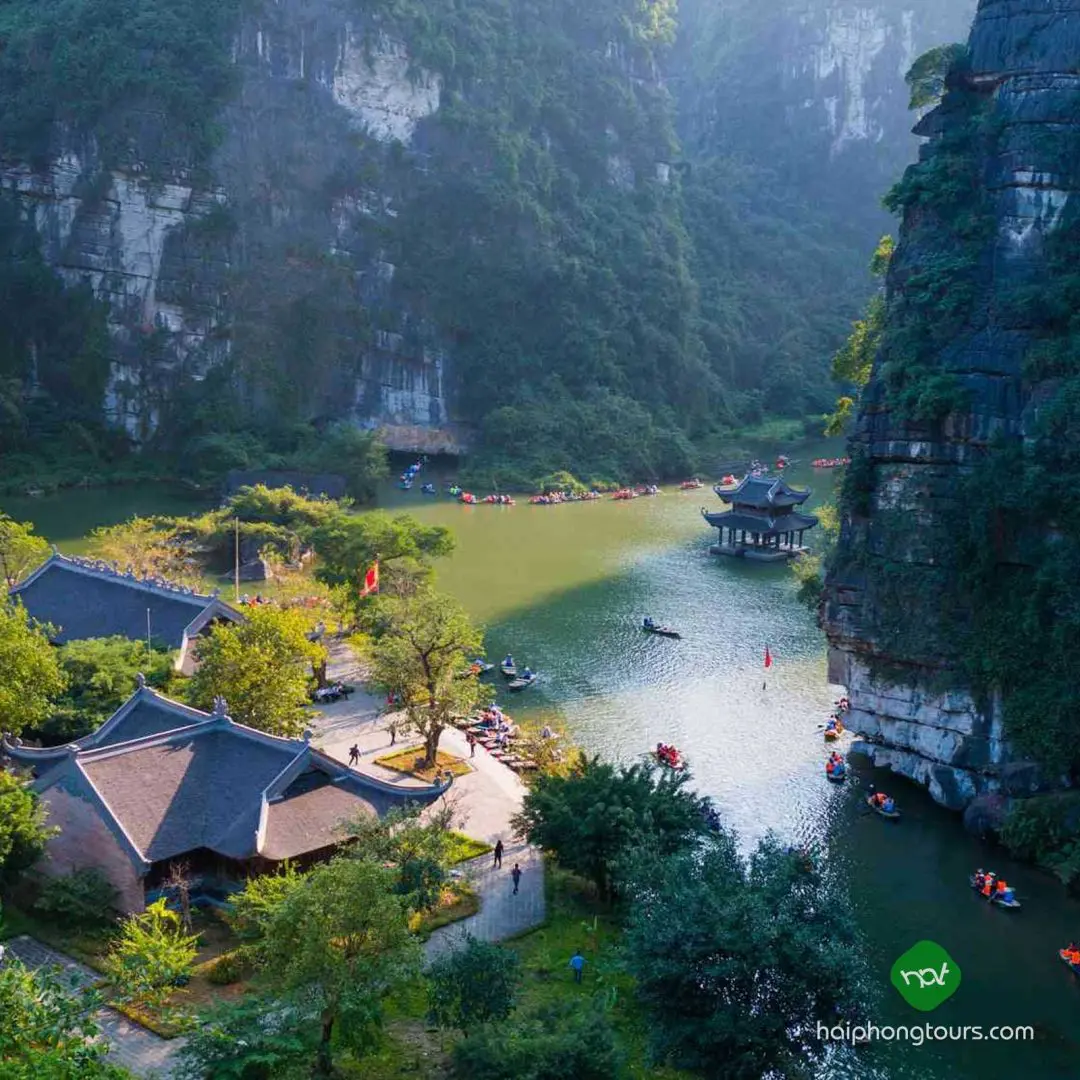
Start with the temple and its river setting
Den Truc honors the general Ly Thuong Kiet. Local legend tells of his military flag being carried onto the mountain by the wind, followed by thanksgiving celebrations after his return. Treat this as the community’s explanation of the sacred landscape, rather than a documented account of everything visible today.
The bamboo garden helps explain the temple’s name. Look from the river-facing approach toward the timber buildings: a five-bay front hall leads toward a smaller three-bay sanctuary. The contrast between the open planted ground and the enclosed worship space is more interesting than trying to count every altar.
Walk slowly through the permitted areas and leave the inner sanctuary dependent on access that day. Cover shoulders and knees, follow footwear instructions and ask before photographing worshippers. An offering is a personal choice; you can visit respectfully without participating in a ritual.
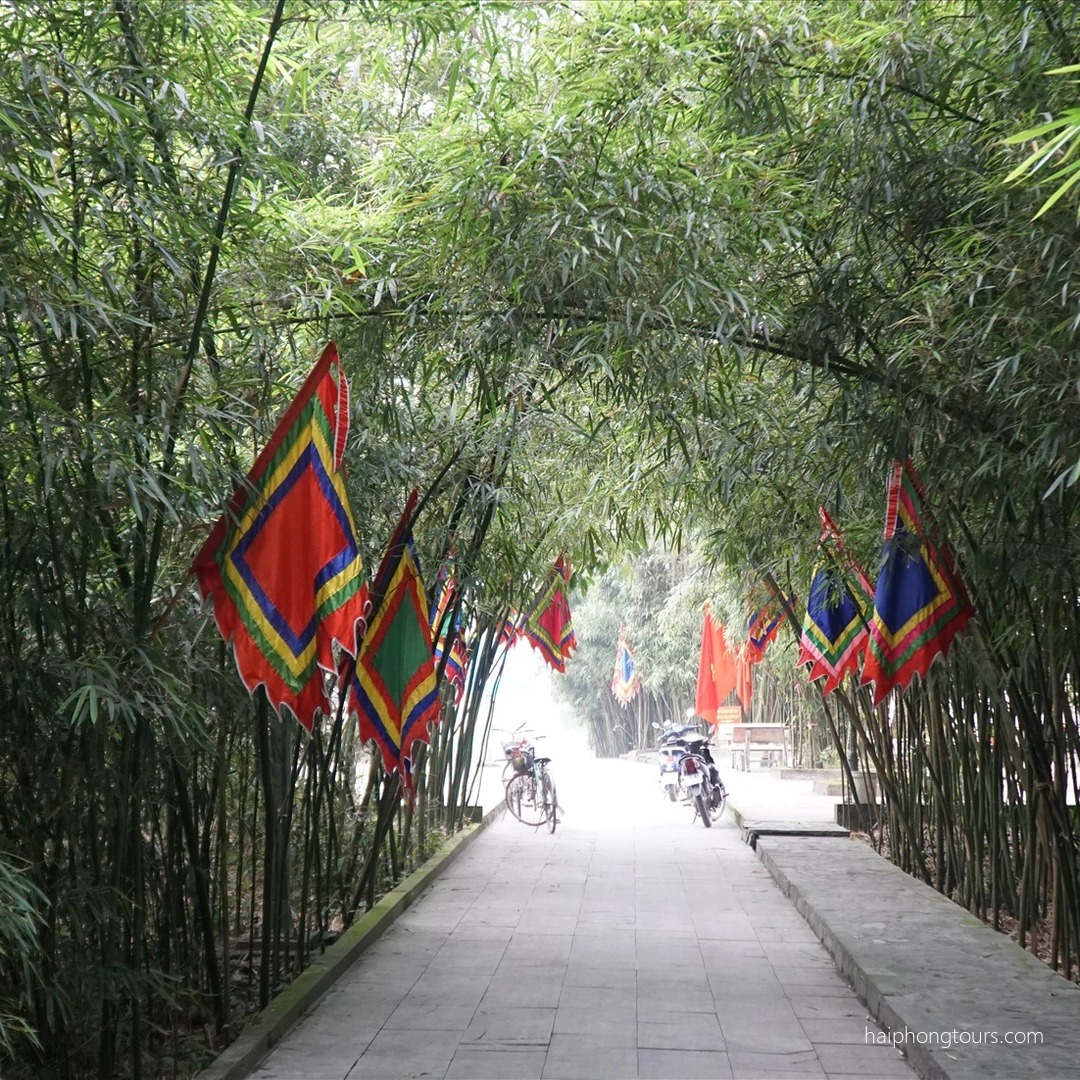 The bamboo-lined approach at Den Truc.
What the five-chamber cave walk involves
The chambers are linked inside Cam Mountain. The entrance is above river level, and the cave system has an exit on the other side of the rock. Before entering, ask which sections are open and whether visitors currently continue through or return the same way.
The first chamber is relatively small, with a narrow connection onward. The fourth opens into a larger space, while the fifth has openings divided by substantial formations and hanging stone curtains. Pay attention to that changing sense of enclosure instead of expecting five identical rooms.
Decide at the entrance whether the footing, light and confined sections suit your group. Ask for the visitor route to be explained before starting; having a phone flashlight does not make an unlit passage an appropriate route. Stay within the indicated area and do not enter a closed section to reach a photograph.
Wear shoes with grip and keep your hands free where the passage narrows. Leave formations untouched, including stones someone describes as making musical sounds. Children need close supervision, and anyone uncomfortable with narrow spaces can make the temple the main visit instead.
After heavy rain, check both the cave access and the riverside approach before departing. Postpone the cave portion if staff advise against entry or the route is wet, flooded or poorly lit. The presence of an open temple does not establish that the underground route is suitable that day.
Hat Dam and the difference between a festival and an ordinary visit
Quyen Son is associated with hát Dậm, a tradition combining song and dance in communal worship. Its connection to Den Truc gives the place a cultural interest beyond the caves. A routine temple visit, however, does not include an on-demand performance.
If this tradition is your main interest, ask about the current spring festival program before choosing a date. Ceremonies can involve Quyen Son communal house and a procession between local religious sites, so waiting at the temple alone may miss the activity you came to see. Confirm the specific meeting place and time with a local organizer.
For a quieter architectural visit, choose an ordinary day and accept that there may be no singing or procession. During worship, keep the route clear and ask permission before recording performers or participants at close range.
Visitor information, charges and transport
The Ninh Binh Tourism Information and Promotion Center can help direct an inquiry to the appropriate local contact. This is a regional information office, not Den Truc’s ticket desk. Give the full temple-and-cave name, your date and whether you specifically want to enter the caves.
Before traveling, establish the arrival window, current cave access and any admission or parking charge. Ask what a requested payment covers; distinguish a stated visitor charge from a voluntary temple donation. Bring small-denomination cash, water and suitable shoes, without depending on a particular stall being open.

From Phu Ly, arrange a return car or a clearly agreed collection rather than relying on finding a vehicle at the exit. From Hanoi, request an excursion quote that includes the actual stop, waiting and return journey. For an English explanation of the temple and local traditions, arrange a guide explicitly; a driver and an English-speaking guide are different services.
Choose one useful pairing
Tam Chuc Pagoda is the larger outing to compare: lake transport and extensive religious buildings need the main portion of a day. If combining the two, agree a selective Tam Chuc route and a confirmed Den Truc arrival window rather than trying to cover every hall, climb and cave.
Ba Danh Pagoda and Ngoc Mountain offer another riverside cultural stop. Choose between the two smaller sites according to your interests: Den Truc adds the connected cave system, while Ba Danh emphasizes a planted compound, carved timber and local female-guardian worship. Adding both is most useful when you enjoy slow temple visits and have flexible transport.
For a short stay near Phu Ly, Den Truc can provide a manageable temple-and-landscape excursion. For a dedicated trip from farther away, settle the cave access or festival arrangement first; that decision determines whether the journey delivers the experience you want.
Would you like help fitting this experience into your trip? Contact us with your travel dates, starting point, available time and group size. Tell us about walking limits or special interests so we can suggest a practical itinerary.