
Light rain does not automatically cancel a Ninh Binh trip. A confirmed-open boat route or a compact cultural visit can still be worthwhile, but thunder, strong wind, rising water, flooding or an official warning changes the answer: boats, caves, viewpoints and forest activities can be rerouted, partly suspended or closed at short notice.
Check two things before leaving your accommodation: the current weather warning and the operating status of the exact attraction or route. A rain icon is not a closure notice, but listed opening hours are not live safety confirmation either. For normal sightseeing choices outside wet weather, use this broader Ninh Binh travel guide.
Quick answer: what still works and what can close
Often workable in light rain, after confirmation
- Trang An, Tam Coc or Van Long boat rides: possible only when the ticket office confirms that boats are departing and there is no thunderstorm, strong-wind, flood or suspension warning.
- Hoa Lu Ancient Capital: the temple halls provide some shelter, although you still walk outdoors between buildings.
- The lower area of Bich Dong Pagoda: a short visit may work if the site is open and the stone surfaces are comfortable underfoot. The upper levels are a different decision.
- Ninh Binh Museum: the clearest public indoor fallback in the urban Hoa Lu area, subject to its limited official schedule and advance arrangements at weekends.
- A slow local day: a long meal, café, massage or prearranged indoor activity near your accommodation avoids an unnecessary drive to another weather-sensitive site.
Poor choices when surfaces are wet or storms are nearby
- Climbing the exposed ridge at Hang Mua.
- Continuing to the upper levels of Bich Dong on slippery steps.
- Cycling or riding a scooter on unfamiliar rural roads in heavy rain.
- Starting a long forest trail without current route advice from park staff.
- Traveling to a distant outdoor attraction simply because its normal hours say it is open.
Activities that can be partly or fully suspended
- All inland-water sightseeing during a serious storm response.
- One or more Trang An routes while a temporary route operates.
- Specific caves or boat sections inside a larger attraction such as Thung Nham.
- Overnight forest stays or individual routes at Cuc Phuong.
- An entire attraction, including land sites such as Hang Mua, when local authorities or management decide conditions are unsafe.
First decide whether this is rain, a thunderstorm or a severe-weather event
The useful distinction is not simply “dry” versus “rainy.” Make the decision from the current warning, what you can see locally and what the attraction confirms.
- Light-rain plan: no thunder or lightning, no strong-wind or flood warning, roads are normal, and the attraction confirms the intended route is operating. A boat or compact cultural visit may still work.
- Wait-and-recheck plan: heavy shower, poor visibility, uncertain road conditions or no reply from the attraction. Stay near your base, wait for a clearer window and check again before paying for transport.
- Stop plan: thunder, lightning, strong gusts, a typhoon or tropical-depression warning, rising or fast-moving water, local flooding, barriers or an official suspension. Do not board a sampan, climb a ridge, enter a restricted cave or continue into a forest route.
The National Center for Hydro-Meteorological Forecasting publishes short-range forecasts and separate warnings for storms, heavy rain, thunderstorms, floods, flash floods and landslides. Ninh Binh’s official tourism website and the Ninhbinhtourisminfo app also carry tourism news and weather information. Your hotel or driver can help confirm local roads, but the attraction or ticket office should confirm the activity itself.
Boat trips in the rain: Trang An, Tam Coc and Van Long
A light shower and an official storm closure are not the same event. When conditions are mild, ticket sales are open and staff confirm departure, a boat trip can still be the main activity. Expect an exposed seat, spray or rain entering the boat and a long period without a quick indoor escape.
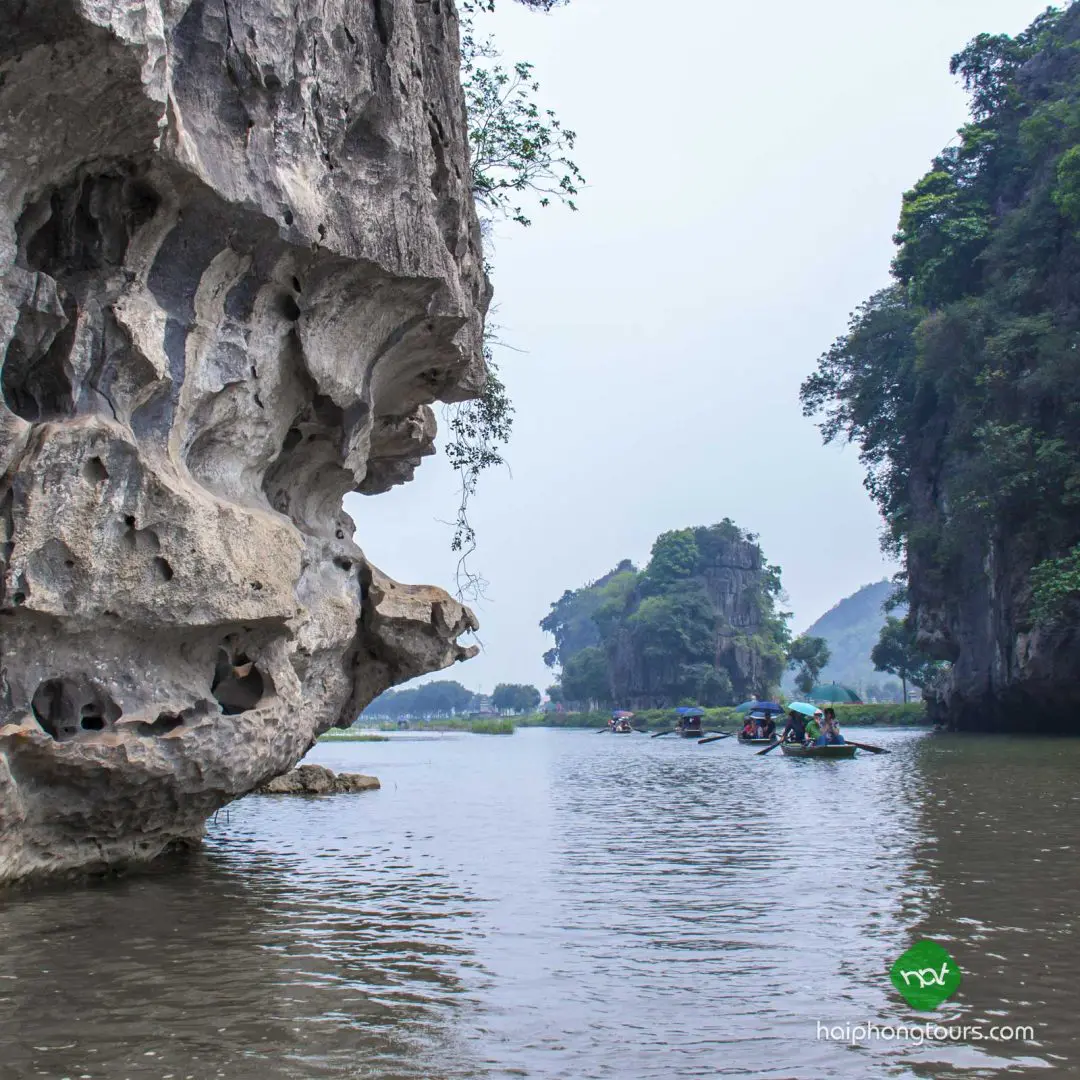
Do not rely on a promise that a boat runs “year-round” or “rain or shine.” During severe weather, Ninh Binh can suspend all tourist activity on inland water. At other times, a site may operate an alternative route, omit cave passages or stop ticket sales before the wider area appears badly affected.
Ask about the route, not only whether the site is open
Before traveling to the pier, ask four precise questions:
- Are boats selling tickets and departing now?
- Is the regular route operating, or is a shorter alternative in use?
- Are the cave passages and planned stops included today?
- If a booked tour loses its boat ride, what replacement, rescheduling or refund rule applies?
A cave is not reliable rain shelter. High water or unsafe access can make a cave one of the first parts of a route to close. The same principle applies to Trang An’s cave passages, the three caves at Tam Coc and cave or wetland components at other sites.
What to take on a confirmed boat departure
- A compact poncho that leaves your hands free; an open umbrella can obstruct other passengers and is awkward in gusty wind.
- A waterproof pouch or dry bag for your phone, passport and electronics.
- Shoes with grip for the pier and any wet temple or cave stops.
- A small towel and a dry layer for the return journey.
- The provided life jacket, fastened throughout the boat ride.
If thunder is audible or the sky becomes threatening before departure, do not treat an issued ticket as proof that conditions remain safe. Follow staff instructions and get into a substantial building rather than waiting beside open water.
Hang Mua and Bich Dong are not rainy-day substitutes
Hang Mua viewpoint
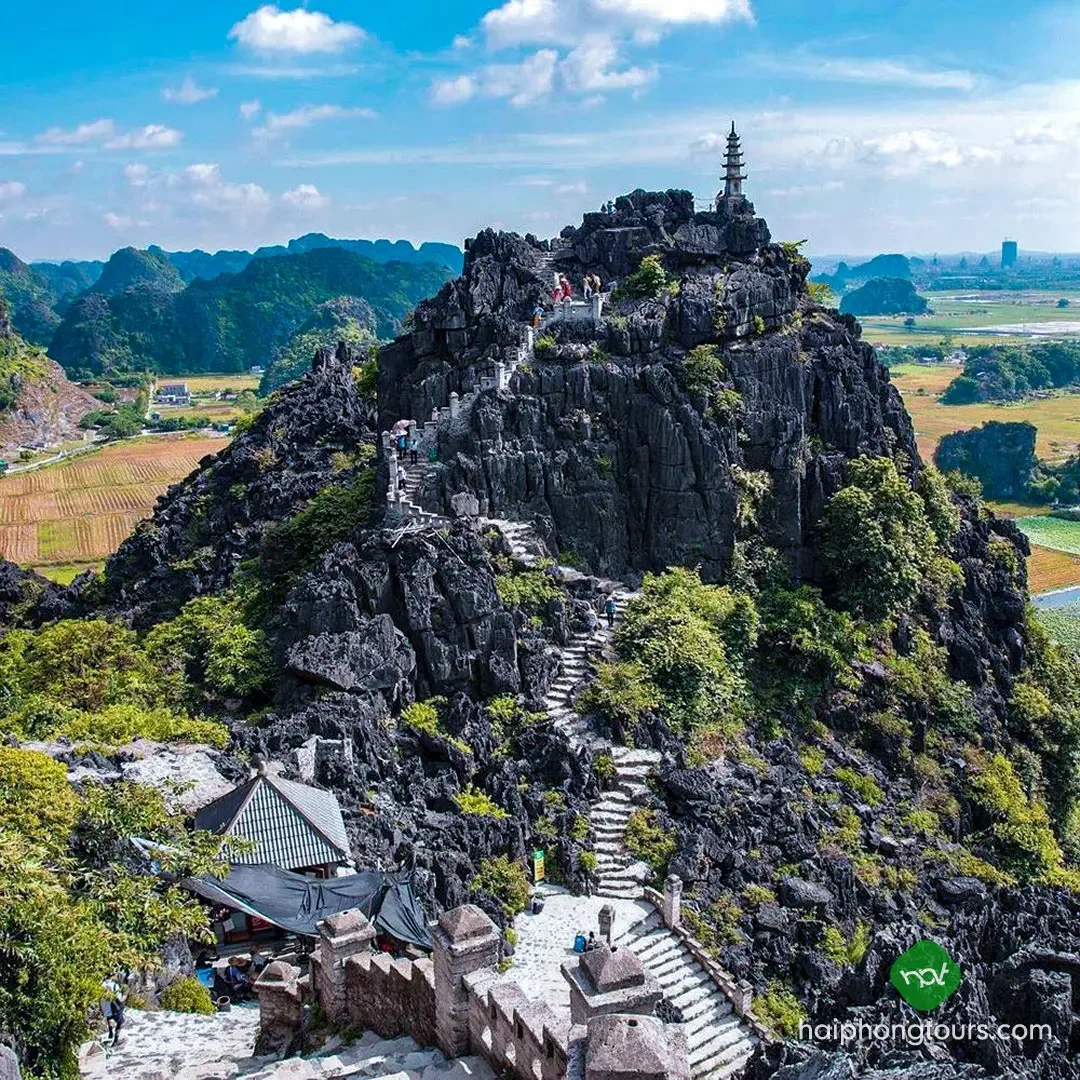
Hang Mua’s main experience is an exposed stone stairway to a ridge viewpoint. Wet steps reduce grip, cloud can remove the view, and a high ridge is the wrong place to be when thunder or strong wind approaches. The entrance being open does not make the summit a sensible objective.
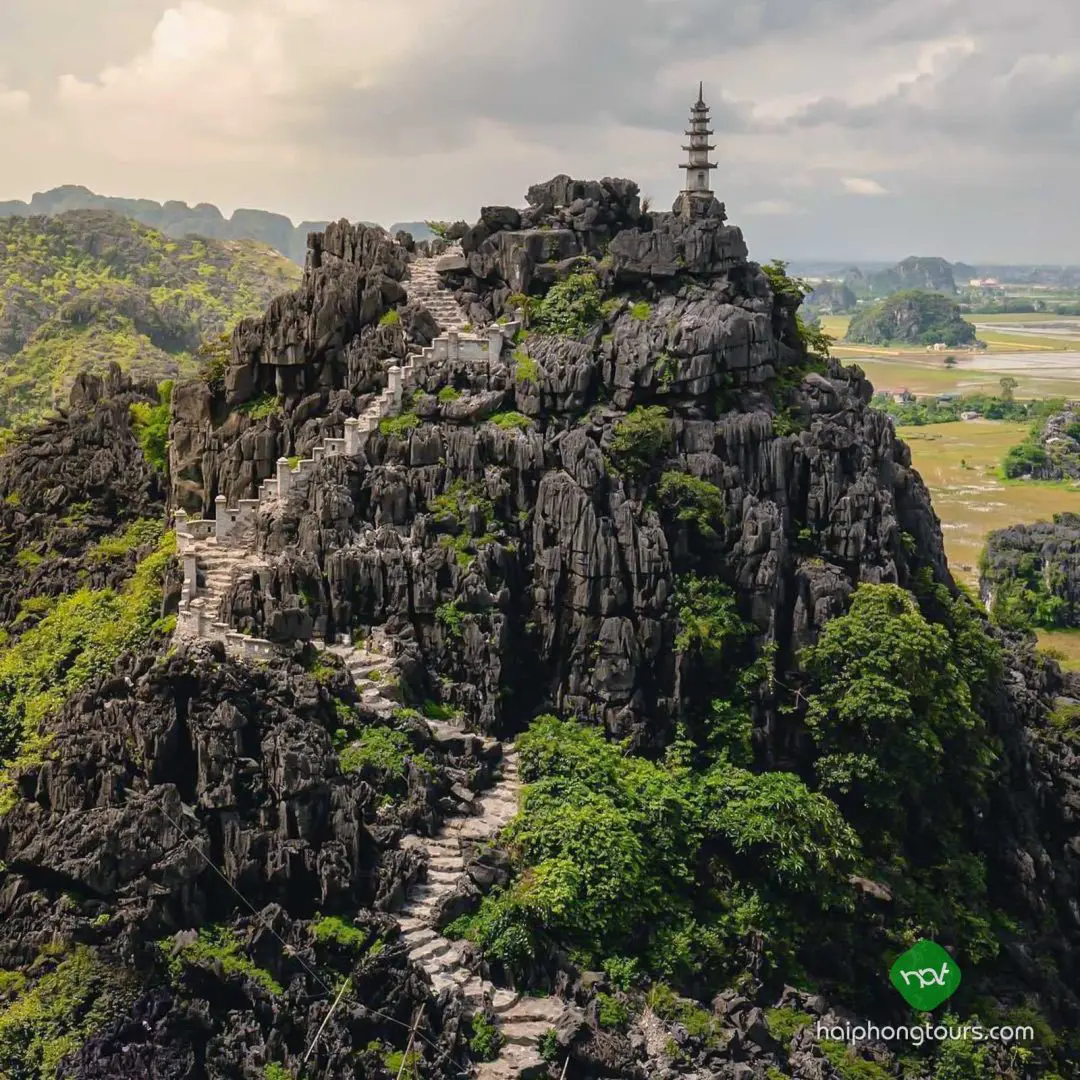

The rocky ridge and viewpoints at Hang Mua.

In a brief light shower, you could remain in the lower grounds if management permits, but do not climb simply to avoid “wasting” the ticket. Turn back when footing feels uncertain or the weather worsens.
Bich Dong Pagoda
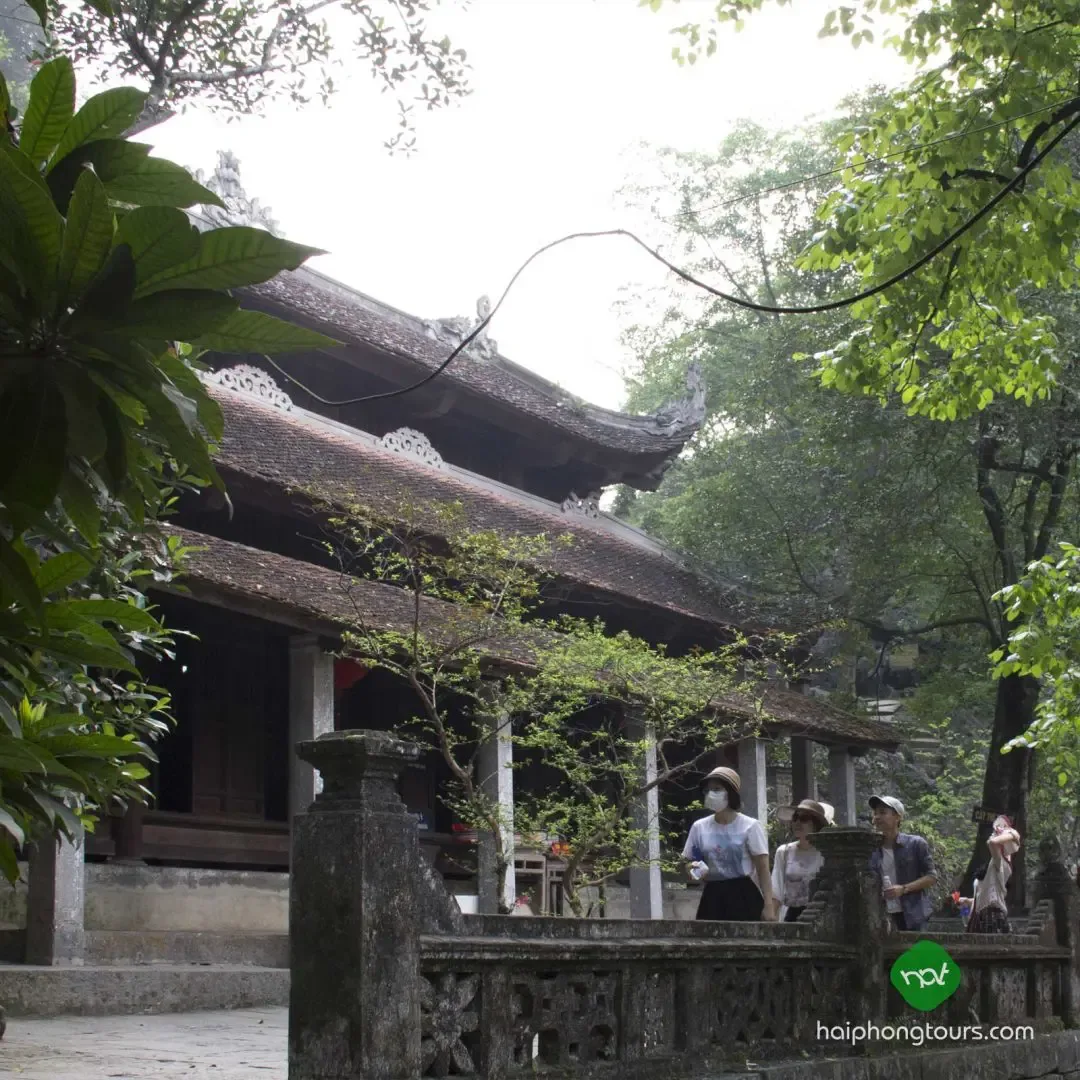
Bich Dong has three pagoda levels arranged up a mountainside. The middle and upper sections require stone steps, and part of the route passes through a cave before continuing outside. This makes Bich Dong partly sheltered, not an indoor attraction.
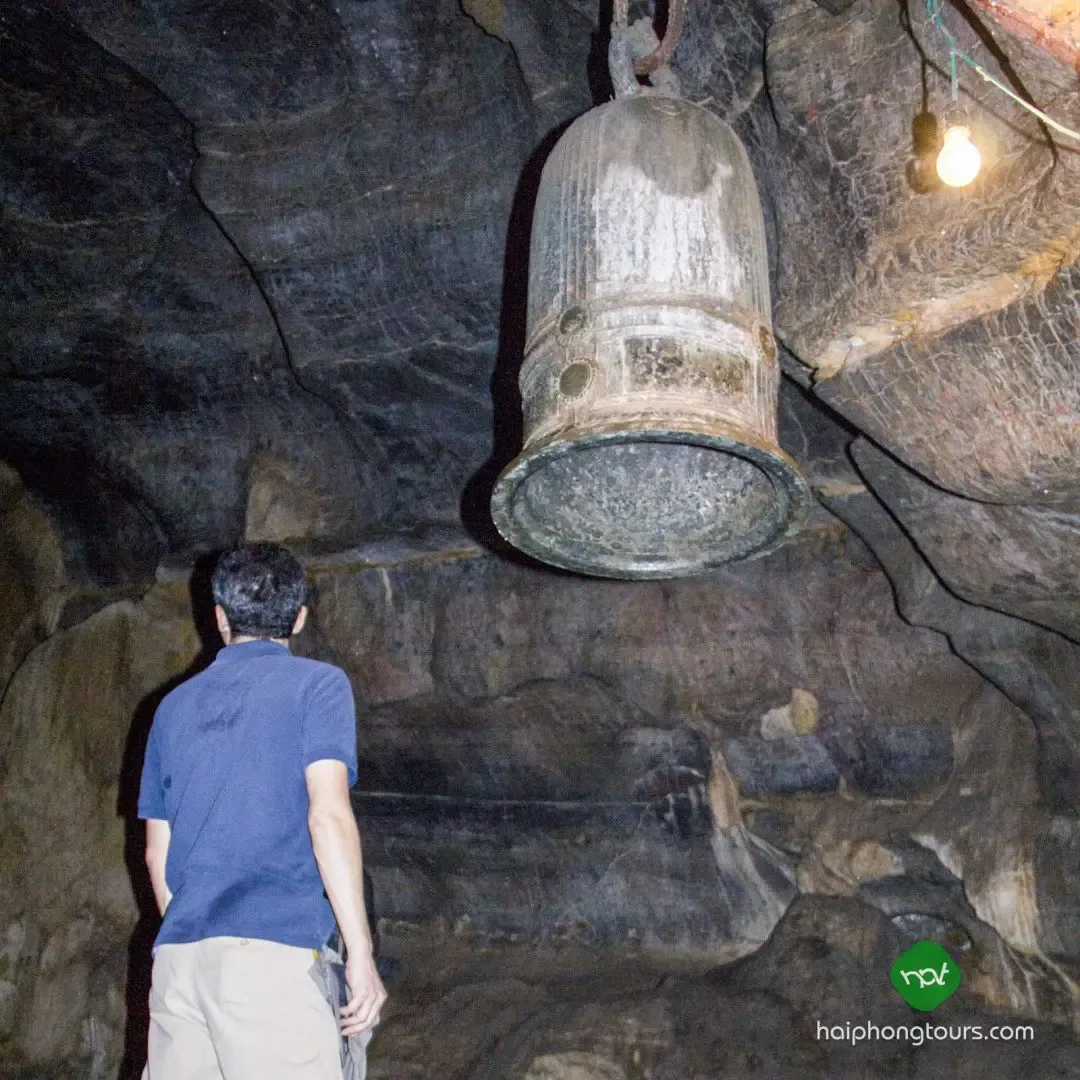
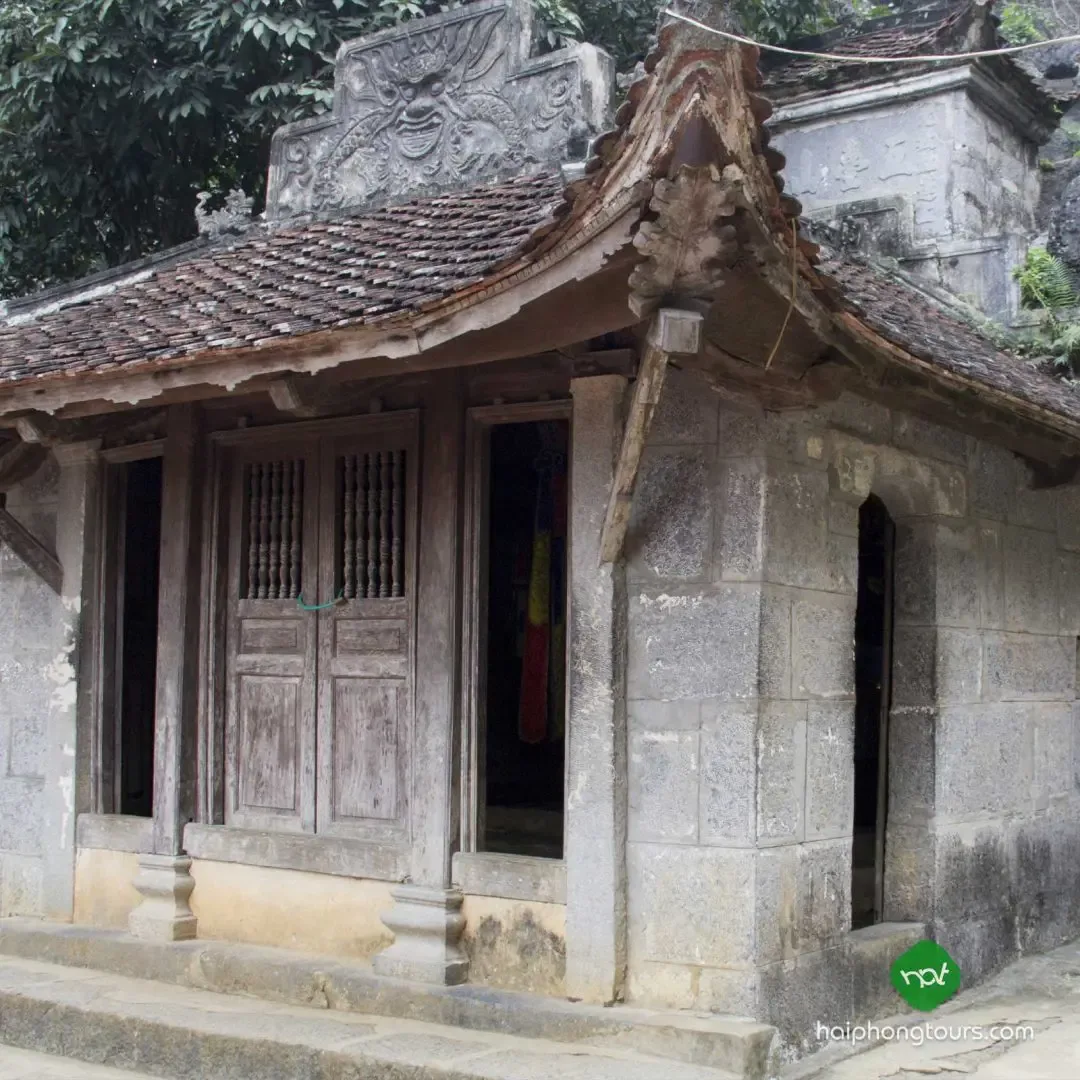
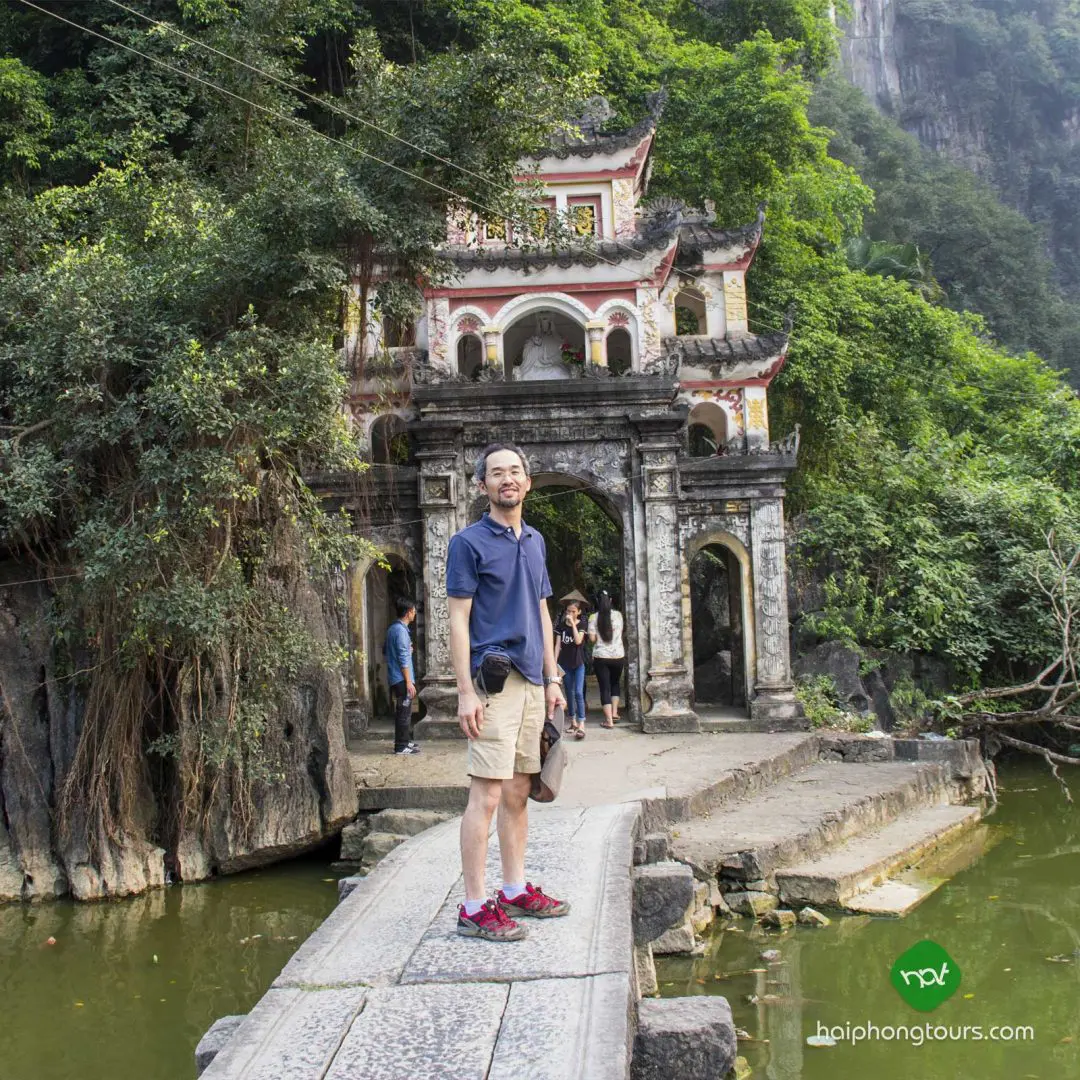
The cave bell, temple building and entrance bridge at Bich Dong.
When the site is open in light rain, the lower pagoda can be a short cultural stop. Skip the upper ascent if steps are slick, visibility is poor or thunder is nearby. Smooth-soled sandals are a poor choice.
Hoa Lu and Bai Dinh: cultural sites with different rain trade-offs
Hoa Lu Ancient Capital
Hoa Lu can work better than a viewpoint in light rain because its principal temple halls provide shelter and the visit can be kept compact. You still cross courtyards and walk between the main temple areas, so it is not fully indoors.
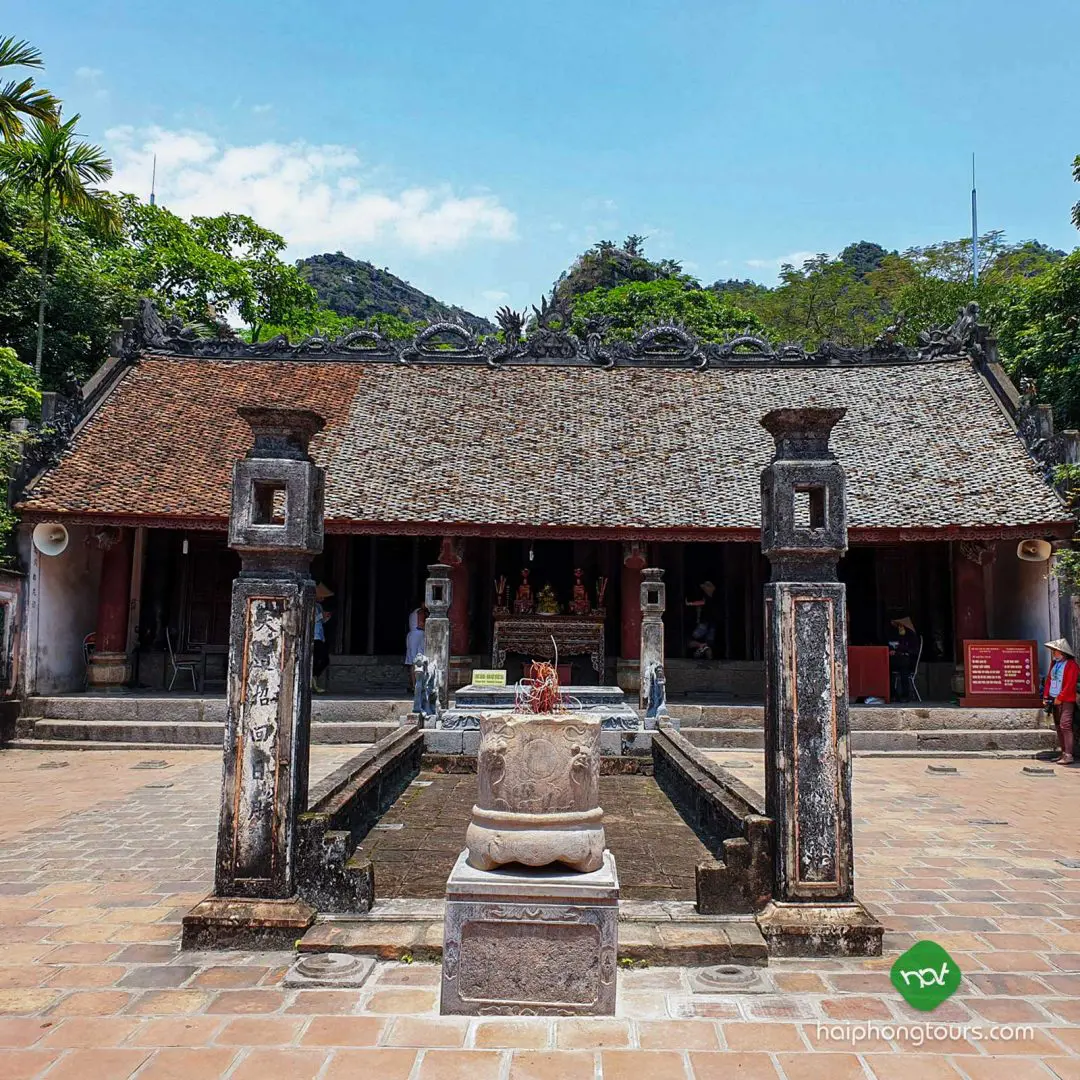

Temple courtyards and the garden approach at Hoa Lu Ancient Capital.
Keep the plan to the lower historic complex. Do not add the separate Ma Yen mountain climb on wet steps. If rain becomes heavy or local staff restrict access, return to your vehicle or a substantial building.
Bai Dinh Pagoda
Bai Dinh is a large complex with long distances and substantial open space between covered buildings. An electric vehicle may reduce walking when it is operating, but it does not turn the visit into an indoor experience.
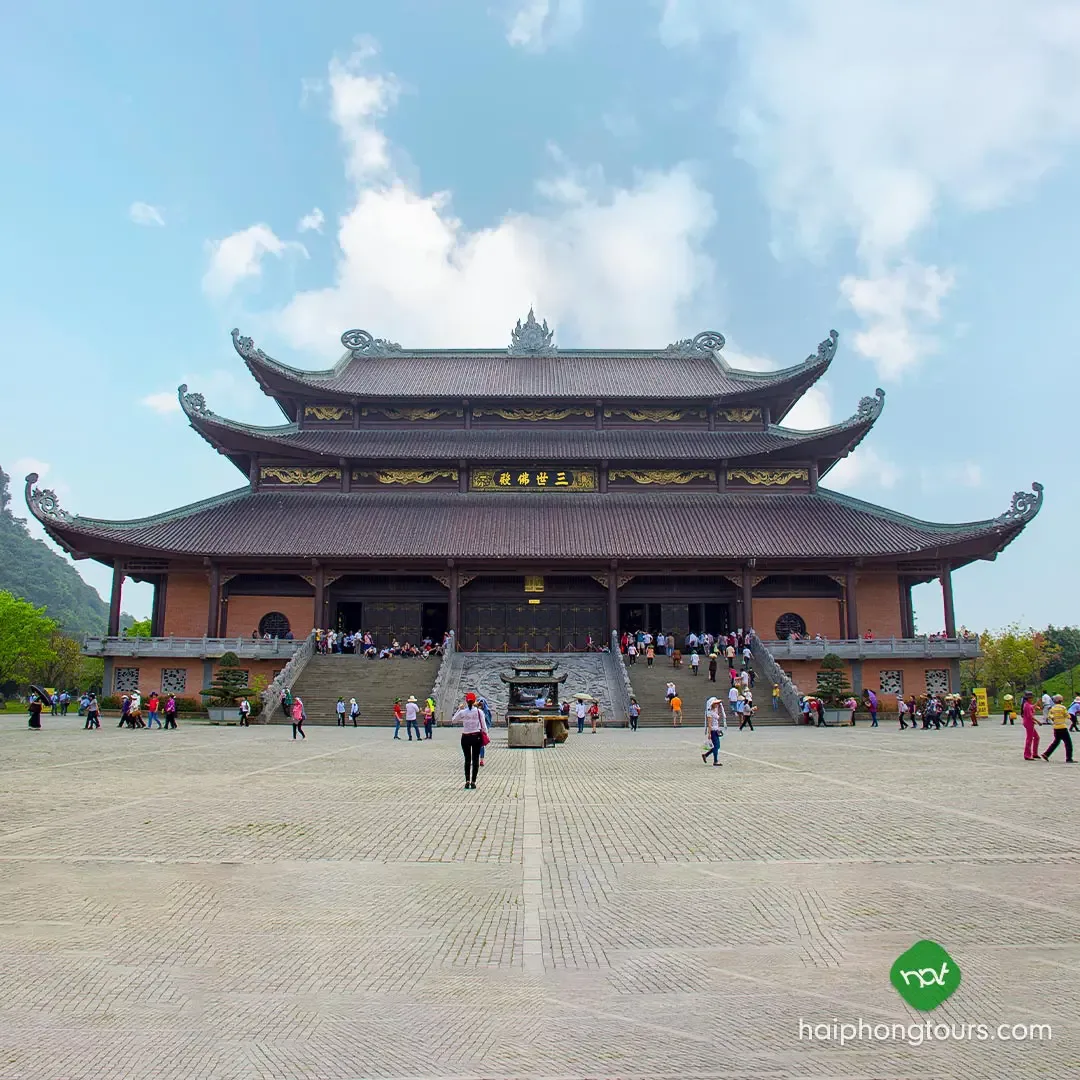


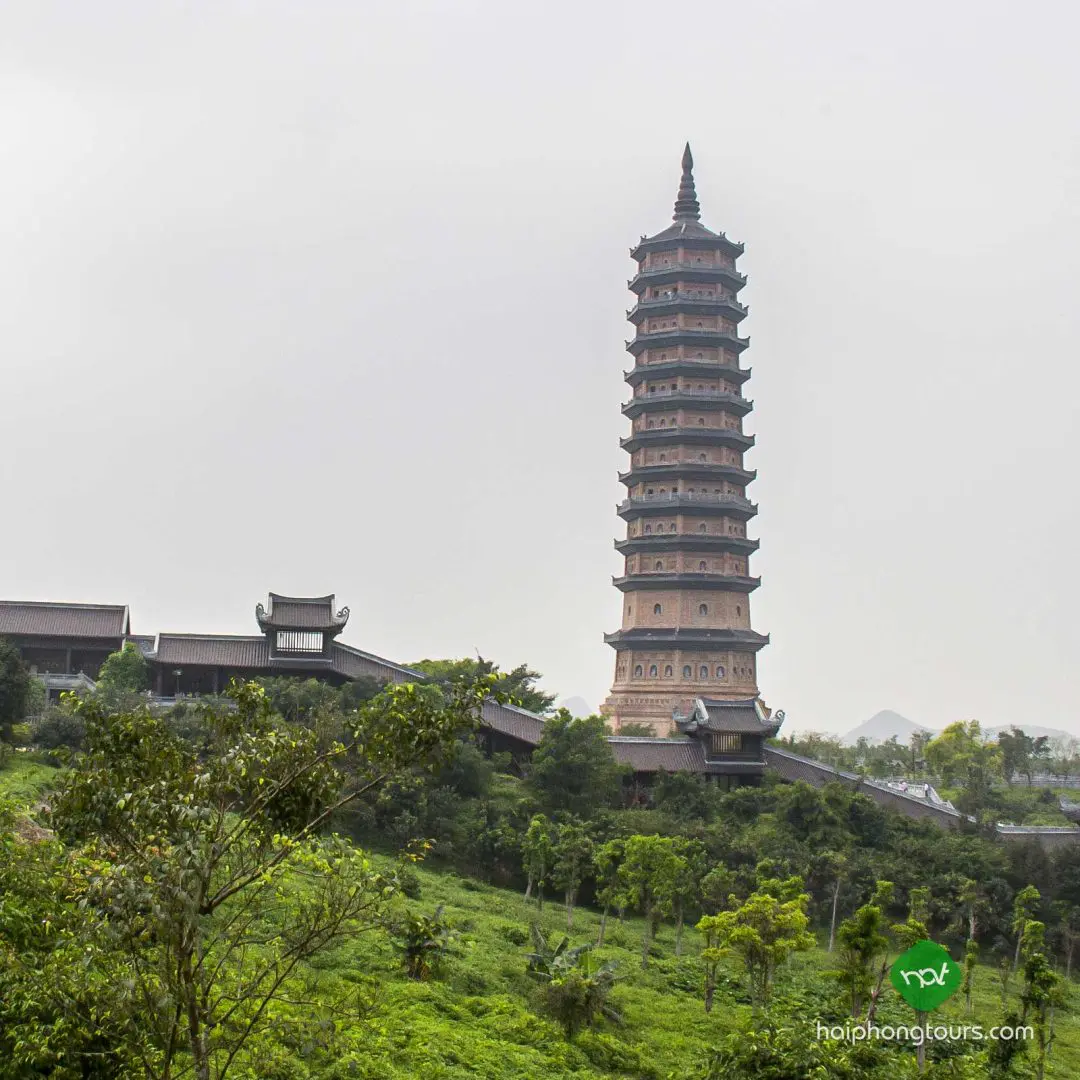
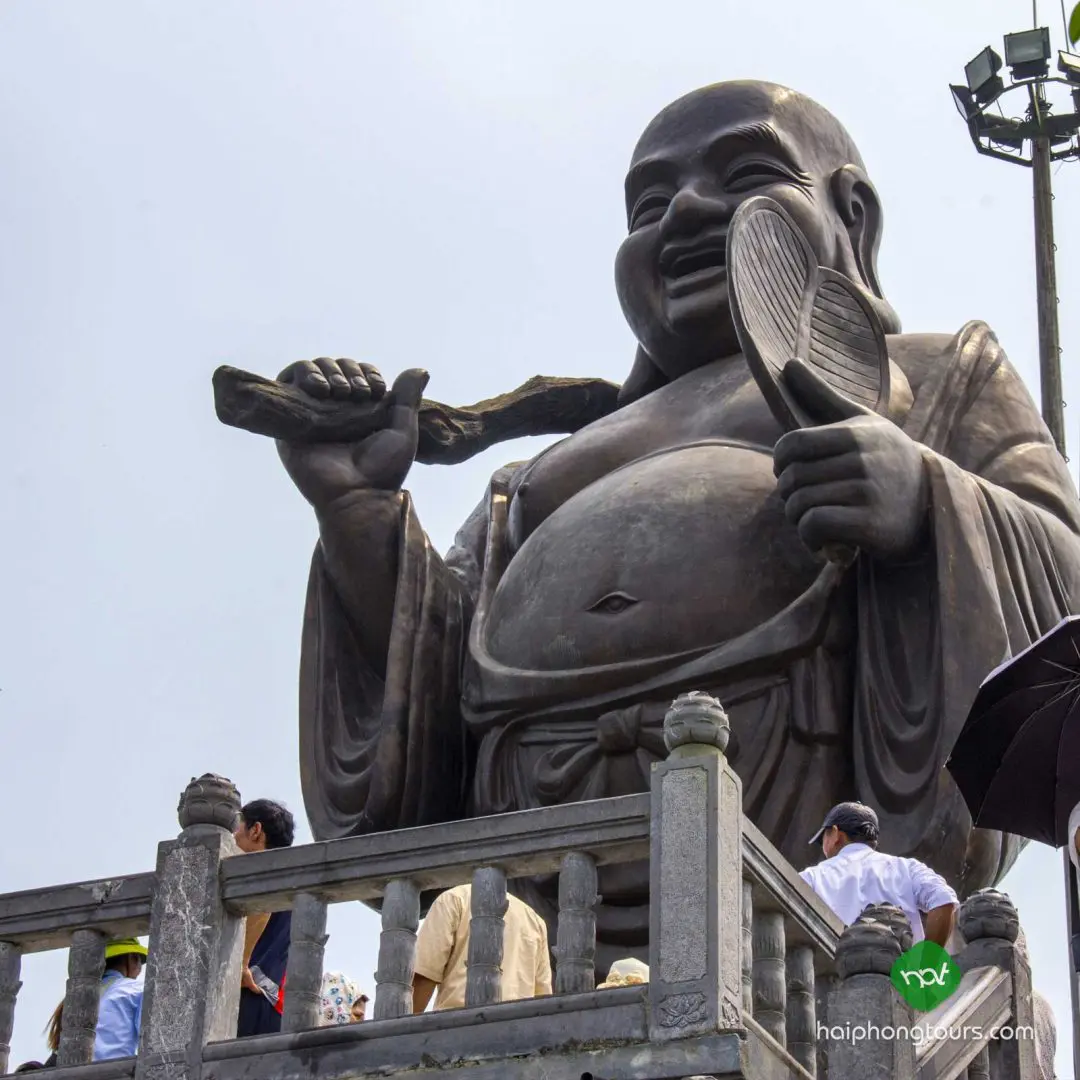


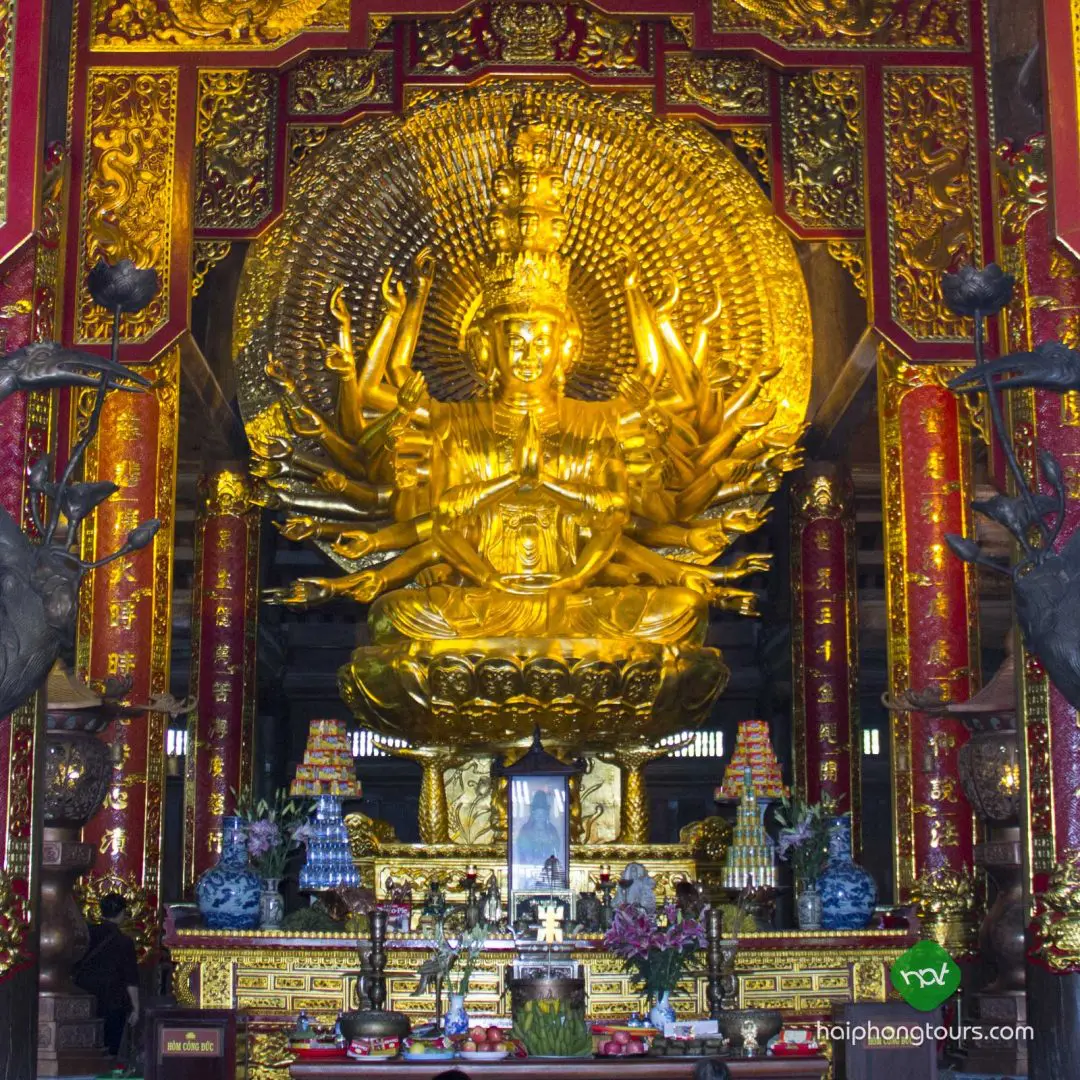
Bai Dinh halls, electric shuttles, a bronze drum, the tower and Buddhist statues.
Choose Bai Dinh in rain only after confirming the site and internal transport are operating, and only if your group is comfortable walking on wet surfaces. For a short wet-weather window, Hoa Lu is usually easier to keep compact.
Thung Nham and Cuc Phuong can have partial closures
Thung Nham
Thung Nham combines gardens, wetland, boats, caves, steps and a bird area. These components do not always share one operating status. Management may close selected caves or water activities while other parts of the site continue.
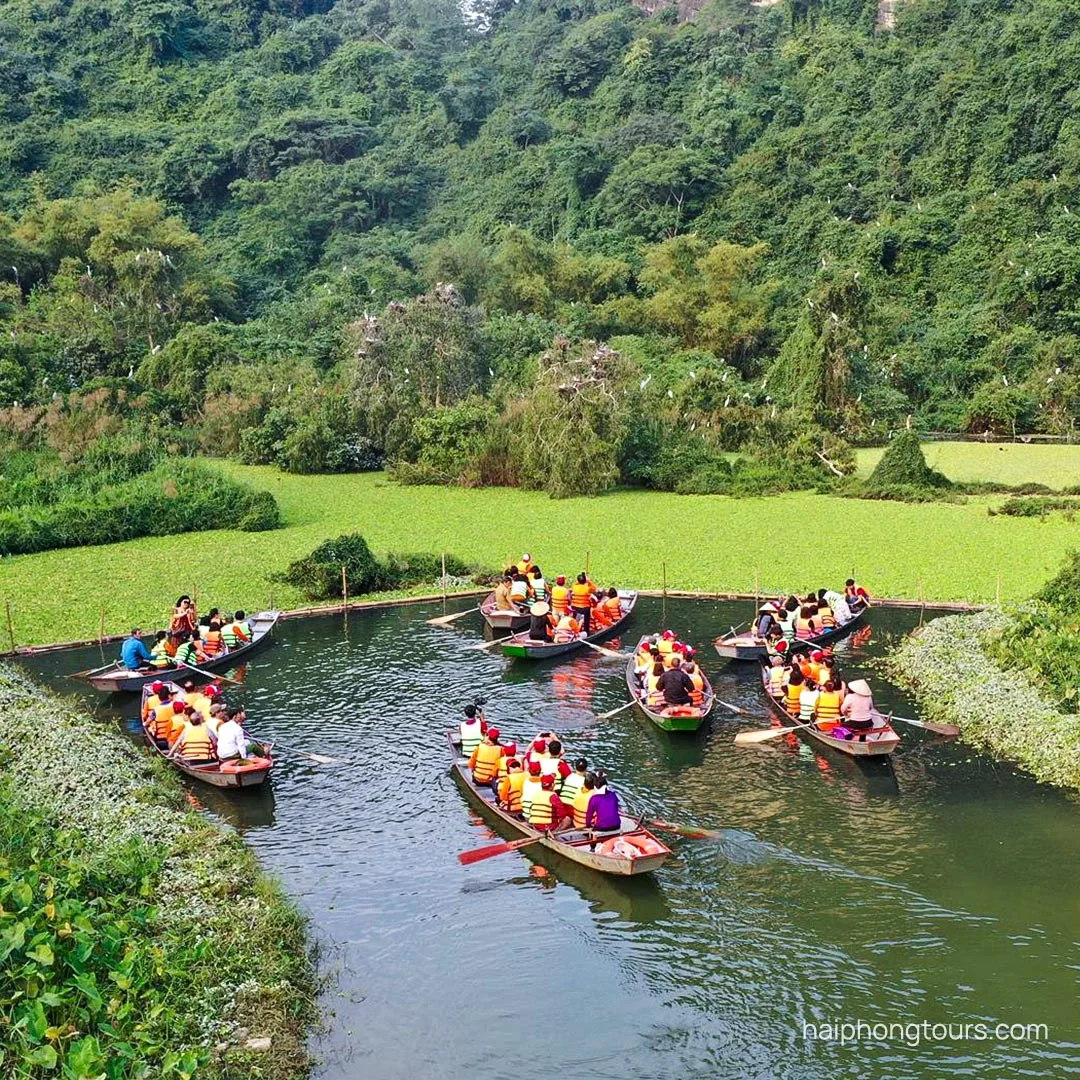


Rowboats and birds in the Thung Nham wetland landscape.
Ask exactly which caves, boats and viewing areas are included before buying a ticket or starting the drive. A partially open site may still be poor value if the closed component is your main reason for visiting.
Cuc Phuong National Park
Light rain in a forest is not automatically a closure, but conditions can change by route. Mud, fallen branches, high water, insects and poor visibility affect a short visitor-area walk differently from a longer forest trail or overnight stay.
Contact the park for the exact route and program you want. Follow barriers and staff instructions, and do not infer that daytime trails are open because an accommodation or conservation facility answers the phone. If warnings mention flooding or landslides, replace the forest day rather than improvising a route.
A genuinely indoor fallback: Ninh Binh Museum
Ninh Binh Museum, in the urban Hoa Lu area, is one of the few public attractions that can provide a genuinely indoor visit. Its collections introduce the province’s natural history, archaeology and cultural heritage, making it more useful than sitting in a vehicle waiting for rain to stop.
Access needs planning. The official schedule is split between morning and afternoon on weekdays, with a midday closure. Weekend visits are not standard walk-ins and require advance contact. Confirm the current day’s access before traveling from Tam Coc or Trang An, especially on a weekend or public holiday.
Three workable bad-weather plans
If you are already staying in Tam Coc or Trang An
- Check the official warning and ask your accommodation to confirm one boat route.
- If the route is operating in light rain, make it the day’s only major outdoor commitment.
- If it is suspended, choose Hoa Lu or the museum only after confirming access, then use the remaining time close to your accommodation.
- Recheck the next morning instead of chasing several closed piers in one day.
If you have a one-day trip from Hanoi
Ask the tour provider what is actually operating before the vehicle leaves Hanoi. A generic promise that the tour departs is not enough; ask what replaces the boat, cycling or Hang Mua if those components stop. If the boat ride is your main reason for traveling and a severe-weather warning is active, rescheduling is usually more useful than spending much of the day on the road for a reduced program.
If you have two days
Put the boat ride in the clearest confirmed window and keep Hoa Lu, the museum or a slow local block for the wetter period. Do not lock the whole visit to a fixed morning/afternoon order several days in advance. Check again each evening and before departure.
Transport in heavy rain and flooding
- Do not ride a scooter or bicycle through heavy rain, poor visibility or standing water on an unfamiliar road.
- A car with a local driver reduces exposure but cannot make a flooded road safe.
- Ask your accommodation or driver about the exact road to the attraction; rural conditions can differ from the urban center.
- Do not walk or drive through floodwater, move a barrier or pressure a driver to continue past a closure.
- Allow extra time for the return to Hanoi, a railway station or an airport. Avoid a weather-sensitive attraction immediately before a fixed connection.
Same-day checklist before you leave
- Read the warning: check the official national forecast and hazardous-weather bulletin, not only a phone weather icon.
- Check Ninh Binh tourism updates: look for closure or restriction notices on the official tourism site or Ninhbinhtourisminfo app.
- Confirm the exact activity: ask the attraction, hotel or booking provider about ticket sales, route changes, cave access and the latest departure.
- Confirm the road: ask about local flooding, barriers and the return journey before hiring a vehicle.
- Clarify booking terms: if you prepaid, ask what happens when one component closes before you leave for the meeting point.
- Check again: conditions can change between breakfast and arrival at the pier.
Frequently asked questions
Is Ninh Binh worth visiting in August?
Yes, if you can keep the schedule flexible. August falls within northern Vietnam’s wetter season and within the broader tropical-cyclone risk period, so a two-day stay is more resilient than making one fixed boat ride the condition for a successful day trip. A seasonal pattern is not a forecast; check the exact dates.
Does Trang An close when it rains?
Not automatically for every shower. However, routes can change, cave passages can be omitted, ticket sales can stop and the entire attraction can close when weather or water conditions are unsafe. Confirm the current route on the day.
Is Trang An or Tam Coc better in rain?
Choose the one that confirms an acceptable route is operating. Trang An’s managed routes may change with cave or water conditions; Tam Coc’s river journey is also exposed to rain. Neither is a guaranteed wet-weather option, and traveling between both piers to search for an open boat wastes time.
Are caves a good rainy-day activity?
Do not assume so. Some caves require a boat, outdoor steps or a forest approach, and high water can close the cave section before the surrounding attraction closes. Check the named cave and access route.
Will a tour refund me if the boat closes?
There is no single rule for every operator or booking platform. Ask before departure whether the provider substitutes another attraction, reschedules the trip or refunds the affected service. Keep the written answer with your booking record.
Final planning advice
Ninh Binh can still be rewarding in light rain, but flexibility matters more than a fixed checklist. Confirm one main activity, keep a compact cultural or indoor backup, and stop when thunder, wind, floodwater or an official restriction appears. The safest rainy-day plan is the one that can change before you have committed to a long drive or an exposed route.
Useful guides for your trip
Would you like help fitting this experience into your trip? Contact us with your travel dates, starting point, available time and group size. Tell us about walking limits or special interests so we can suggest a practical itinerary.