
A cross-terminal connection at Noi Bai requires a direction-specific baggage plan. For international to domestic, complete arrival procedures and retrieve required baggage at T2, use the public-area shuttle to T1, recheck at the domestic airline counter, then complete security and reach the gate.

For domestic to international, retrieve required baggage at T1, use the shuttle to T2, complete the international airline’s check-in or transfer procedure and baggage recheck, then continue through the required departure controls and gate process. Confirm the actual baggage tag and operating airlines; never assume through-checking.
Identify the connection direction
T1 serves domestic flights and T2 serves international flights. Write the arriving and departing airlines, flight numbers, terminals, and dates. A midnight itinerary can place two flights on different calendar dates.
This plan covers cross-terminal international–domestic and domestic–international flows, not an international-to-international airside transfer.
Read the baggage tag
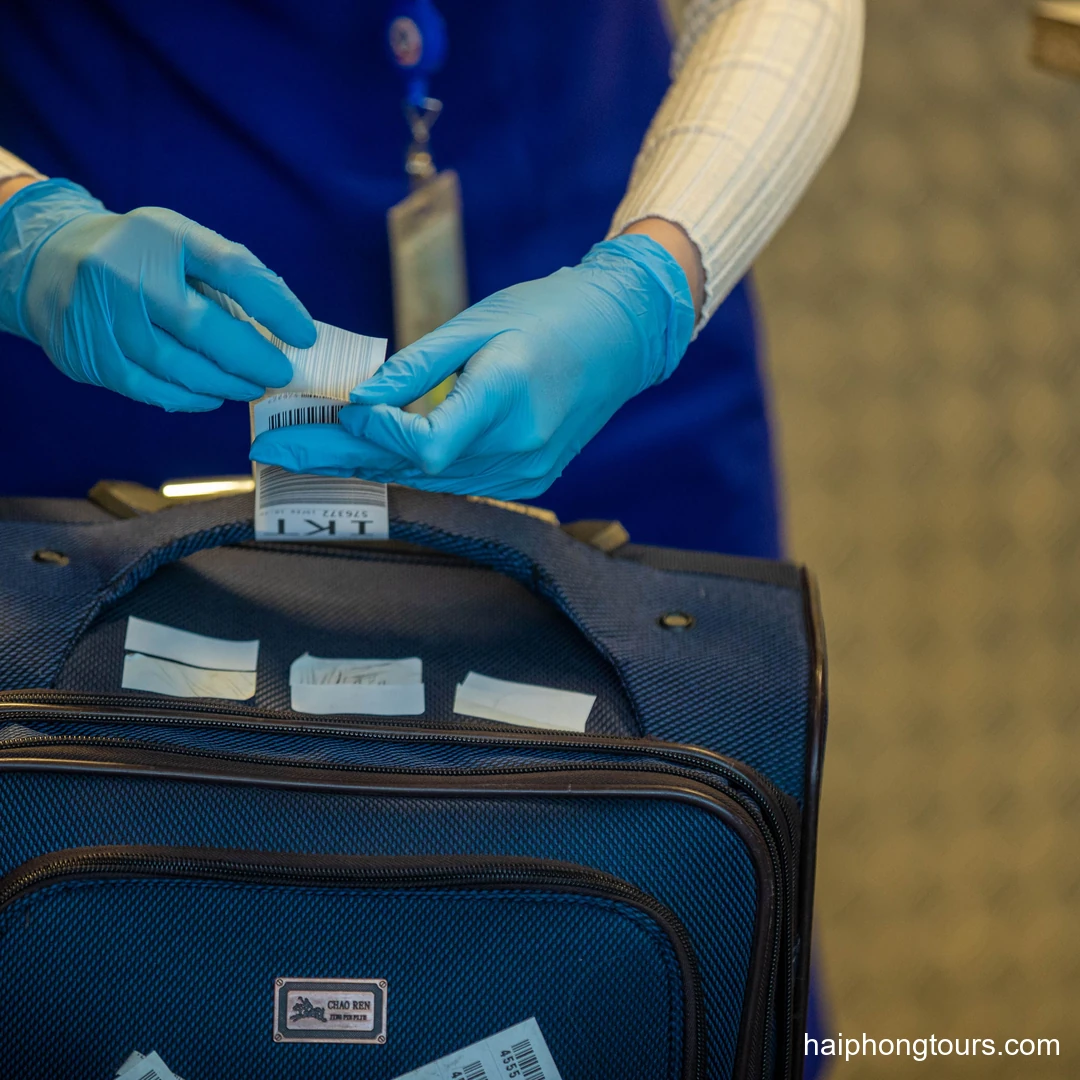
Check the destination printed on the baggage tag and ask the operating airline whether the bag must be collected at Noi Bai. A through-ticket, shared itinerary, or verbal assumption does not prove the bag is checked through.
Keep the tag receipt and airline answer. Separate tickets require especially careful confirmation, but no ticket structure should replace the actual baggage instruction.
International arrival at T2
Follow the required international arrival procedures, then reach baggage claim and collect every bag when instructed. Count bags before leaving the reclaim area and use a free trolley if helpful.
Enter the public arrivals area with documents, valuables, and onward ticket accessible. Do not search for the terminal shuttle before completing the required arrival flow.
Move from T2 to T1
Reach Level 1 public arrivals. Because current official pages conflict on the exact T2 lane or column, use live shuttle signs or ask the information counter for the operating pickup.
Allow walking and scheduled waiting time. The free shuttle is not instantaneous or on demand.
Recheck at T1
At T1, locate the operating domestic airline counter or instructed transfer point. Present the onward booking, complete the airline process, and recheck baggage as required.
Then complete domestic security and follow live gate information. Arrival at T1’s curb does not complete the connection.
Domestic arrival at T1
After the domestic flight, retrieve baggage when required and count it before leaving the hall. Keep the international itinerary and passport accessible.
Move to Level 1 and follow current signs toward the free shuttle stop at Hall or Wing A. Confirm the direction to T2.
Move from T1 to T2
Use the public-area shuttle and include the scheduled wait. Keep all bags together and retain the trolley only as airport rules allow.
On arrival at T2, locate the operating international airline’s counter or instructed procedure. Do not assume the counter is beside the shuttle drop-off.
Complete T2 departure procedures
Check in or complete the airline transfer process, recheck bags as instructed, and then follow the international departure sequence, including the required controls and current gate information.
Live counter and gate details control. A saved terminal map cannot guarantee the operating desk.
Build a complete time budget
Include arrival procedures, baggage delivery, public-hall walking, shuttle location, scheduled wait, road travel, airline counter, baggage recheck, security or immigration, and gate walking.

Do not assume any minimum connection is guaranteed. Confirm the operating airlines’ deadlines and assess whether the itinerary remains workable.
Handle missing or delayed baggage
If a required bag does not arrive, use the operating airline’s baggage process before leaving the area. Tell the onward airline that the connection is at risk.
Do not abandon required reporting merely to catch the shuttle. Preserve tags and written instructions.
Use a fallback when the shuttle is unsuitable
The published shuttle window is 05:00 to 01:00. If timing or service makes it unusable, choose a legitimate public-area road vehicle and state T1 domestic or T2 international precisely.
Recalculate all receiving-terminal deadlines. A faster road ride does not remove check-in, recheck, security, immigration, or gate time.
Coordinate separate tickets
When flights are on separate tickets, keep both confirmations and the actual baggage instruction available. Do not assume the receiving airline knows about the arriving flight or will protect the later booking.
Tell the receiving airline about a delay while options still exist. Preserve any written instruction about check-in or baggage, but do not invent a minimum connection or protected status.
Manage a family or group connection
Assign one adult to documents and airline communication and another to count people and bags. Keep children with a named adult through reclaim, trolley movement, shuttle loading, and the receiving counter.
Do not split the group between shuttles unless every traveler has the exact terminal, airline counter, and reunion point. A faster traveler arriving first does not replace the documents carried by another person.
Verify every handoff
Count checked bags at reclaim, before the shuttle, after terminal arrival, and at recheck. Keep baggage tag receipts until the final airline accepts the bags.
At each stage, confirm which organization is responsible: arriving airline, airport shuttle, or departing airline. Airport information can guide movement but cannot change the operating airline’s baggage decision.
Keep medicine, documents, valuables, and one essential clothing layer in hand baggage throughout the entire cross-terminal connection process. Do not place the onward boarding proof inside a case that must be rechecked at the next airline counter.
Connection checklist
- Direction and terminals identified;
- operating airlines confirmed;
- baggage tag and retrieval instruction checked;
- bags counted before public hall;
- current shuttle stop verified;
- waiting time included;
- baggage rechecked at the receiving airline;
- security or immigration and gate completed;
- road fallback ready.
Hai Phong Tours does not control Noi Bai baggage or airline procedures. Follow the operating airlines and airport staff, and treat baggage retrieval, public shuttle movement, recheck, departure controls, and the live gate as separate required stages.
Would you like help fitting this experience into your trip? Contact us with your travel dates, starting point, available time and group size. Tell us about walking limits or special interests so we can suggest a practical itinerary.