
Adventure travel in North Vietnam ranges from a guided valley walk or calm-water kayak to a multi-day trek, remote motorcycle loop or cave expedition. Choose the activity by skill, rescue access, weather and recovery time. A famous destination does not make every route suitable for a beginner.
For a first active trip, combine Ninh Binh cycling and boat travel, Cat Ba or Lan Ha kayaking, and one guided mountain hike. Add Ha Giang self-riding, Fansipan trekking or remote camping only when your experience, insurance and operator checks support the specific activity.


Cyclists on rural roads and paths in Ninh Binh.
Quick adventure decisions
- Best mixed first trip: Ninh Binh plus Cat Ba or Lan Ha Bay.
- Best continuous road adventure: Ha Giang, by private car, easy rider or legally qualified self-rider.
- Best mountain trekking base: Sapa and the Hoang Lien area, with route and permit checks.
- Best quiet hiking: Pu Luong, Mai Chau, Mu Cang Chai or Y Ty according to season and access.
- Best island combination: Cat Ba hiking, caves and kayaking.
- Best waterfall-and-cave route: Cao Bang, with enough road days.
- Best low-risk rule: use a trained guide, daylight and a weather alternative.
- Most important insurance check: confirm that the exact activity, vehicle, elevation and evacuation area are covered.
Choose the adventure level before the destination
Low-intensity adventure
This level includes short marked walks, sightseeing boats, flat village cycling, cable cars and guided kayaking in calm conditions. It suits first-time outdoor travelers, families and mixed-fitness groups. Low intensity does not mean no risk: boarding, heat, slippery stone and traffic still need attention.
Moderate adventure
Expect several hours of activity, uneven trails, repeated steps, longer paddling or cycling on mixed surfaces. A Cat Ba National Park hike, Ninh Binh viewpoint climb, guided rural ride or full-day valley trek may fit here depending on route and weather.
Ask for distance, elevation gain, surface and actual moving time. “Moderate” is only a label until those details are known.
High-commitment adventure
Multi-day remote treks, technical cave routes, exposed mountain riding, unsupported cycling and backcountry camping have fewer easy exit points. Fitness is one requirement; navigation, equipment, judgment and emergency planning are separate skills.
A high-commitment activity should have a route plan, qualified leadership, weather criteria, communication method and evacuation procedure. Do not use social-media footage as the safety briefing.
For coached practice in the capital, see the Hanoi dirt-bike lesson guide.
Cat Ba and Lan Ha Bay
Cat Ba offers North Vietnam’s most compact mix of island hiking, caves, limestone scenery, kayaking and boat travel. A traveler can hike in the national park, paddle through a sheltered bay route and sleep in town or on a cruise without crossing several provinces.
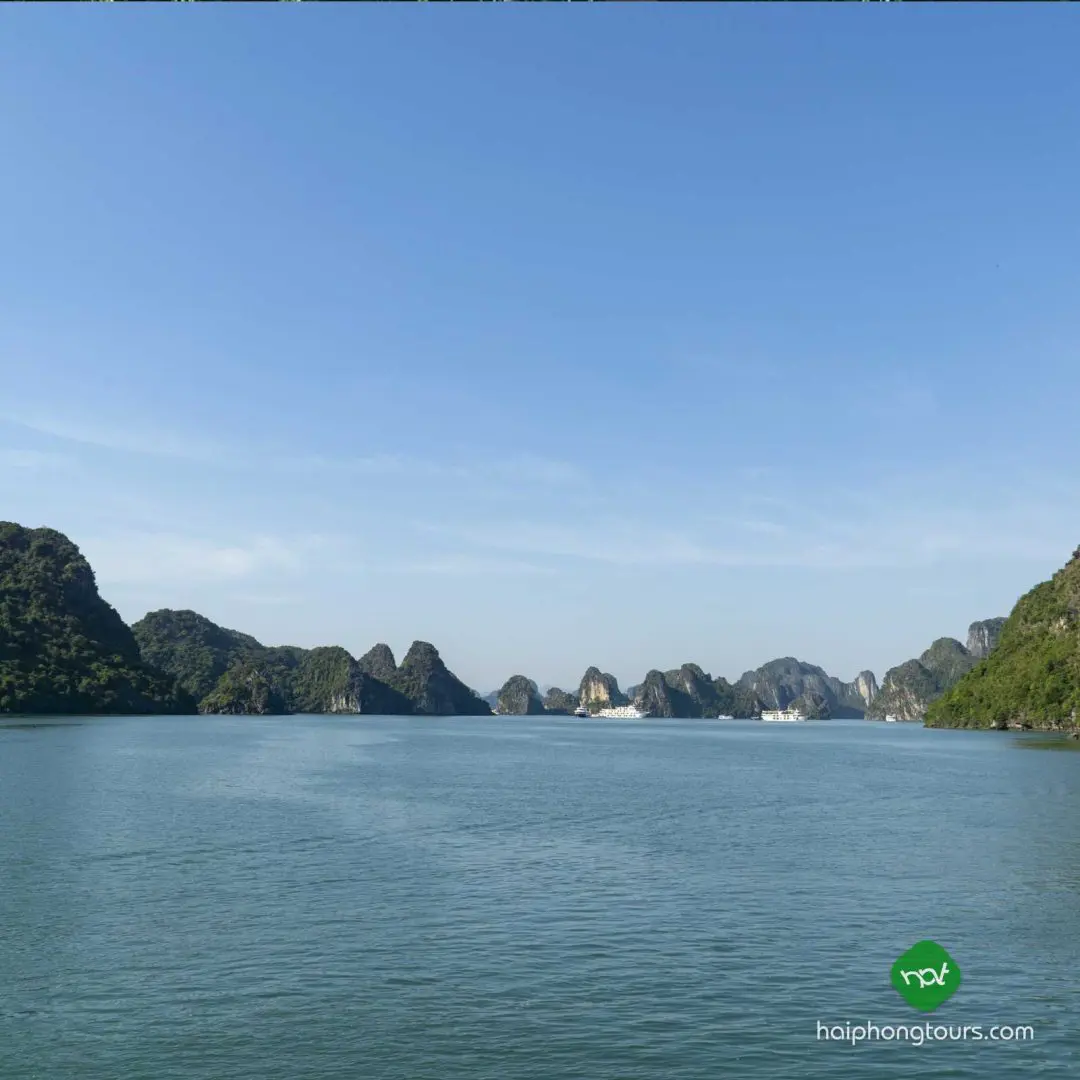
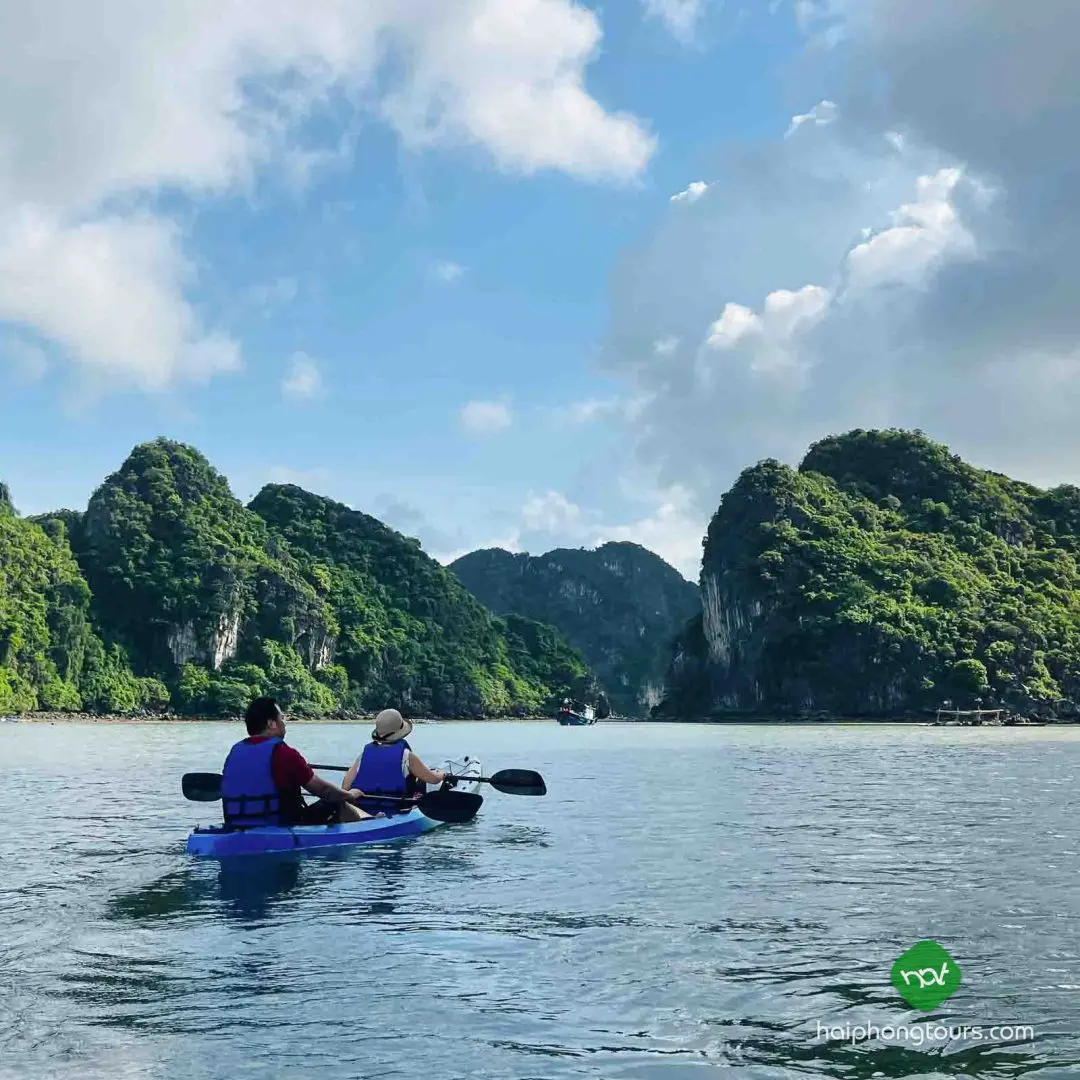
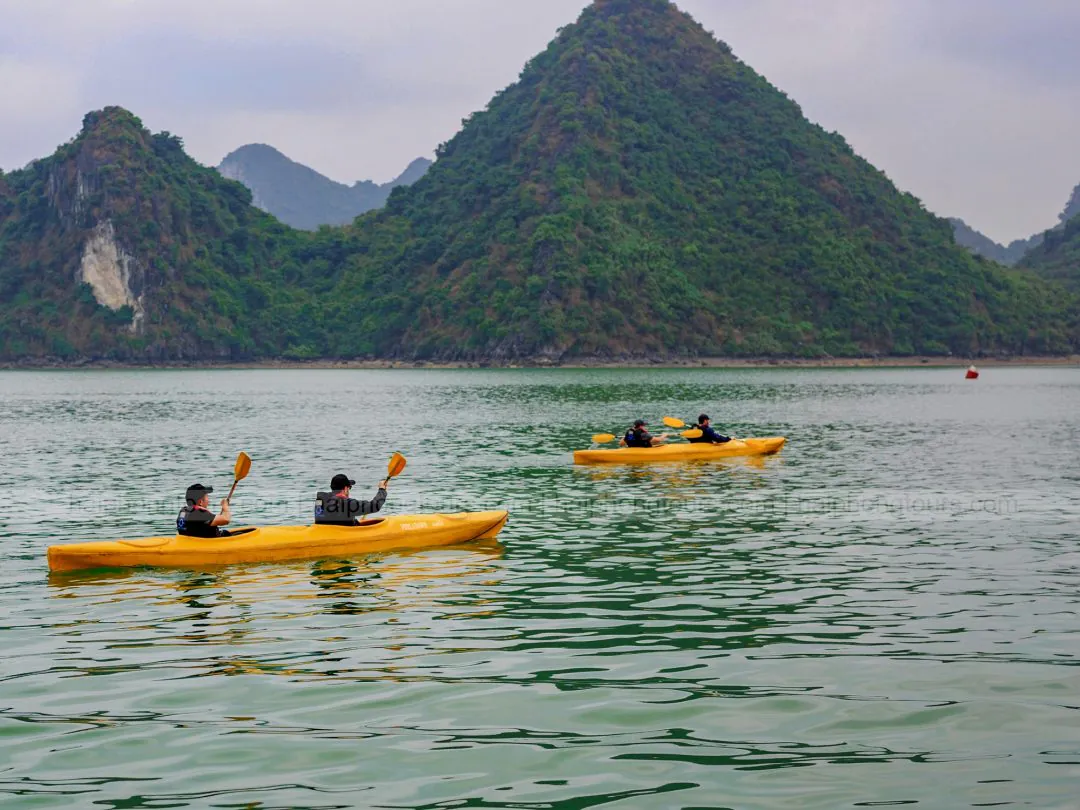
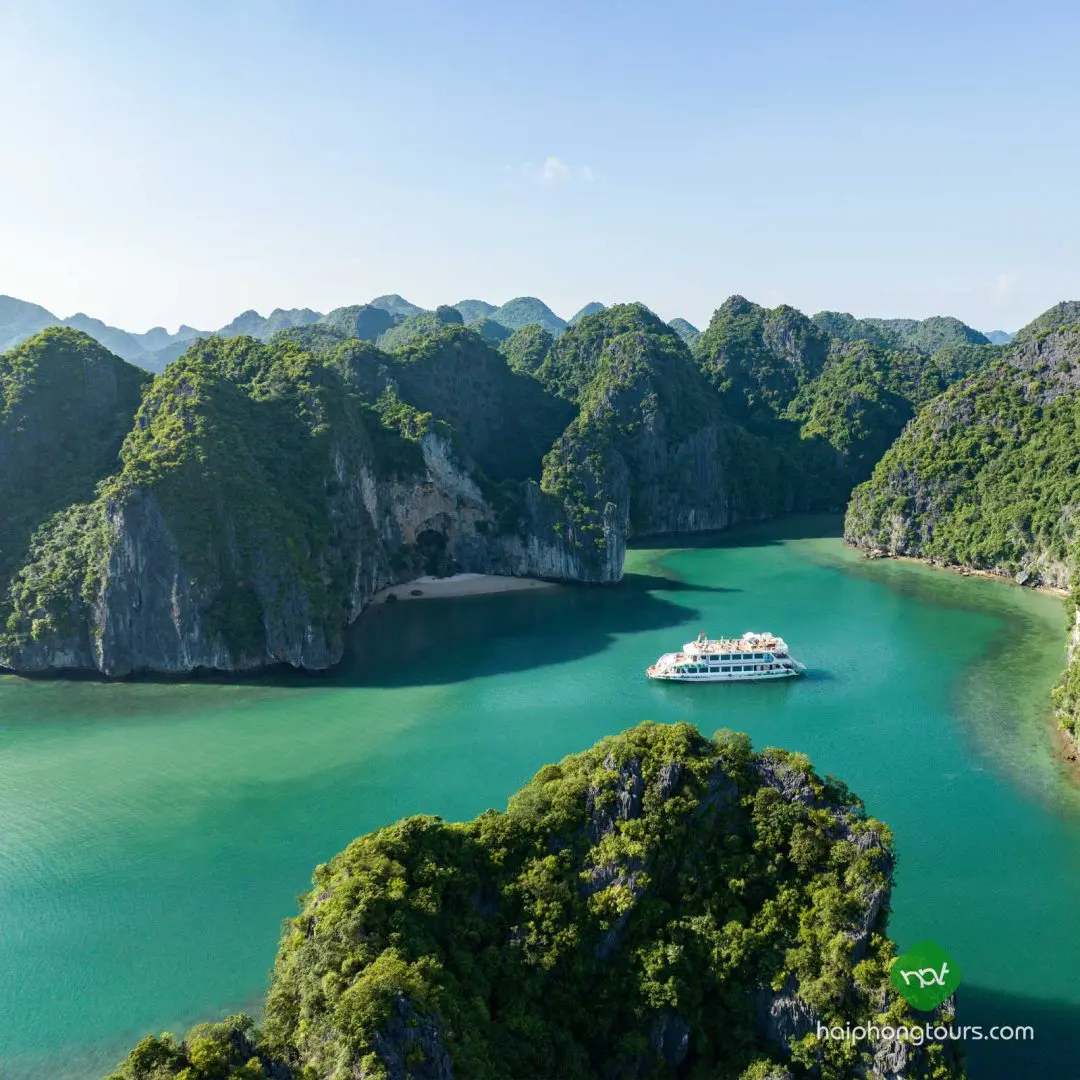
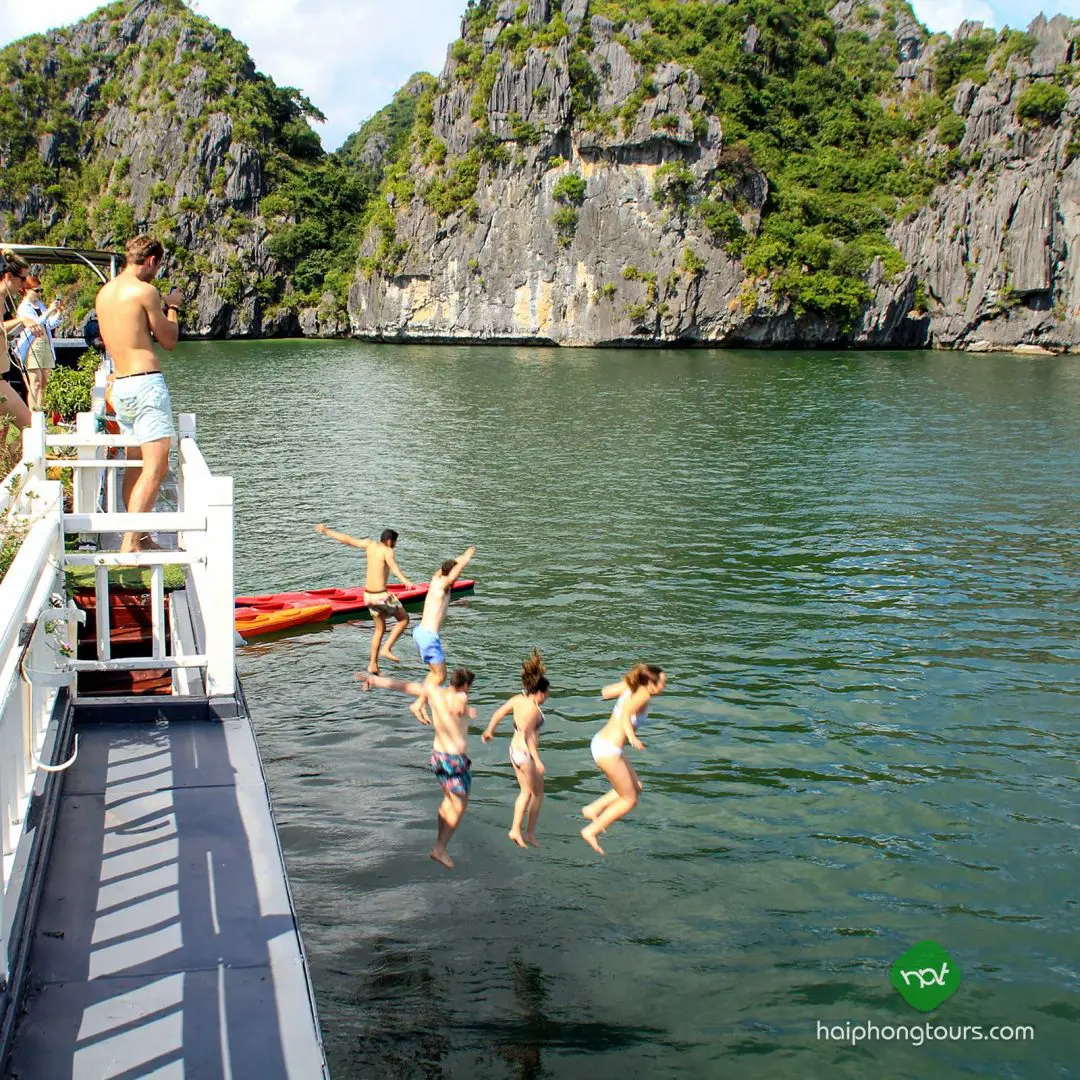
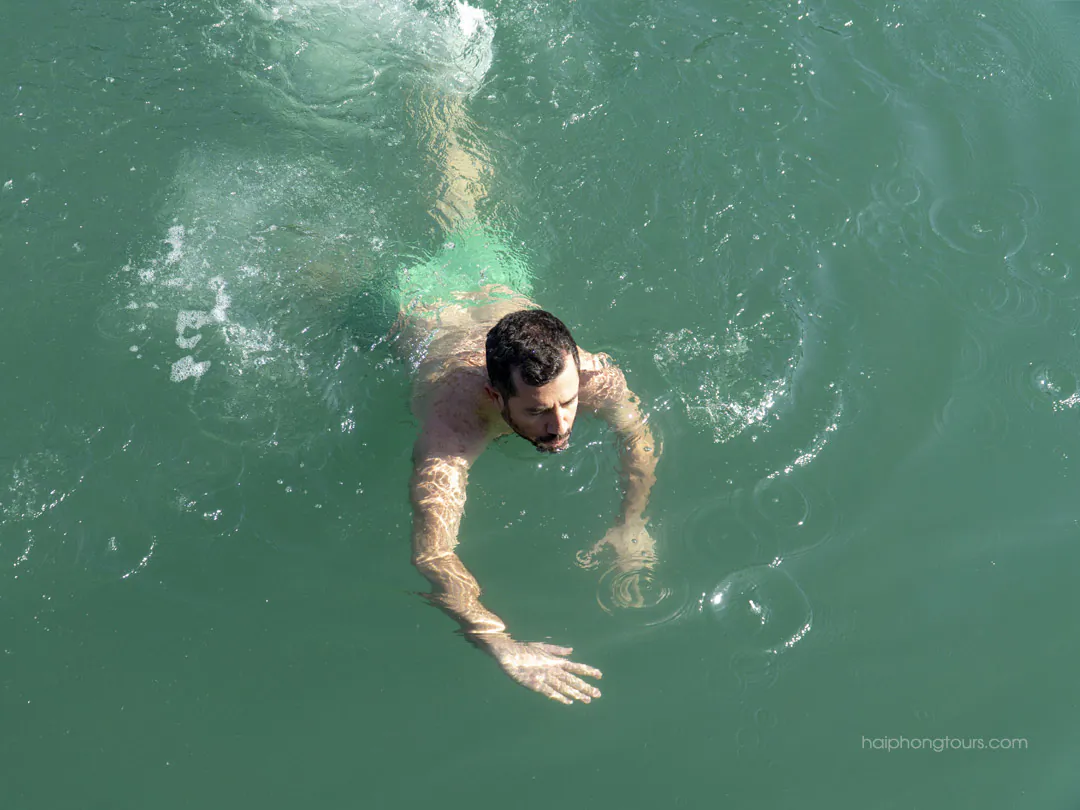
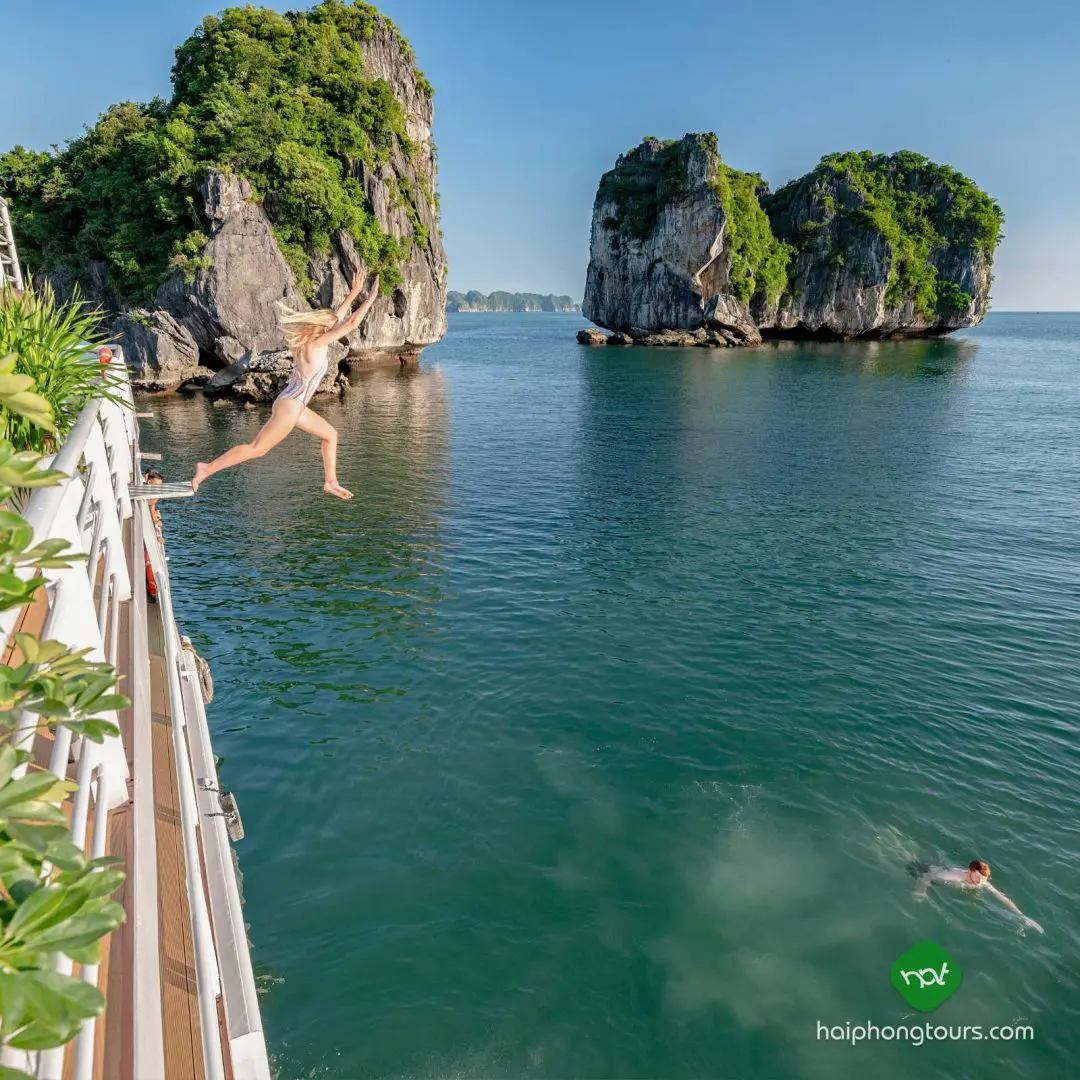
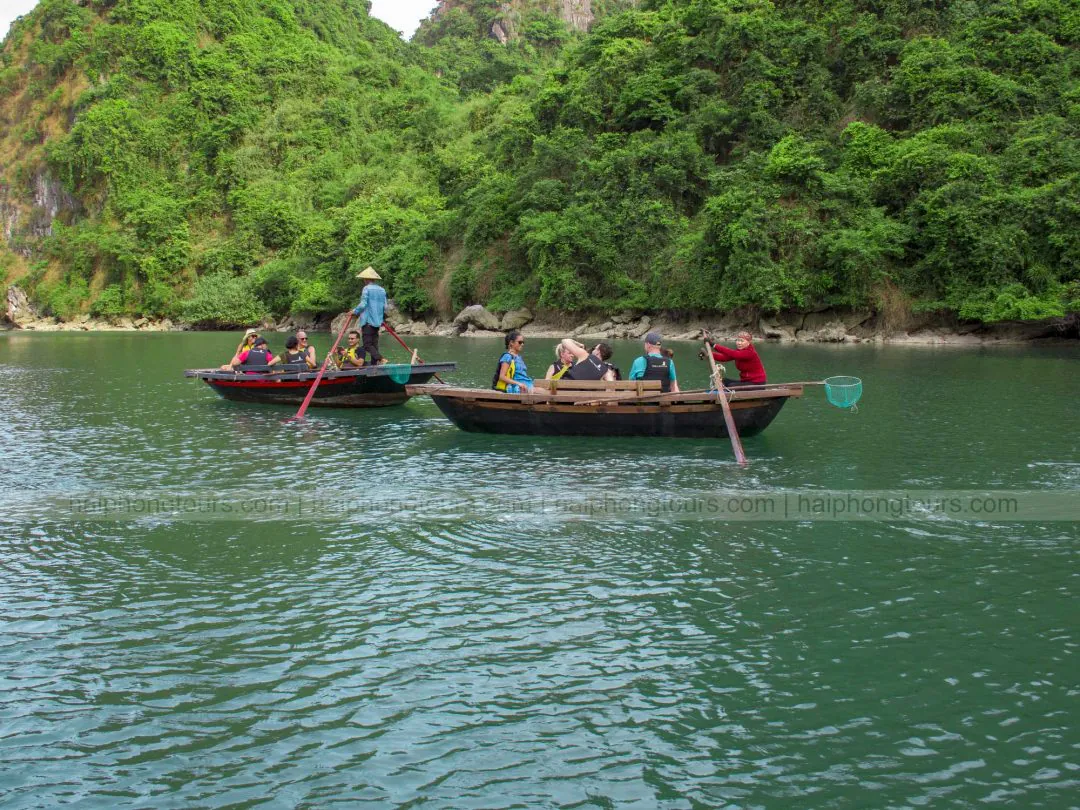
Limestone islands, kayaking, swimming and rowboats around Lan Ha Bay.
Conditions determine the activity. Wind, current, visibility and boat traffic affect kayaking; rain and humidity change the forest trail. Ask whether the kayak is single or double, where entry occurs, how far the route goes and whether a support boat remains nearby.
National-park trails range from short visitor walks to routes requiring a guide and vehicle or boat pickup. The Cat Ba National Park trails guide explains route shape, return logistics and surfaces.
Many cruises include kayaking, but duration and location differ. Use the current Hai Phong Tours cruise directory to compare active vessels, then verify the actual itinerary and whether a non-kayaking alternative is provided.
Ninh Binh
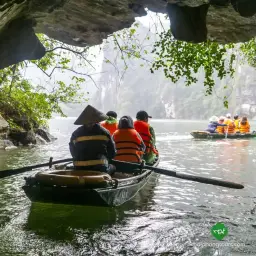
Ninh Binh combines low-intensity boats with cycling, temple walks and steep viewpoints. Trang An and Tam Coc require prolonged sitting in a small boat. Village cycling can be gentle, but roads are shared with motorbikes, cars and farm traffic.
Hang Mua’s viewpoint is a staircase climb, not an easy extension to every boat tour. Heat, humidity and wet stone change the effort. Start early, carry water and turn around when footing or weather becomes poor.
Current packages on the Ninh Binh Day Tour from Hanoi combine different boat routes, historical sites, cycling and Hang Mua. Select the package whose physical demands match the group.
Ha Giang
Ha Giang makes the mountain road the central adventure. Private cars, easy riders and self-riders experience the same landscape with very different risk and fatigue. A rental shop handing over a motorcycle does not prove that the rider is legally licensed, insured or skilled for steep roads.
Use four road days for a first loop, plus arrival and departure time. Do not begin technical riding directly after a sleeper bus. Fog, rain, road work, loose material and heavy vehicles can change a short map stage.
The Ha Giang Loop route guide explains the common northern arc, overnight towns and return options. The North Vietnam road-trip guide compares private cars, easy riders and self-driving.
Sapa and Hoang Lien
Sapa gives access to valley walks, village routes and high-mountain trekking. The town’s tourism infrastructure does not make every trail easy. Mud, stone steps, steep agricultural paths, fog and heat all affect a route.
Fansipan can be approached by cable car or by a demanding trek. These are different activities. A cable-car visit still includes station movement, stairs and high-elevation weather; a trek needs route permission, qualified guidance, equipment and a clear turnaround plan.
For village hiking, ask whether the path crosses private land, where lunch and toilets are available and how the group returns. Avoid routes that pressure residents to open homes or create a costume-photo performance.
For runners, compare a guided Sapa trail-running holiday with a village trek.
Mai Chau and Pu Luong
Mai Chau suits gentle cycling and valley walks with easy access from a central village base. Pu Luong adds steeper roads, terraced slopes and longer walking options. The two areas can form one road route but should not be treated as identical.
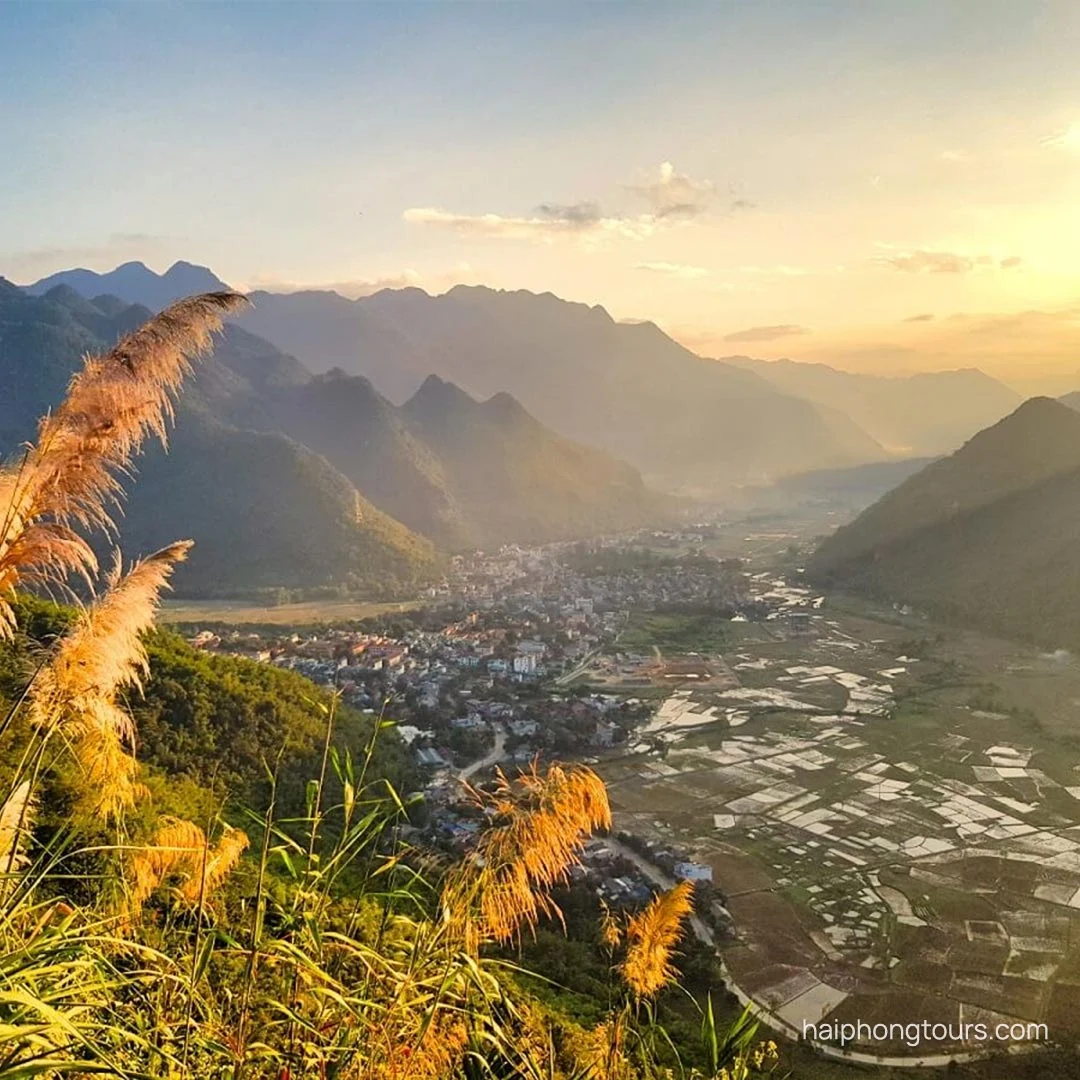
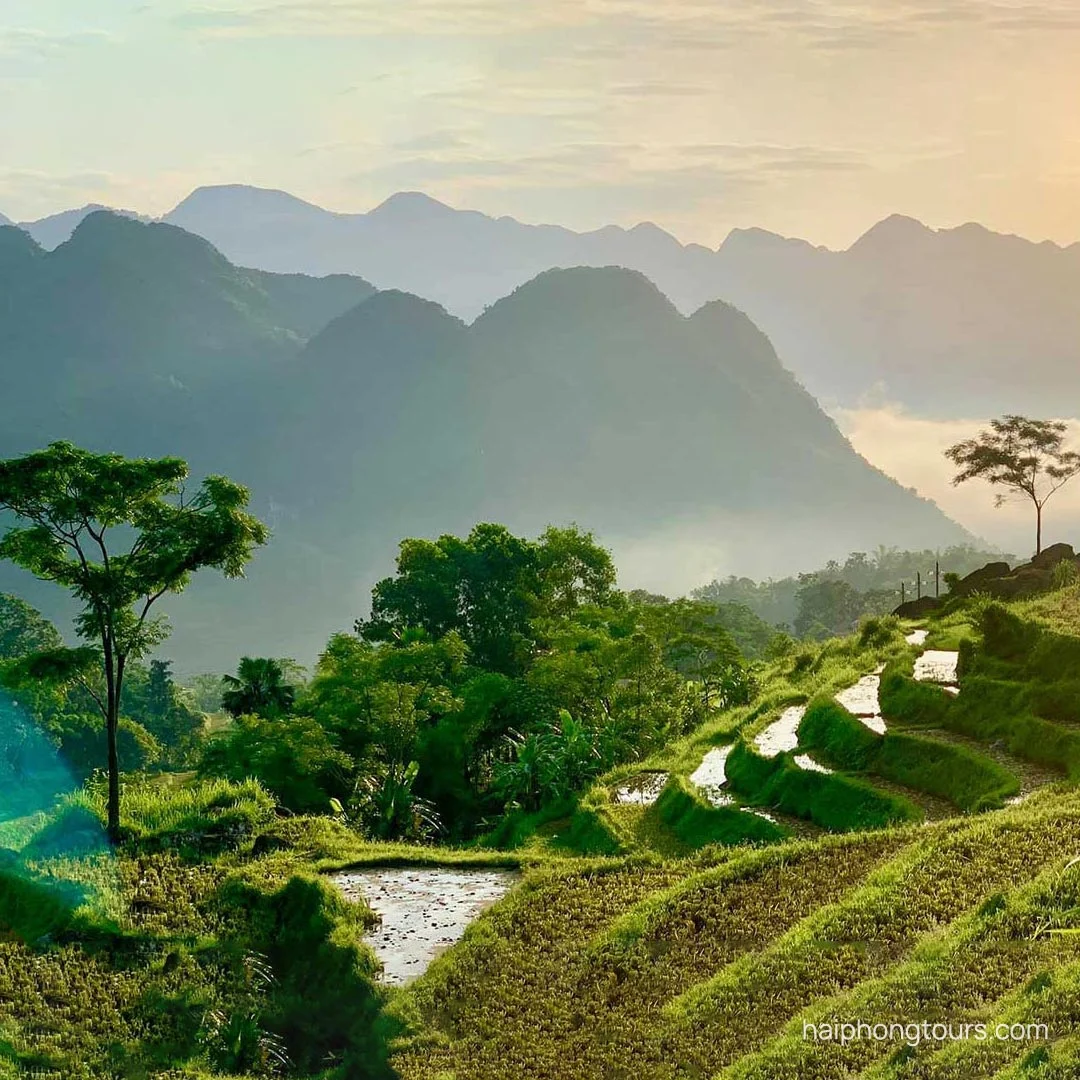
Mountain valleys and rice terraces in Mai Chau and Pu Luong.
In Pu Luong, accommodation may sit on a hillside with many steps. Confirm the route from vehicle to room before using the property as a recovery base. After rain, choose a shorter valley walk instead of forcing a slippery ridge or forest trail.
Mu Cang Chai and Y Ty
These western mountain areas suit landscape-focused road trips and guided walks. Rice color changes with elevation, farming decisions and weather. One published “golden season” date cannot predict every valley.
Road access and accommodation are more limited than in Sapa. Use a driver familiar with the route, keep daily stages short and check current road conditions. The Mu Cang Chai guide and Y Ty guide help choose between them.
Cao Bang and Ba Be
Cao Bang combines Ban Gioc Waterfall, caves, karst valleys and geopark roads. Ba Be adds lake and forest activities. This is a car-friendly adventure region because the road connects distinct sites, although individual walks and boat access still need checking.
Waterfall edges, cave steps and wet rock require secure footwear. Border-area instructions can affect access and photography near Ban Gioc. Carry your passport and follow current signs.
Use the North Vietnam caves guide to distinguish show caves, boat caves and routes that require specialist equipment.
Hai Phong countryside
Hai Phong provides a useful short active day without a remote expedition. Elephant Mountain and surrounding countryside can combine hiking with a city or port stay. Limestone surfaces and steps still become slippery in rain.
The current Hai Phong Hiking Tour is a full-day format with Hai Phong pickup and an Elephant Mountain or countryside focus. Confirm the selected route, footwear and weather before departure.

Trekking: ask for route facts
A useful trekking description states:
- distance and elevation gain;
- moving time and total time;
- surface, exposure and river crossings;
- highest elevation and expected temperature;
- guide ratio and group size;
- water, food and toilet plan;
- turnaround time and bad-weather alternative;
- transport and communication at the exit.
The North Vietnam hiking and trekking guide provides a full planning framework. Choose the route from these facts, not from a single difficulty word.
Kayaking: calm water still needs discipline
Wear a correctly fitted personal flotation device and keep it fastened. Listen to the guide’s boundaries, stay clear of moving vessels and do not enter a cave or narrow passage after the group turns back.
Ask about wind, current, tide, route length, capsize procedure and support boat. A double kayak is often easier for a first-time pair, but weight balance and communication matter. Protect medication and electronics in a dry bag supplied or checked before launch.
Swimming ability does not replace a flotation device. If weather, shoulder mobility or confidence is poor, use the boat alternative.
For a guided city paddle, the Hanoi Red River SUP guide explains the Ben Bac–Long Bien route and equipment choices.
Cycling: separate trails from traffic
Flat village scenery can hide road risk. Ask how much of the route uses quiet lanes, unsealed tracks or active roads. Check bicycle size, brakes, tires, helmet and saddle before leaving.
A support vehicle adds value on a multi-day route, especially for luggage, mechanical failure and weather. The North Vietnam cycling guide covers bike choice, daily stages and surfaces.
Caves: know the access category
A lit show cave with constructed steps is different from a boat cave, a natural walking cave and a specialist expedition. Ask about darkness, water, ladders, confined passages, helmet use and the exit. Do not enter a closed or flooded cave.
Stay on the marked route, do not touch formations and never leave graffiti or objects. A phone light is not a substitute for expedition lighting and backup equipment.
Camping: permission and weather first
Use an established campsite or obtain clear land-management and local permission. An attractive viewpoint can be exposed to wind, lightning, fire risk or sudden fog. Do not camp on farmland, a sacred site or a road edge.
Carry out waste and avoid open fires unless the site explicitly permits them. The North Vietnam camping guide covers site choice, water, storms, toilets and emergency exits.
Tandem paragliding near Hanoi
For a flight within reach of the capital, the Hanoi tandem paragliding guide compares Doi Bu and Vien Nam, current meeting points and the difference between the flight fare and a complete outing. Keep the return flexible and agree on charges for transport already used if weather prevents flying.
How to evaluate an operator
- Ask who leads the activity and what experience they have on this route.
- Request the maximum group size and guide ratio.
- Inspect activity-specific equipment before departure.
- Ask how weather cancellation and refunds work.
- Identify the communication method where mobile signal fails.
- Ask where the nearest practical road, boat landing or medical facility is.
- Confirm food, water, permits, transport and porter arrangements.
- Check what happens if one participant must stop early.
A waiver does not replace safe operation. Do not continue when the guide, equipment or route differs materially from the booking.
Insurance and legal checks
Read the policy’s activity definitions. Trekking may be limited by elevation; motorcycle cover may depend on engine class and a legally valid license; caving, climbing or kayaking may require an activity extension. Emergency evacuation and search costs are separate from routine medical treatment in some policies.
Carry the policy number and assistance contact offline. Tell the insurer the actual activity rather than using the broad word “tour.” If self-riding, confirm legal driving authorization for Vietnam and the vehicle class before accepting a motorcycle.
Weather and seasonal judgment
North Vietnam does not have one adventure season. Summer heat and heavy rain affect trails, roads, rivers and caves. Winter can be cool in the delta and cold at elevation. Fog reduces both mountain views and riding safety.
Check the North Vietnam weather guide for broad planning, then use current forecasts and operator information. A safe cancellation is part of adventure planning, not a failed trip.
Pack by failure point
- Footwear with grip for the actual surface
- Rain and warm layers suitable for elevation
- Sun protection and treated drinking water
- Personal medication and a compact first-aid kit
- Offline map, hotel details and emergency contacts
- Power bank and waterproof protection
- Cash for remote services without exposing all valuables
- Dry clothing stored separately on water activities
Equipment should solve a known problem. Heavy technical gear is unnecessary for a short guided walk, while ordinary city shoes are inadequate for wet rock.
A practical ten-day active route
- Days 1–2, Hanoi: recover, walk the city and check equipment.
- Days 3–4, Ninh Binh: boat, selected cycling and one staircase or temple route.
- Days 5–7, Cat Ba or Lan Ha: national-park hiking, kayaking and a recovery half-day.
- Days 8–10, Mai Chau or Pu Luong: guided valley walking and rural cycling according to weather.
Replace the final region with Ha Giang only when you can add more road days. Do not combine Sapa, Ha Giang, Cao Bang and Cat Ba into the same short adventure.
Adventure should leave an exit
The best North Vietnam adventure is not the route with the most activities. It is the one whose skill, weather and rescue plan you understand. Use guides for local access, choose equipment before departure and keep enough daylight to turn around.
Begin with one mountain activity and one water activity. Add greater commitment only after the route, operator, insurance and recovery time all remain credible.
You can keep the landscape while removing exposed viewpoints; see the North Vietnam guide for travelers with a fear of heights for river, bay and street-level alternatives.
Would you like help fitting this experience into your trip? Contact us with your travel dates, starting point, available time and group size. Tell us about walking limits or special interests so we can suggest a practical itinerary.