
An architecture-focused trip to North Vietnam should compare how buildings respond to trade, climate, belief, colonial history, state planning and modern growth. Hanoi provides the widest range, while Hai Phong adds a compact port-city layer and Ninh Binh shows how sacred and royal sites relate to landscape.
Use at least five days: three in Hanoi, one or two in Hai Phong and an optional two-night Ninh Binh extension. Walk short areas slowly rather than photographing isolated facades from a vehicle.
Read a city in layers
Before naming a style, note the building’s function, street width, setback, materials, ventilation, courtyard, roof, later alterations and current use. A building may combine several periods rather than represent one pure category.
Separate what can be seen from the street from what is open to visitors. A heritage facade is not permission to enter an office, home, school or worship space.
Hanoi Old Quarter: plot shape and everyday adaptation
The Old Quarter’s narrow-fronted tube houses, courtyards, shopfronts and guild-street pattern reward observation at walking speed. Look at how light, ventilation, storage and commerce work on deep plots.
The area is busy and pavements are not continuous walking corridors. Choose a few streets, pause from a safe position and avoid treating residential alleys as public interiors. The Hanoi Old Quarter walking guide helps plan a compact route and safe pauses.
Hanoi civic and colonial-era fabric
The French Quarter and nearby civic areas show wider streets, gardens, villas, institutions and monumental buildings. Compare these with the commercial density of the Old Quarter rather than reducing the difference to decorative style.
St. Joseph’s Cathedral, Hanoi Opera House and surviving villas can be understood from public space. Entry, performance and worship access vary, so confirm the current arrangement and respect services or official use.

For one focused church visit, see the Cua Bac Church guide.
Vietnamese religious and educational architecture
The Temple of Literature, pagodas, communal houses and temples organize courtyards, gates, roofs and ritual sequence differently from a Western civic building. Move through the site in the intended direction and notice thresholds, water, trees and changes in enclosure.

Active worship sites require appropriate dress and quiet behavior. Do not block offerings or photograph people closely during prayer.
Modern and collective housing
Hanoi also contains collective housing, postwar institutions and contemporary towers. Study how residents modify balconies, ground floors and shared space, but remember that these are homes rather than open-air museums.
Photograph from public areas and avoid publishing room numbers, faces or private interiors without permission.
Hai Phong: a compact port-city comparison
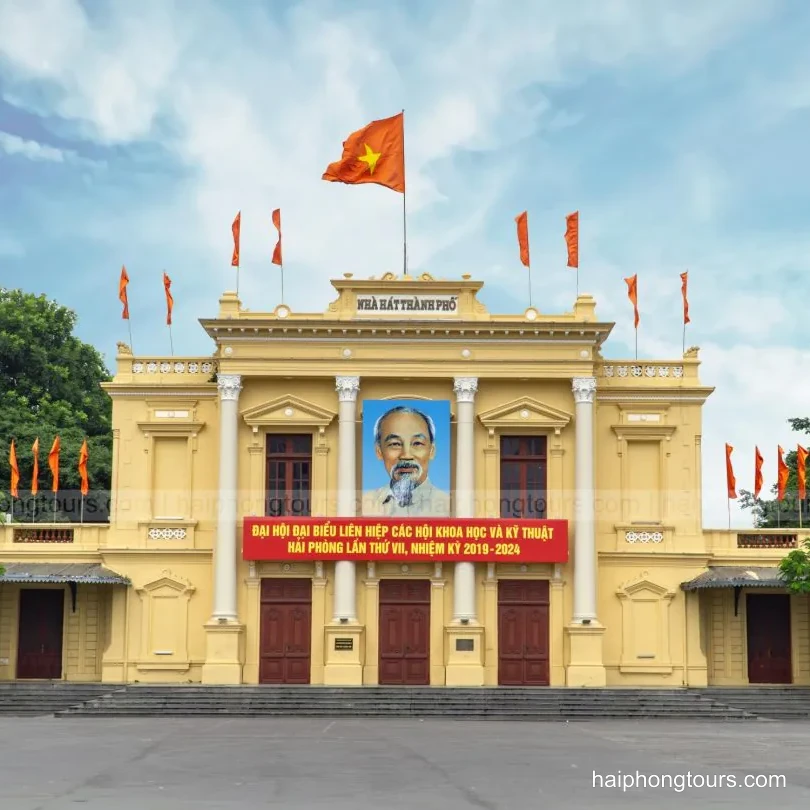
Central Hai Phong combines broad streets, civic buildings, commercial facades, the Opera House area and the historic railway station within a relatively compact urban core. The relationship between port commerce, transport and public space makes it different from Hanoi.
Use one walking loop around the central civic area and another focused stop rather than trying to add Do Son and Cat Ba on the same architecture day. Check current access before expecting to enter the Opera House or station interiors.
Ninh Binh: buildings within a karst landscape
Hoa Lu and the Trang An landscape place royal, religious and settlement history within limestone topography and waterways. The relationship between site and terrain matters more than collecting individual building styles.


Choose one boat route and one land heritage area. Leave Hang Mua’s viewpoint optional; the steep staircase is a landscape observation choice, not an architectural requirement.
Vernacular and community architecture
Hai Phong Tours suggests Cho Thuong covered bridge near Nam Dinh for a focused study of a roofed village crossing. Its tiled roof, repeated timber bays and stone surface show how shelter and movement share one compact structure. Add it to a planned Nam Dinh countryside outing; it is outside the Tam Coc–Trang An sightseeing cluster.
Village gates, communal houses, stilt houses and market structures vary by region and community. A tourism-ready community visit may explain construction and social use, while an ordinary village is not automatically available for guided entry.
Arrange specialist access, ask before entering homes and pay for structured interpretation where offered. Avoid using ethnic or rural architecture as a backdrop without understanding who uses it.
Photography and equipment
- Use a normal or moderately wide lens before relying on extreme perspective.
- Return in different light rather than entering unsafe traffic positions.
- Check tripod, drone and commercial-shoot permissions for each site.
- Keep doorways, pavements and worship routes open.
- Ask before photographing residents or work inside a building.
Rain can improve color and reflections but make stone, stairs and traffic more difficult. Carry simple weather protection and keep an indoor museum alternative.
Use a guide by subject
Ask whether a guide can explain urban history, construction, conservation or religious space, depending on your interest. A general city guide may provide historical context without offering specialist architectural analysis.
Request a route outline and clarify whether interiors are genuinely accessible. Do not accept private-entry promises that depend on ignoring site rules.
A seven-day architecture route
- Days 1–3, Hanoi: Old Quarter, civic quarter and religious or modern layer.
- Days 4–5, Hai Phong: central port-city fabric and one thematic extension.
- Days 6–7, Ninh Binh: Hoa Lu or another heritage area plus one landscape route.
Skip Ninh Binh when the interest is primarily urban; use the extra time to revisit Hanoi or Hai Phong in different light.
What makes the trip useful?
Good architecture travel connects a building to street, climate, use and change. Choose fewer areas, observe from public space, verify access and let the comparison between Hanoi, Hai Phong and Ninh Binh shape the route.
For a slower way to study these streets and buildings, the North Vietnam urban-sketching guide covers safe viewpoints, a compact kit and respectful practice in Hanoi, Hai Phong and Ninh Binh.
For work after dark, the North Vietnam night-photography guide covers daylight scouting, safe public viewpoints, compact equipment and etiquette in Hanoi and Hai Phong.
Useful guides for your trip
Would you like help fitting this experience into your trip? Contact us with your travel dates, starting point, available time and group size. Tell us about walking limits or special interests so we can suggest a practical itinerary.