
Hanoi is the strongest base for a North Vietnam art trip because it combines the national fine-arts collection, changing contemporary exhibitions, architecture and access to folk-art traditions in the Red River Delta. Give the city at least three full days, then add one workshop or regional extension whose current access has been confirmed.
Do not treat every craft demonstration as an artist studio or every decorative object as documented local work. Begin with museum context, ask galleries what is on view during your dates and buy only after you understand the maker, medium, edition and transport limits.
Start with the national collection
The Vietnam National Fine Arts Museum in Hanoi gives a chronological and material introduction to Vietnamese visual culture. Its permanent displays include sculpture, lacquer, silk, ceramics, folk art and modern painting. This is the best first stop because techniques seen here will reappear in galleries, workshops and souvenir claims.

Allow at least two focused hours. Choose two or three media to follow rather than trying to memorize every period. Opening days, temporary galleries and interpretation services can change, so check the museum’s own current information before the visit.
The Vietnam Fine Arts Museum visitor guide helps you choose a route through lacquer, silk, sculpture and folk art, compare English interpretation options and pair the collection with the nearby Temple of Literature.
Use contemporary galleries as a changing layer
Hanoi’s independent art spaces do not operate like a single permanent attraction. Exhibitions open and close, small venues may require an appointment, and the address in an old article may no longer be current. Build a short list from each venue’s own recent program, then reconfirm on the day.
- Ask whether the display is an exhibition, a commercial gallery, an artist-run space or a private collection.
- Check whether entry is open, ticketed or by appointment.
- Read the curator’s note before photographing labels or artwork.
- Do not expect every staff member or artist to provide an English tour without arrangement.
- Leave time between venues; crossing Hanoi can take longer than the map suggests.
For concrete places to start, compare Hanoi contemporary art spaces: Manzi has separate café and exhibition addresses, VCCA offers changing shows at Royal City, and Heritage Art Space combines a small art library with scheduled events at Complex 01. Choose the current program first, then plan the journey around its actual venue.
The North Vietnam architecture guide adds context for the buildings and neighborhoods surrounding many cultural spaces.
Understand four northern art traditions
Lacquer
Vietnamese lacquer can refer to labor-intensive layered work, modern fine art or factory-finished decorative objects. Ask about the support, pigments, number of stages and whether the piece is original, part of an edition or a reproduction. A glossy surface alone does not explain the method.
Silk painting and textiles
Silk may be the painted support, the woven object or only a marketing description. Confirm the fiber and process, keep the work dry and ask how it should be rolled or packed. For textiles, distinguish weaving, embroidery, appliqué, printing and machine production.
Folk woodblock prints
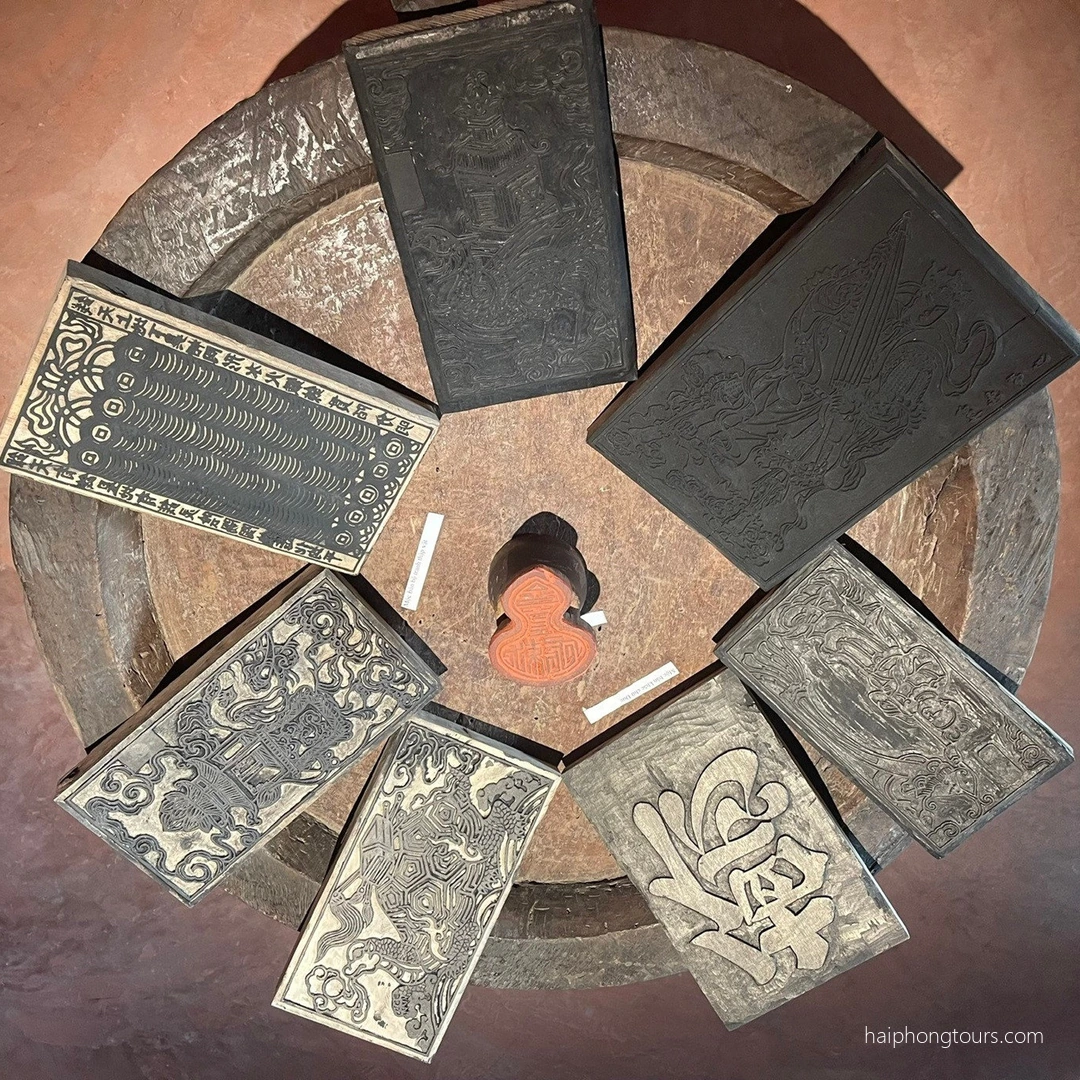
Dong Ho is associated with carved woodblocks, traditional subjects and paper prepared with a shell-derived surface. Contemporary prints vary in maker, paper, pigment and intended use. A village visit is most valuable when a workshop is expecting you and can explain how the block and impression are made.
Ceramics and applied art
Bat Trang is the most accessible ceramics extension from Hanoi, but its market, production workshops and hands-on visitor activities are different experiences. Confirm whether the visit includes a working studio, a retail stop or a short decorating activity. Ask about food safety before using decorative glaze ware for eating.
Choose a workshop for learning, not only a photo
A useful workshop states the technique, working time, group size, language support and what you will take home. Ask which stages are completed by the visitor and which were prepared in advance. A one-hour decorative session can be enjoyable, but it should not be presented as mastery of a multi-stage craft.
For a hands-on city session, the Hanoi painting-class guide distinguishes a taught lesson, a silk-painting project and a social painting event, with practical advice for taking your work home.
The North Vietnam craft-workshop guide helps compare pottery, prints, silk and incense by participation level and logistics.
For a countryside studio extension, Hai Phong Tours suggests an arranged visit to Hai Minh painting village near Nam Dinh. Meet the receiving artist, discuss paintings of local bridges and coastal scenery, or reserve a separate practical session. Pair it with time in Hai Hau, and settle the medium and packing before choosing a take-home painting.
Add Hai Phong for a different urban frame
Hai Phong’s central civic buildings, railway station, museum and port-city streets create a useful contrast with Hanoi. It is stronger for architecture, urban observation and historical context than for completing a long gallery list.
Plan one day around the center and check the current program of Hai Phong Museum or other cultural venues before travel. Port facilities and working infrastructure are not automatically public art or photography sites.

How to buy art responsibly
- Record the artist’s full name and the exact title of the work.
- Ask whether it is an original, edition, artist proof or reproduction.
- For an edition, request the edition size and number.
- Confirm medium, dimensions, year and care instructions.
- Ask for an invoice and any available certificate or provenance note.
- Discuss packing before paying, especially for lacquer, glass, ceramics or framed work.
- Check airline, customs and destination-country rules yourself.
Do not buy archaeological material, protected cultural objects or wildlife-derived materials on a seller’s verbal assurance. Old appearance is not provenance, and an export problem may only become visible at the airport.
A practical four-day art itinerary
- Day 1, Hanoi: National Fine Arts Museum and one nearby historical site.
- Day 2: two current gallery exhibitions in the same part of the city, with time to read and discuss.
- Day 3: one prearranged workshop or a focused ceramics visit.
- Day 4: architecture walk, artist-book browsing and a final buying appointment if needed.
Add Hai Phong or a craft village only with another full day. Art travel benefits from repeated looking and comparison; rushing six venues in a day leaves little time to understand the work or make a careful purchase.
One medium deserves a slower look. The North Vietnam lacquer-art guide explains museums, studios, materials, workshops and responsible buying.
Would you like help fitting this experience into your trip? Contact us with your travel dates, starting point, available time and group size. Tell us about walking limits or special interests so we can suggest a practical itinerary.