
North Vietnam can deliver a rewarding beach trip, but it is more seasonal and transport-dependent than the country’s central and southern coast. For a first island stay, choose Cat Ba for the broadest mix of beaches, hiking and bay trips; choose Co To for a beach-focused escape; or choose Quan Lan and Minh Chau for a slower island stay with fewer urban distractions.
Allow at least two nights on any ferry-dependent island. Summer usually gives the strongest swimming intent, but it also brings heat, busy weekends, rough-sea disruption and tropical storms. In cooler months, treat the coast as a landscape, food and walking trip rather than assuming beach weather.
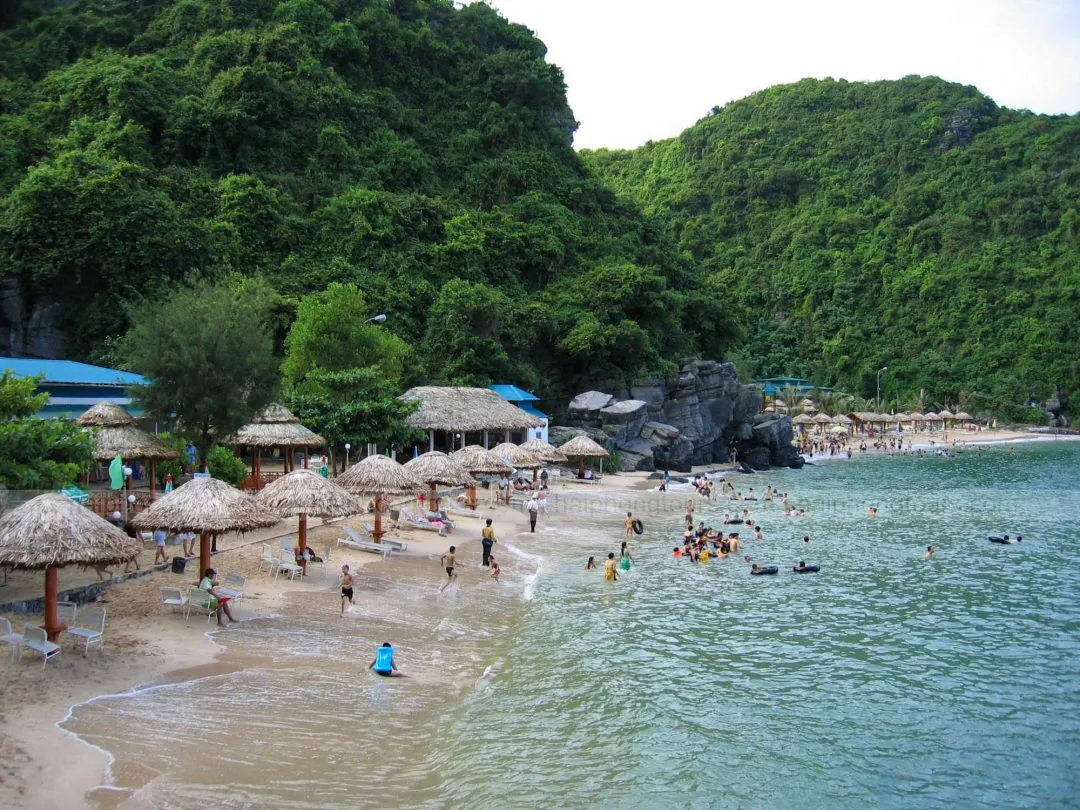
Quick beach and island decisions
- Best first island: Cat Ba, for the easiest combination of town services, beaches, national-park walks and Lan Ha Bay activities.
- Best dedicated beach break: Co To, when you can give the ferry schedule a weather buffer.
- Best slow island stay: Quan Lan or Minh Chau, with the exact pier and accommodation area confirmed before arrival.
- Best long mainland beach: Tra Co, combined with Mong Cai and Sa Vi rather than treated as a quick Hanoi day trip.
- Best short coast stop from Hai Phong: Do Son, for seafood and local atmosphere more than clear tropical water.
- Best easy resort-and-cruise base: Bai Chay or Tuan Chau in Ha Long.
- Best bay immersion: an overnight Lan Ha, Halong or Bai Tu Long cruise with a verified itinerary.
- Most important planning rule: do not book a same-day flight or international connection after an island ferry.
North Vietnam beach season
Late spring
Late spring can bring warm days before the busiest domestic holiday and school-vacation periods. Sea temperature, visibility and rain still vary. Check the forecast close to departure instead of treating one month as a guarantee.
Summer
Summer is the main beach period. It also brings the strongest heat, humidity, sudden rain and storm risk. Popular beaches and island ferries can be crowded on weekends and public holidays, while official weather restrictions can stop passenger boats or swimming.
Build flexibility into the trip. A refundable mainland night is more useful than a tight ferry-to-flight connection.
Early autumn
Early autumn may still suit swimming, but tropical weather remains possible. Later in the season, temperatures and daylight begin to fall. Confirm sea conditions and services rather than relying on a broad seasonal label.
Winter and early spring
The northern coast can be cool, cloudy, damp and windy. Cat Ba, Ha Long and the Quang Ninh islands still work for scenery, food, walking and quiet stays, but they should not be sold as dependable winter sun destinations.
The North Vietnam weather guide explains the regional pattern. Use it for broad planning, then check the marine forecast and local transport notice for the actual travel date.
Cat Ba Island: the most versatile choice
Cat Ba is the strongest all-round island for a first visit. It combines a functioning town, several beach areas, national-park trails, caves, fishing-village history and access to Lan Ha Bay. Two nights cover a compact introduction; three or four allow a forest walk, a bay day and time for weather changes.
Cat Ba Town is convenient for restaurants and boat departures, but it can be busy and noisy at peak times. A quieter property outside town may suit couples and nature-focused travelers, although evening transport and meal options become more limited. Check the final approach from the road to the room, especially when carrying luggage or traveling with limited mobility.
Use the Cat Ba Island guide to choose beaches, boat trips and forest walks. Cat Ba has more to offer than a single bay excursion, so avoid compressing the island into a hurried day between long transfers.
Cat Ba and Lan Ha Bay are related but different
A Lan Ha Bay cruise travels through water and limestone scenery around the archipelago. It does not automatically include time on Cat Ba Island. Some itineraries embark near the island but visit only floating or water-based stops; others include a named cave, village or national-park activity.
Read the Lan Ha cruise and Cat Ba stop guide, then verify the named land stop in the current itinerary. If you want both an island stay and a cruise, book them as two separate experiences with a clear connection.
Getting to Cat Ba
Road transport reaches the Cat Hai side, after which the final island connection may use a passenger vessel, vehicle ferry, cable-car arrangement or combined bus-and-boat service according to current operation. Exact terminals and procedures change, so use the terminal printed on the live ticket.
The current Hanoi to Cat Ba transfer is useful when you want one coordinated direction from Hanoi. The Northern Vietnam transfer directory also lists current Cat Ba connections from Ninh Binh, Sapa, Pu Luong, Yen Tu, Ao Tien and Hai Phong.
Co To Island: a stronger beach escape
Co To suits travelers who want the island and its beaches to be the main trip. Hong Van and Van Chay serve different sea conditions and local arrangements, while the Mong Rong rock coast is a landscape stop rather than a swimming substitute. Co To Con and lighthouse access depend on current operation and weather.

Plan at least two nights, with three nights better when the ferry journey is long or the weather is unsettled. Keep the final mainland return flexible. Boat cancellations can affect both directions, and a missed flight costs more than an extra night near the port.
Current tourist services generally connect through the Van Don area, with Ao Tien functioning as the main planning gateway. Sailing times and fares are date-specific. The Co To Island guide explains the beaches, rock coast, island transport and a realistic trip shape without freezing a ferry timetable into the article.
Who should skip Co To
Skip Co To when the itinerary has no weather buffer, when several luggage-heavy transfers are difficult, or when a traveler needs predictable access to specialist medical care. Cat Ba or a mainland base will usually be easier. A beach-focused traveler with two or three flexible nights will get more value from Co To than someone trying to collect it as a day stop.
Quan Lan and Minh Chau: slow travel with more logistics
Quan Lan and Minh Chau sit within the wider Bai Tu Long setting. The island experience centers on beaches, village movement, seafood and unhurried time on land. It is different from sleeping aboard a cruise, even though the geography overlaps.
 Overnight Cruise
Bai Tu Long Bay
Signature Cruise 2 day 1 night tour
 Overnight Cruise
Bai Tu Long Bay
Renea Cruise 2 day 1 night tour
 Overnight Cruise
Bai Tu Long Bay
Larissa Cruise 2 day 1 night tour
Overnight Cruise
Bai Tu Long Bay Larissa Cruise 3 day 2 night tour
Overnight Cruise
Bai Tu Long Bay Signature Cruise 3 day 2 night tour
Overnight Cruise
Bai Tu Long Bay Renea Cruise 3 day 2 night tour
Accommodation is spread across different areas, and vessels may arrive at different island piers. Confirm all four names before paying: mainland departure port, operator, island arrival pier and accommodation pickup point. A booking that says only “Quan Lan” leaves an important transport gap.
Use two nights as a minimum. Summer weekends can be busy, so the islands should not be assumed empty. The Hai Phong to Quan Lan guide explains the Ao Tien boat connection and island transfer chain.
Quan Lan or Minh Chau
Choose by the actual accommodation area and the beach time you want, not by a loose island label. Ask which beach is practical from the property, whether an electric vehicle or other local transfer is needed, and where meals are available after dark. A sea-view room does not prove direct beach access.
Bai Tu Long Bay: cruise or island stay
Bai Tu Long is too far for a useful one-day cruise in the Hai Phong Tours program. There is no Bai Tu Long day cruise. Choose at least a two-day, one-night itinerary when you want the cruise experience.
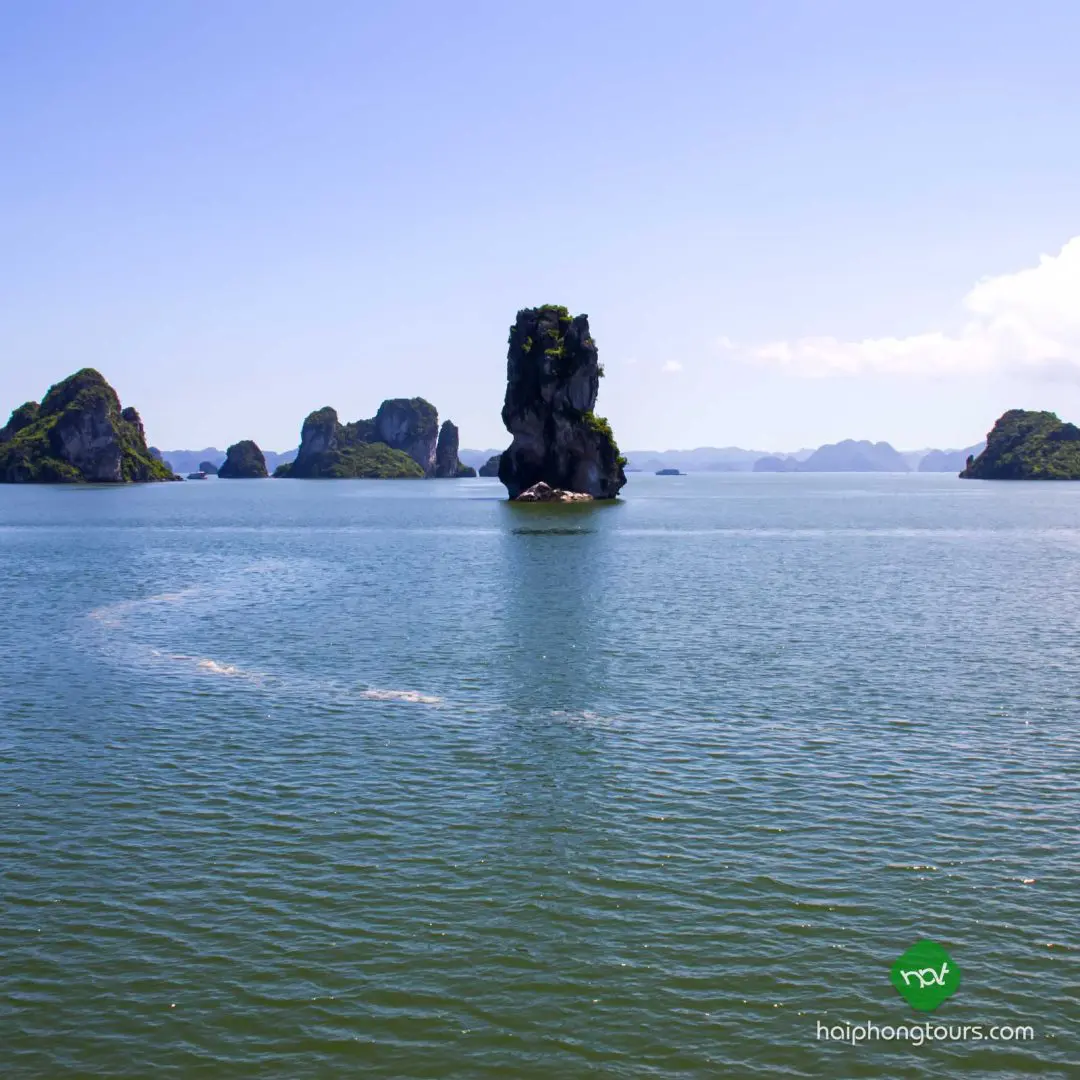
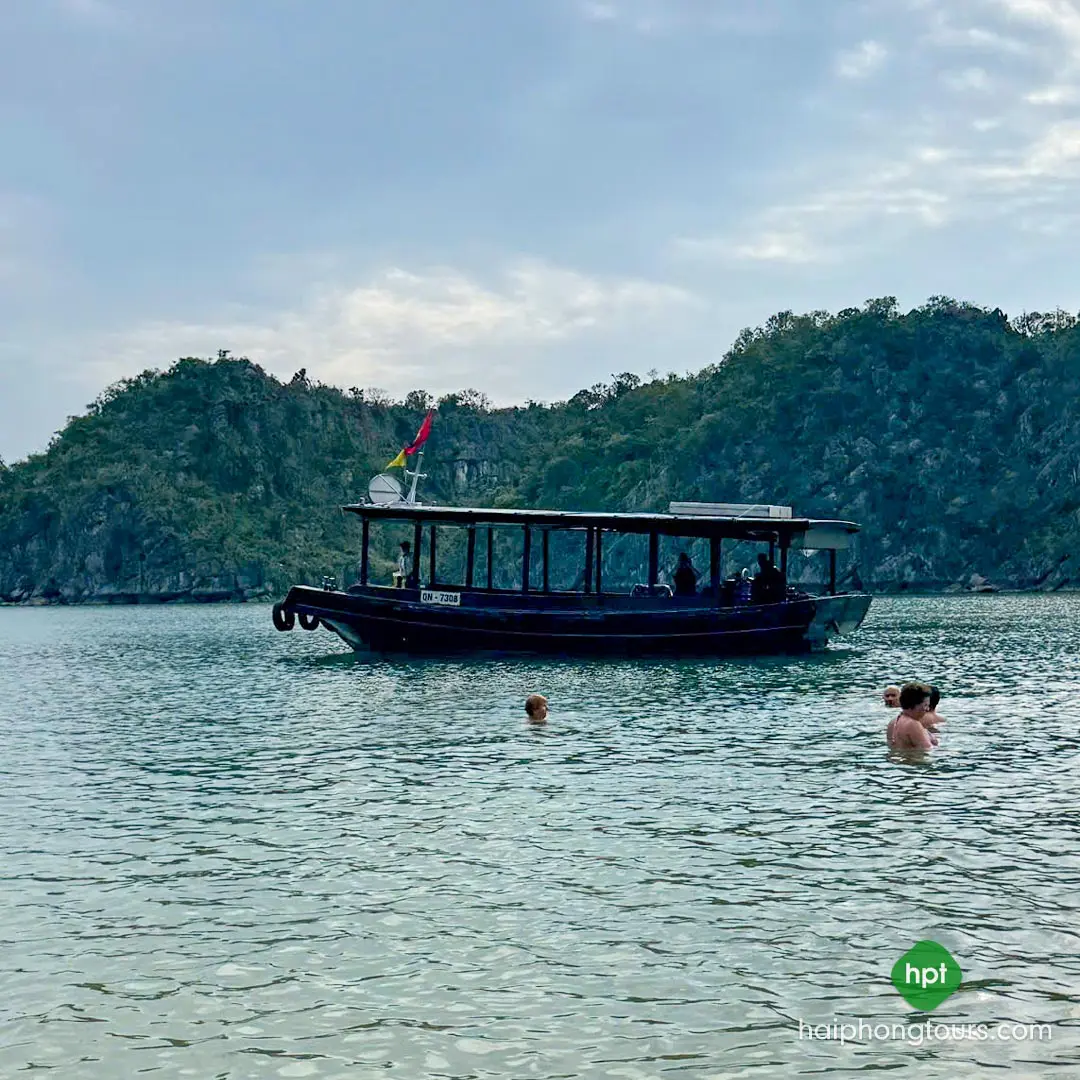
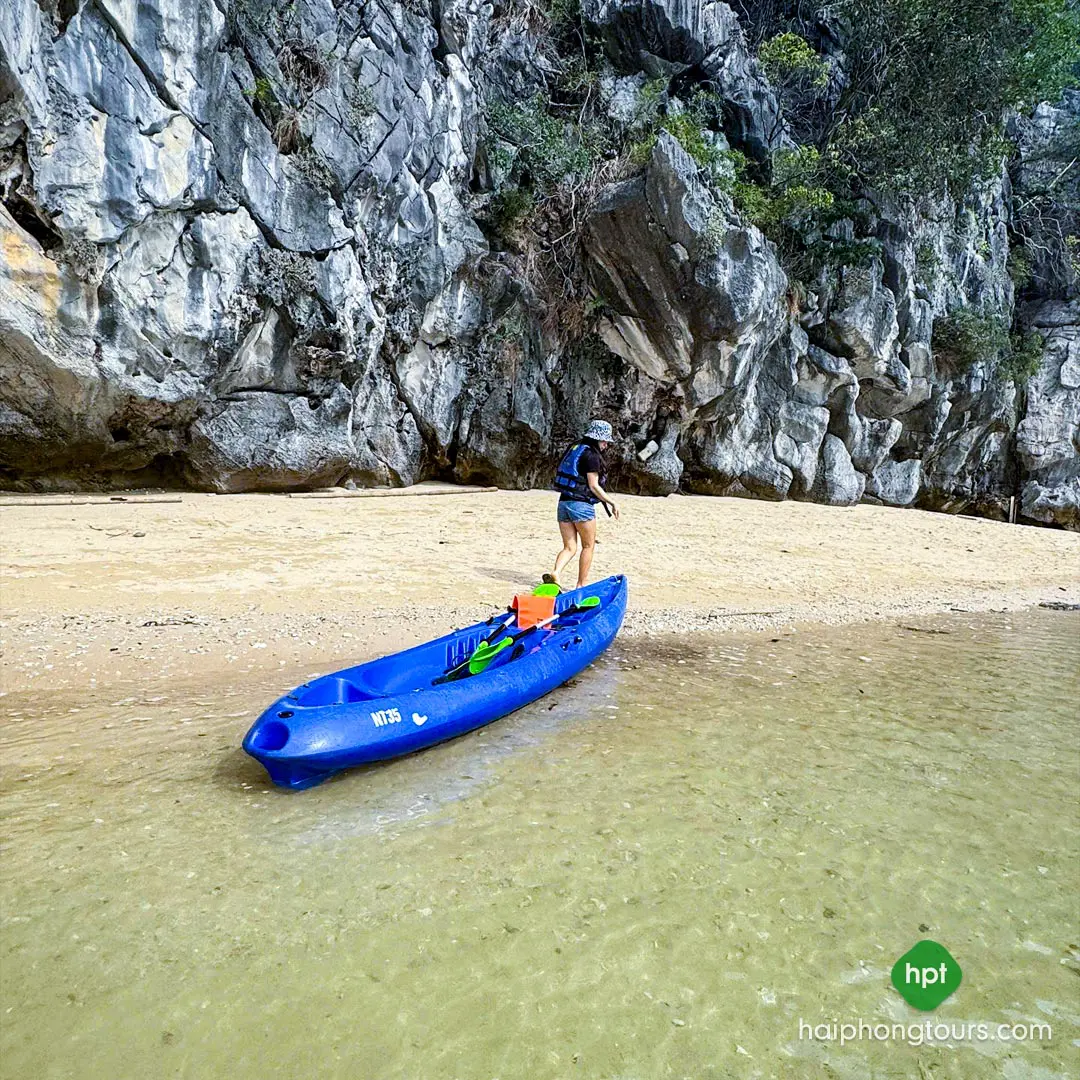
Limestone islands, swimming and a small beach in Bai Tu Long Bay.
A cruise gives you a timed program, cabin, meals and water scenery with fewer independent transport choices. Quan Lan gives you more control over beaches and evenings, but it adds ferry, pier and accommodation transfers. The Bai Tu Long cruise versus Quan Lan guide compares these formats in detail.
If a cruise fits, compare the current overnight vessels in the Bai Tu Long Bay cruise collection. Confirm the actual departure port, cabin, activities and seasonal substitutions before booking.
Ngoc Vung: beach walks and a quieter island stay
For a stay centered on Truong Chinh Beach and local life, the Ngoc Vung Island guide covers the Ao Tien passenger-boat connection, accommodation choices and a flexible two-night plan. Confirm both sailings and the island pickup before arranging the mainland journey.
Tra Co: a mainland beach with a border-city trip
Tra Co is a long mainland-coast destination near Mong Cai. It fits travelers willing to make the road journey for beach time, local seafood, Sa Vi and nearby cultural stops. It is a road trip rather than an island transfer.
Stay one or two nights. Choose a hotel area by whether you value direct beach access or easier city services. Near the frontier, carry your passport, follow posted restrictions and do not assume every coastal or boundary track is open to visitors.
The Tra Co travel guide covers the beach, Sa Vi, Mong Cai and accommodation-area decisions. It is more useful than a fixed list of old hotels or transport times.
Do Son: the easiest Hai Phong coast stop
Do Son is convenient from central Hai Phong and works well for a half-day or overnight coast break. It has several distinct beach areas, seafood, historical sites and a strong domestic-resort atmosphere. Water clarity and the feel of the beach differ from the offshore islands.
Choose Do Son for convenience, local food and a wider Hai Phong itinerary. Choose Cat Ba, Co To or Quan Lan when the island experience itself matters more. The Do Son beach guide compares Khu II, Beach 295 and Dragon Ocean without treating them as one shoreline.
Cai Chien: a smaller, simpler island
Cai Chien can suit travelers who accept simpler services and more dependence on local transport. It is a poor choice for a tight first trip because the access chain, accommodation supply and weather alternatives are narrower than Cat Ba.
Confirm the operating boat, mainland port, vehicle rules, island pickup, meals and return sailing directly for the travel date. The Cai Chien Island guide gives the planning framework. Do not travel on the basis of an old fixed timetable.
Ha Long, Bai Chay and Tuan Chau
Bai Chay and Tuan Chau provide convenient hotels, urban services and access to cruise terminals. They suit travelers who want a managed beach or resort base alongside a Halong Bay cruise. They do not create the same independent island stay as Cat Ba, Co To or Quan Lan.
Separate three decisions: where you sleep, where the cruise boards and where you expect to swim. A hotel marketed around “Ha Long” may be far from the booked terminal, and a bay cruise may offer kayaking or a beach stop only when weather and itinerary permit.
Use the Hai Phong Tours cruise directory to compare active Halong, Lan Ha and Bai Tu Long options by bay and duration.
For coastal photography rather than swimming, the Thai Binh Infinity Sea guide explains the tidal flats around Quang Lang and Thuy Xuan. This is a pre-dawn outing with local access arrangements, suitable tide and calm-weather requirements, so choose the morning before booking the overnight stay.
Islands that are not practical defaults
A remote island appearing on a map is not automatically a leisure destination. Bach Long Vi is far offshore with limited, operationally sensitive access and should not be added to an ordinary beach itinerary. Small islands and sandbanks may also be controlled, seasonal, protected or reachable only through a licensed local activity.
Choose a place with a published passenger connection, confirmed accommodation and a realistic return plan. Do not arrange an informal boat solely because someone offers transport at the pier.
Ferry and speedboat checklist
- Confirm the exact departure terminal, not only the province or city.
- Record the operator name, sailing date and passenger check-in deadline.
- Ask which island pier the vessel reaches.
- Use passenger names that match passports or accepted identification.
- Check luggage and large-item rules before arriving.
- Arrange accommodation pickup only after the arrival pier is known.
- Reconfirm the return sailing and a backup mainland night.
- Carry seasickness medication that is suitable for you and take it according to professional advice.
- Keep medicine, documents and one dry layer in hand luggage.
- Never pressure an operator to sail after a weather restriction.
Swimming and water safety
Use a managed bathing area and follow local flags, lifeguards and same-day instructions. A calm-looking surface can hide current, a sudden depth change, boat traffic or poor visibility. Do not swim alone, at night or after alcohol.
Keep children within direct reach near water. A flotation aid does not replace adult supervision. On a boat or kayak, wear the provided personal flotation device correctly and keep it fastened.
Wear footwear where shells, rock or broken material may be present. Protect yourself from heat and sun even in haze. After heavy rain or a storm, wait for the bathing area to reopen rather than deciding from the appearance of the water.
Choose a hotel by logistics
Island accommodation should solve the arrival and beach-access problem. Before booking, ask:
- Which pier is nearest, and is pickup included or charged separately?
- Can a vehicle reach the entrance, or are steps and walking required?
- Is the advertised beach private access, public access or a distant sea view?
- Are meals available on site, and until what time?
- Does the room have reliable cooling, hot water and backup power?
- What happens if the ferry is canceled?
- Is construction or evening entertainment likely near the room?
Book early for summer weekends and holidays. Outside the main season, reconfirm that the restaurant, local transport and the specific room category are operating.
Seafood without avoidable surprises
Ask whether seafood is priced by dish, portion or weight. Confirm the weight and unit price before cooking when choosing from a live tank. Clarify preparation fees, side dishes and drinks, then check the bill while the order is still easy to identify.
If you have a shellfish allergy, do not rely on the word “seafood” as a complete explanation. Cross-contact can occur in shared oil, grills, broths and utensils. Carry your written allergy information and personal medication.
How many days to allow
- Do Son: half a day to one night, usually as part of Hai Phong.
- Ha Long mainland: one or two nights around a day or overnight cruise.
- Cat Ba: two nights for an introduction; three or four for hiking, a bay day and weather flexibility.
- Co To: two or three nights plus a safe onward-connection buffer.
- Quan Lan or Minh Chau: two or three nights, with pier transfers coordinated.
- Tra Co: one or two nights after accounting for the long road journey.
- Cai Chien: at least two nights when current transport and services are confirmed.
Three practical coast itineraries
Five days: Hanoi, Ha Long and Cat Ba
- Travel from Hanoi to Ha Long and stay near the correct cruise terminal.
- Take the booked day or overnight cruise.
- Connect to Cat Ba using a verified route with enough transfer time.
- Use one full day for the national park, town or a separate Lan Ha activity.
- Return to Hanoi without placing an international flight immediately after the island connection.
Four days: Van Don and Co To
- Reach the Van Don area and sleep near the confirmed mainland port if the sailing is early.
- Travel to Co To, check in and choose one managed beach.
- Use a full island day for a second beach, Mong Rong and a conditional local boat activity.
- Return to the mainland and keep the evening free of critical connections.
Four days: Bai Tu Long cruise or Quan Lan
Choose one primary format. Spend at least two days and one night on a Bai Tu Long cruise, or spend two to three nights based on Quan Lan or Minh Chau. Combining both requires another port check-in and enough mainland margin, so it works better in a longer Quang Ninh itinerary.
Travel with less coastal impact
Use refillable water where safe refills exist, carry small waste back from undeveloped beaches and decline single-use items you do not need. Do not collect coral, shells or living marine material. Avoid touching reef or feeding wildlife.
Choose licensed passenger boats and established local services. Stay out of closed dunes, mangroves, nesting areas and protected forest routes. A quieter beach is not permission to create a fire, camp or drive on the sand.
Make the island connection the center of the plan
Choose the destination by trip length and tolerance for ferry uncertainty. Cat Ba is the most flexible first island, Co To gives the strongest beach-break feel, and Quan Lan or Minh Chau suits a slower stay. Tra Co and Do Son avoid the passenger-ferry chain but provide a different kind of coast trip.
After choosing, verify the marine forecast, exact terminal, return sailing, arrival pier and hotel pickup in that order. Those five checks matter more than adding another beach name to the itinerary.
Useful guides for your trip
Would you like help fitting this experience into your trip? Contact us with your travel dates, starting point, available time and group size. Tell us about walking limits or special interests so we can suggest a practical itinerary.