
Camping in North Vietnam is safest and most useful when it is arranged through a managed campsite, national park, licensed guide or accommodation that controls the land. Do not assume that an empty hill, beach, forest clearing or rice terrace is open for an overnight tent.
For a first trip, choose a managed site near Hanoi or an organized forest program at Cuc Phuong. Remote mountain camps in Y Ty, Ha Giang, Cao Bang or Ta Xua require local route knowledge, weather judgment, land permission and a complete exit plan. An overnight in a homestay with a day hike is often the better choice when the purpose is sunrise, scenery or village access rather than camping itself.
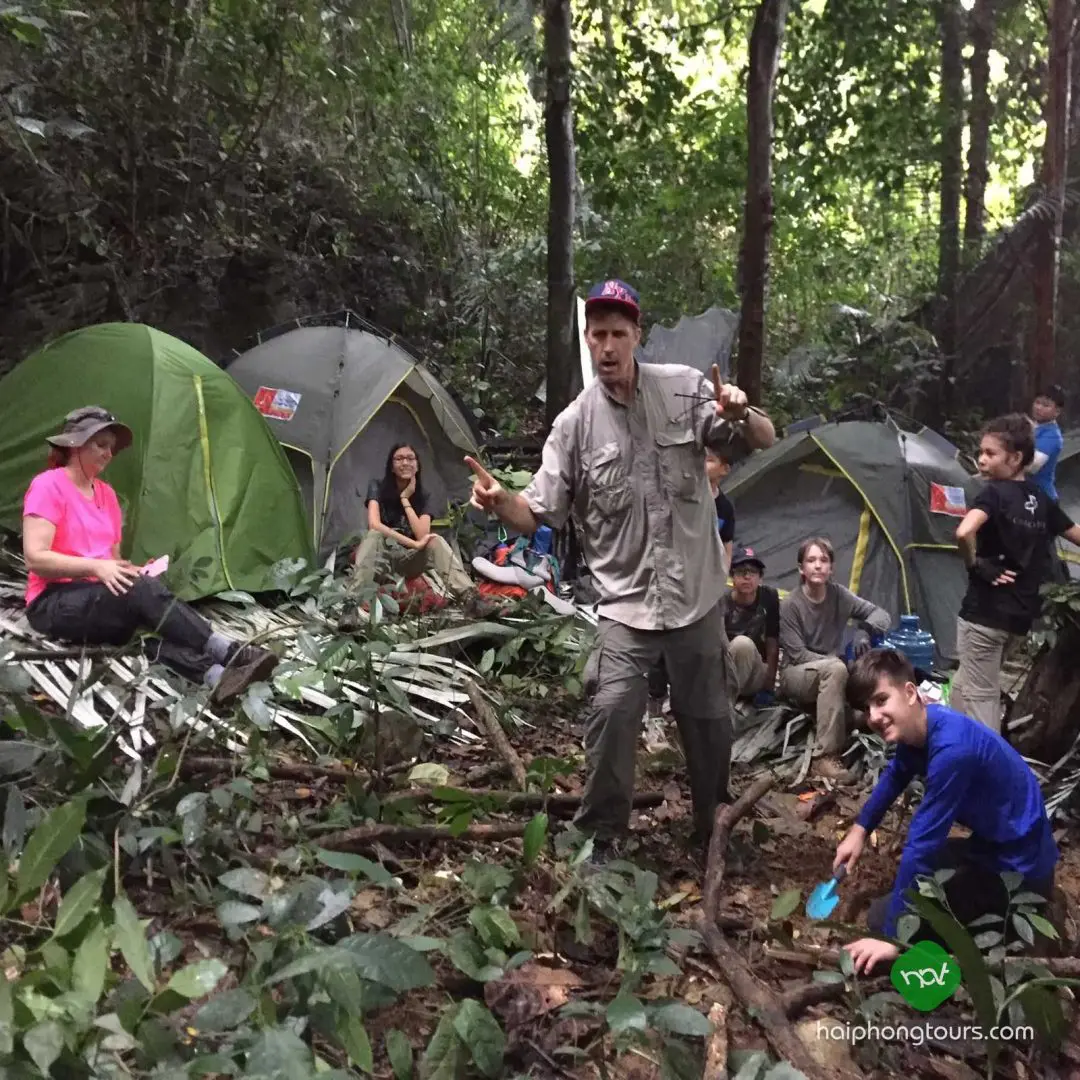
Choose the type of camping first
Managed campsite
A managed site may provide tent platforms, toilets, water, parking, food, lighting and staff. Facilities vary, so ask what is operating on your date and whether the site is quiet camping, a family recreation area or an event venue.
National-park program
A park may allow camping only in designated areas or as part of a guided route. Entrance tickets, guide, equipment, food and forest permissions can be separate. Confirm directly with the park rather than relying on an old traveler report.
Guided mountain camp
A specialist operator arranges the route, local permission, tents, food, water, porters or pack transport and emergency plan. Ask exactly what each participant carries and what happens if the summit or camp becomes unsafe.
Accommodation-based camping
A homestay, farm or lodge allows tents on its land while providing a toilet, meal and road access. This is often the simplest way to camp in a rural landscape without creating sanitation, permission and transport problems.
Independent wild camping
This has the most uncertainty. Land can be privately farmed, protected, culturally sensitive, near a border or controlled for security, fire or conservation reasons. Do not use a map pin or social-media video as evidence of permission.
Permission is part of the campsite
Before pitching a tent, identify who manages the land and obtain current permission. A local guide’s presence can help, but the guide must still know the land, protected-area and border rules.
- National parks and nature reserves may restrict camping to designated programs.
- Rice terraces, orchards and fields are working private or community land.
- Beaches and islands can fall inside protected or managed tourism zones.
- Border areas may require identification, registration or route approval.
- Military, security, infrastructure and reservoir areas can have additional controls.
- Fire restrictions can change with weather and land management.
Permission to walk through an area is not permission to camp, light a fire, fly a drone or collect water.
Where camping works best
Ba Vi and areas near Hanoi
Managed sites and accommodation-based camping around Hanoi are the lowest-friction introduction. They reduce travel time and usually provide road access, toilets and emergency support. Ba Vi adds forest and cooler elevation, while other peri-urban sites may focus more on lawns and family activities.
Check whether the advertised package includes a pitched tent, mattress, blanket, meals, shower, parking and park entry. Weekend music and group events may conflict with a quiet nature stay.
Suoi Mo for temples, cascades and a managed picnic
The Suoi Mo guide covers the Nghia Phuong destination in the former Bac Giang area. Choose an allocated picnic or camp area and confirm equipment, overnight arrangements and current stream access; a reservoir bank that looks dry is not automatically a camping pitch.
Cuc Phuong National Park
Cuc Phuong officially promotes guided forest camping and longer walking programs. Treat this as a park-arranged activity rather than permission to set up anywhere. Confirm the current route, designated camp, guide, equipment, food, transport inside the park and weather decision.
The Cuc Phuong National Park guide explains the distance between the entrance area and core forest, route options and what to check with the park. A cabin or park room may be a better fallback during heavy rain.
Cat Ba National Park
Cat Ba combines limestone forest, caves and island weather. Do not assume that a trail ticket includes overnight camping. The long Ao Ech–Viet Hai traverse already needs a separate exit; adding an overnight makes guide, campsite and transport planning more important.
Use the Cat Ba National Park trail comparison to distinguish a short Ngu Lam hike, Trung Trang cave visit and the long Viet Hai route. Ask the park about any current camping program directly.
Ha Long and Lan Ha Bay islands
Do not plan independent beach or island camping inside the bay. Access is controlled through ports, boats, protected-area rules, tides and approved visitor routes. A small beach visible from a kayak is not automatically legal or safe for an overnight stay.
Only use a camping activity that is explicitly included and confirmed by the authorized operator for the exact itinerary. Ask about weather cancellation, toilet, fresh water, tide, emergency boat and what happens if the campsite cannot be used.
Sapa and Fansipan region
Sapa is a strong guide and accommodation base, but highland camping adds cold, fog, rain and steep trail access. A Fansipan trek is a specialist route with current guide and permission requirements; it is not an independent extension of a village walk.
Ask whether the overnight uses a fixed shelter, tent or simple camp and what sleeping equipment is supplied. Verify the temperature rating, shared arrangements, food, toilet method, pack weight and evacuation plan.
Y Ty and Lao Than
Y Ty combines remote border roads, cloud conditions and specialist trekking objectives such as Lao Than. Camping should be arranged through a qualified local operator that handles current border and route requirements.
The Y Ty travel guide covers road timing, accommodation for international visitors and weather limits. A clear evening does not guarantee a safe or visible summit morning.
Ha Giang
Ha Giang’s famous road circuit already creates long days. Camping adds gear, weather exposure and land-permission questions. It suits a guided walking or community route more than a roadside stop chosen after dark.
Use established accommodation when moving quickly around the loop. Choose a guided camp only when the camp itself is part of the itinerary and the operator can explain water, toilet, shelter, transport and evacuation.
Cao Bang and Ba Be
Cao Bang offers river valleys, waterfalls and limestone landscapes, while Ba Be adds lake and forest. Both require local permission and water-level awareness. A campsite near water must be assessed for recent rain, upstream flow and flood escape.
A homestay plus guided day walk or boat trip often provides the same landscape with safer sanitation and weather backup. Do not camp beside the Quay Son River, Ban Gioc area or a lake edge without explicit local authorization.
Pu Luong and Mai Chau
These valleys contain farms, villages and protected landscapes rather than unused open ground. Accommodation-based camping is the practical model. It keeps the tent on managed land and gives access to meals, toilets and a road.
After heavy rain, hillside access and soil paths can become slippery. Confirm whether a car reaches the property and whether the tent area drains or collects water.
Mu Cang Chai and terrace regions
Rice terraces are working agricultural systems. Do not camp on a terrace wall, irrigation path or field without permission. A tent can damage crops, block access or affect water flow even when the field appears empty.
Stay at a local property and use a designated tent area or wake early for a guided viewpoint. Field color and farming activity change, so camping does not guarantee a particular sunrise scene.
Weather can cancel the camp
North Vietnam camping conditions vary by altitude and season. Summer can bring intense heat, thunderstorms, heavy rain, flash flooding and landslides. Cooler periods can bring fog, wind and low nighttime temperatures in the mountains.
Use the North Vietnam weather-by-month guide to choose a broad period, then check the short-term forecast, recent rain, wind, river level, road status and local authority advice.
Cancel or move to solid accommodation when the manager or guide says the site is unsafe. A waterproof tent does not protect against a falling branch, flood channel, lightning exposure, landslide or blocked exit road.
Choose the actual tent site safely
- Use the designated pad or area given by the manager.
- Avoid dry riverbeds, drainage channels, flood marks and low ground.
- Stay away from unstable slopes, cliffs, loose rock and dead branches.
- Do not place a tent on a road, farm path, terrace wall or animal route.
- Check wind exposure and secure the shelter without damaging trees.
- Keep a clear route to staff, vehicle access or a solid building.
- Know where the toilet and safe drinking water are before dark.
Arrive with daylight to inspect the site. Setting up after a late bus or long drive hides hazards that would be obvious during the day.
Fire and cooking
Do not light an open fire unless the land manager expressly permits it for that place and date. Dry vegetation, wind, protected forest and local restrictions can make even a small campfire unsafe or illegal.
Use the approved cooking area and equipment. Keep fuel away from the tent, never operate a flame or charcoal source inside an enclosed shelter, and fully extinguish everything according to the manager’s procedure.
If cooking is not essential, order a meal from the host or guide. This reduces fuel, waste, wildlife attraction and fire risk.
Water and food
Do not drink untreated stream, river or spring water because it looks clear. Carry safe water or use a treatment method you understand, with enough capacity for drinking, cooking and delays.
Keep food sealed and follow the guide’s storage method. Do not leave scraps around camp or feed wildlife. In warm weather, perishable food can become unsafe before dinner; ask how ingredients are carried and cooled.
Send vegan, gluten-free or allergy requirements before the operator buys food. The North Vietnam food allergy guide explains cross-contact and medical backup for remote meals.
Toilets, washing and waste
Ask whether the campsite has a toilet and what type it is. For a remote camp, follow the guide’s sanitation method and local rules. Do not leave toilet paper, wipes or hygiene products in the landscape.
Use soap and wash water only where instructed. Avoid contaminating streams and lakes. Carry out batteries, packaging, food waste and all personal items; “biodegradable” does not mean something should be left at the site.
Wildlife and insects
Keep distance from animals, do not feed them and store food as instructed. Check shoes, clothing and bedding before use. Use personal insect protection and a tent with intact mesh.
Leeches, mosquitoes and other insects can be common in wet forest conditions. Ask the guide what is typical for the route, but do not use wildlife sightings as a guarantee. Camping should be chosen for the forest experience, not an expectation of seeing a particular species.
Equipment checklist
- Tent suited to the expected wind and rain, with groundsheet and stakes.
- Sleeping bag or quilt with a realistic temperature rating.
- Insulated sleeping mat; tent fabric alone provides little insulation.
- Dry sleep clothing and sealed bag liners.
- Rain jacket, sun protection and tested footwear.
- Headlamp plus spare power.
- Safe water capacity and planned treatment.
- Personal medication and compact first-aid supplies.
- Offline map, emergency contacts and communication backup.
- Waste bags and toiletries appropriate to the site.
The North Vietnam packing list covers seasonal layers, rain protection, luggage and transport. For a guided camp, request an itemized equipment list so you do not carry duplicates or discover that a sleeping mat is excluded.
Transport and the exit plan
Write the route in four parts: city to region, road to trailhead, walk to camp and exit from camp. A one-way trek may finish on another road or village. Confirm who collects you, the latest pickup and what happens if weather delays the group.
The North Vietnam transport guide helps with trains, buses and private road legs. Do not leave valuables or essential medication in a vehicle that may not stay with the route.
Solo camping
Solo travel does not require an isolated camp. Use a managed site or join a guided departure. Share the exact route, site, guide and expected return with a trusted person, and agree on a check-in time.
A social-media location with no staff, signal or exit plan is not a suitable first solo camp. Weather and injury become more serious when nobody knows where you are.
Camping with children
Choose a managed site with a toilet, safe water, short vehicle access and a solid-building fallback. Check water edges, fire areas, dogs, farm machinery, drop-offs and nighttime temperature.
Use a short first night near Hanoi before attempting a remote route. Carry familiar food, medication and warm layers, and keep one adult free to supervise rather than both adults handling camp tasks.
When a homestay is the better choice
Use a homestay when the main goals are sunrise, village life, a mountain view or a day hike. It provides a bed, toilet, meal and weather shelter while preserving the rural setting. The North Vietnam homestay guide explains room types, local etiquette and the questions to ask.
Choose camping when sleeping outside, carrying equipment and managing weather are genuinely part of the experience. Do not use a tent only to save one room night on a difficult route.
Booking checklist
- Name the land manager, park or licensed operator.
- Confirm camping permission for the exact site and date.
- Request the route, elevation, walking time and camp coordinates.
- List included tents, bedding, food, water and pack support.
- Check toilet, waste and fire procedures.
- Ask for weather cancellation and evacuation plans.
- Confirm transport to the start and from the finish.
- Share dietary, medical and mobility needs.
- Save the guide, accommodation and emergency contacts offline.
Red flags
- The seller says permission is unnecessary because other people camp there.
- The route has no named site, land manager or guide.
- An exposed summit camp has no bad-weather alternative.
- The plan depends on untreated stream water without a treatment method.
- Open fire is promised without a current site decision.
- No one can explain the toilet and waste system.
- A one-way trek has no confirmed exit transport.
- The operator dismisses lightning, flood, wind or landslide questions.
Frequently asked questions
Can I wild camp anywhere in North Vietnam?
No. Land may be private, protected, farmed, culturally sensitive or controlled for border, security, fire and conservation reasons. Obtain current permission from the responsible manager.
Where should a beginner camp?
Start at a managed site near Hanoi or an organized park program with toilets, road access and staff. Test your sleep system before choosing a remote mountain camp.
Can I camp in Cuc Phuong National Park?
The park promotes guided camping programs, but this does not permit independent camping anywhere. Confirm the current program, guide, designated site and equipment directly.
Can I camp on an island in Ha Long Bay?
Only when an authorized operator confirms the exact approved itinerary and site. Do not land and camp independently on a beach or island.
Is camping good in the rainy season?
It carries more risk from storms, lightning, flooding, landslides, leeches and blocked roads. Use a managed site with a solid shelter fallback or choose accommodation.
Do I need a guide?
Use one for remote, protected, border, summit and one-way routes. A guide should explain permission, weather decisions, equipment, sanitation, communication and evacuation.
Camp where the plan can support you
A good North Vietnam camp has a responsible land manager, a legal site, safe water, a weather fallback and a confirmed exit. Choose the outdoor night for the experience itself, and use a homestay or lodge whenever a solid roof produces a safer and more useful journey.
If the night sky is part of the camping plan, use the stargazing in North Vietnam guide to check moonlight, cloud, local lighting and safe after-dark access.