
A useful coffee trip in North Vietnam compares three things: a plain brewed coffee, a clearly identified bean and a local drink such as Hanoi egg coffee. Hanoi and Hai Phong offer convenient tasting and shopping stops. For growing and processing, plan a separate highland visit rather than assuming that a Hanoi-roasted bag was grown near the city.
Choose what you want to compare
Start without milk or toppings, then add the sweeter drink later. Otherwise, changing the bean, brewing method and ingredients all at once makes it difficult to understand why two cups taste different. Two people can order contrasting drinks and compare them without each ordering a full sequence.
| Your question | A useful comparison |
|---|---|
| How does a phin taste? | A plain phin coffee, then the same coffee with condensed milk |
| What does origin change? | Two identified coffees prepared by the same method |
| What is distinctive about Hanoi? | Egg coffee after a plain coffee, focusing on the topping and balance |
| Which beans should I buy? | A cup brewed from the actual roast available in the shop |
Useful ordering words include đen for black coffee, nâu for coffee with condensed milk, nóng for hot and đá for iced. Say không đường if you want no added sugar. Condensed milk is already sweet, so asking for less sugar does not turn a milk coffee into an unsweetened drink.
Hanoi: traceable beans at Oriberry
For a central stop, Oriberry lists 1 Phạm Sư Mạnh, telephone 086 640 3011. For West Lake, its branch is at 28 Quảng An, telephone 033 906 7911. General enquiries go to oriberry.enquiries@gmail.com. The shop directory does not provide dependable opening hours, so use the relevant branch number for a special visit.
Its Điện Biên whole-bean catalogue identifies Arabica Catimor, a medium-dark roast and suitability for paper filtering. The producer account connects this coffee with Mường Phăng and Mường Ảng. This gives you a concrete northern origin to discuss instead of a bag labelled only “Vietnamese coffee.” The listing requests a quotation rather than publishing a current pack price.
Ask which coffee is in the cup that day and whether the same roast is available in a sealed bag. A retailer can stock several origins without serving every one as a prepared drink. Match the intended brewing method before asking the shop to grind a purchase.

Hanoi: finish with egg coffee at Giảng
Café Giảng, 39 Nguyễn Hữu Huân, publishes daily opening from 07:00 to 22:00. Contact 0917 002 299, or +84 917 002 299 from abroad; email Cafegiang1946@gmail.com. Choose this branch by address rather than treating all Giảng locations as interchangeable.
Order cà phê trứng to compare rich whipped egg topping with the coffee underneath. Taste a little topping and then a combined spoonful before deciding how much to mix. The point is the relationship between the sweet, creamy layer and the stronger coffee, not whether it resembles an unadorned specialty filter brew.
Egg and dairy are central to this drink. If either is unsuitable for you, choose another preparation and state your ingredient restrictions before ordering. A coconut or salted-cream coffee is not automatically dairy-free.
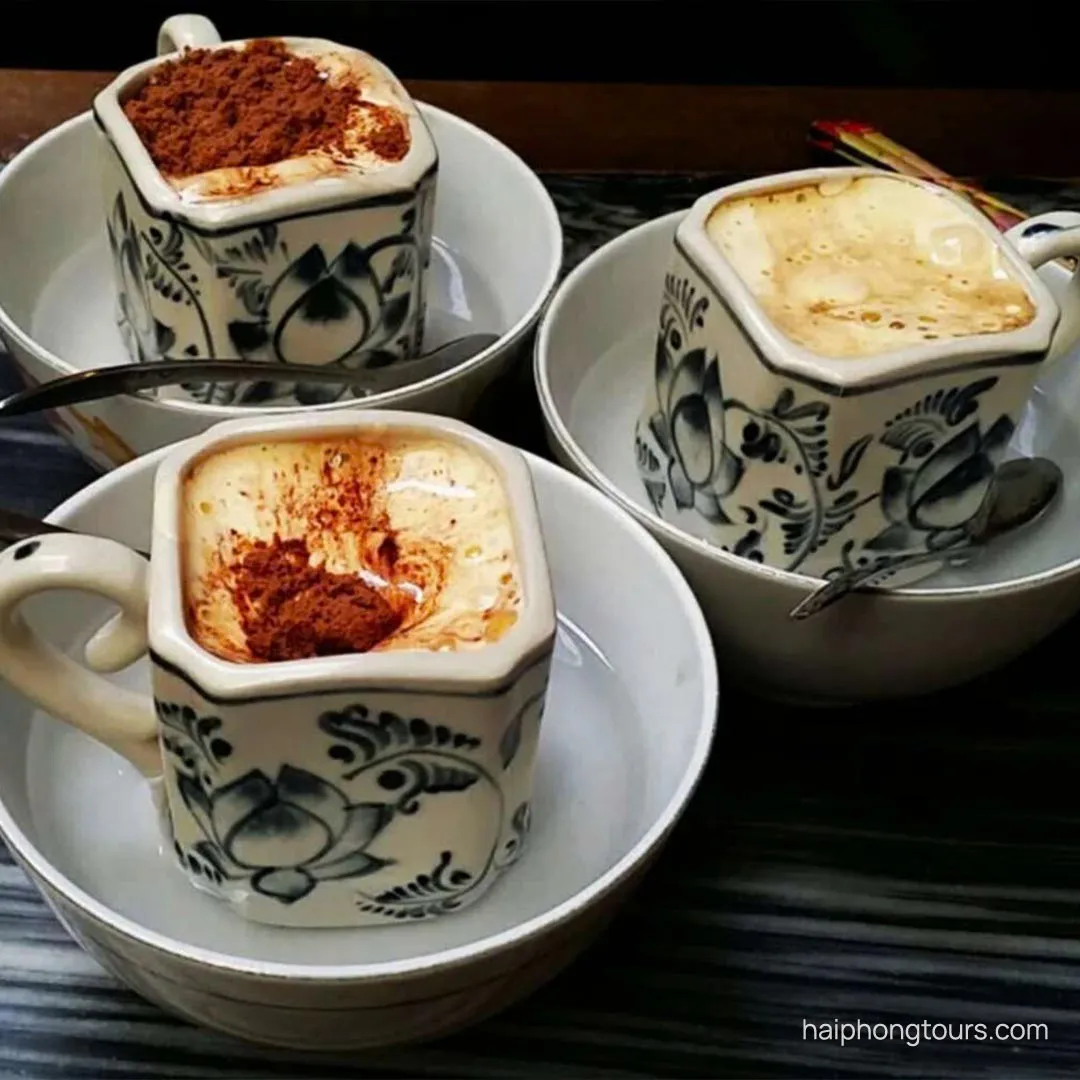
Hai Phong: a comparison at 2046 Coffee Roasters
2046 Coffee Roasters is at 72 Hoàng Văn Thụ, telephone 0896 692 046. Its published hours are Monday 07:00–11:30, Tuesday–Saturday 07:00–15:00, and Sunday 08:00–15:00. Treat it as a morning or early-afternoon stop.
The shop’s menu lists Robusta black coffee at 30,000 VND, Robusta nâu at 35,000 VND, Arabica espresso at 35,000 VND and an Arabica long black at 40,000 VND, per drink. Filter and cold-brew availability is an enquiry at the counter, not a fixed-price tasting flight.
Its bean range includes dark-roasted Đắk Lắk Robusta, washed Cầu Đất Arabica roasted medium, an 80:20 Robusta–Arabica blend and a 50:50 blend. Bags come in 250 g, 500 g and 1 kg; bean prices require a current quote. This is coffee roasted in Hai Phong using origins elsewhere in Vietnam.
A repeatable starting recipe for your phin
A phin uses gravity rather than espresso-machine pressure. For a small gravity-press model, Nguyen Coffee Supply gives a useful starting recipe: 14 g finely ground coffee and about 120 ml water at 91–93°C. Adjust the recipe for a different filter size.
- Set the filter plate and chamber on the cup, add the coffee and level the grounds.
- Rest the gravity press on top. Add approximately 30 ml water and leave it for 45 seconds.
- Add the remaining water. The guide aims for the first drip before two minutes and the last around five minutes.
- Taste plain first, then add condensed milk, sugar or ice according to your preference.
Keep the coffee dose and water quantity fixed while adjusting the grind. Record what you changed and how the cup tasted. A larger phin or a screw-down insert needs its own recipe; pressing harder is not a substitute for understanding the equipment. The Hanoi coffee-workshop guide helps if you prefer supervised practice.
Buy a bag you can use at home
Photograph the label and note the origin, coffee variety, processing description, roast date, weight and intended brewer. “Roasted in Hanoi” identifies the roasting location. “Điện Biên Arabica” identifies an origin and species; neither phrase by itself tells you the roast date or grind.
Choose whole beans if you have a suitable grinder. Otherwise show the seller your actual brewer, especially if you are using a phin rather than an espresso machine or paper filter. At a 14 g dose, a 250 g bag supplies roughly 17 full brews, a useful way to decide whether you need a small bag or a kilogram.

Do not judge a coffee’s ingredients from tasting notes such as chocolate, nuts or dried fruit. These can describe perceived flavours rather than additions. Ask separately about flavourings or roasting additives when that affects your purchase. Keep the bag sealed and dry, and follow its storage instructions.
Fit the coffee stops into your trip
In Hanoi, use one roaster visit for the plain coffee and bean purchase, then leave Giảng for a separate pause. In Hai Phong, place 2046 before lunch rather than arriving after its published closing time. There is little reason to travel between the two cities just to complete a tasting checklist; choose the stops that fit your existing route.
To follow coffee back to its growing region, the Son La coffee-farm guide explains a separate producer visit. That requires more travel time than a city café stop. For help fitting coffee into a city itinerary, contact Hai Phong Tours with your destination, available time and whether you prefer drinking, brewing or buying beans.