
Hanoi is the easiest base for a North Vietnam cooking holiday because it offers market-linked classes, home-style menus and enough food context to compare techniques over several days. Choose one genuinely hands-on class, one guided market visit and one regional food extension instead of booking repeated classes that teach the same rolls, salad and dipping sauce.
The phrase cooking class can describe a full lesson, a chef demonstration or a short cruise activity. Ask how many dishes you personally prepare, which stages are completed in advance and whether you work at your own station or watch one shared pan.
Compare classes using eight questions
- What exact dishes are planned for my date?
- How much of the session is hands-on cooking?
- What is the maximum group size?
- Does the market visit teach ingredient selection or mainly fill time?
- Can the menu handle my allergies, religion or diet without unsafe substitutions?
- Is the class taught in a language I understand?
- Will I receive measured recipes and method notes?
- What is included in the price and cancellation policy?
A long dish list is not automatically better. Four dishes partly prepared by staff may teach less than two dishes where you select, cut, season, cook and taste the result yourself.
Decide what you want to learn
Everyday northern technique
Look for broth building, balancing fish sauce and acidity, handling rice noodles, fresh herbs, grilling or stir-frying. Ask whether the recipe can be repeated with ingredients available in your home country.
Street-food context
A market-and-cooking format can connect raw ingredients with a finished dish, but it should not imply that a home kitchen reproduces the speed and equipment of a specialist street stall. The North Vietnam food-tour guide is better when your priority is tasting several businesses rather than learning to cook.
Vegetarian or dietary adaptation
Ask how stock, fish sauce, oyster sauce, shrimp paste and shared utensils are handled. Removing visible meat does not make a dish vegetarian, and replacing one sauce can change salt, sweetness and fermentation.
Regional food
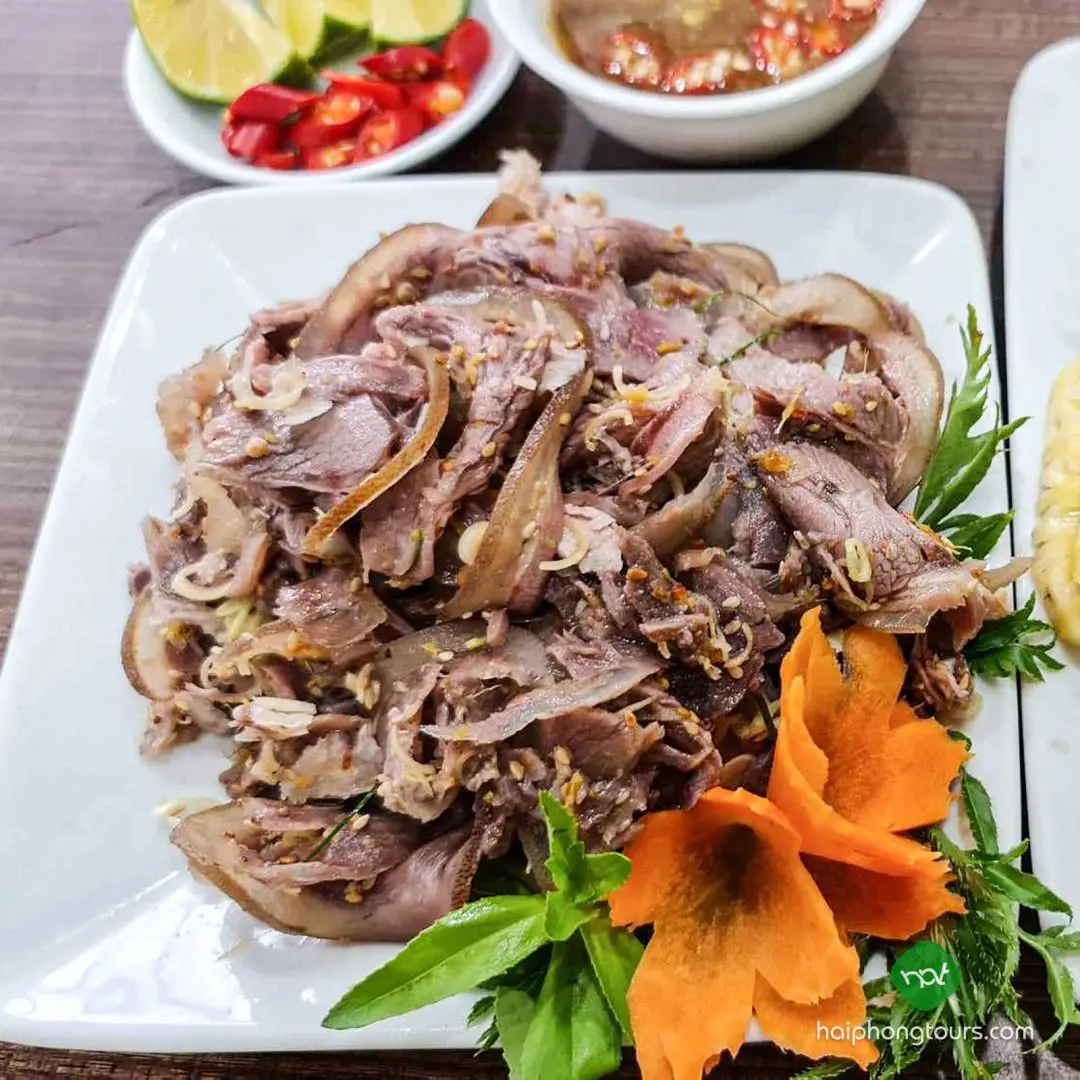
Hai Phong noodles and seafood, Ninh Binh goat dishes, mountain herbs and Red River Delta ingredients require different sourcing and context. A Hanoi class may teach an interpretation rather than a recipe used in the region itself. That is acceptable when the teacher describes it honestly.
For a valley stay, compare Mai Chau cooking classes at the Lodge and Mai Chau Home. Choose a market-and-restaurant lesson or a family session in Lac Village, and reserve cooking separately from an ordinary meal.
In the mountains, compare Sapa cooking classes and Hmong family-meal experiences. Sapa Farmstay offers a market-linked course with recipes, while ETHOS Simply Hmong focuses on preparing lunch with a family. Settle the walking and transport arrangements before choosing.
For a specific city choice, compare Hanoi cooking classes at Rose Kitchen and Apron Up. Apron Up offers a compact Old Quarter program with several daily starts; Rose Kitchen combines a longer market-and-villa outing with arranged Old Quarter pickup. Their standard menus overlap, so choose by timing, setting and the dishes you want to practice.
For an island session, compare Cat Ba cooking classes at Quiri and Linda Kitchen. Quiri fits a morning and lunch, while Linda combines an afternoon market visit with cooking and dinner. Reserve these land-based classes separately from a bay trip.
Arrange a cooking session on land in Ha Long
Ha Long has chef-led Vietnamese cooking classes at hotel restaurants as well as the short activities offered on boats. Two places to contact are Soul Bowl and Marina Kitchen, both in the Halong Marina area of Bai Chay. Use the Ha Long city guide to place them in your itinerary; these are mainland venues, separate from Cat Ba.
Soul Bowl at Citadines Marina Ha Long
Soul Bowl offers hands-on Vietnamese cooking with its chefs at Citadines Marina Ha Long on Hoang Quoc Viet Road. The format suits a traveler who wants a restaurant-based lesson while staying around Bai Chay. Contact or specifically about the cooking class.

The restaurant opens daily from 11 a.m. to 10 p.m.; those are dining hours, not guaranteed class start times. Ask for the dishes, start and finish times, and amount of individual preparation before reserving.
Marina Kitchen at InterContinental Halong Bay Resort
Marina Kitchen offers a chef-led Vietnamese cooking class at the resort on Peninsula 2, Halong Marina, off Hoang Quoc Viet Road. It also offers a separate coffee class covering Vietnamese and Italian brewing. Specify which experience you want when contacting Marina Kitchen.
A restaurant table reservation is not a cooking-class confirmation. The dishes on Marina Kitchen’s dining menu are not necessarily what you will prepare in a lesson.
For either venue, confirm admission if you are staying elsewhere, English instruction, the total class charge, minimum participants and the agreed menu before paying. Hai Phong Tours recommends fitting the lesson into a settled night in Ha Long rather than a tight connection after a cruise. A confirmed finish time matters more than the restaurant’s opening hours when you have onward transport.
Judge the market component
A useful market visit identifies ingredients, seasonality, quality signs and realistic substitutes. It should also explain which items are bought from specialist suppliers rather than pretending the class purchases every ingredient during a short walk.
Wear closed shoes, keep out of delivery paths and ask before photographing sellers. Raw-food areas can be wet and crowded. The North Vietnam markets guide explains market types, timing and visitor behavior.
Check food safety before participating
- Wash hands before cooking and after handling raw meat or eggs.
- Keep raw and ready-to-eat ingredients separate.
- Confirm that drinking and recipe water is safe.
- Eat hot food while it is properly cooked and hot.
- Tell the instructor about allergies before ingredients are shared.
- Ask for help with unfamiliar knives, burners and hot oil.
Travelers who are pregnant, immunocompromised or managing a serious food allergy should choose a class that can explain sourcing and cross-contact clearly. Skip raw or undercooked components when the risk is not acceptable to you.
Cooking on a cruise is a different product
A spring-roll or food-carving activity on a bay cruise is usually a short social program, not a comprehensive cooking course. It can be fun and useful for meeting other passengers, but kitchen access, recipe depth and individual preparation are limited.


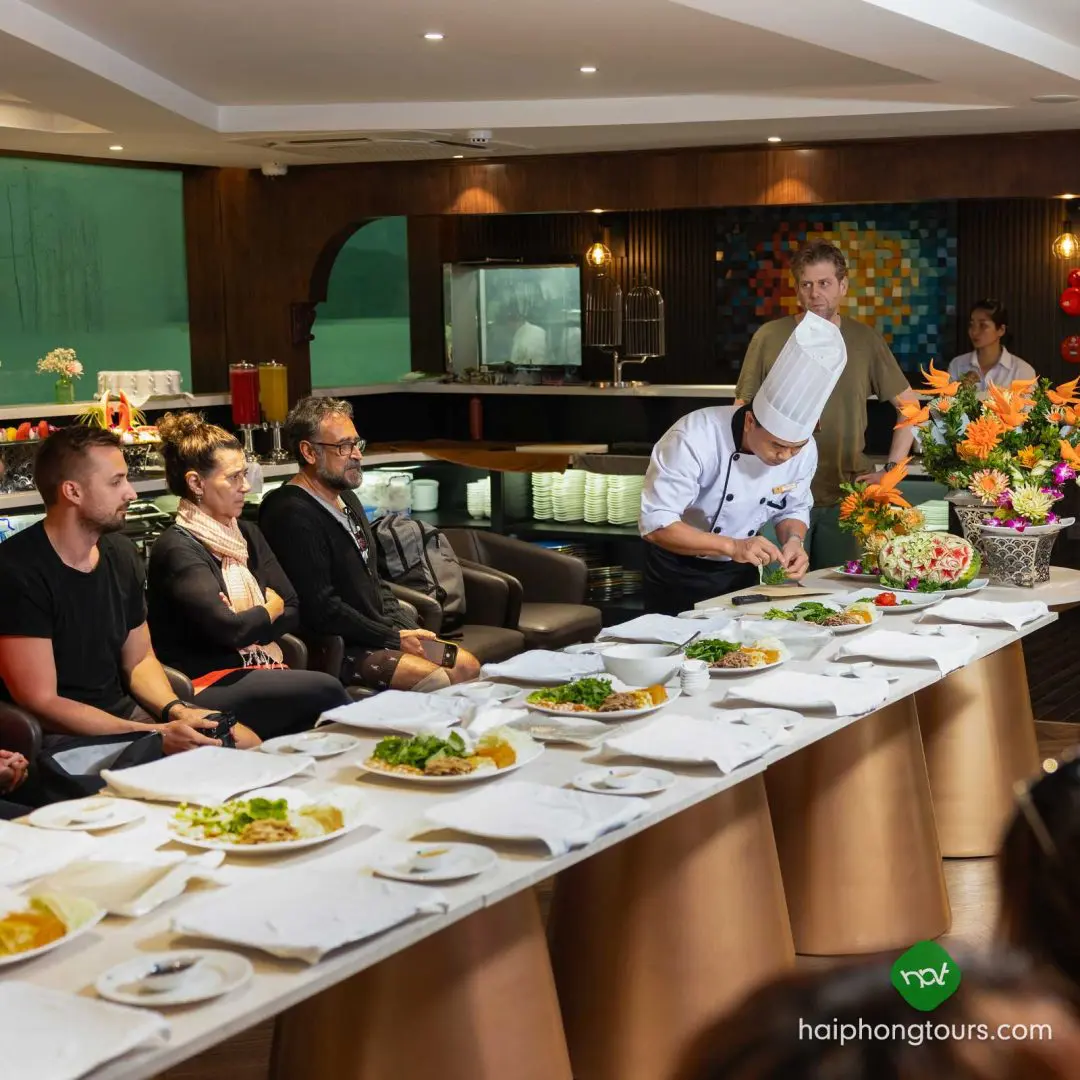
Cruise cooking activities aboard Renea, Starlight and Catamaran Premium.
If cooking is a main purpose of the trip, take the full class on land. Choose the cruise for its route, cabin, safety and bay experience rather than allowing a brief demonstration to determine the booking.
Plan for children and mixed-skill groups
Ask the minimum age, counter height, supervision ratio and whether children use knives or heat. A child who enjoys rolling, mixing and decorating may not be able to stand through a long market tour and multi-course lesson.
For adults with different skills, check whether each person receives a station. Shared tasks can leave one confident cook doing the work while others only observe.
A four-day Hanoi food-learning plan
- Day 1: use the North Vietnam food guide to taste two or three dishes and identify what you want to learn.
- Day 2: take one market-linked hands-on class.
- Day 3: revisit a market or ingredient shop independently and keep the evening free.
- Day 4: choose one specialized lesson, producer visit or regional day focused on a different technique.
Use the Vietnamese language-learning trip guide to prepare numbers, food words and polite repair phrases. Do not rely on a memorized phrase for a severe allergy.
Leave with usable knowledge
Before the class ends, confirm ingredient quantities, heat level, timing and storage. Photograph your own work and recipe sheet, not private kitchen areas or staff without permission. Ask which substitutions preserve the method and which create a different dish.
The best cooking holiday changes how you shop and cook after the trip. Choose depth over menu count, protect food safety and use regional tasting to understand why the same technique produces different results across North Vietnam.
Would you like help fitting this experience into your trip? Contact us with your travel dates, starting point, available time and group size. Tell us about walking limits or special interests so we can suggest a practical itinerary.