
A North Vietnam coolcation should use elevation, shade and a slower schedule to reduce heat exposure, but no destination guarantees cool weather. Sapa, Mau Son, Tam Dao, Moc Chau and the Ha Giang highlands can feel milder than the lowlands at times, yet heat, humidity, rain, fog and strong sun still occur.
Choose by access and accommodation as well as temperature. Sapa has the broadest visitor services, Tam Dao is convenient from Hanoi but busy on popular weekends, Moc Chau offers a gentler plateau route, Mau Son is quieter with limited services, and Ha Giang requires the most road planning.
Quick destination comparison
- Sapa: best for services, hotels and several activity choices; cloud, rain and construction can affect the stay.
- Tam Dao: best for a short escape from Hanoi; steep streets and weekend pressure reduce its calm.
- Moc Chau: best for plateau scenery and a multi-night road trip; sights are dispersed.
- Mau Son: best for travelers accepting limited facilities and weather-dependent mountain access.
- Ha Giang highlands: best for a longer landscape journey; difficult roads and changing visibility require conservative planning.
- Mai Chau or Pu Luong: best for rural rest and shade, but they are not reliably cool during hot lowland periods.
What “cooler” actually means
Elevation can lower air temperature, but direct sun, humidity and physical activity still create heat stress. A cloudy mountain day may feel comfortable while a steep unshaded climb is exhausting. A cool evening can follow a warm afternoon.
Compare daytime and nighttime conditions, not one average temperature. Ask whether the room has effective ventilation, air conditioning, heating or dehumidification for the season. A property designed mainly for cool weather may become uncomfortable during an unusual hot period.
Sapa: the easiest highland base
Sapa offers hotels, restaurants, pharmacies, cable-car access and guided walks. This makes it the most practical first coolcation choice, particularly for travelers who need alternatives when weather changes.
The trade-offs are town traffic, construction, weekend groups and frequent cloud or rain. A valley stay can feel more rural but may require steep access and all meals at the property. Use the North Vietnam mountains guide to compare Sapa with other highland regions.
For a direct private journey, the current Hanoi to Sapa transfer is route-specific. Confirm pickup, luggage, vehicle size and the exact final hotel access before booking.

Tam Dao: short access with a busy center
Tam Dao’s elevation and proximity to Hanoi make it a common short break. The central slopes, viewpoints, restaurants and hotels are compact, which also means traffic and visitors concentrate in a small area.
Stay on a weekday when possible and confirm whether the hotel sits above a steep street. Fog and wet steps can reduce visibility and make walking harder. A one-night weekend visit may deliver more traffic than rest.
Moc Chau: a broad plateau, not one town center
Moc Chau combines tea landscapes, farms, seasonal flowers and scattered attractions. It suits a three-night stay with a vehicle better than a quick temperature escape. The plateau can still be sunny and warm, and flowering or harvest conditions change by season.
Choose the accommodation after mapping the activities. The Moc Chau travel guide explains the long local distances and seasonal decisions.
Mau Son: limited services and strong weather exposure
Mau Son offers a mountain environment with fewer tourism services than Sapa or Tam Dao. That can appeal to travelers seeking a simple retreat, but accommodation, meals, road access and visibility need direct confirmation.
Do not travel only for a forecast of cold, frost or a particular cloud view. Conditions can change quickly, and severe weather is a reason to delay the road journey rather than chase it.
Ha Giang: cooler sections within a demanding route
The high plateau can provide cooler periods and dramatic scenery, but the loop is not a simple climate escape. Long riding or driving days, exposed roads and rapidly changing visibility increase fatigue.
Use a trained local driver or an appropriate licensed arrangement. Do not self-drive merely to reach a cool forecast. Build rest days and keep night travel off the plan.
Do not confuse shade with a cool destination
Mai Chau, Pu Luong, Ba Be and Cat Ba can offer shaded walks, water, breeze or comfortable mornings. They can also be hot and humid. Choose them for the full landscape and activity mix, not as guaranteed relief from heat.
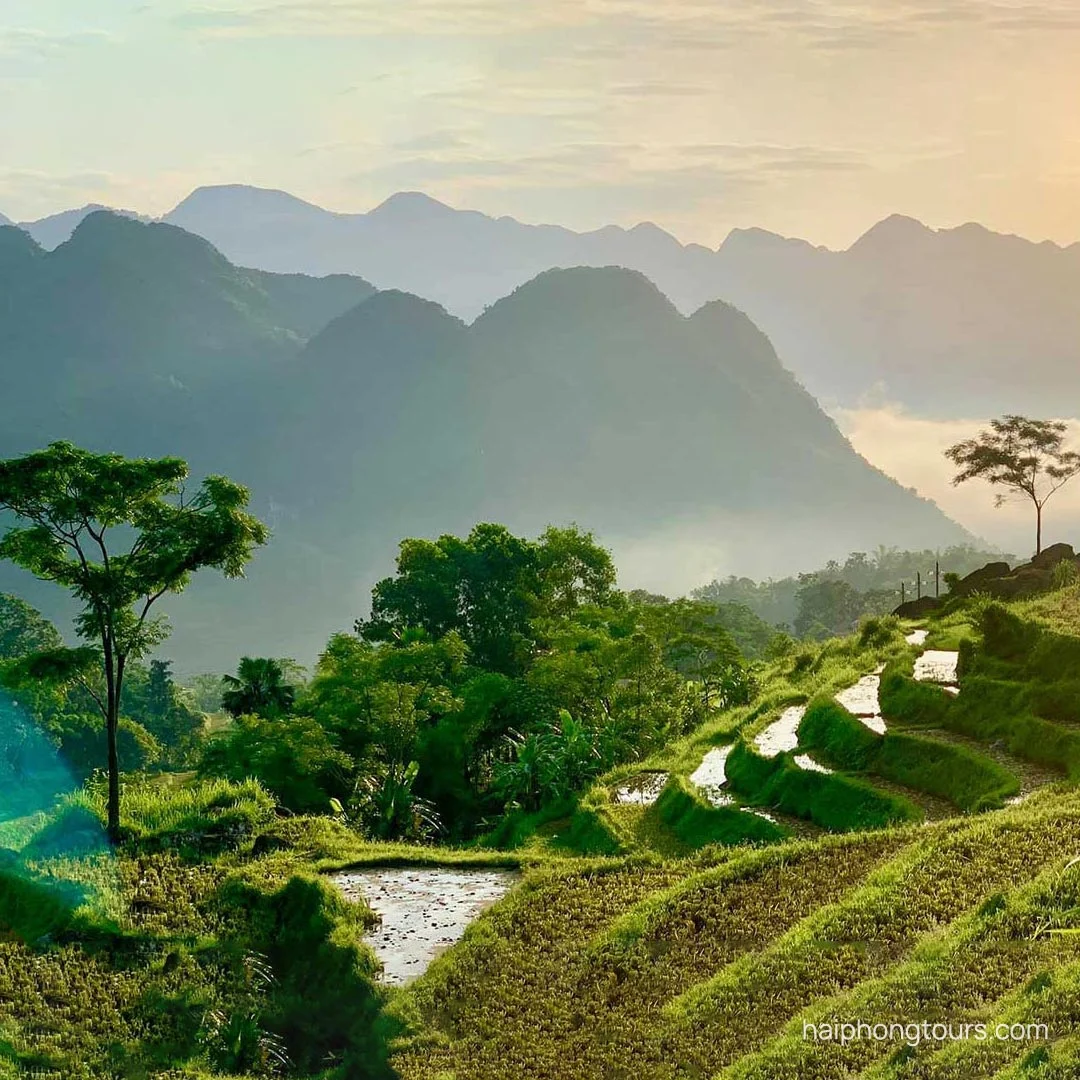
Move outdoor activity to early morning and late afternoon, then rest in the hottest part of the day. The North Vietnam weather-by-month guide helps place this decision within the wider seasonal pattern.
Book the room for both heat and cold
- Ask whether air conditioning operates in the booked room.
- Confirm heating for cold or damp periods; a decorative fireplace may not heat the room.
- Check window screens, ventilation and insects.
- Ask about dehumidification, bedding and hot water.
- Confirm backup power if temperature control is medically important.
- Request the exact room position if direct afternoon sun is a concern.
A highland room can be colder and damper than expected outside summer. Pack layers even when the lowland forecast is warm.
Plan the day around exposure
- Early morning: use the clearest safe window for a walk or viewpoint.
- Late morning: return for breakfast, a museum, café or indoor activity.
- Midday: rest, hydrate and avoid an exposed climb.
- Late afternoon: take a short local activity after checking rain and visibility.
- Evening: eat near the accommodation and avoid unnecessary mountain driving.
A coolcation should reduce physical pressure. Filling the day with steep hikes can cancel the comfort gained from a lower temperature.

Rain, fog and storms
Rain can lower the temperature while making roads, trails and steps less safe. Fog reduces views and driving visibility. A storm can disrupt power, transport and outdoor access.
Keep one indoor or low-risk day in the itinerary. Delay a transfer when local authorities, the operator or the accommodation advises against travel. The North Vietnam travel safety guide explains weather buffers and transport decisions.
Health and heat planning
Cool air does not remove dehydration or sun exposure. Carry water, use shade, wear suitable sun protection and reduce activity when anyone becomes dizzy, confused, unusually weak or unwell. Seek medical help for severe symptoms.
Travelers with heart, breathing, circulation or temperature-regulation concerns should discuss the trip with a qualified clinician. Remote mountain destinations may be far from appropriate medical care.
A practical five-day coolcation
- Day 1: stay in Hanoi and recover from the flight.
- Day 2: travel in daylight to Sapa, Tam Dao or Moc Chau and keep the afternoon light.
- Days 3–4: use one early outdoor activity each day with long midday rest.
- Day 5: return after breakfast with no fixed international flight immediately after the road journey.
For a longer trip, add nights at the same base instead of moving to another mountain area. This gives the forecast room to change.
Pack for variation
- Light breathable clothing and a warmer evening layer.
- A waterproof outer layer and shoes with wet-surface grip.
- Sun protection and refillable water.
- Medication and comfort items that may be difficult to replace remotely.
- A dry bag or pouch for documents and electronics.
The best North Vietnam coolcation is not the coldest location. It is the destination with milder conditions, a suitable room, safe access and enough time to adapt the day when mountain weather changes.
Would you like help fitting this experience into your trip? Contact us with your travel dates, starting point, available time and group size. Tell us about walking limits or special interests so we can suggest a practical itinerary.