
A craft-focused trip in North Vietnam should distinguish three different experiences: shopping for finished work, observing a production process and learning through a hands-on workshop. A place described as a “craft village” may offer only one or two of these on a given day, so confirm the exact activity, language, duration and maker before traveling.
Hanoi is the easiest base for a first craft trip. Bat Trang pottery and Van Phuc silk are practical day or half-day options, while Dong Ho woodblock printing and more distant villages need stronger current confirmation.
Choose the kind of craft experience you want
- Make: complete a beginner-safe object under instruction.
- Observe: see genuine production without interrupting a working space.
- Learn: understand materials, stages and cultural meaning.
- Buy: identify the maker, material, transport needs and care.
- Document: photograph or record with permission.
One visit rarely does all five well. State the priority when contacting a workshop or guide. For patient needlework in a village setting, the Quat Dong embroidery workshop guide explains Tu Thi’s classes, course options and how to request a single visit.
For a small object you can shape with an artisan, the Xuan La to he village workshop guide explains rice-dough figure-making south of Hanoi. Arrange the exact teacher and venue, and distinguish a focused lesson from a full family day with lunch and group activities.
For another traditional toy, consider a Hanoi paper-mask workshop.
For fabric craft and introductory signs, consider the KymViet workshop.
For a flower-focused activity, compare Hanoi flower workshops: a cultural lesson using fresh floral offerings or a prepared dried-flower frame or coaster. Choose by what you want to learn, then confirm the language, finished item and collection arrangements.
Dong Van: a glassblowing workshop south of Hanoi
The VGCP glassblowing workshop guide explains making a cup at a working factory in the former Ha Nam area, now Ninh Binh Province. Compare the small-party and large-group formats, arrange an appointment, and confirm when your finished glass can be collected or delivered before planning the journey.

Hanoi silver jewelry: a studio session with a keepsake
The Hanoi silver-jewelry workshop guide compares working with metal at Silver Soul and shaping a silver-clay ring at Muoi. Choose the process and finished design first, then confirm the material allowance and collection time; these city studios offer a different experience from observing production in a craft village.
Bat Trang pottery: the easiest hands-on starting point
Bat Trang, on the Hanoi side of the Red River, combines pottery shopping, heritage context and visitor workshops. A beginner session may focus on shaping or decorating rather than the complete professional process.
Ask whether the piece will be fired, how long firing takes and whether collection or shipping is possible. Wet clay made during a short visit may not become a finished object before you leave. Wear clothes that tolerate clay and keep nails, jewelry and loose sleeves practical for a wheel.
For a lesson without the village journey, compare pottery classes in central Hanoi. The city-studio guide separates wheel throwing, hand building and painting, with the firing and collection details needed to fit a finished piece into your trip.
Best for: a first craft outing from Hanoi and travelers who want a short hands-on activity. It is less suitable when you need a technical multi-day ceramics course unless a specialist has confirmed one.
Van Phuc silk: strong for process and material comparison
Van Phuc is known for silk weaving and finished textile products. The useful visit is not only shopping: look for opportunities to understand thread, loom work, pattern and the difference between hand-related processes and industrial production.
Do not assume every shop contains an operating loom or offers instruction. If a workshop is essential, arrange it before leaving Hanoi. For purchases, ask what the fabric is made from and how it should be washed; price alone does not establish fiber content or production method.
Best for: textile interest, material observation and careful shopping. A spontaneous visitor may see more retail than production.
For an ao dai maker visit, the Trach Xa village guide explains workshop arrangements and the distinction between watching the craft, ordering clothing and booking travel portraits.
Nam Cao: hand-drawn silk and village loom work
The Nam Cao silk village guide explains an arranged visit to cocoon-thread makers and weavers in the former Thai Binh area. Choose the village for a full craft day, or the connected Hanhsilk Silk House in Hanoi for a shorter bracelet, embroidery or marbling session; confirm the actual venue and participation before booking.
Dong Ho woodblock printing: heritage with limited practitioners
Dong Ho printing uses carved blocks, handmade paper prepared with scallop powder and colors applied in sequence. UNESCO placed the craft on the List of Intangible Cultural Heritage in Need of Urgent Safeguarding in 2025, noting that only a small number of families continue the practice.
This makes advance contact essential. Do not arrive expecting a daily public workshop or treat a working family space as a staged attraction. Confirm whether the visit includes a demonstration, print-making activity, explanation, shop or appointment with a practitioner.
Best for: travelers interested in graphic art, printing, Tet imagery and safeguarding living heritage.
For an appointment focused on this craft, use the Dong Ho painting village visit guide to distinguish a conservation-center display from an artisan demonstration or a hands-on printing session, and arrange the exact location before leaving Hanoi.
Quang Phu Cau incense village: visual process, not a guaranteed workshop
Quang Phu Cau is associated with incense production and colorful drying displays. Production activity and drying conditions can vary with weather and work schedules. Ask whether the visit includes an explanation or only observation and photography.
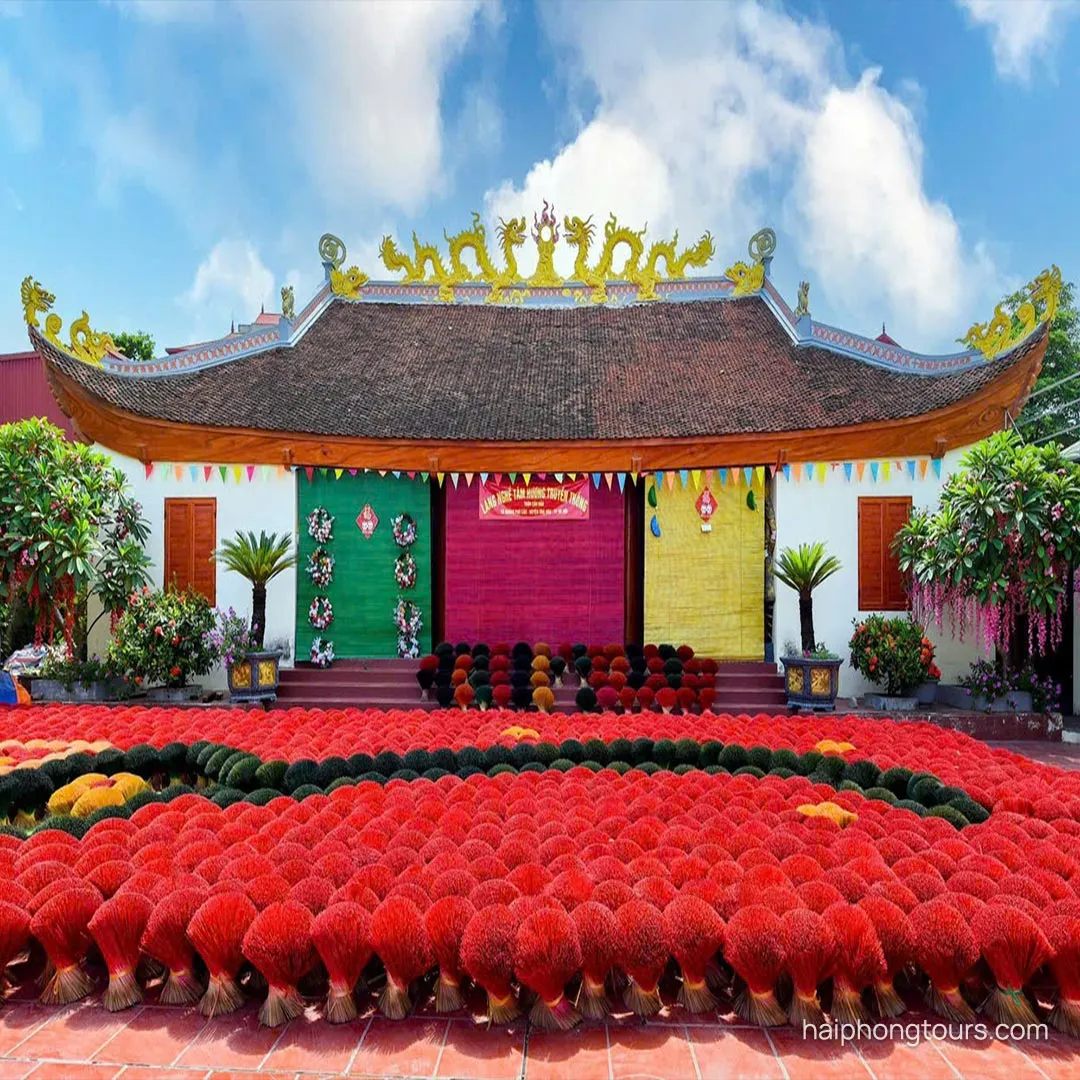
The morning package of the current Hanoi City Group Tour includes Quang Phu Cau, Train Street and lunch with Hanoi Old Quarter pickup. It suits travelers who want a guided incense-village visit within a fixed half-day program; it is not presented as a hands-on incense-making class.
Dong Trieu pottery and other regional villages
Dong Trieu in Quang Ninh offers another pottery tradition and can fit a route between Hanoi, Hai Phong and the bay region when a current workshop or visit is confirmed. More remote weaving, basketry, drum and metalwork villages may be rewarding but are rarely interchangeable with a visitor-ready studio.
Before adding distance, confirm who receives visitors, what happens during the visit and whether the craft is active that day. A village’s historic reputation does not guarantee visible production at every address.
The Thuy Ung horn-comb village guide explains maker visits, material questions and the distinction between observing and making.
Huong Canh: unglazed stoneware northwest of Hanoi
Huong Canh pottery village offers a focused visit to working family studios making dark stoneware. Arrange a named maker and activity, distinguish a clay model from a fired item, and add one of the carved communal houses if you have time.
Ha Thai lacquer: understand the stages behind the finish
The Ha Thai lacquer-village guide compares an artisan visit with a short activity on a prepared base. Confirm exactly which stages you will try and what can be taken home; a brief eggshell or painting session does not reproduce the full multilayer lacquer process.
For a different decorative technique, the Kieu Ky gold-leaf workshop guide distinguishes a short imitation-leaf gilding class from professional goldbeating. Check the host’s age rules, material and village meeting point before booking.
Chuong village: hat stitching or a decorating session
The Chuong conical hat village guide distinguishes observing a maker, trying construction stages and decorating a prepared hat. Book the activity you want; the early wholesale market needs a separate lunar-date and arrival-time check.
Phu Vinh: bamboo and rattan weaving
The Phu Vinh bamboo and rattan village guide explains maker visits, beginner weaving and the difference between household baskets and finely woven pictures. Choose a specific demonstration or activity, then use the finished pieces to understand the preparation, pattern and form behind the work.
Hua Tat: Hmong paper-making and beeswax drawing
For a craft stop on a Moc Chau journey, the Hua Tat village experience guide compares making a decorated paper sheet with drawing wax patterns on cloth. Arrange the host and finishing stages first: paper needs drying time, while a textile sample does not automatically become a finished bag during the session.
Questions to ask before paying
- Is this hands-on, demonstration-only or a shop visit?
- Who teaches or demonstrates, and in what language?
- How long is active instruction versus transport and shopping?
- What materials, tools and safety equipment are included?
- Can children join, and what is the minimum age or required supervision?
- Will the finished item be ready the same day?
- Can the item travel in hand luggage or checked baggage?
- What happens if the practitioner or production process is unavailable?
Visit a working place respectfully
Ask before photographing people, tools, designs or private interiors. Keep away from kilns, cutting tools, dyes, machinery and drying areas unless invited. Do not move products to create a photograph.
Pay the stated workshop or product price without treating the maker’s time as a free demonstration. If translation is limited, use short questions and visual examples rather than pushing a long interview during production.
Buying and transporting craft objects
Measure fragile or oversized work before buying. Ask how ceramics will be wrapped, whether textile dyes require special care and whether wood, plant, shell or animal-derived material is subject to the customs rules of your destination country.
Keep receipts and maker information when available. Do not ask a seller to label an item inaccurately for customs. For a valuable piece, arrange professional packing and understand who carries the risk in shipping.
A practical four-day craft framework
- Day 1: use a Hanoi museum, gallery or shop to learn materials and vocabulary.
- Day 2: take one confirmed hands-on session, such as pottery.
- Day 3: visit a production village or practitioner for observation and context.
- Day 4: collect fired work, make final purchases or use the day as a cancellation buffer.
Place the least flexible appointment early enough to reschedule. Keep shopping until after you understand the process and material.
What makes a craft trip valuable?
The strongest outcome is not the number of villages visited. It is knowing what you saw, who made it, which part you practiced and what limitations shaped the work. Confirm the exact experience and give each craft enough time to be more than a photo stop.
Travelers interested in fiber, indigo and embroidery can continue with the North Vietnam textiles and natural-dye guide for provenance, workshops and respectful buying.
Would you like help fitting this experience into your trip? Contact us with your travel dates, starting point, available time and group size. Tell us about walking limits or special interests so we can suggest a practical itinerary.