
A North Vietnam food trip should begin in Hanoi, add Hai Phong for port-city noodles and seafood, then follow the travel route into Ninh Binh, Ha Long, Sapa, Ha Giang or Cao Bang. Do not try every famous dish in one evening. Four to six small tastings, each with a clear reason for being on the route, create a better food tour than a sequence of full meals.
Choose a guide when language, hidden alleys, market context or dietary communication matters. Travel independently when you prefer to control portions and spend longer at one place. In either case, use current venues, eat food cooked and served hot, and ask about ingredients rather than deciding from appearance.
Food in northern Vietnam: the broad pattern
Northern cooking often uses a lighter balance of seasoning than many travelers expect from Vietnamese restaurant food abroad, with herbs, broth, dipping sauces and ingredient texture carrying much of the meal. This is a broad regional tendency rather than a rule. Port cities, mountain communities and tourist centers each have distinct ingredients and service styles.
A useful food route compares:
- rice noodles in soup, dipping and dry forms;
- fresh and fried street snacks;
- seafood and fish cakes near the coast;
- rice, corn and buckwheat foods in the highlands;
- family meals in homestays;
- coffee, tea and nonalcoholic local drinks;
- market ingredients before they become a finished dish.
Guided food tour or self-guided tasting?
Choose a guide when
- you have one evening and want an efficient route;
- the best context matters more than choosing a particular restaurant;
- you want help ordering small portions;
- dietary needs require clear Vietnamese communication;
- the market or neighborhood is difficult to interpret alone;
- you prefer a known route back to the hotel.
Travel independently when
- you want to repeat a favorite dish;
- you need more time to assess ingredients or hygiene;
- your appetite does not fit a fixed tasting schedule;
- you have several days in the same neighborhood;
- you prefer restaurants with menus and seating.
A private guide can adapt pace and ingredients more easily than a large group, but only when the route is discussed before booking. A food tour cannot guarantee allergy-safe preparation unless each kitchen confirms it.
How to judge a food tour
- How many actual food stops are included?
- Are portions tastings or full dishes?
- Does the price include every food and drink?
- Is the route mainly walking, or does it use a vehicle?
- How far and how long will you walk?
- Can the operator adapt for vegetarian, vegan, halal, gluten-free or allergy needs?
- Will replacements remain regionally meaningful?
- Where does the tour finish, and is hotel return included?
- What happens during heavy rain?
Ask for categories rather than an inflexible dish list: one noodle, one grilled or fried item, one market ingredient, one dessert and one drink. Venues can close or sell out, so a strong guide should preserve the culinary idea when the exact stall changes.
Hanoi: the best place for a first food walk
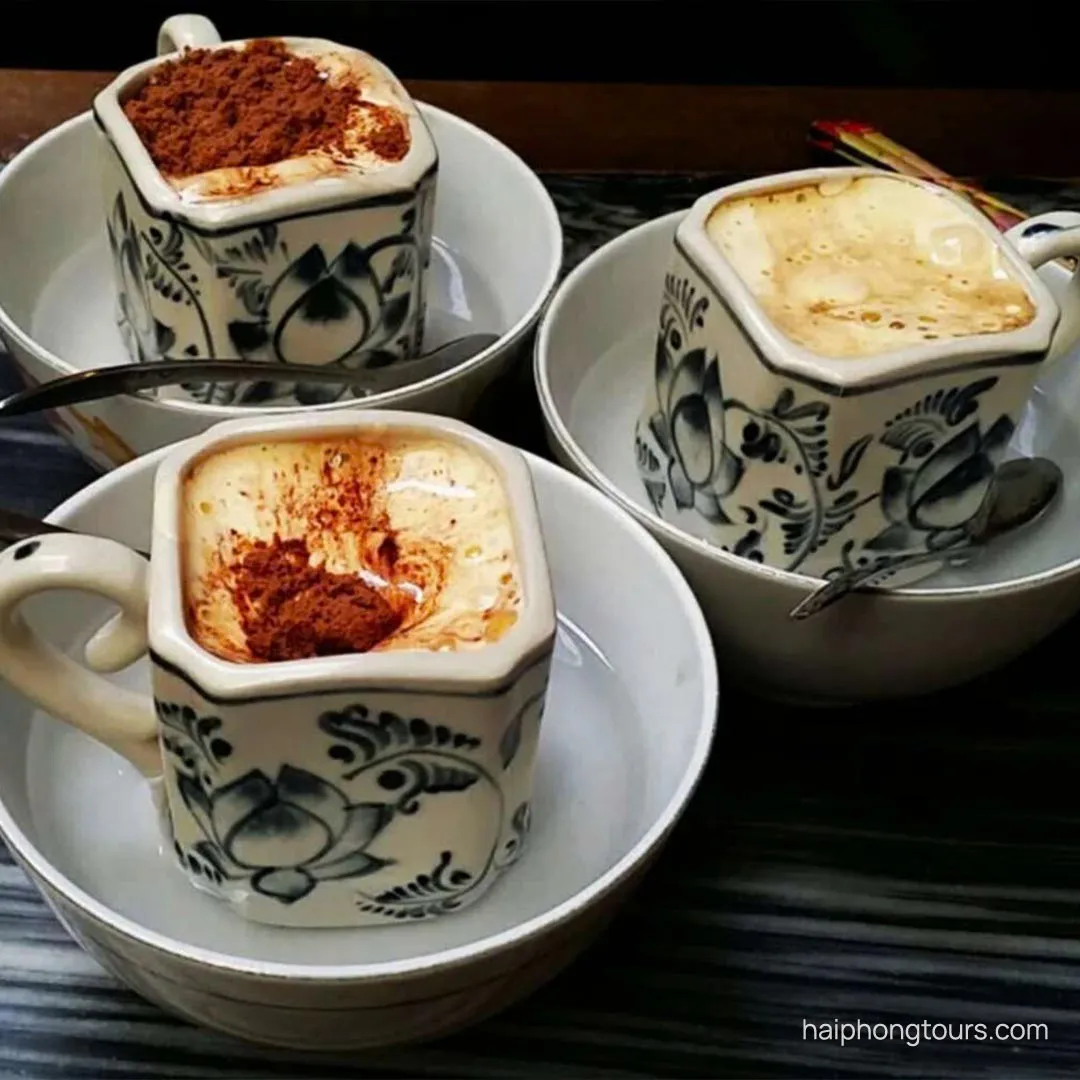
Hanoi supports a compact route through noodle shops, grills, market lanes, cafés and dessert stalls. Pho, bun cha, cha ca, banh cuon and egg coffee represent different techniques and meal times; they should not be treated as interchangeable items on a generic menu.

Build the route by time of day
- Morning: noodle soup, steamed rice rolls, sticky rice and market activity.
- Lunch: a complete rice or noodle meal at a specialist shop.
- Afternoon: coffee, tea, fruit or a light sweet.
- Evening: grilled food, dipping noodles, shared plates and a slow walk.
Do not order five full dishes because they appear on a list. Share portions, pause for water and let one meal remain a meal.
The current Private Hanoi City Tour offers an optional evening street-food walking add-on after the daytime sightseeing program. Choose it when you want a guide and hotel return attached to a full city day; it is not presented as a standalone food-only product.

Hai Phong: port-city flavor and focused dishes
Hai Phong is worth a food stop for dishes tied closely to the city. Banh da cua uses red rice noodles and a crab-based broth with toppings that vary by shop. Banh mi cay is a small crisp baguette typically filled with pâté and eaten with chili sauce. Nem cua be is a square crab spring roll. Snail dishes and seafood expand the evening choice.
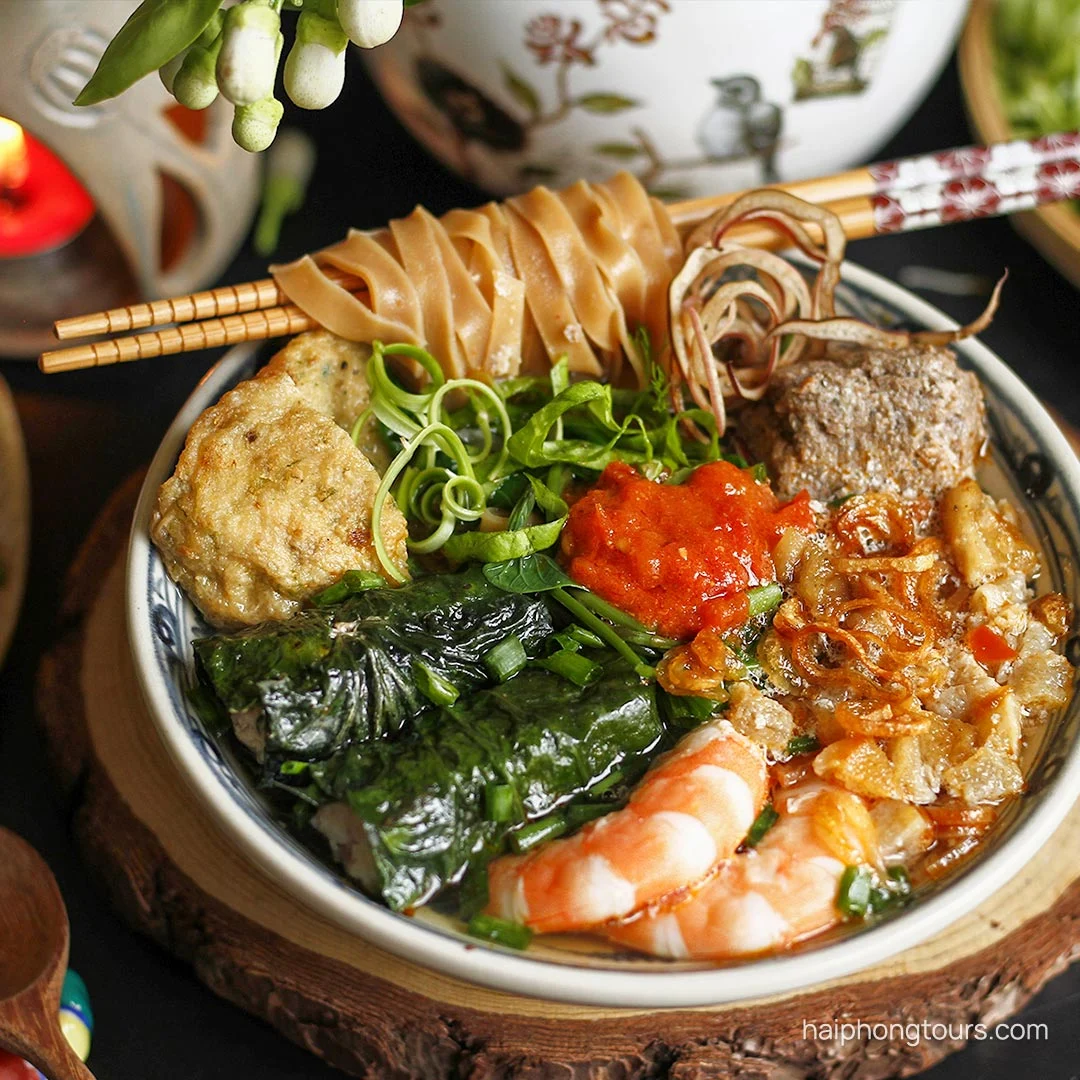
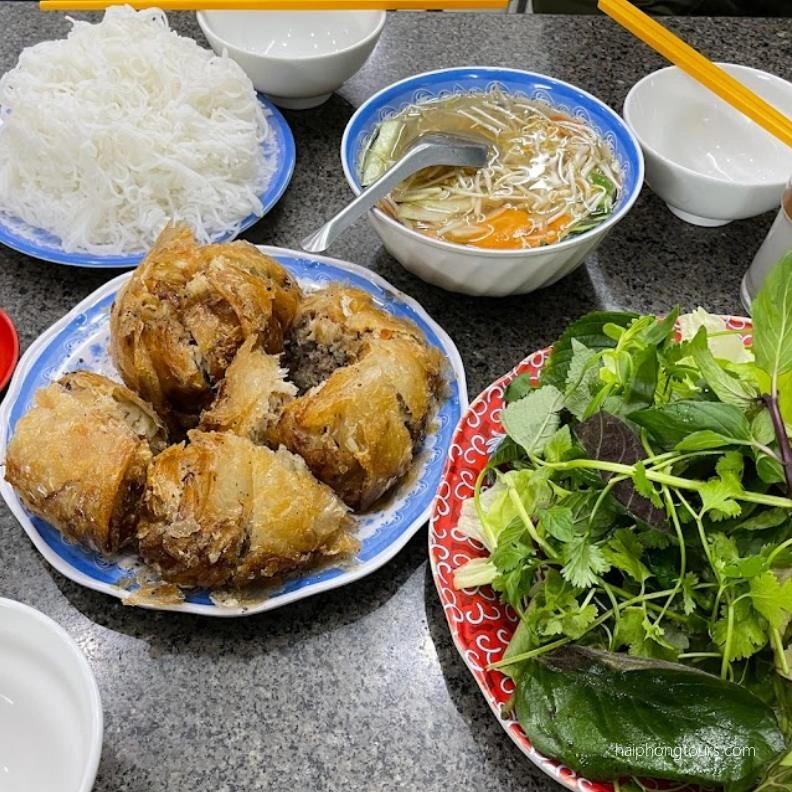
These foods solve different moments: banh da cua can be a meal; banh mi cay is a compact snack; nem cua be is often part of a shared order. Do not compare them only by popularity.
Ask what is included in the bowl or dipping sauce. Crab broth, fish cake, pork, sausage, fried shallots and herbs may appear in different combinations. A person with shellfish allergy should not treat a shop as safe because one visible topping is removed.
Ha Long and Quang Ninh: seafood with route awareness
Ha Long and the Quang Ninh coast are associated with seafood and chả mực, a fried squid cake. Choose seafood by freshness, preparation, transparent pricing and portion rather than a broad claim that a waterfront restaurant is automatically better.
Before ordering live or market-priced seafood, ask for the unit, weight, preparation charge and final estimate. Confirm whether the price is per kilogram, per dish or per item. Photograph the written order when the selection is complicated.
A cruise meal is a different experience. It follows a set program and may be buffet or plated. Dietary requests must be attached to the exact vessel before boarding; once at sea, another kitchen is not available.
Cat Ba: island meals need timing
Cat Ba town offers seafood restaurants, noodle shops, cafés and traveler-oriented menus. Remote resorts and full-day boats provide fewer spontaneous alternatives. Eat before a long transfer and carry a useful snack for ferry or cable-car connections.
For seafood, use the same weight and unit checks as Ha Long. For a boat trip, ask who prepares lunch, what is included and whether the meal is on the main boat, another vessel or a land stop.
 Overnight Cruise
Halong Bay
Catherine Cruise 2 day 1 night tour
 Day Cruise
Halong Bay
Top Luxury Halong bay 1 day Yacht with Private room
 Day Cruise
Halong Bay
Halong Bay Day Tour
 Day Cruise
Halong Bay
Luxury Halong bay day cruise
 Day Cruise
Halong Bay
Private 4 Hour Halong Bay Day Cruise
 Day Cruise
Halong Bay
Private 6 Hour Halong Bay Day Cruise
 Day Cruise
Halong Bay
Catherine Horizon Day Cruise
 Overnight Cruise
Halong Bay
Oriental Sails 2 day 1 night tour
 Overnight Cruise
Halong Bay
Athena Cruise 2 day 1 night tour
 Overnight Cruise
Halong Bay
Starlight Cruise 2 day 1 night tour
Overnight Cruise
Halong Bay & Lan Ha Bay Oriental Sails 3 day 2 night tour
Overnight Cruise
Halong Bay & Lan Ha Bay Starlight Cruise 3 day 2 night tour
Overnight Cruise
Halong Bay Athena Cruise 3 day 2 night tour
Overnight Cruise
Halong Bay Catherine Cruise 3 day 2 night tour
 Day Cruise
Halong Bay
Icon Cruise Halong Bay: 6-Star Luxury Day Cruise
Ninh Binh: understand the name before ordering
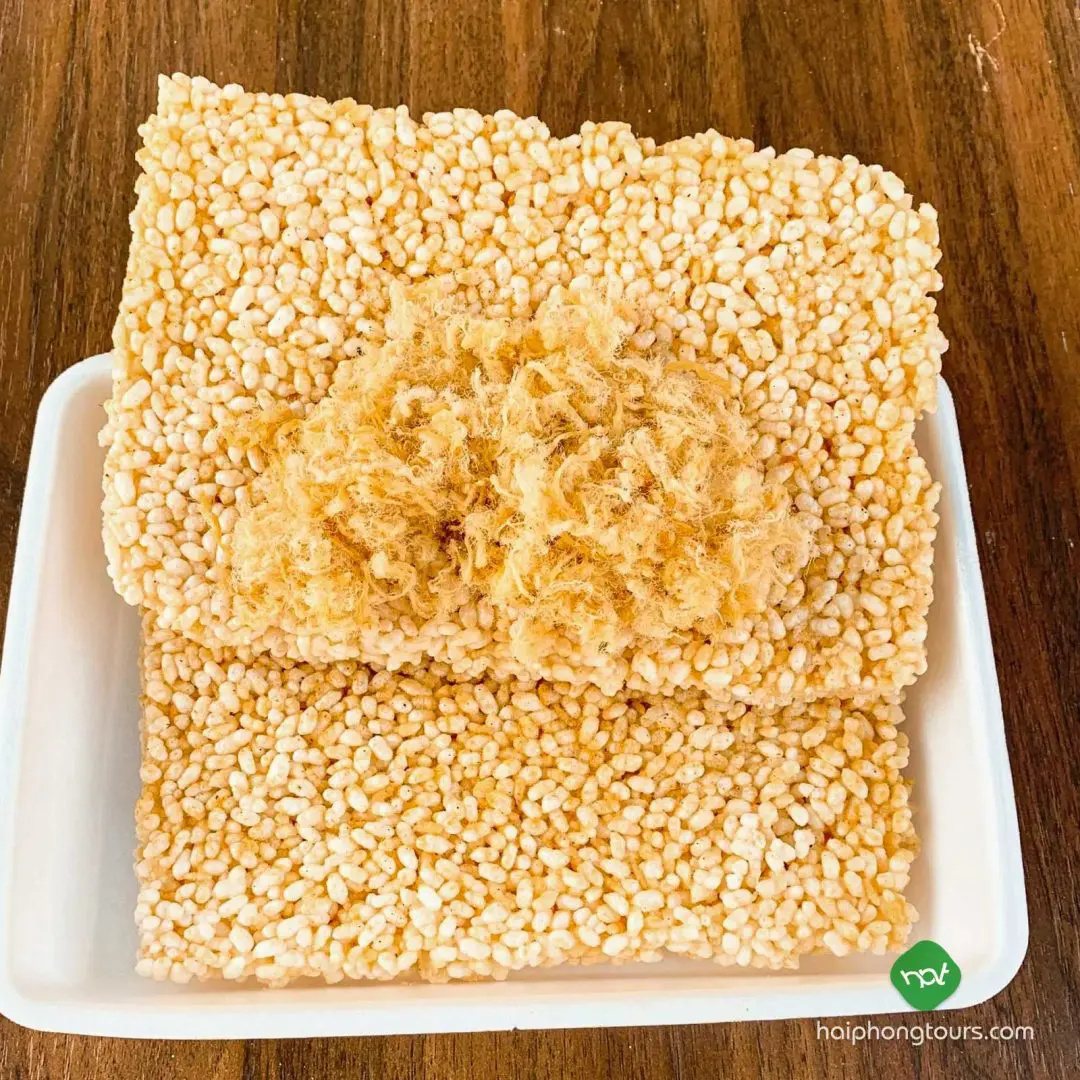
Ninh Binh is associated with goat dishes and cơm cháy, crisp rice served with sauces or toppings. The accents matter: cơm cháy means crispy or scorched rice, while cơm chay without the rising accent refers to vegetarian rice or food. Crispy rice is not automatically vegetarian.
Ask what sauce comes with the rice and what broth, meat or dairy appears in the complete plate. Goat can be prepared in several ways; choose one style and a suitable portion rather than ordering multiple large dishes for two people.
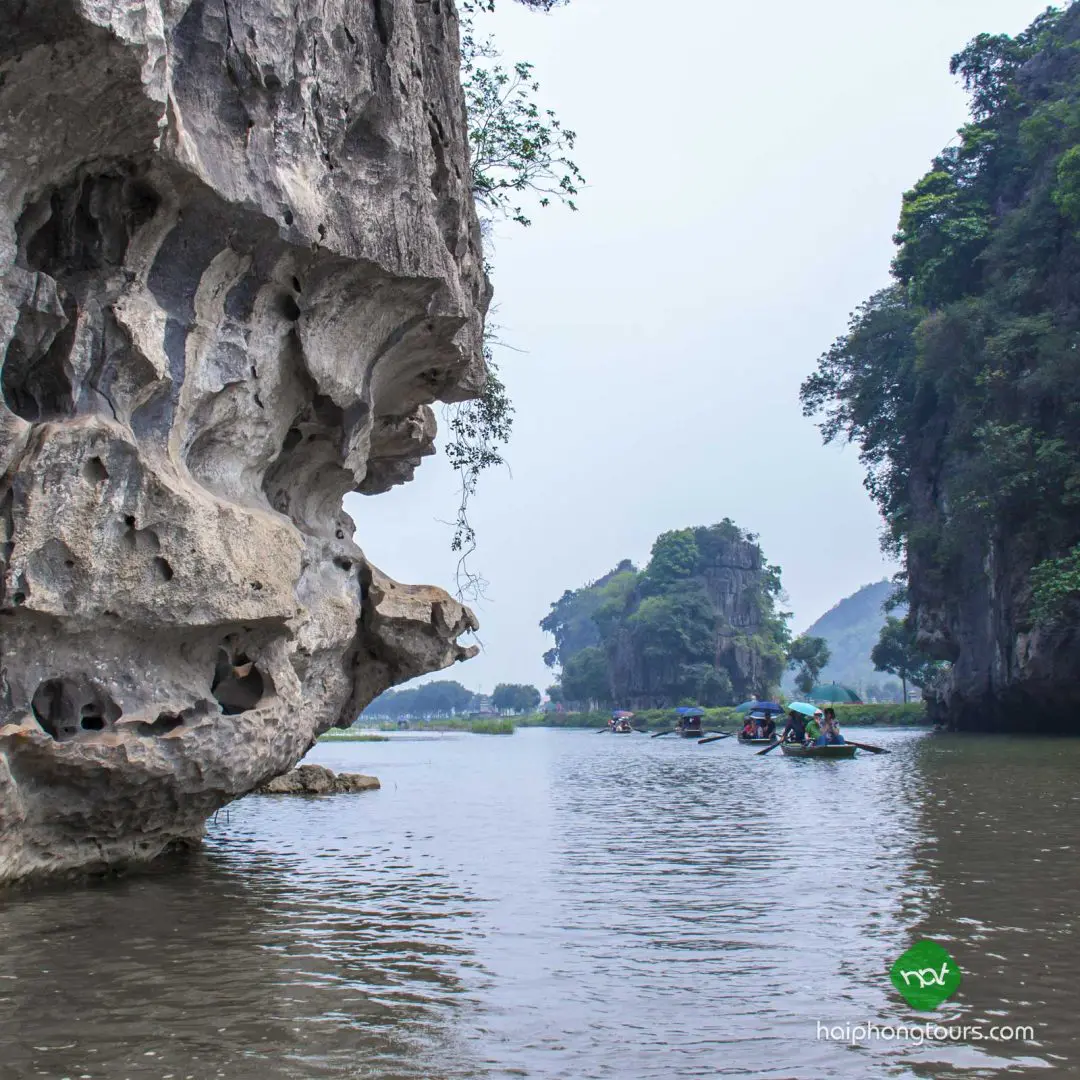
Tam Coc has the easiest concentration of traveler restaurants. Rural Trang An, Bai Dinh and countryside stays may make dinner dependent on the accommodation, so confirm meals before leaving the central area.

Sapa and Lao Cai: highland meals and tourist interpretation
Sapa offers hotpots, grilled foods, market snacks and homestay meals. Salmon and sturgeon dishes reflect cold-water aquaculture in the highlands, while thang co is a traditional stew associated with upland markets and communities.
Ask what meat and organs a thang co preparation uses; recipes and restaurant versions vary, and the dish will not suit every traveler. Do not order it only for a photograph or dare.
For a homestay, ask whether dinner is a family meal, group set menu or restaurant-style service. Dietary requests should reach the actual host before ingredients are bought.
Ha Giang: eat around the road route
Ha Giang food reflects highland crops, markets and cold-weather meals. Buckwheat cakes, corn-based foods, warming porridge and shared hot dishes may appear along the route. Availability changes by town, season and market day.
Áu tẩu porridge is a local specialty with a distinctive ingredient and preparation tradition; restaurant versions commonly include animal broth or meat. Travelers with allergies, pregnancy concerns or medical dietary restrictions should ask about the complete recipe rather than treating an unfamiliar local plant as automatically safe.
Road timing determines meals. Ask the driver or guide where lunch is planned and carry a backup if the group reaches a small town after kitchens close.
Cao Bang: broth, roast dishes and market ingredients
Cao Bang bánh cuốn is commonly served with a warm savory broth rather than the dipping sauce many travelers know elsewhere. Roast duck and seasonal chestnut products are other local associations. Use these as starting points, not a requirement to order every specialty.
Ask whether the broth contains meat, bones or fish sauce. Travelers seeking a vegetarian bánh cuốn need both a suitable filling and a separate plant-based broth.
Ban Gioc and rural sightseeing areas have fewer food alternatives than Cao Bang city. Arrange breakfast and lunch around the road plan.
Markets: learn before you taste
A market is valuable for understanding ingredients, seasonality and daily trade. Go early enough to see the market functioning, but do not treat every vendor as an attraction.
- Ask before making a close photograph.
- Do not handle produce or prepared food without permission.
- Keep bags away from cutting and serving surfaces.
- Pay the stated or agreed price for small purchases.
- Use a guide for unfamiliar ingredients and cultural context.
- Do not identify a vendor’s ethnicity from clothing alone.
A busy stall can suggest turnover, but it does not prove that every ingredient or preparation step meets your health needs.
Food safety without avoiding local food
Fully cooked food served hot is the safest practical default. Choose vendors that cook to order, handle raw and cooked ingredients separately, use clean utensils and store food away from traffic dust and insects.
- Wash or sanitize hands before eating.
- Choose food that is cooked through and served hot.
- Avoid items that have sat at room temperature for a long period.
- Use sealed bottled drinks or a known safe water source.
- Choose fruit you can peel yourself when water hygiene is uncertain.
- Do not use alcohol or chili as a substitute for food-safety judgment.
Street food is not automatically unsafe, and a formal restaurant is not automatically safe. Judge the specific preparation and your own medical risk.
Vegetarian, vegan, gluten-free and allergy needs
Fish sauce, oyster sauce, shrimp paste, meat stock, egg and dairy can appear in a dish with no visible meat. The North Vietnam vegan and vegetarian guide provides ingredient language and regional planning.
For celiac disease or food allergy, ask about packaged sauces, soy sauce, cooking water, frying oil, utensils and preparation surfaces. The gluten-free and food allergy guide includes Vietnamese cards and cross-contact questions.
A food tour should be told before payment. If the operator cannot identify the kitchens and their process, a medically complex requirement may be better served by a smaller private plan or self-catered meal.
Ordering and portion control
Ask whether a price is per bowl, plate, person, item or weight. A dish designed for sharing can overwhelm a tasting route. Use small portions and agree to share when appropriate.
Useful phrases:
- Một phần. One portion.
- Phần nhỏ. Small portion.
- Không cay. Not spicy.
- Ít cay. A little spicy.
- Không đường. No sugar.
- Tính tiền. The bill, please.
“Not spicy” may reduce added chili without changing a broth or sauce that is already prepared. Ask for chili on the side when possible.
Coffee, tea and alcohol
Vietnamese coffee may use condensed milk. Black coffee is cà phê đen; no sugar is không đường. Egg coffee contains egg and usually dairy ingredients. Ask about plant milk instead of assuming it is available.
Tea at a shop, restaurant or household may be complimentary or part of hospitality. Follow the host’s lead and do not assume every tasting is unlimited.
Rice or corn alcohol may be offered in mountain meals. Strength and production are not always clear. Drink only if you choose, avoid unsealed or uncertain alcohol, and never combine drinking with driving, cycling or a difficult mountain road.
Food tours with children
Shorten the route and include seating, toilets and familiar backup food. Ask about nuts, bones, small shells, hot soup, skewers and strong chili. A crowded curbside stool may not suit every child.
One new dish at a time works better than a long challenge list. Do not pressure a child to eat an unfamiliar organ, insect, very spicy condiment or raw ingredient for entertainment.
Payment and tipping
Carry small cash for simple stalls and ask the price before ordering. Larger restaurants may accept cards or QR payments, but international access is not guaranteed. Keep a second payment method.
Tipping is not handled uniformly. For a guided tour, check whether gratuity is included and tip voluntarily according to the service and your custom. Do not assume a street-food vendor expects a separate percentage.
Two practical food routes
Five days: Hanoi and Hai Phong
- Hanoi: morning noodles, a focused evening food walk and one market visit.
- Hai Phong: banh da cua meal, banh mi cay snack and one carefully ordered seafood dinner.
- Use the remaining meals for repetition, rest and dietary balance.
Ten days: city, countryside, bay and mountain
- Hanoi: three nights.
- Ninh Binh: two nights with goat or crispy-rice context.
- Ha Long or Cat Ba: two nights with one seafood or cruise meal.
- Sapa or Cao Bang: three nights with a prearranged homestay or local meal.
Do not make every meal a planned tasting. Leave simple breakfasts and quiet dinners so appetite and digestion can recover.
Common mistakes
- Ordering full portions at every stop.
- Choosing a guide from the number of dishes instead of route and context.
- Assuming a visible vegetarian ingredient makes the full dish vegetarian.
- Confusing Ninh Binh cơm cháy with vegetarian cơm chay.
- Ordering seafood without confirming weight and unit price.
- Depending on rural road stops for a medical diet.
- Drinking unfamiliar alcohol before driving or a mountain transfer.
- Photographing market vendors without permission.
Frequently asked questions
Which city has the best food tour in North Vietnam?
Hanoi has the widest choice and easiest compact walking routes. Hai Phong offers a stronger focus on port-city noodles, small baguettes, crab spring rolls and seafood.
Is street food safe?
No setting is risk-free. Choose food cooked through and served hot, clean handling, high turnover and safe water. Apply the same precautions to restaurants and markets.
Can a food tour accommodate vegans?
Some can, but fish sauce, stock, egg and shared cookware need checking. Ask for the replacement dishes and kitchens before paying.
What is the difference between cơm cháy and cơm chay?
Cơm cháy is crispy or scorched rice associated with Ninh Binh. Cơm chay means vegetarian rice or food. The crispy-rice sauce and toppings may contain animal ingredients.
Should I visit a market with a guide?
A guide adds value when you want ingredient names, seasonal context and respectful communication. Independent visitors should buy modestly, ask before photos and avoid blocking trade.
How many dishes should I try in one food walk?
Four to six small tastings are enough for most people. Use fewer stops when one dish is a full bowl or shared meal.
Eat a route, not a checklist
A valuable North Vietnam food trip shows how place changes a bowl, snack, market and family meal. Begin with Hanoi, add one coastal and one rural region, order small portions and ask precise ingredient questions. The goal is enough appetite and time to understand each stop, not the largest number of dishes in one day.
If tasting is only the start of your food interest, the North Vietnam cooking-class holiday guide explains how to compare market visits, hands-on time, menus, hygiene and dietary support.
Travelers eating without a guide or group can use the solo dining guide for North Vietnam to choose suitable dishes, order clearly and handle shared seating or bills.
Would you like to include local food in a city visit? Contact us with your destination, date, group size and dietary needs to discuss a suitable tour or private itinerary.