
To understand North Vietnam’s history, follow places in sequence rather than visiting unrelated monuments. Begin with Co Loa for early state formation, Hoa Lu for the first unified dynasties of the independent era, Hanoi for Thang Long and the modern capital, Bach Dang for river defense, and Yen Tu for the Truc Lam Buddhist tradition. Add Dien Bien Phu only when the twentieth-century war history justifies the long journey.
A seven-to-ten-day history route can link Hanoi, Ninh Binh, Hai Phong and Yen Tu without rushing. Museums and memorials present particular institutional perspectives, so compare the building, objects, landscape and written interpretation. A local guide adds most value when they explain why a place mattered, not merely repeat dates.
Quick history-route decisions
- Best introduction: Hanoi, with the Imperial Citadel, Temple of Literature, Hoa Lo and selected museums.
- Best early-state site: Co Loa, outside central Hanoi.
- Best dynastic landscape: Hoa Lu in Ninh Binh.
- Best military-and-river history: the Bach Dang sites around Hai Phong and Quang Ninh.
- Best religious-intellectual route: Yen Tu, extended to Vinh Nghiem and Con Son–Kiep Bac with enough time.
- Best twentieth-century destination: Dien Bien Phu, planned as a separate extension.
- Best urban comparison: Hanoi and Hai Phong, for imperial-capital and colonial-port development.

A short timeline for the places you will see
Early settlements and the Co Loa landscape
The Red River Delta supported complex settlements before the written dynastic record. Co Loa is associated with the Au Lac state and An Duong Vuong, while archaeology helps distinguish the ancient settlement from later legend. Its concentric earthworks make the landscape itself part of the evidence.
Independence and the Bach Dang River
The Bach Dang river system is associated with decisive victories in 938, 981 and 1288. The best-known commanders and rulers linked with those events are Ngo Quyen, Le Hoan and Tran Hung Dao. Tidal knowledge, river channels, obstacles and coordinated forces made the landscape strategically important.
Hoa Lu and the first unified dynasties
Hoa Lu became the capital under the Dinh and Early Le dynasties in the late tenth century. Limestone terrain helped protect the capital. The site explains the consolidation of an independent state before the political center moved to Thang Long.
Thang Long from 1010
Ly Thai To moved the capital to Thang Long in 1010. The city remained a central political and cultural place through successive dynasties, even as names, walls and administrative structures changed. Hanoi’s Imperial Citadel preserves layers rather than one intact palace from a single era.
The Tran dynasty and Truc Lam Buddhism
The Tran period connects the 1288 Bach Dang victory with the growth of the Truc Lam Buddhist tradition. Former emperor Tran Nhan Tong is central to the Yen Tu story. A combined history route can therefore link political power, military defense and religious life rather than treating them as separate lists.
Colonial cities and the port economy
French colonial rule reshaped Hanoi and Hai Phong through streets, administrative buildings, railways, ports and segregated urban plans. The architecture is visible, but it should be read with the labor, taxation, resistance and economic system that produced it.
Revolution, war and reunification
Twentieth-century sites in the north cover anti-colonial struggle, the First Indochina War, the 1954 Dien Bien Phu battle, the divided-country period and reunification in 1975. Different museums emphasize different actors and experiences. Use primary objects and multiple forms of interpretation where possible.
For the events before the declaration of independence, the Tan Trao historical-site guide connects Na Nua hut, the National Congress meeting place and the surrounding village. Keep the 1945 core distinct from the wider sites associated with the later resistance war.
Hanoi: read the capital in layers
Imperial Citadel of Thang Long
The Imperial Citadel is the strongest place to see Hanoi as a long-lived political center. Archaeological remains, gates, later military structures and underground spaces belong to different periods. Do not expect one visually complete imperial palace.
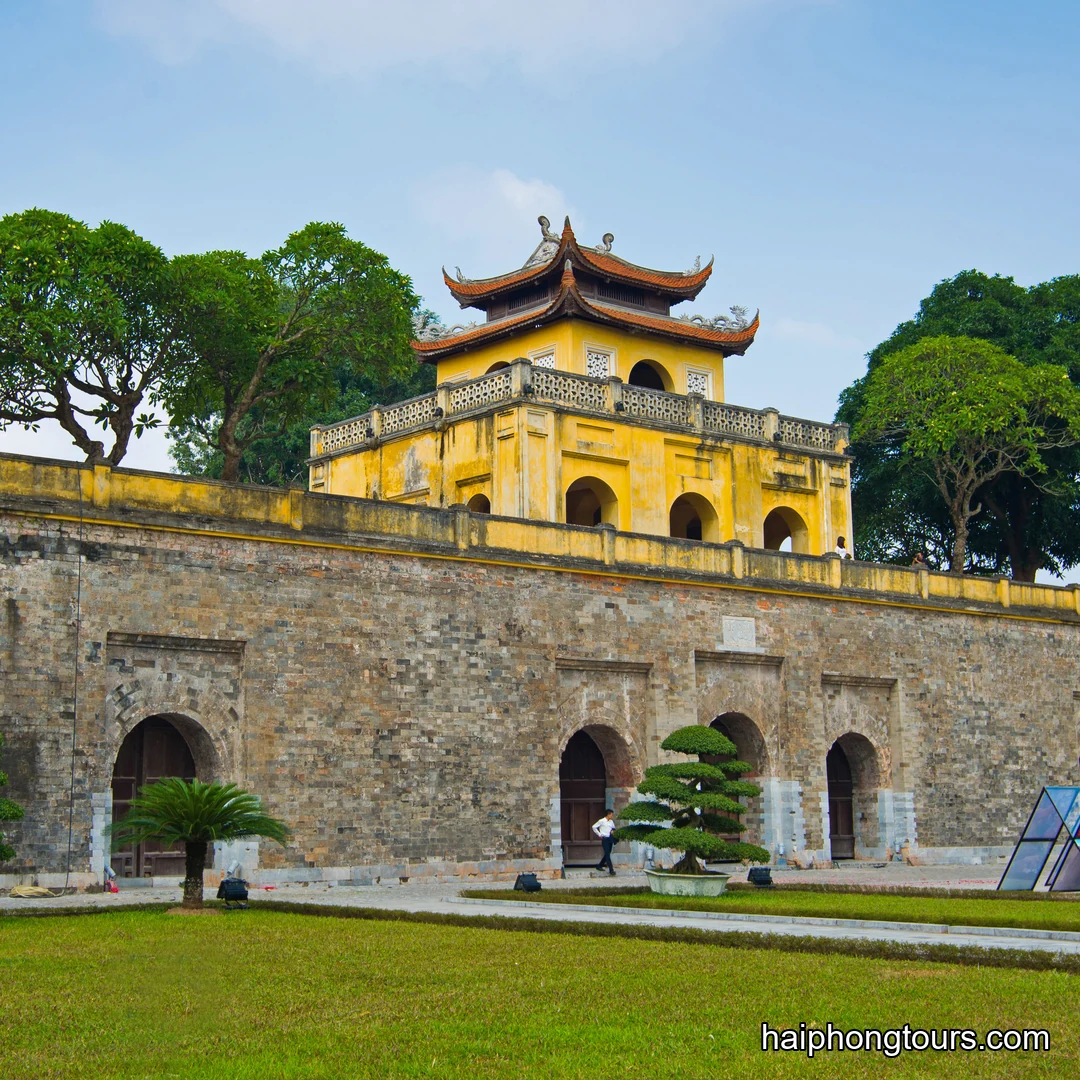
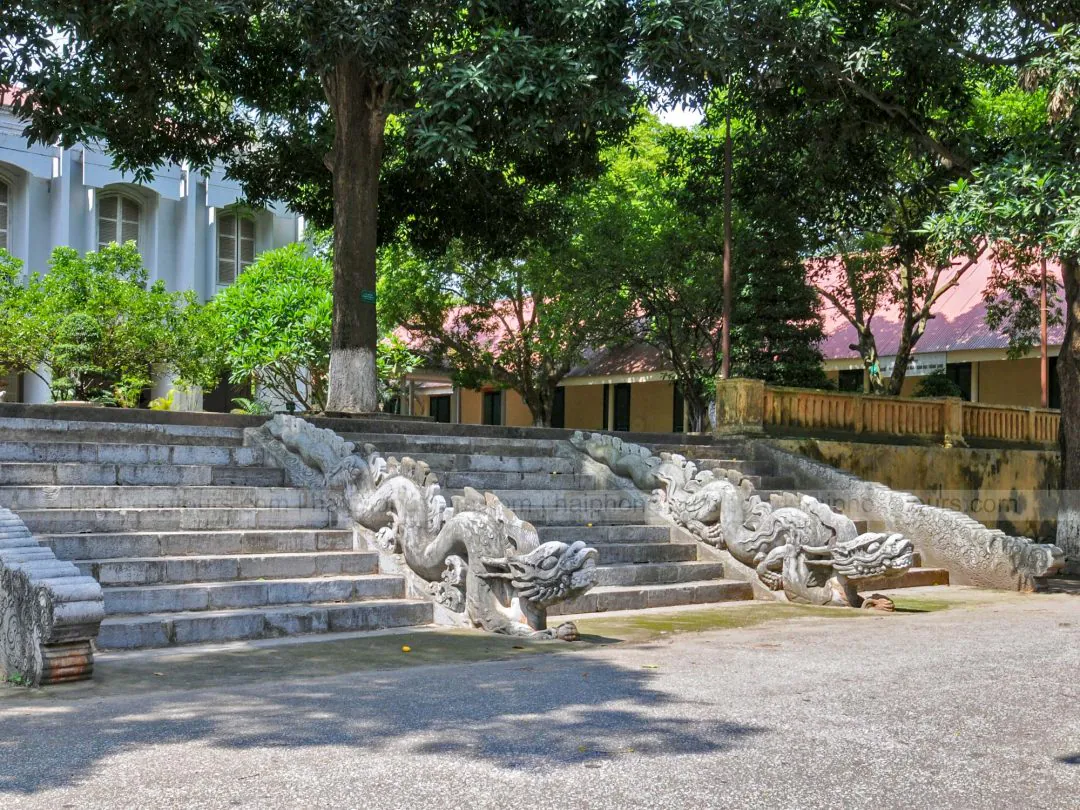

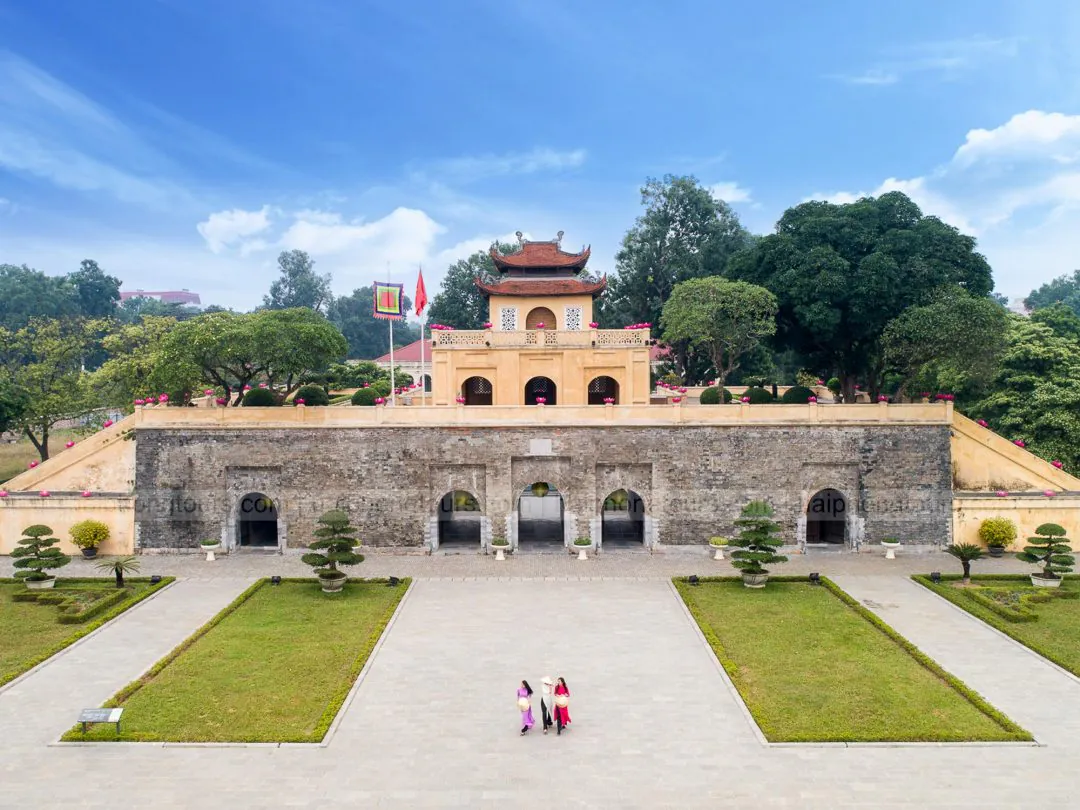

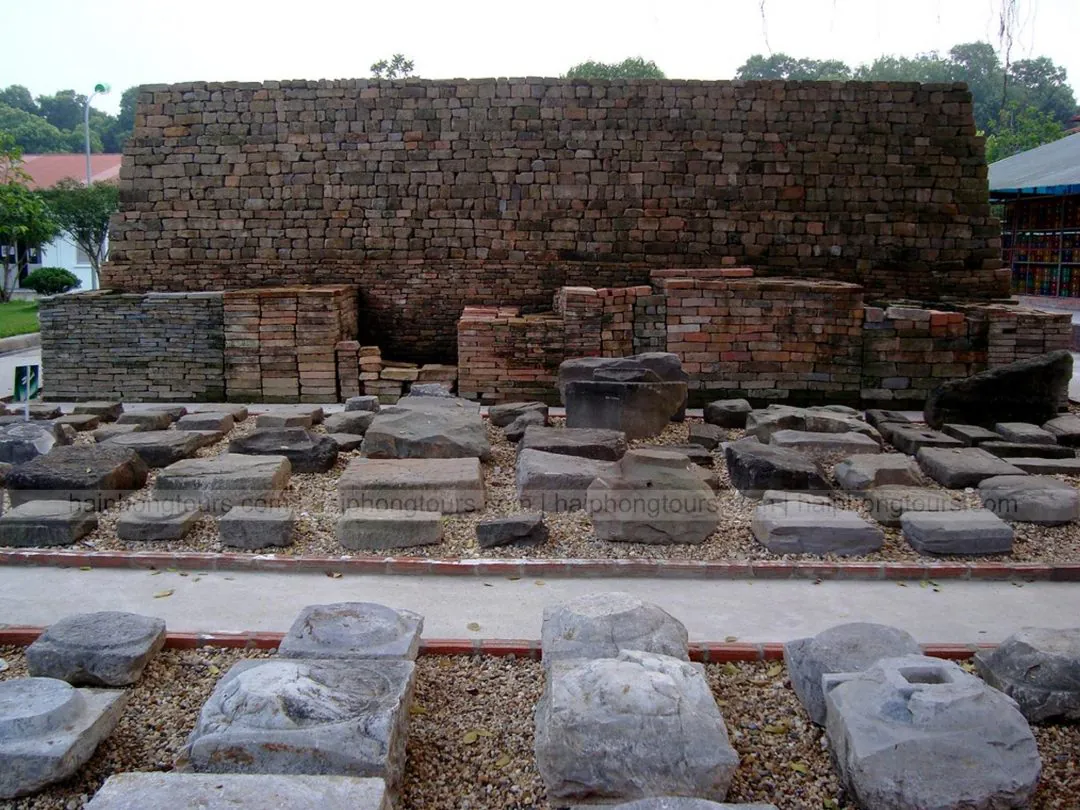
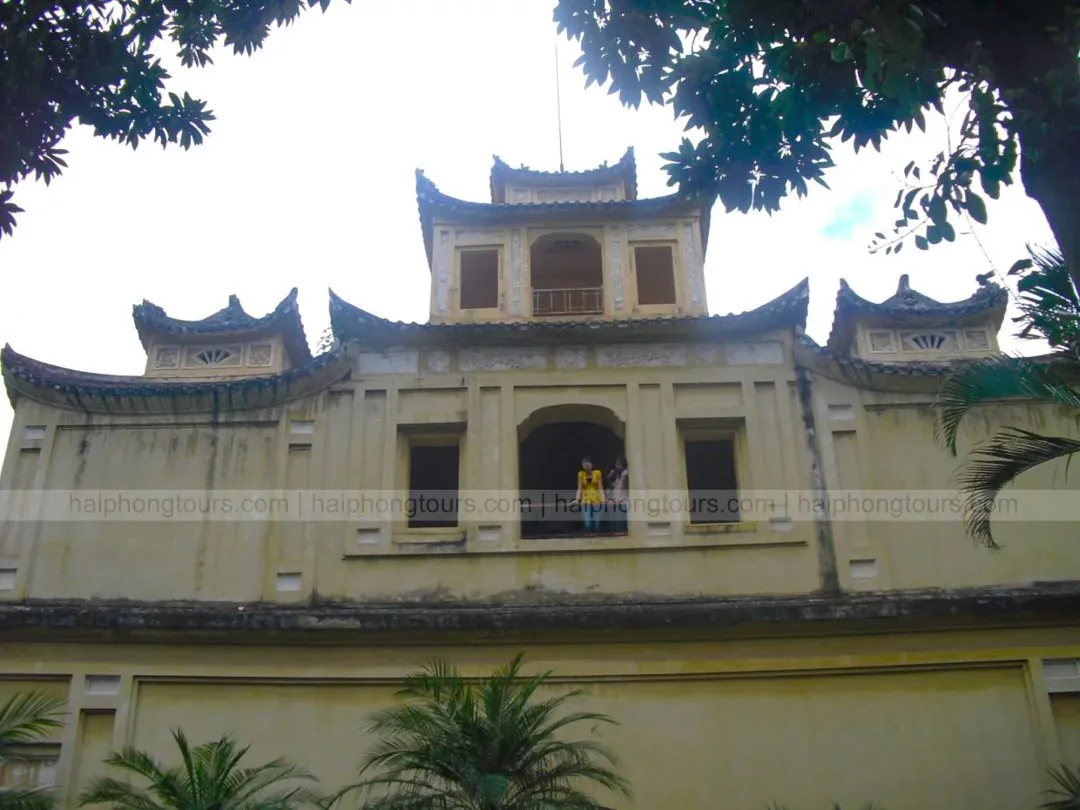

Gates, stone dragons, archaeological remains and buildings around the Imperial Citadel of Thang Long.
Allow enough time to identify which century each building or display represents. Temporary exhibitions and access to individual areas can change, so check the current visitor route.
Temple of Literature
The Temple of Literature introduces Confucian education, court scholarship and the prestige of examinations. Its courtyards and doctoral stelae help explain how learning served the state. It is a historical and ceremonial site rather than a standard Buddhist pagoda.
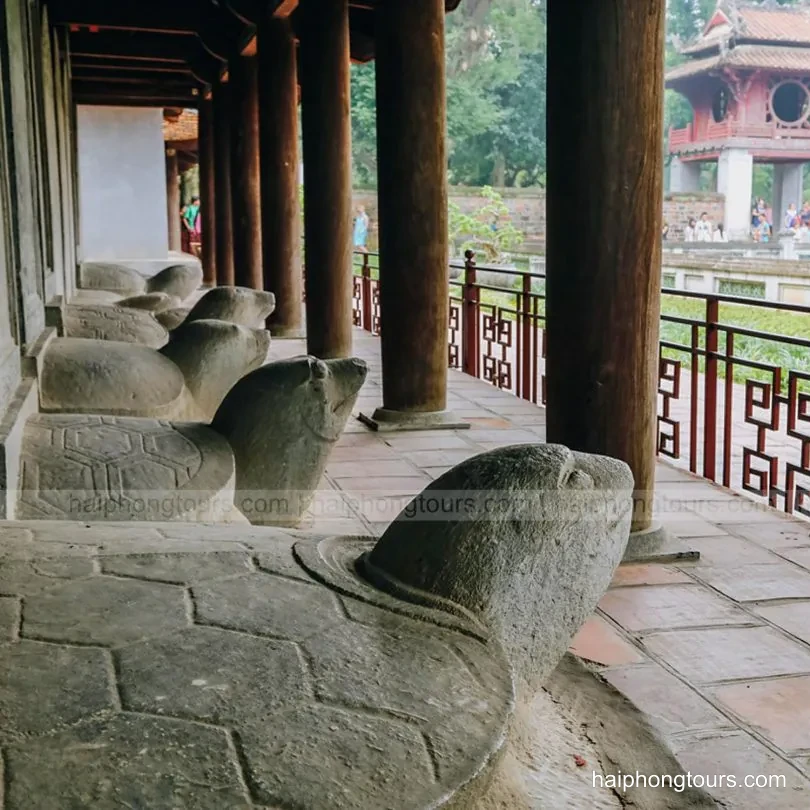

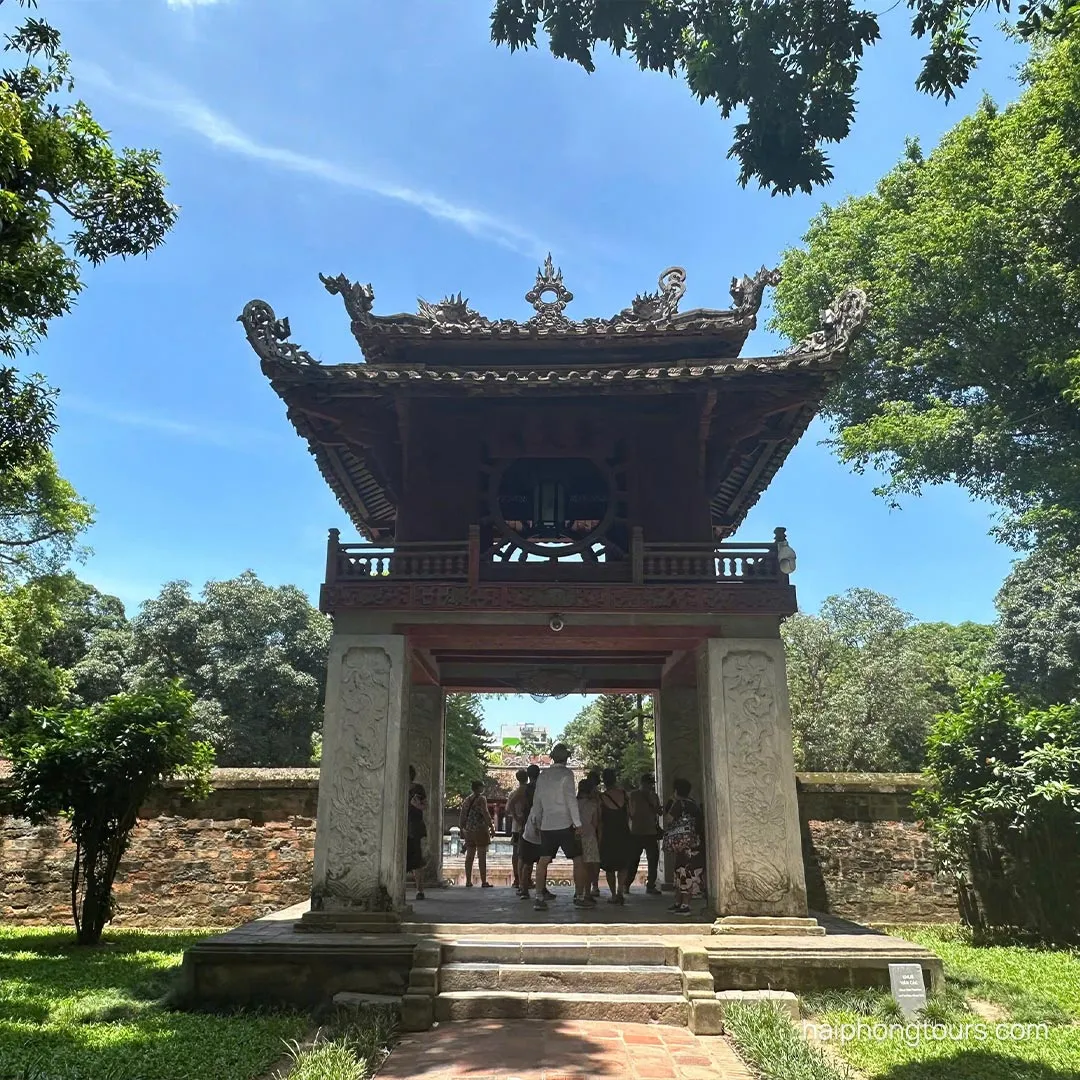
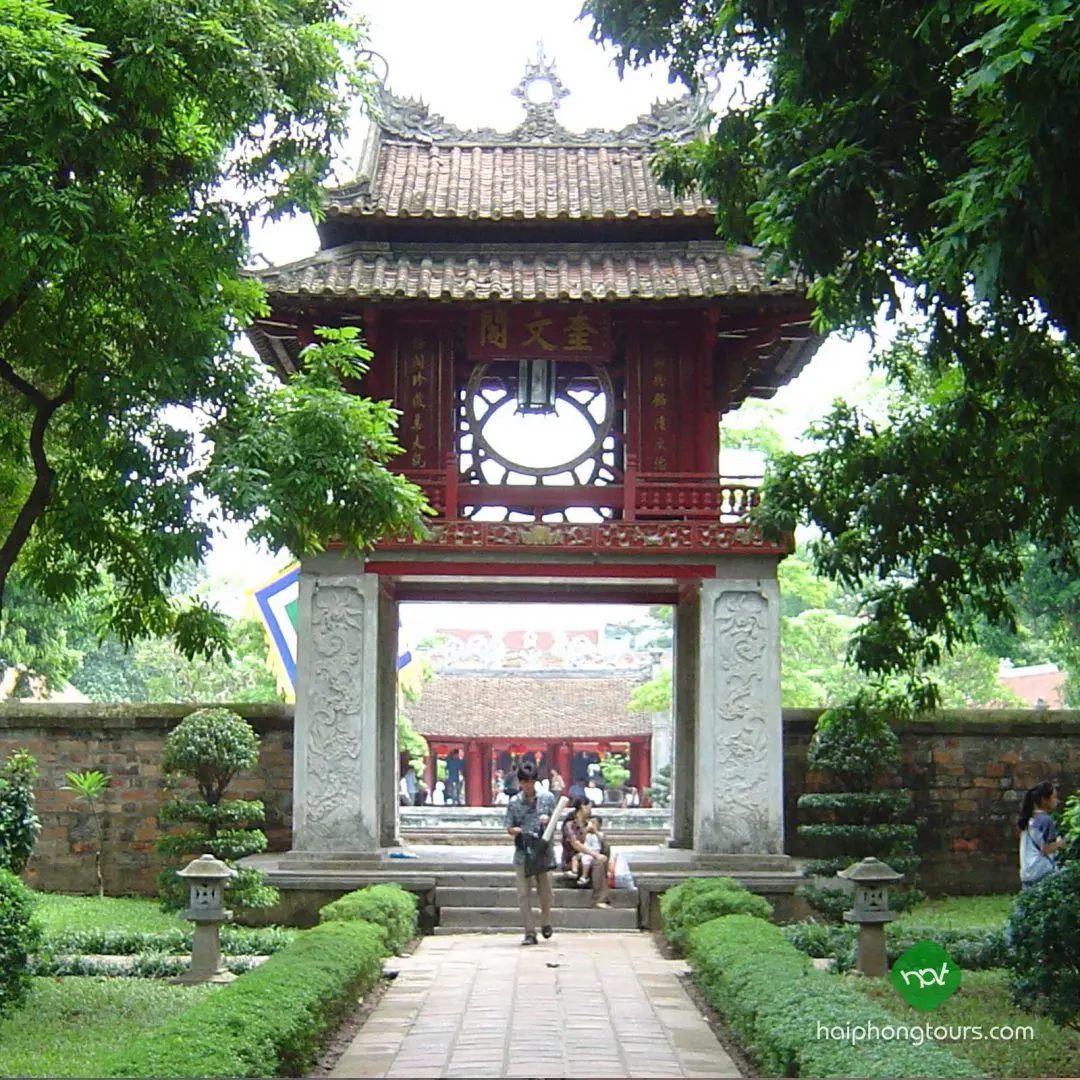


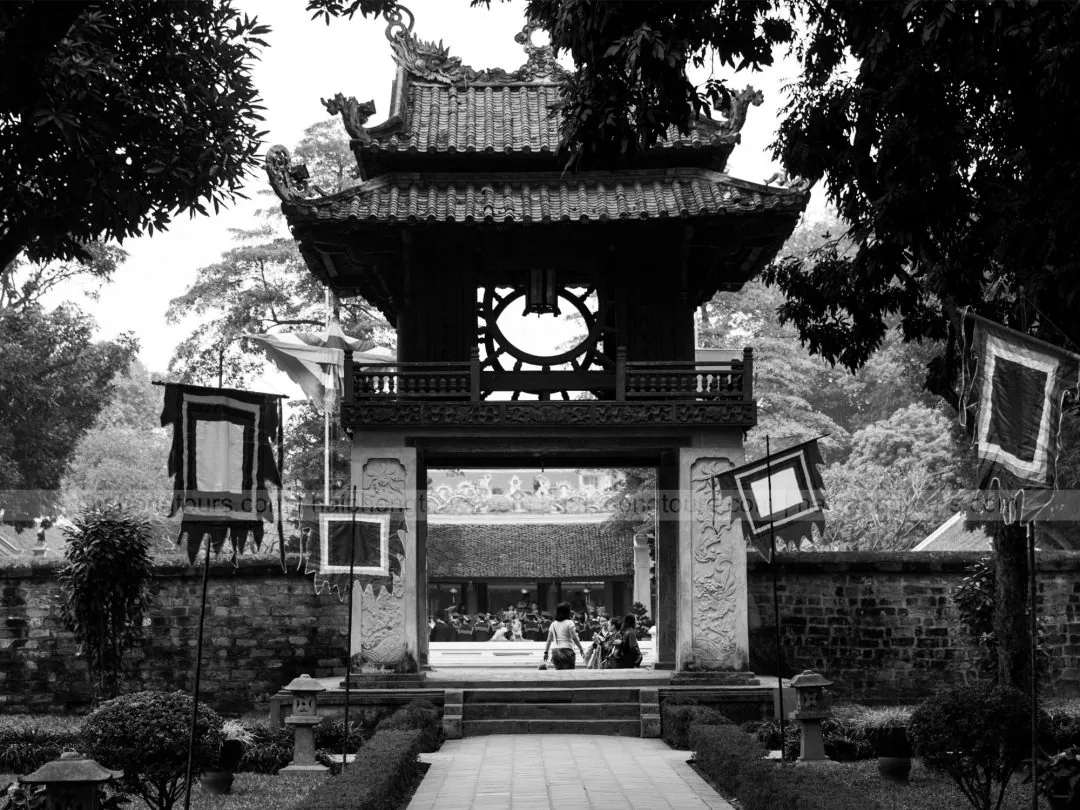
Courtyards, stone stelae and ceremonial buildings at the Temple of Literature, with a historical gate photograph.
Hoa Lo Prison
Hoa Lo was built during French colonial rule and later held American prisoners of war. The surviving site and exhibition cover more than one historical period. Read the sequence carefully so the anti-colonial prison history and later war history do not collapse into one story.
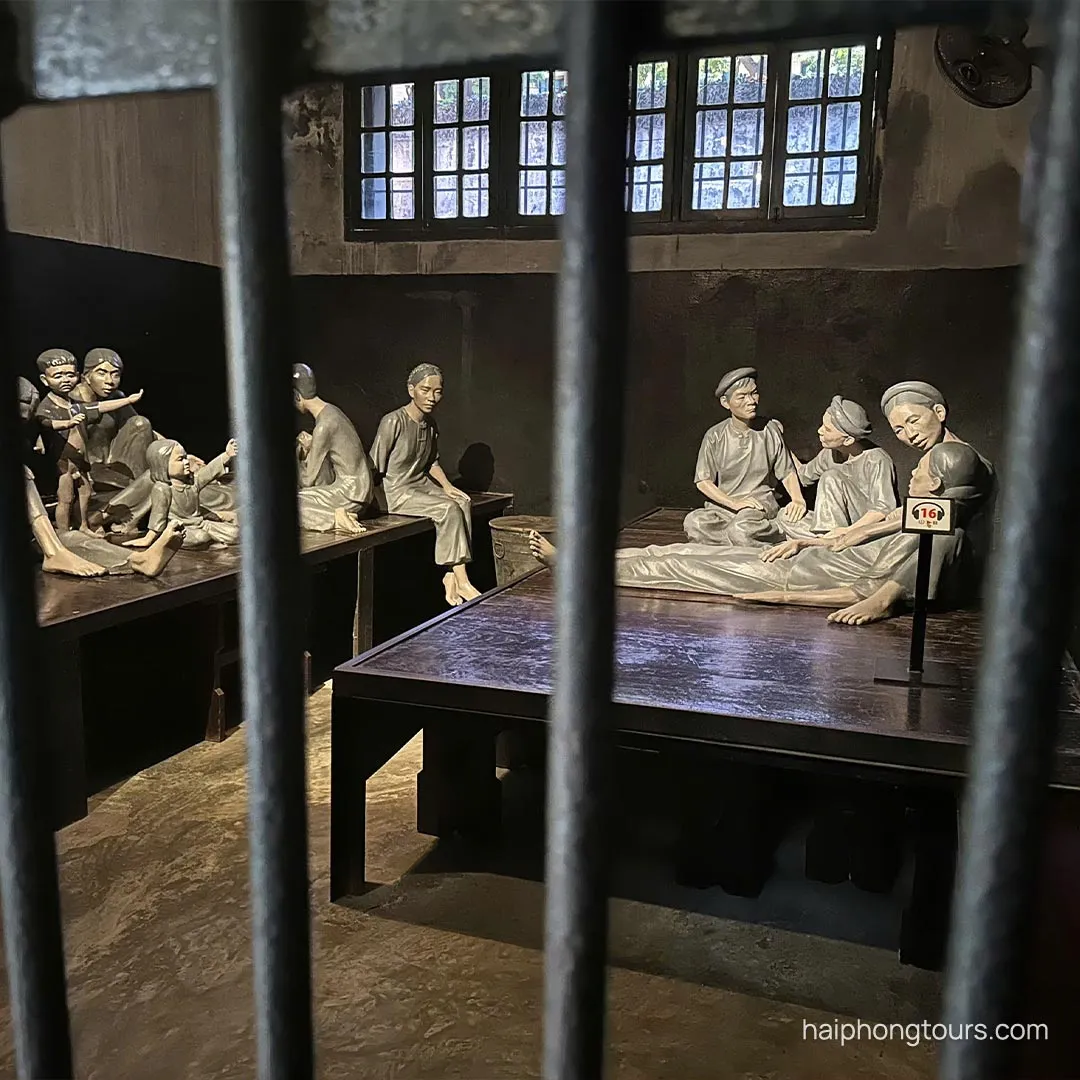
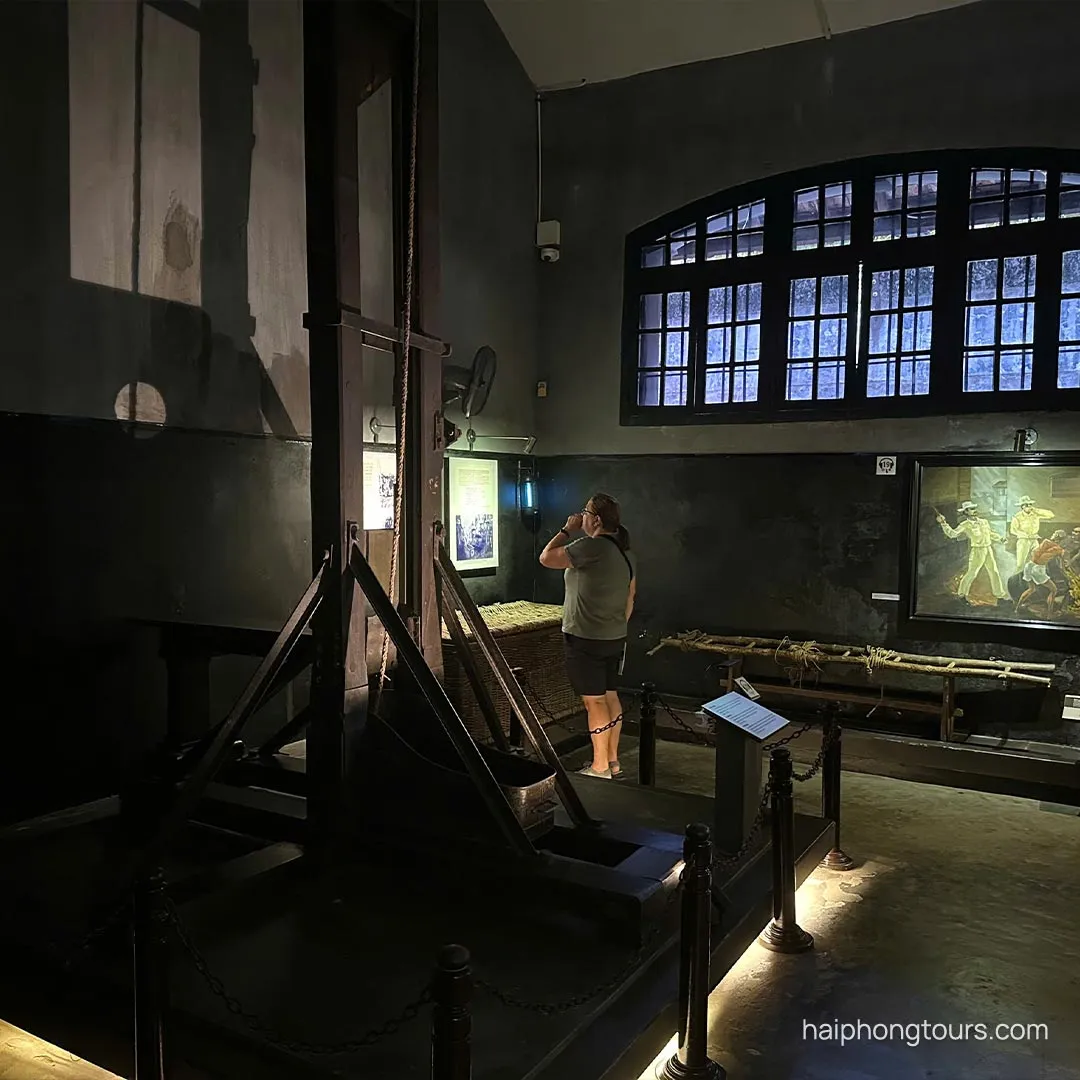

Prison exhibitions and the entrance to Hoa Lo.
Ho Chi Minh Complex
The mausoleum, stilt house, museum and Ba Dinh area connect the revolutionary period, state formation and public commemoration. Security, dress and access rules vary by building and date. A closed interior does not make the surrounding historical landscape irrelevant.
Museums
Choose a museum for a question. Use a national-history collection for long chronology, an ethnology museum for community diversity and material culture, and a military museum for weapons, campaigns and state interpretation. Collection locations, temporary closures and displays can change; verify before traveling across the city.
The current Private Hanoi City Tour includes the Ho Chi Minh Complex, Temple of Literature, Hoa Lo, Hoan Kiem and Ngoc Son in a full-day format. Confirm access conditions and optional additions for the date.
Co Loa: history before Thang Long
Co Loa lies north of central Hanoi and preserves a landscape of large earthen ramparts associated with the ancient Au Lac capital. Temples and legends focus attention on An Duong Vuong, the magic crossbow and the fall of the state, while archaeological evidence adds a material history of settlement and defense.
Walk or drive between selected rampart, temple and excavation-related points rather than expecting one enclosed attraction. A guide should separate legend, later worship and archaeological interpretation. The Co Loa Citadel guide explains how to plan the site from Hanoi.
Best for: travelers interested in archaeology, early state formation and the relationship between legend and evidence.
Main limitation: earthworks require explanation; visitors expecting monumental stone ruins may miss their significance.
Hoa Lu: the capital in a protected landscape
Hoa Lu’s temples honor rulers of the Dinh and Early Le dynasties. The surrounding limestone explains why this location was defensible and why the move to the wider Red River plain changed the scale of the capital.
Hoa Lu Ancient Capital and Hoa Lu Ancient Town are different places. The historic temple area belongs to the former capital; the modern attraction beside Ky Lan Lake serves an evening and cultural role in today’s Ninh Binh city.
Combine Hoa Lu with one landscape activity such as Trang An, but give the history enough time to stand on its own. The Bai Dinh versus Hoa Lu guide helps distinguish dynastic history from a large Buddhist complex.
Current packages on the Ninh Binh Day Tour from Hanoi use different combinations of Hoa Lu, Bai Dinh, boat routes, cycling and Hang Mua. Choose the package that answers your historical question.

Bach Dang: use several sites for one river story
The Bach Dang story extends across a tidal river landscape and multiple memorial or archaeological sites. No single viewpoint explains all three famous victories. Trang Kenh and Bach Dang Giang provide a landscaped interpretive and memorial environment; Cao Quy connects archaeological stake evidence with the broader water system; Tu Luong Xam centers worship and memory associated with Ngo Quyen.
Water level, modern embankments and urban development make the historical terrain difficult to read without context. A good route explains channel choice, tide and location without pretending that every displayed object remains in its original battle position.
Use the Bach Dang historical-sites comparison to choose the sites by evidence, worship, landscape and driving time.
Yen Tu, Vinh Nghiem and Con Son–Kiep Bac
Yen Tu is a mountain Buddhist landscape associated with the formation of Truc Lam Buddhism and Tran Nhan Tong. Cable cars reduce some climbing, but they do not remove queues, steps or mountain weather. A rushed upper-station photograph is weaker than a route that connects religious practice, architecture and terrain.
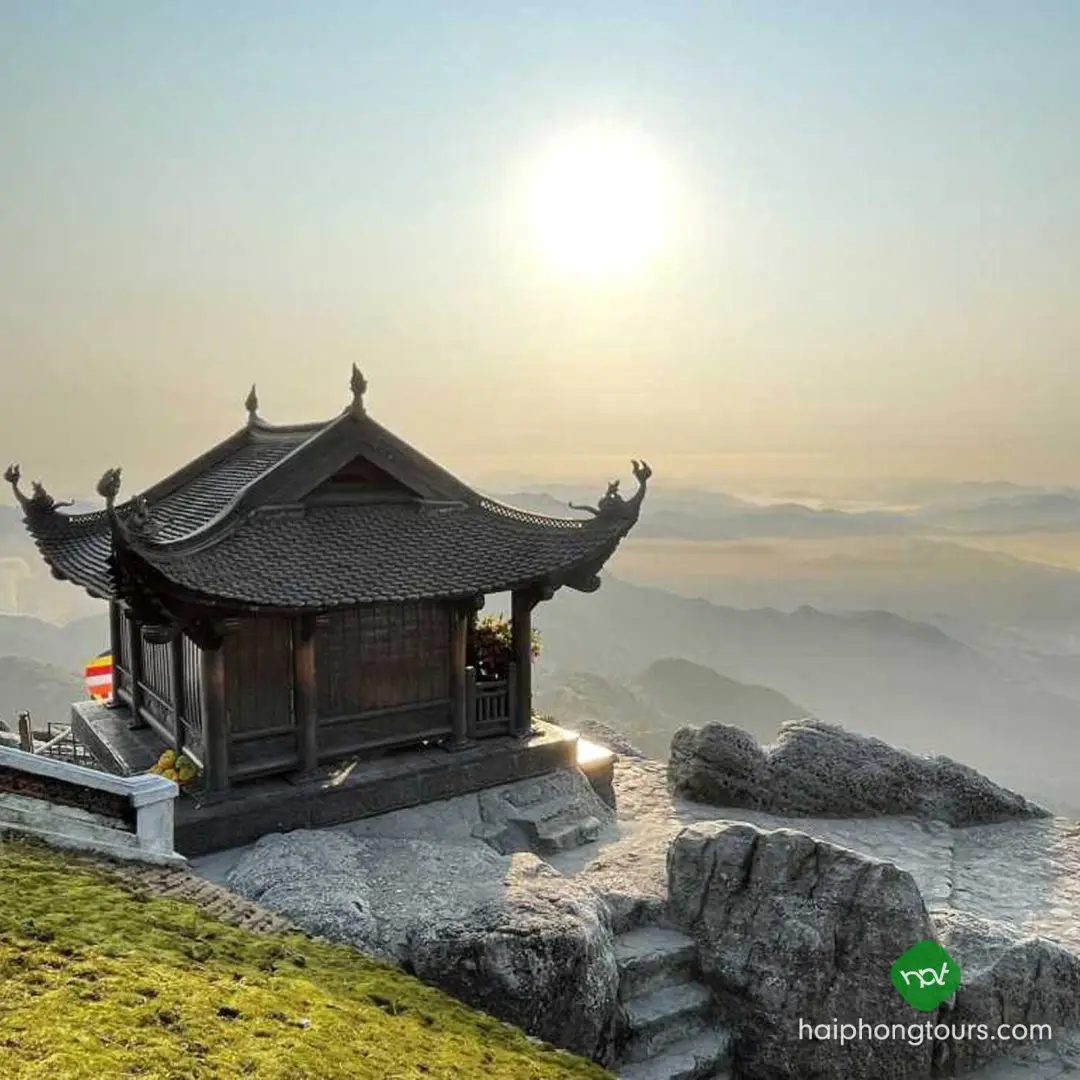
Vinh Nghiem Pagoda is associated with Truc Lam textual and monastic traditions. Con Son–Kiep Bac connects religious, literary and military memory, including figures linked with the Tran period. These sites are spread across provinces and cannot be absorbed as minor stops on one fast day.
The Yen Tu UNESCO World Heritage route guide gives a practical sequence for the wider complex.
Xuong Giang: a fort site and a modern memorial
The Xuong Giang visitor guide separates the medieval fort story from the later commemorative temple. Use its courtyard, halls and interpretation to understand the 1427 campaign without expecting an intact medieval fortress.
Duong Lam: village form and layered memory
Duong Lam is often marketed as an ancient village, but its value lies in the relationship between lanes, communal buildings, family houses, agriculture and the commemoration of historical figures. Individual houses have different ages, alterations and access arrangements.
Visit as a living settlement. Do not enter courtyards without invitation or treat residents as part of the architecture. The Duong Lam village guide explains walking, house access and a realistic half-day plan.
Hai Phong: port, resistance and modern city
Hai Phong developed as a major port and colonial city. Railway, port and civic architecture reveal its commercial role, while temples, pagodas and nearby battle sites connect the urban center with much older regional history.
Use the city as a base rather than treating it only as a transfer point for Cat Ba. A half-day can compare central architecture and a religious site; a separate road day can reach Bach Dang locations. The Hai Phong first-time visitor guide places the history within food, neighborhoods and onward travel.
Dien Bien Phu: a separate history journey
Dien Bien Phu is central to understanding the end of French colonial rule in Indochina. The battlefield, hills, command sites, cemetery and museum are spread across a valley that needs time and orientation.
Do not add Dien Bien as a simple side trip from Hanoi or Sapa. Flights and long road travel make it a separate extension. Allow at least one full sightseeing day after arrival, and choose a guide who can connect terrain with the campaign rather than reducing the visit to a series of bunkers.
Sites of combat and burial require restrained photography and behavior. Distinguish commemoration from entertainment.
How to read a museum critically
A museum selects objects and language to tell a particular story. Read the institution’s scope at the entrance. Note which dates, regions and groups receive attention, then compare the exhibition with the place itself and another reliable account.
- Separate an original object from a replica or reconstruction.
- Check whether a photograph is contemporary with the event.
- Notice when a translation shortens the Vietnamese text.
- Distinguish a national narrative from a local memory.
- Ask which part of a building is original and which was restored.
- Record names in Vietnamese when English spellings vary.
Critical reading does not require treating every statement as false. It means knowing what kind of source you are seeing.
Guides, audio guides and self-guided visits
Use a guide when the site is spread across a landscape, contains limited English interpretation or combines history with worship. Ask what training or subject experience the guide has. A fluent speaker is not automatically a historian, and an academic lecture is not automatically a practical tour.
An audio guide works well in a structured museum or citadel. Self-guided travel suits compact sites with clear displays. Download material before leaving the hotel when mobile coverage may be weak.
Historical accuracy and legends
Legends carry cultural meaning even when they are not literal records. Co Loa’s magic crossbow, local protective figures and origin stories should be identified as legends or traditions. Archaeology, inscriptions and contemporary documents provide different evidence.
Avoid repeating unsupported superlatives, precise ages or “oldest” claims from souvenir signs. When several sites claim the same title, focus on what is securely known and why the claim matters locally.
Respect at memorials and sacred sites
Cover shoulders and knees at religious sites, remove hats indoors and follow signs about shoes. Keep voices low, do not block altars and ask before photographing worshippers or ceremonies. At cemeteries and war memorials, avoid playful poses and loud group staging.
The North Vietnam temples and pagodas guide explains the difference between Buddhist, historical, communal and Confucian sites.
A practical ten-day history itinerary
- Days 1–3, Hanoi: Imperial Citadel, Temple of Literature, Hoa Lo and one focused museum.
- Day 4, Co Loa: early-state earthworks, temples and archaeology with a guide or prepared map.
- Days 5–6, Ninh Binh: Hoa Lu, one boat landscape and either Bai Dinh or Bich Dong.
- Days 7–8, Hai Phong and Bach Dang: city architecture, a pagoda and selected river-history sites.
- Days 9–10, Yen Tu: a full pilgrimage day or an overnight with part of the wider heritage route.
Add Dien Bien Phu with separate days rather than removing rest and interpretation from this sequence. If time is shorter, keep Hanoi, Hoa Lu and one Bach Dang or Yen Tu extension.
Let each place answer one question
Use Co Loa to ask how early power shaped a defensive landscape. Use Hoa Lu to ask why a capital moved. Use Hanoi to trace the institutions of Thang Long and the modern state. Use Bach Dang to see how geography affected warfare, and Yen Tu to connect royal history with Buddhist thought.
The result is a journey through evidence, memory and living ritual. Fewer sites, read in sequence, produce a clearer history than a long list of monuments visited without context.
Plan a family-roots journey
Travelers using old photographs, family records or historic place names can follow the ancestral travel guide for North Vietnam to organize evidence, map pre- and post-2025 locations and arrange respectful village visits.
Travelers who want to separate legend, archaeology and living worship can follow the North Vietnam myths and legends route through Hoan Kiem, Co Loa, Giong temples, Ha Long and Yen Tu.
Travelers interested in how transport and work shaped northern cities can use the North Vietnam industrial-heritage route for rail, port and civic history in Hanoi and Hai Phong.
Would you like help fitting this experience into your trip? Contact us with your travel dates, starting point, available time and group size. Tell us about walking limits or special interests so we can suggest a practical itinerary.