
Choose accommodation in North Vietnam by route and daily logistics before choosing by star label or room photograph. For a first trip, a central Hanoi hotel, a Tam Coc base in Ninh Binh, a correctly located Ha Long or Cat Ba stay, and a Sapa town or valley stay each solve different problems. The right property reduces transfers, early departures and difficult last-mile travel.
Confirm the exact address, room configuration, stairs or elevator, heating and cooling, breakfast hours, cancellation terms, final payable amount and pickup access before paying. A listing can be accurate yet still be unsuitable because the room is internal, the homestay is far from the road, or the hotel is in a different part of the destination than your cruise pier or tour meeting point.
Quick accommodation decisions
- First visit to Hanoi: stay near the Old Quarter or Hoan Kiem if walkability matters more than quiet.
- Longer Hanoi stay: consider the French Quarter, Ba Dinh or West Lake after checking the daily travel time to your planned sights.
- Ninh Binh without a vehicle: Tam Coc is usually the simplest base for food, bicycle rental and local services.
- Ha Long cruise night: choose the hotel only after confirming the operator’s actual harbor and meeting arrangement.
- Cat Ba: Cat Ba Town is convenient; a resort or remote bay stay trades access for quiet.
- Sapa: choose the town for transport and restaurants, or a valley lodge for landscape and a slower stay.
- Ha Giang road trip: use a practical first and last night in Ha Giang City, then confirm every loop stop with the operator.
- Limited mobility: require written answers about step-free access, elevator dimensions, bathroom layout and vehicle approach.
- Light sleeper: ask about construction, bars, karaoke, street frontage, lifts and connecting doors.
- Early departure: verify that breakfast, reception and vehicle access work at the required time.
Choose the accommodation type
Full-service hotel
A conventional hotel is the easiest format when you need a staffed reception, luggage storage, breakfast, card payment or help arranging transport. Facilities vary within the same star level, so verify the feature that matters instead of assuming it follows from the rating.
International branding does not guarantee a central location. A larger hotel can be useful for lifts, backup systems and group logistics, while a small hotel may put you closer to restaurants and pedestrian areas.
Boutique hotel
Boutique properties often offer a distinctive building or neighborhood and fewer rooms. The trade-off may be smaller lifts, narrow staircases, street noise or less space for vehicles to stop. Ask how luggage reaches the room and where a driver can legally wait.
Homestay
In North Vietnam, homestay can mean a family home with shared space, a private bungalow, a small guesthouse or accommodation designed mainly for visitors. The label does not tell you whether the host lives on-site, meals are shared, the bathroom is private or the room is soundproof.
Use the North Vietnam homestay guide to compare room privacy, meals, local etiquette, cultural claims and booking questions.
Resort or lodge
A resort or landscape lodge works when the property itself is part of the trip. Check whether restaurants, activities and transport are available without a private vehicle. A valley or island setting can become inconvenient if every meal and excursion requires advance transport.
Hostel
Hostels can be social and economical, but dorm design matters. Confirm curtain or pod privacy, locker size, luggage storage before check-in, quiet hours, mixed or single-gender rooms, bathroom location and whether the advertised social program affects sleep.
Apartment
An apartment helps on a longer stay when you need a kitchen, washing machine or separate living area. Confirm that the property can legally and practically check in foreign guests, that someone will meet you, and that building access works after hours. Do not assume a residential building has a hotel-style reception.
Overnight cruise cabin
A cruise cabin is accommodation and transport combined, but it is not a substitute for a flexible hotel night. Cabins are compact, boarding is time-sensitive, stairs may be steep, and weather or operating decisions can change the plan. Confirm the vessel, harbor, cabin deck, bed type, window or balcony, private bathroom, meals and transfer separately.
If comfort is the priority, the North Vietnam luxury travel guide explains where upgraded rooms, private transport and a longer cruise create practical value.
Where to stay in Hanoi
Old Quarter and Hoan Kiem
This is the simplest base for a first-time visitor who wants restaurants, street food, heritage streets and the lake within walking distance. It also suits many tours that use an Old Quarter pickup zone.
The limitations are traffic, horns, nightlife and narrow properties. A room described as quiet may face an internal shaft rather than have an exterior window. Confirm the room itself, not only the hotel.
French Quarter
The French Quarter can feel less compressed while remaining close to Hoan Kiem and central museums. It suits travelers who want a more formal hotel environment or easier vehicle access. Check the walking distance to the Old Quarter entrance you will actually use.
Ba Dinh
Ba Dinh is practical for government, diplomatic and historical areas. It can be quieter at night than the busiest central streets, but attractions and restaurants are spread out. It suits a planned itinerary better than spontaneous Old Quarter evenings.
West Lake
West Lake offers larger properties, serviced apartments and a slower residential rhythm. It is useful for a longer stay or when room space matters. Allow for repeated rides to central sights and verify which side of the lake the property occupies.
Near the airport
An airport-area hotel is useful for a very late arrival, an early flight or a protected connection. It is a poor sightseeing base for central Hanoi. Confirm the shuttle pickup method and operating hours; the word airport in a property name does not prove walkability from the terminal.
Where to stay in Ninh Binh
Tam Coc
Tam Coc is the most convenient independent-travel base for restaurants, bicycle rental and access to the local boat area. It is a sensible choice when you want to move around without arranging every meal or ride in advance.
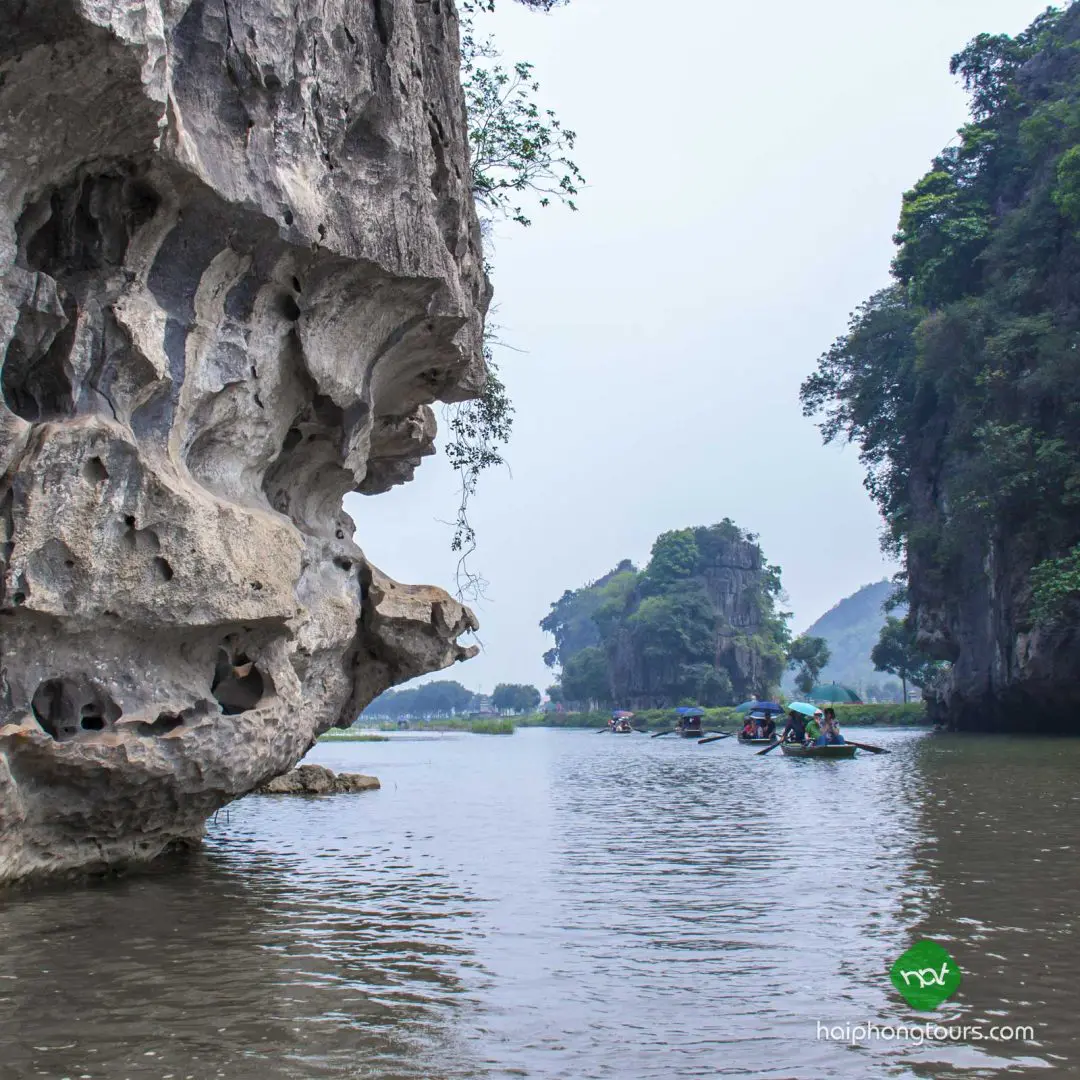

The Tam Coc boat route and surrounding limestone landscape.
Properties stretch beyond the compact center. Check the map and the road surface if you expect to walk with luggage. A rice-field view may mean a darker lane, insects, seasonal farm activity and greater dependence on a taxi or motorbike.
Trang An countryside
A countryside stay near Trang An suits travelers who value quiet and landscape. It can reduce access time to nearby nature and temple areas, but evening food and transport choices may be limited. Ask whether the property serves dinner and can arrange a reliable car.
Ninh Binh City
The city is practical for the railway station, local administration and onward transport. It is less atmospheric for many leisure visitors and requires transport to the major landscape sites. Use it for a short transit night or when the timetable matters more than scenery.
Where to stay for Ha Long, Lan Ha and Cat Ba
Bai Chay
Bai Chay has a large visitor infrastructure and works for a hotel night before or after many Ha Long activities. It is not one uniform area. Confirm walking distance to restaurants and the time to the exact marina or meeting point.
Tuan Chau
Tuan Chau can reduce transfer stress when a confirmed cruise departs there. It offers less city variety than a central urban stay, so its value comes from matching the harbor. Never choose it only because an old itinerary named Tuan Chau; operators and embarkation arrangements can change.
Hon Gai
Hon Gai provides a more local city setting and may suit travelers with plans on the eastern side of Ha Long City. It can be the wrong side for a specific departure. Compare bridge traffic and harbor access before booking.
Cat Ba Town
Cat Ba Town is the easiest island base for restaurants, local operators and onward transport. Central rooms can receive promenade, traffic or karaoke noise. A rear room may be quieter but have no sea view.
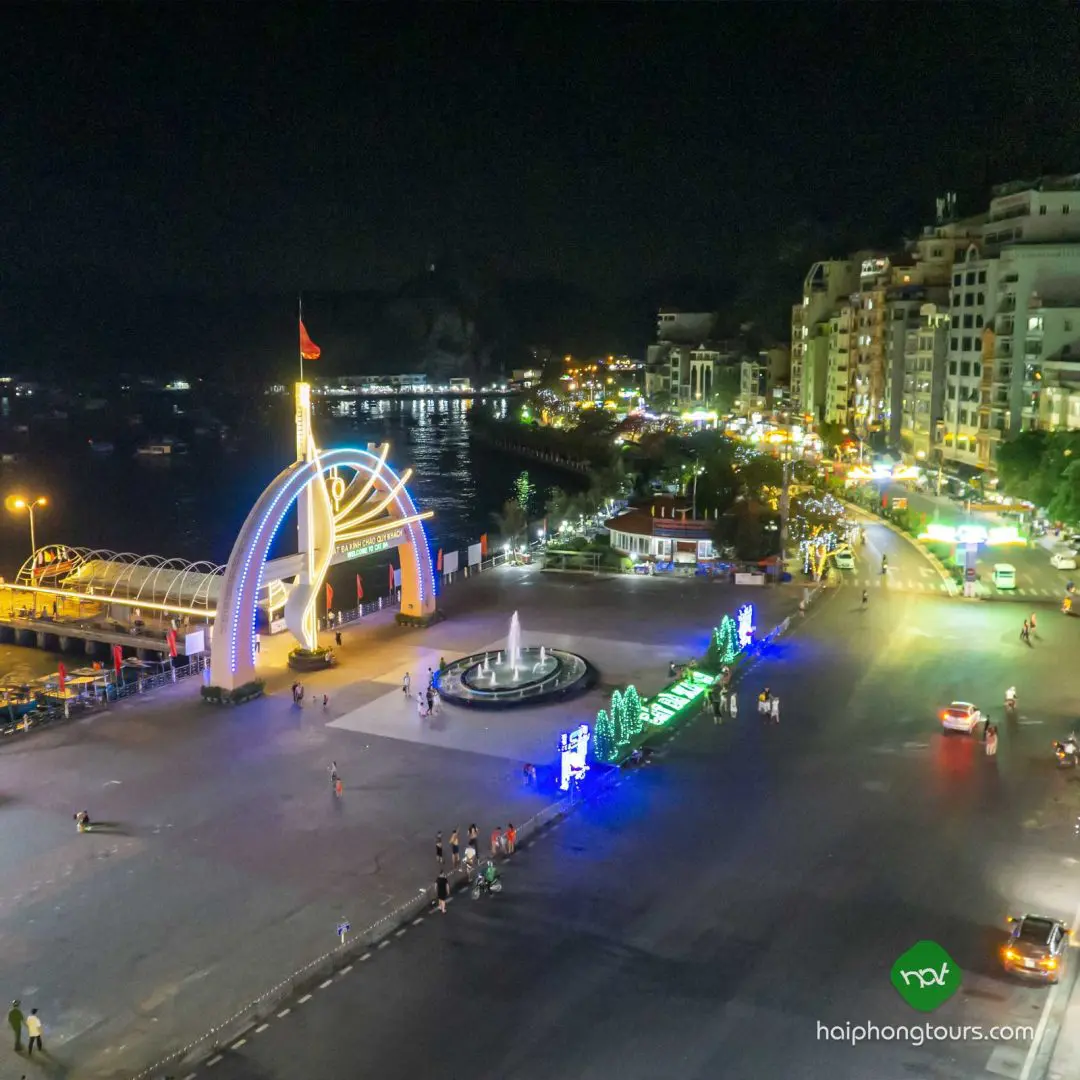
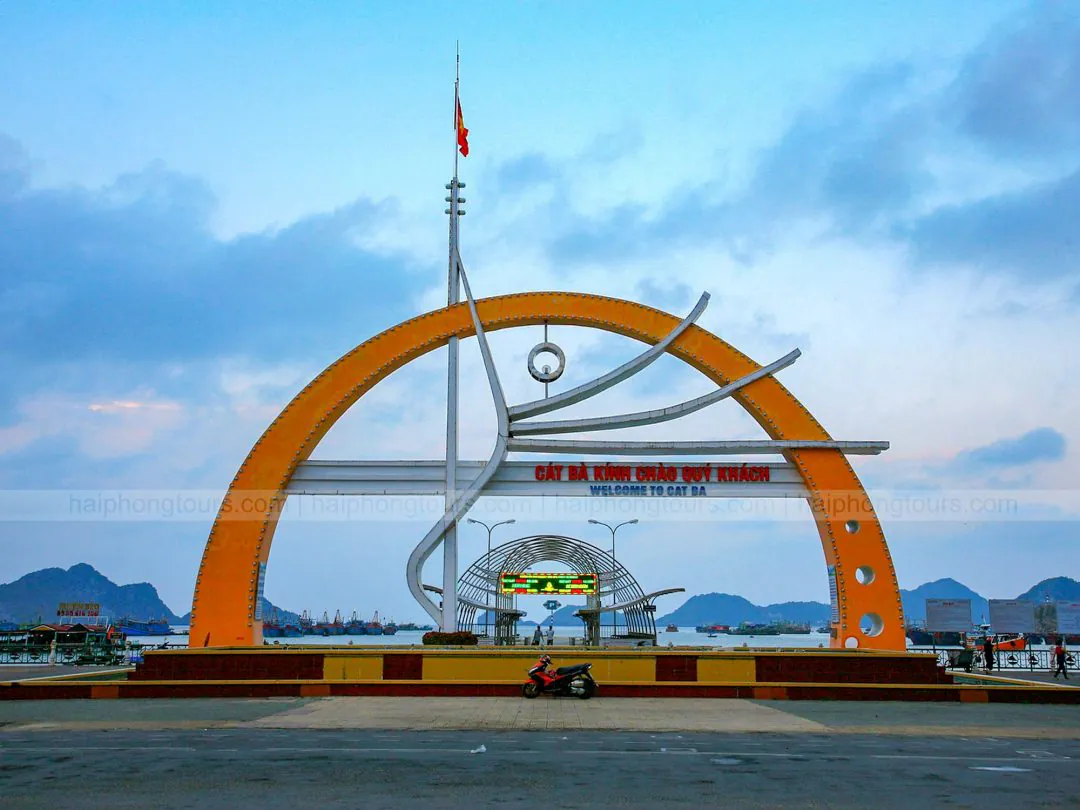
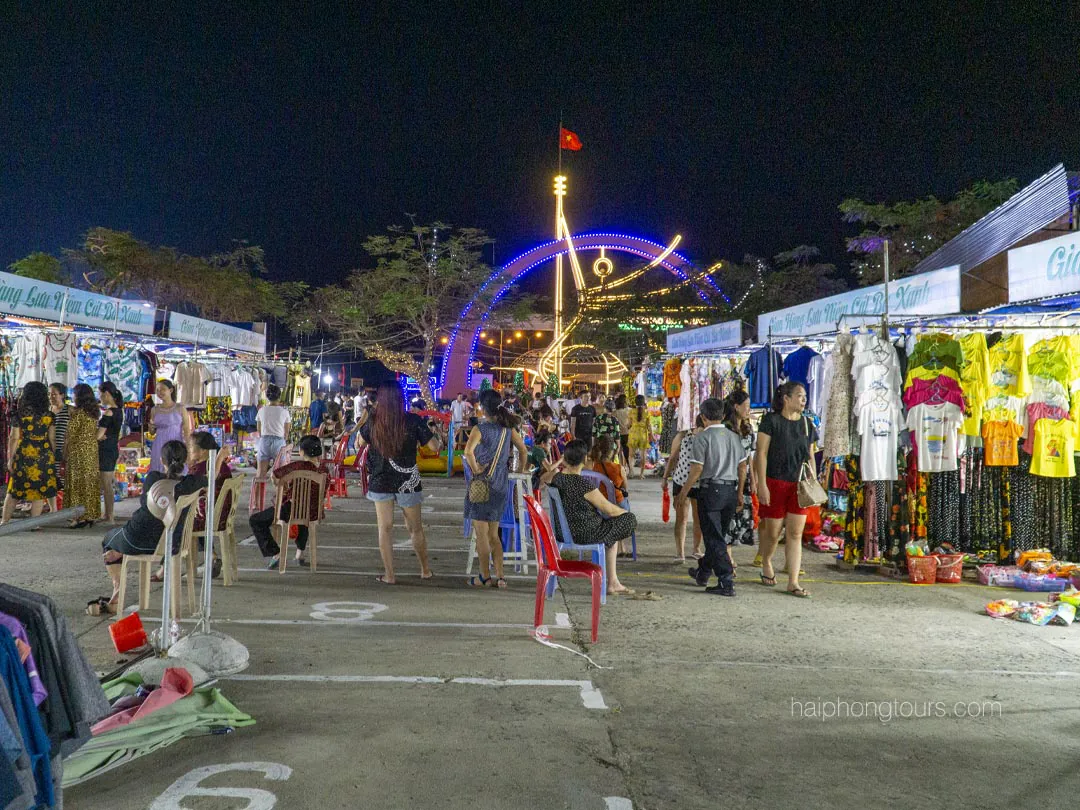
Bay swimming, Cat Ba harbor and the island night market.
Remote Cat Ba and bay stays
Remote lodges and resorts trade flexibility for setting. Confirm the final boat or road transfer, luggage handling, meal plan, return schedule and what happens if weather disrupts access. A cheap room can become expensive when every transfer is private.
Where to stay in Sapa and the northern mountains
Sapa town
Sapa town is the easiest base for bus arrivals, taxis, restaurants and changing plans. Its steep roads can make a short map distance demanding. Check the vertical route from the arrival point to the hotel, not only the number of meters.
Mountain views depend on weather, building position and the assigned room. Pay for a view only when the room category and obstruction policy are clear. In cool months, verify the heating system and hot-water capacity.
Muong Hoa Valley and village lodges
A valley stay suits scenery, trekking and slower evenings. Road conditions, steps and vehicle access vary. Ask whether a normal car reaches reception, who carries luggage, whether dinner is available and how you return to town.
Ha Giang City
Use Ha Giang City as a logistical night before and after a loop rather than choosing it for the mountain scenery promised by the wider province. Prioritize secure luggage storage, an early breakfast or packed meal, and clear coordination with the driver or rental operator.
Loop towns and remote districts
Accommodation on the Ha Giang Loop ranges from simple guesthouses to small hotels and lodges. Heating, soundproofing, card payment and private bathrooms should not be assumed. Confirm the final stop each night because similar property names can appear in different towns.
Ba Be, Cao Bang, Mai Chau and Pu Luong
These areas reward staying near the activity you came for, but the practical center may be a village, lake shore or road junction rather than the place name shown on a booking page. Check road access, meals, mobile signal, local transport and the time needed to reach the next route.
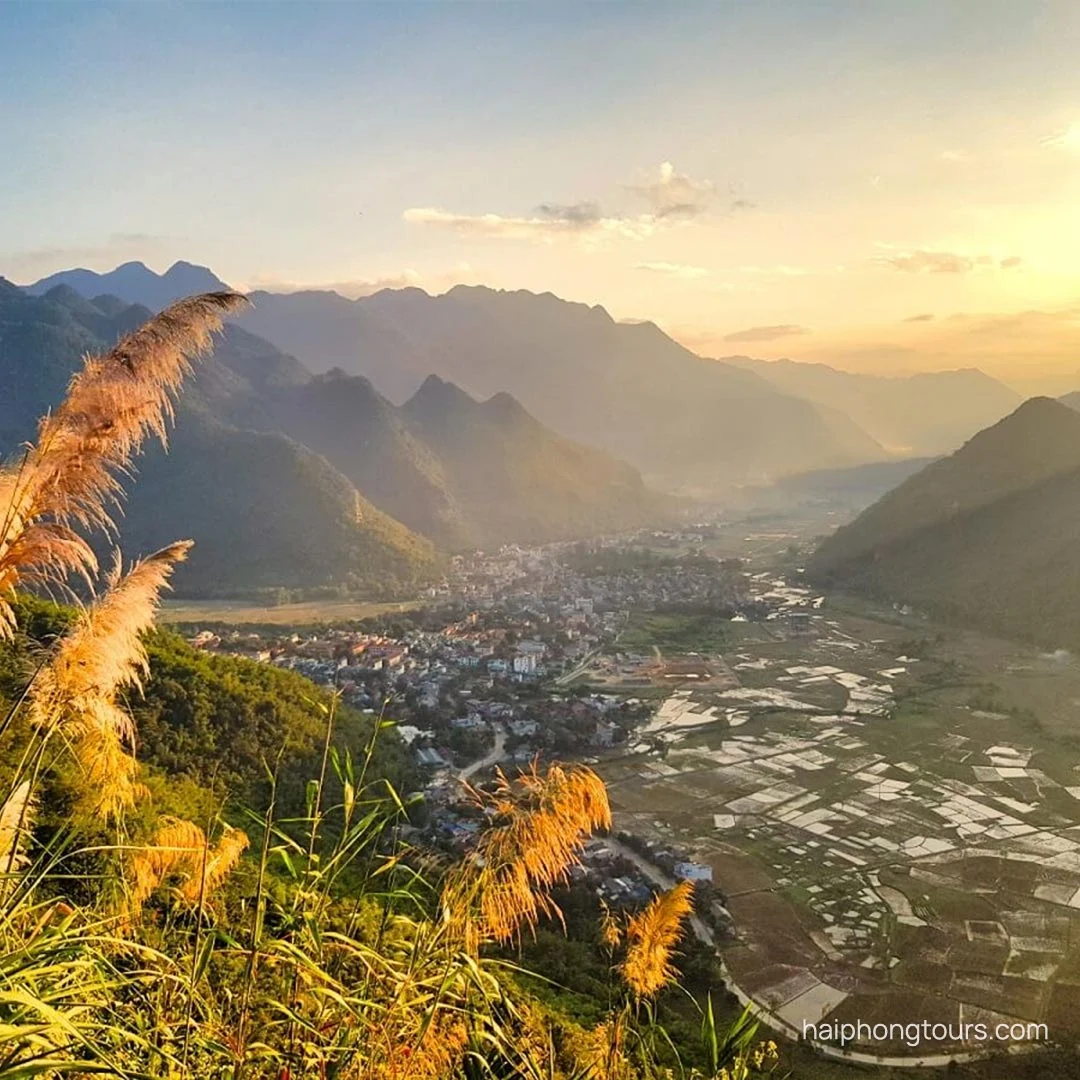

Mountain valleys and rice terraces in Mai Chau and Pu Luong.
Read the room description carefully
- Double room: normally one bed for two; it does not promise a king bed.
- Twin room: two separate beds; ask whether they can be joined.
- Triple room: may be three beds, or a double plus a single.
- Family room: describes occupancy, not connecting bedrooms or child-safe design.
- Connecting rooms: have an internal door; adjacent rooms may only be nearby.
- Extra bed: may be a rollaway, sofa bed or mattress and can reduce floor space.
- Private bathroom: does not guarantee a separate shower enclosure, grab bars or dry floor.
- Window: may face an internal corridor, wall or shaft unless an exterior view is specified.
- Ground floor: may still have steps from the road or reception.
- Sea, mountain or city view: confirm that the booked category, not merely the property, has that view.
Ask for the bedding plan in writing when children or three adults share a room. The North Vietnam with kids guide covers family rooms, child seats, food and route pace.
Check the final booking terms
Compare the final amount after taxes, service charges, breakfast, extra beds and compulsory supplements. Check the payment currency and whether your card provider will convert it. A lower prepaid rate can cost more if weather or transport changes the route.
Read the cancellation deadline in the property’s local time. Record whether the booking is refundable, partially refundable or changeable, and whether a no-show charges one night or the entire stay. Keep the confirmation and payment record offline.
Confirm the number of guests, ages of children, bed type, arrival time and special requests. A request field is not the same as a guaranteed room feature. Ask the property to confirm any requirement that would make you cancel.
Match the hotel to transport
A central address does not guarantee door-to-door pickup. Old streets, pedestrian periods, narrow lanes and large-bus restrictions can move the meeting point. Send the property name, full address and a map pin to the operator, then ask whether pickup is at reception or at a nearby road.
For a broad northern route, the North Vietnam transport guide compares trains, buses, cars and route logic. If the origin and destination are known but the best connection is not, the current North Vietnam transfers directory lets you compare available point-to-point routes and pickup areas.
Leave a buffer between an overnight bus, train or flight and a fixed cruise departure. A hotel night can be worthwhile when a missed connection would lose the larger booking.
Plan for weather and power
Northern winters can feel damp and cold, especially in mountain rooms with tile floors and limited insulation. Ask about fixed heating, not only a portable unit. In summer, confirm air conditioning and whether it operates when you leave the room.
Heavy rain can affect valley roads, islands and remote access. Ask whether a car can still reach the property and what cancellation or relocation rule applies. Use the North Vietnam weather guide to match coastal storms, mountain rain and winter cold to the route.
Remote properties may use generators or experience unstable internet. If you need medical equipment, refrigeration or uninterrupted work access, obtain a specific answer about backup power and mobile coverage.
Accessibility and reduced mobility
Words such as accessible, lift or ground floor are not enough. Ask for the number and height of steps from vehicle drop-off to bed, door width, lift access to every required floor, shower threshold, toilet support and space beside the bed.
Request current photographs of the route into the room and bathroom. Confirm that the same room will be assigned. The accessible North Vietnam guide provides a route-based checklist for wheelchairs and limited mobility.
Safety, documents and late arrival
Provide identity details through the property’s normal check-in process. If the original passport is needed for registration, ask when it will be returned and collect it promptly. Do not leave a passport as security for a motorbike, room charge or disputed bill.
At check-in, note the emergency exit, stair route and reception contact. Use the room safe when it is suitable, divide cash and keep a copy of important documents separate. For street theft, payment disputes and emergency preparation, read the North Vietnam travel safety guide.
If arrival will be late, send the flight or transport details and obtain instructions before departure. Ask who will meet you, how the entrance opens, and whether payment is due at night. Do not rely on a messaging account that cannot be matched to the confirmed property.
A practical accommodation checklist
- Place every planned stop on one route before reserving rooms.
- Choose the neighborhood or village that reduces daily transport.
- Check the full address and map pin.
- Confirm the exact room, bed arrangement, window and bathroom.
- Verify stairs, lift, vehicle access and luggage handling.
- Ask about heating, cooling, hot water, power and internet when they matter.
- Check breakfast and reception hours against departures.
- Compare the final payable amount and cancellation deadline.
- Confirm pickup at reception or obtain the exact meeting point.
- Save the address, confirmation and property contact offline.
Build the route first with the North Vietnam itinerary guide, then reserve the rooms that make that route easier. A modest, correctly located room is often more useful than a better-looking property that adds two vehicle transfers every day.
Light sleepers can use the quiet hotel room booking checklist to assess room position, connecting doors, construction, karaoke and cruise-cabin noise before paying.
Travelers considering two accommodations in one destination can use the hotel hopping in North Vietnam guide to decide when a split stay saves time and when one practical base is better.
Planning transport around this stay? Contact us with the property name, travel date, pickup and destination, plus the room or reception times your journey needs to fit.