
North Vietnam has enough museums to support a whole trip, but most travelers need a smaller decision: which museum will make the next destination easier to understand? In Hanoi, choose the Vietnam Museum of Ethnology for living cultures, the Vietnam National Fine Arts Museum for visual history, the Vietnamese Women’s Museum for human stories, Hoa Lo Prison Relic for a focused political-history visit, or the Vietnam Military History Museum for large-scale military collections.
Outside the capital, Hai Phong Museum explains the port city, Quang Ninh Museum connects coal, coastal culture and the Ha Long region, the Museum of the Cultures of Vietnam’s Ethnic Groups adds depth in Thai Nguyen, and the Dien Bien Phu Victory Museum belongs in a dedicated battlefield itinerary. One well-chosen museum followed by the related neighborhood or landscape usually teaches more than three rushed collections.
Quick museum decisions
- Best first museum for cultural context: Vietnam Museum of Ethnology in Hanoi.
- Best for art: Vietnam National Fine Arts Museum.
- Best for accessible social history: Vietnamese Women’s Museum.
- Best focused memorial visit: Hoa Lo Prison Relic.
- Best large military collection: Vietnam Military History Museum at its newer western Hanoi site.
- Best local city museum: Hai Phong Museum.
- Best before or after Ha Long Bay: Quang Ninh Museum.
- Best regional history journey: Dien Bien Phu Victory Museum with the battlefield sites.
- Best rule: check the museum’s own announcement on the day; hours, temporary galleries and ticket arrangements can change.
Choose by the question you want answered
A useful museum visit begins with one question. If you want to understand why houses, clothing and livelihoods change across mountain regions, choose ethnology. If you want to recognize lacquer, silk painting, sculpture and religious art elsewhere in the trip, choose fine arts. If you want personal stories about family, work, dress and conflict, choose the Women’s Museum.
Military and memorial museums answer narrower questions about colonization, revolution, war and national memory. They need time and emotional attention. A city or provincial museum is strongest when you will explore that same place afterward.
Vietnam Museum of Ethnology: strongest broad introduction
The Vietnam Museum of Ethnology in Cau Giay combines indoor displays with an outdoor architectural garden. It introduces the cultures of Vietnam’s officially recognized ethnic groups through objects, clothing, tools, ritual material, photographs and full-scale or reconstructed buildings. A separate exhibition area broadens the view to cultures elsewhere in Southeast Asia.
This is the most useful first museum before Sapa, Ha Giang, Mai Chau, Cao Bang or another culturally diverse region. It helps you notice that language, dress, housing and social practice vary between communities. It does not turn one display into a complete account of every person in an ethnic group.
How much time to allow
Allow roughly two to three hours if the outdoor houses matter. A short visit can focus on one indoor building, but trying to read every label creates fatigue. Rain, heat and mobility affect the garden portion more than the indoor galleries.
What to look for
- How house form responds to climate, materials and social organization
- Who made and used an object, rather than only what it is called
- Differences between ceremonial clothing and everyday clothing
- How displays describe change, trade and modern life
- Whether a structure is original, relocated, reconstructed or maintained for demonstration
Carry this context into the North Vietnam villages guide. A museum can prepare you to ask better questions, but a living village remains a home and workplace rather than an open-air exhibit.
Vietnam National Fine Arts Museum: learn the visual language
The Vietnam National Fine Arts Museum stands at 66 Nguyen Thai Hoc, close to the Temple of Literature. Its collection spans early objects and religious sculpture through lacquer, silk, painting and modern art. It is a better choice than a general history museum when form, material and visual meaning interest you.

Do not race chronologically through every room. Choose two media, such as lacquer and sculpture, then compare how artists use surface, color, pose and symbols. This approach makes later temple, pagoda and civic-building visits easier to read.
Best pairing
Pair the museum with the Temple of Literature or a focused architecture walk. The North Vietnam architecture guide explains courtyards, gates, roof forms and the difference between temples, pagodas and communal houses.
Some works are sensitive to light, and individual rooms can close or rotate. Treat a famous-object list as a possibility rather than a promise that every piece will be on display.
Vietnamese Women’s Museum: social history through people
The Vietnamese Women’s Museum at 36 Ly Thuong Kiet uses objects, clothing, oral histories and personal narratives to explore family life, work, fashion, belief and women’s roles in twentieth-century history. It is often easier for a first-time visitor to follow than a collection organized mainly by dynasty or object type.
Give the stories time. Household objects and textiles can reveal labor, status and regional identity, while wartime material needs historical context. Avoid treating one wedding custom, garment or family structure as universal across Vietnam.
Who it suits
This museum works well for travelers with limited time, teenagers who respond to individual stories and anyone interested in gender or social history. It also pairs naturally with the French Quarter because the building is within a central area that can be explored on foot when weather and mobility allow.
Hoa Lo Prison Relic: a focused and emotionally difficult visit
Hoa Lo is a surviving portion of a much larger prison complex. Its interpretation includes the French colonial prison system, Vietnamese political prisoners and later use connected with American prisoners of war. The remaining site cannot physically represent the original complex at its full scale.

Allow at least an hour and read the sequence rather than jumping to the most photographed object. Displays may use strong national and commemorative language. Separate an original structure or artifact from a model, recreation, photograph or later interpretation.
The subject includes imprisonment, execution and war. Families should prepare children for difficult material. Keep voices low around memorial spaces and do not stage humorous photographs with restraints, cells or execution-related objects.
Visit independently or with a guide
An independent visit works when you are comfortable reading historical interpretation critically. A guide adds chronology and can connect Hoa Lo to the wider city. The current Private Hanoi City Tour includes Hoa Lo, the Ho Chi Minh complex, the Temple of Literature, Hoan Kiem Lake and Ngoc Son Temple; confirm access and the final itinerary for your date.
Vietnam Military History Museum: plan for the new scale
The Vietnam Military History Museum moved from its former central location to a much larger site on Thang Long Boulevard in western Hanoi and opened the new venue in 2024. Historic aircraft, vehicles, equipment, campaign material and large outdoor displays make it different from a compact city-center museum.
Do not use an old map pin or an article that still directs visitors to Dien Bien Phu Street near the Imperial Citadel. Confirm the current entrance, opening notice and transport before leaving. The distance from the Old Quarter and the size of the grounds make this a half-day commitment for many travelers.
Who should choose it
Choose this museum for military technology, campaign history or a large collection. Choose Hoa Lo for one prison site and its layered history. Choose the Fine Arts or Women’s Museum when you want a central, less equipment-focused visit.
Outdoor displays can be hot, wet or exposed. Bring sun or rain protection, but follow bag and security rules at the entrance. Families should agree on a meeting point because the site is much larger than the old museum.
Vietnam National Museum of History: verify the active galleries
The Vietnam National Museum of History has been associated with two central Hanoi buildings that divide broad historical periods. This can confuse visitors who expect one entrance and one continuous exhibition.
Before adding it to a fixed day, check the museum’s current official notice for which building and galleries are open. Renovation, exhibition work or temporary closure can change what is available. If the desired collection is unavailable, use the Fine Arts Museum for visual history or the Museum of Ethnology for cultural context instead of building the day around an uncertain branch.
Ho Chi Minh Museum: understand the complex
The Ho Chi Minh Museum belongs to the wider Ba Dinh and Ho Chi Minh complex, which also includes memorial, political and historic spaces with separate access conditions. The museum uses documents, objects and symbolic exhibition design to present Ho Chi Minh’s life and Vietnam’s revolutionary history.
Do not assume that access to one part means access to all parts. Clothing rules, security, ceremonies, maintenance and opening sessions can affect the route. A guide is useful when symbolic displays or limited English explanation make the chronology difficult to follow.
Hai Phong Museum: begin with the port city
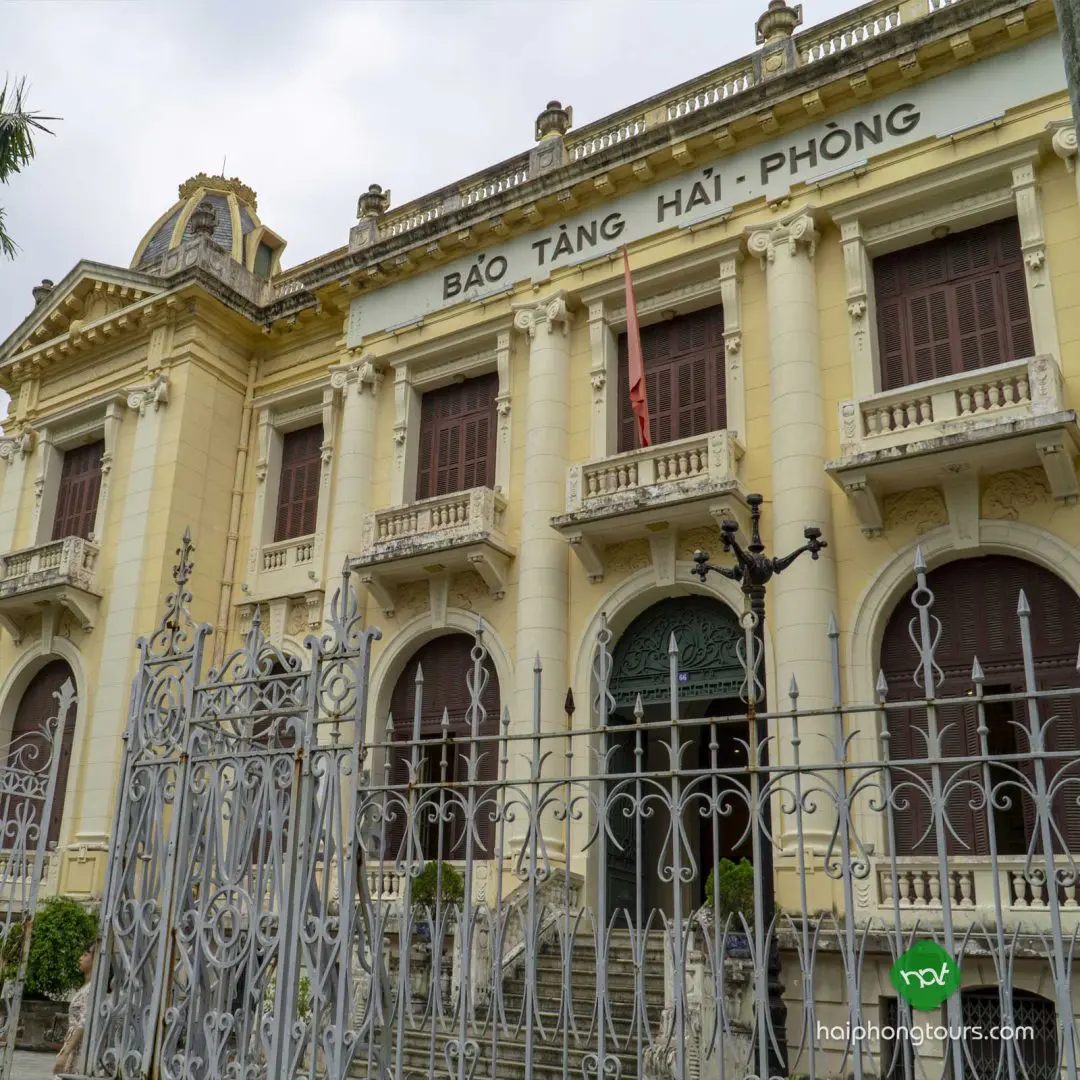
Hai Phong Museum at 66 Dien Bien Phu Street introduces the city’s history, archaeology, culture and role as a port. It is the most useful museum before exploring central Hai Phong, because the collection turns civic buildings, railway links, waterways and wartime sites into parts of one story.
Allow about one to two hours, then walk a short central route rather than treating the museum as the whole city visit. Exhibition schedules and English interpretation can vary, so a local guide or translation tool helps. Check the day’s official opening notice, especially around holidays or special exhibitions.
The North Vietnam history and heritage guide places Hai Phong within a longer route through early capitals, river history, religious centers and twentieth-century conflict.
Quang Ninh Museum: understand the region beyond the bay
Quang Ninh Museum sits on the waterfront in Ha Long City. Its collections connect the province’s natural environment, archaeology, communities, mining history and modern development. The black-glass exterior is a recognizable city landmark, but the value lies in seeing why Quang Ninh is more than a cruise departure point.
This is a practical indoor choice before a late cruise check-in or on a poor-visibility day, provided the timing and luggage plan work. It does not replace the geology and living landscape of the bay. Use the museum for context, then observe how limestone, coal, ports and urban growth shape the wider province.
If the bay is the main purpose of the trip, compare the actual route and overnight format in the North Vietnam beaches and islands guide.
Museum of the Cultures of Vietnam’s Ethnic Groups in Thai Nguyen
This national museum in central Thai Nguyen presents cultures from across Vietnam through themed indoor displays and outdoor cultural spaces. It can deepen an overland journey toward Northeast Vietnam, especially for travelers who want more time than a Hanoi museum visit allows.
Do not add the city only to duplicate the Vietnam Museum of Ethnology. Choose Thai Nguyen when it fits the route, when the museum itself is a central interest, or when another local stop makes the journey worthwhile. Check current gallery access and English interpretation before travel.
The Thai Nguyen ethnic cultures museum visitor guide helps select indoor galleries and outdoor house settings, account for the midday break and distinguish this national museum from the institution in Hanoi.
Muong Cultural Space Museum near Hoa Binh
The Muong Cultural Space Museum guide explains how its house displays represent historical social roles, alongside everyday objects and contemporary art. Arrange English interpretation if you want to understand the differences between the buildings; this hillside visit has a different focus from a broad national collection.
MEDDOM Park: science told through people
In the Hoa Binh area, MEDDOM Park pairs researchers’ manuscripts and personal objects with a landscaped architecture walk. The MEDDOM Park science-heritage guide distinguishes museum admission from educational programs and explains a full-day outing from Hanoi.
Vietnam Space Museum: arrange a science visit at Hoa Lac
For astronomy and satellite technology, the Vietnam Space Museum at Hoa Lac offers a separate science-focused outing west of Hanoi. Arrange access with the museum before traveling, particularly for a small family, and confirm whether the program includes a planetarium session or any telescope activity.
Dien Bien Phu Victory Museum: build a complete battlefield day
The Dien Bien Phu Victory Museum focuses on the 1954 campaign. It works best with the landscape and surviving sites, including A1 Hill and the former command positions, because terrain and distance are essential to understanding the battle.
Begin with either a guide-led overview or the museum, then visit a small number of sites in a logical order. A collection of isolated photographs is less useful than understanding the valley, defensive positions, logistics and chronology.
Commemorative periods around early May can change crowds, traffic, ceremonies and opening arrangements. Book transport and check official notices rather than relying on a normal-week schedule.
Tuyen Quang Museum: a lakeside cultural stop
The Tuyen Quang Museum and city-visit guide explains the Phia Vai archaeology, community clothing and a relaxed half-day around Tan Quang Lake. Use the Dinh Tien Hoang address to distinguish this building from the institution’s Ha Giang branch, and confirm the gallery opening session before making a detour.
How to read a museum critically
Every museum selects a story. Read the title panel first and identify the institution, time period and purpose. Then ask what type of evidence supports each section.
- Original object: check provenance, date, maker and how it entered the collection.
- Replica or reconstruction: use it to understand shape or scale without treating it as the original.
- Photograph: read the date, photographer and caption; cropping can remove context.
- Oral history: value the person’s experience while recognizing that one memory is not every perspective.
- Map or model: check whether it shows a historical moment, a campaign plan or the present landscape.
- Commemorative display: notice how memory and national identity shape the language.
The goal is not to dismiss the museum’s account. It is to distinguish evidence, interpretation and commemoration so the visit becomes more useful.
English labels, audio guides and human guides
English coverage varies by museum, building and temporary exhibition. A museum may have English section titles but detailed labels only in Vietnamese. Audio guides can help, but availability, languages, device deposits and route coverage can change.
Use a human guide when the collection has complex chronology, symbolic display design or few translated labels. Before paying, confirm the language, duration, starting time, group size and whether the guide covers the whole site or selected galleries.
Download an offline translation pack for short labels. Photograph a label only when photography is permitted, and do not block a case while translating a long paragraph.
Opening days, tickets and temporary closures
Do not assume all museums follow the same weekly pattern. Some close on Monday, some use morning and afternoon sessions, and special holidays can produce either closure or extended opening. Renovation can close one gallery while the wider institution remains active.
Check the museum’s current website or verified official social channel on the day before visiting. Confirm:
- the exact branch and entrance;
- opening sessions and last admission;
- current ticket and accepted payment;
- temporary exhibitions or closed rooms;
- bag storage and security rules;
- photography, video and tripod restrictions;
- guided-tour or audio-guide availability;
- holiday or event changes.
Accessibility and sensory load
Ask about the whole route from drop-off to entrance, ticket desk, galleries, lift, toilet and outdoor area. An accessible modern gallery does not guarantee step-free access to a historic building or garden house.
Large military exhibits, prison cells, war photographs, alarms, school groups and narrow galleries may create sensory or emotional load. Choose a quieter opening period, limit the visit to selected rooms and identify an exit or rest area in advance.
Wheelchair users should confirm lift dimensions, thresholds and outdoor surfaces directly. Travelers who cannot stand for long should ask about seating; benches may be limited or moved for an exhibition.
Visiting with children
The Ethnology Museum’s houses, tools and outdoor space can engage children, while the Fine Arts Museum works better with a small visual challenge such as finding three materials. Let each child choose one object and explain what they notice.
Prepare children before Hoa Lo, military collections or Dien Bien Phu. Explain that they may see weapons, imprisonment, death or graphic images. Keep the visit short enough for the child’s age and leave when the material becomes distressing.
Photography without losing the visit
Check the rule for each room. Flash, tripods, selfie sticks, commercial photography and video may be restricted even when phone photographs are allowed. Copyright or conservation can also limit photography of a temporary exhibition.
Photograph the label after the object when permitted, then record one sentence about why it matters. Hundreds of uncatalogued images are less useful than five objects connected to places you will see later.
Three museum plans that work
One central Hanoi half-day
Choose either the Vietnamese Women’s Museum and a French Quarter walk, or the Fine Arts Museum and the Temple of Literature. Keep one long indoor visit and one related outdoor area. Do not cross the city for a third museum.
One full Hanoi museum day
Begin at the Vietnam Museum of Ethnology and spend the morning there. After lunch, choose one central museum with a different method, such as fine arts or personal social history. Leave time for traffic between Cau Giay and the center.
One military-history day
Choose the new Vietnam Military History Museum as the main visit and give it the half-day it requires. Add one related monument only if transport and attention allow. Hoa Lo deserves a separate focused visit rather than becoming a hurried final stop.
Common museum mistakes
- Following an old address for the Military History Museum
- Assuming every branch of the National Museum of History is open
- Trying to visit three large museums in one day
- Reading every label until nothing remains memorable
- Treating replicas and reconstructions as original objects
- Assuming a museum represents every perspective on a conflict
- Photographing memorial spaces as entertainment
- Using outdated ticket, closure or holiday information
- Skipping the outdoor garden at the Ethnology Museum without accounting for weather
- Visiting a provincial museum without connecting it to the surrounding city or landscape
Turn the museum into a better trip
Choose one collection that answers a real question, then connect it to the next place. Ethnology improves a mountain-community visit; fine arts improves a temple or architecture route; Hai Phong Museum improves a port-city walk; Quang Ninh Museum improves the transition between Ha Long City and the bay; Dien Bien Phu Museum explains a battlefield landscape.
Check the active building, current hours and language support before leaving. Inside, distinguish objects from reconstructions and interpretation. The best museum visit gives you a sharper way to see North Vietnam after you step back outside.
Travelers who want to build several days around visual culture can continue with the North Vietnam art-trip guide, which connects museum context with current galleries, workshops and responsible buying.
Useful guides for your trip
Would you like help fitting this experience into your trip? Contact us with your travel dates, starting point, available time and group size. Tell us about walking limits or special interests so we can suggest a practical itinerary.