
Pack for North Vietnam as a system of light layers, rain protection and one route-specific kit rather than a large all-season wardrobe. Hanoi, Ha Long Bay and Ninh Binh can be warm while Sapa, Ha Giang or a high mountain pass feels cold and wet on the same trip. Use a breathable base, a warm layer, a waterproof outer layer and shoes with grip, then adjust for your actual route.
The bag also needs to work on stairs, boats, sleeper vehicles and narrow hotel entrances. Choose luggage you can lift yourself, keep one small daypack for documents and electronics, and confirm any cruise, trekking or motorbike luggage limit before leaving Hanoi.
The short packing list
Documents and money
- Passport and the immigration documents required for your trip.
- Travel insurance details and emergency contacts saved offline.
- Driving licence and supporting permit accepted in Vietnam if you will ride.
- Two payment methods stored separately.
- A modest amount of Vietnamese cash for rural stops and payment-system outages.
- Digital and offline copies of bookings, addresses and onward tickets.
Clothing
- Breathable shirts that dry quickly.
- Light trousers or travel pants.
- One modest outfit covering shoulders and knees for sacred sites.
- A thin insulating layer.
- A waterproof, wind-resistant outer layer.
- Underwear and socks suited to the laundry interval.
- Sleepwear appropriate for simple rural accommodation.
Footwear and weather
- Closed walking shoes with reliable grip.
- Light sandals or slip-on shoes for hotels and easy town use.
- Compact umbrella for cities and a rain jacket for active days.
- Sun hat, sunglasses and sunscreen.
- Dry bags or sealable pouches for electronics and documents.
Health and hygiene
- Regular medication in original or clearly labeled packaging.
- A basic first-aid kit sized to the route.
- Insect repellent.
- Hand sanitizer and tissues.
- Reusable water bottle when you can refill from safe drinking water.
- Personal menstrual, contact-lens or other specialist supplies.
Electronics
- Unlocked phone with a working roaming, SIM or eSIM plan.
- Offline maps, translation and booking details downloaded in advance.
- Charging cables and a compatible travel adapter.
- Power bank carried according to your airline’s cabin-baggage rules.
- Small flashlight or headlamp for rural stays and early departures.
Start with your route, not the country name
“North Vietnam” includes humid lowland cities, limestone valleys, an island and bay, high plateaus and mountain passes. One list cannot treat them as the same climate or activity.
- Hanoi and nearby day trips: prioritize breathable clothes, modest temple wear, a small umbrella and comfortable city shoes.
- Ha Long Bay or Lan Ha Bay: add a compact overnight bag, secure sandals, swimwear in warm conditions and wind protection for the open deck.
- Ninh Binh: add sun and rain protection, shoes for wet boat steps and grip for steep viewpoints.
- Sapa, Ha Giang or Cao Bang: add a warm mid-layer, windproof shell, dry socks and stronger footwear.
- Multi-day trekking: add a supported daypack, blister care, trekking-specific rain protection and only the equipment confirmed by the operator.
- Motorbike loop: use protective riding equipment, compact waterproof packing and no loose straps.
Check the month and each destination in the North Vietnam weather-by-month guide before finalizing layers. A regional forecast 24–48 hours before departure should decide the last additions.
Choose luggage that can move
Main bag
A backpack, soft duffel or wheeled case can all work. The deciding factor is whether you can lift it into a vehicle, carry it up stairs and move it across an uneven entrance without help.
Hard-shell luggage protects fragile items and handles city hotels well. It becomes awkward on steep stairs, boats, homestay paths and small vehicles. A soft bag fits irregular spaces but needs internal waterproofing.
Daypack
Carry passport, money, phone, medication, water and one weather layer in a small daypack. It should close securely and remain comfortable for several hours. A rain cover protects the outside, while an inner dry pouch protects the contents if water reaches the bag.
Packable overnight bag
A light secondary bag is useful for a cruise, one-night mountain stay or sleeper vehicle. Leave the main suitcase at a trusted Hanoi hotel only when you will return and the hotel confirms storage.
Label every bag with a contact method that does not expose unnecessary personal information. Keep valuables and critical medication with you.
Clothing: build a three-layer system
Base layer
The base should handle humidity and dry overnight. Light merino or quick-dry synthetic fabric is practical for active travel. Cotton can be comfortable in cities but stays cold and damp longer after sweat or rain.
Warm layer
A light fleece, sweater or compact insulated jacket adds warmth in mountain towns, air-conditioned buses and windy boat conditions. Choose a layer that fits under the rain shell without restricting movement.
Outer layer
A waterproof, wind-resistant shell is more versatile than a heavy coat. It protects against mountain wind, boat spray and rain while allowing the warm layer to change underneath.
No jacket remains comfortable when its vents, hood and seams do not suit the activity. Test the complete system before travel and carry the shell where you can reach it without unpacking the main bag.
What to pack by season
December to February
Northern lowlands can be cool and damp, while mountain areas become much colder. Indoor heating may be limited in simple accommodation. Pack a warm mid-layer, windproof shell, long trousers, warm sleepwear and dry socks.
For high elevations, add a hat and light gloves after checking the forecast. Do not rely on Hanoi’s daytime temperature to represent Sapa or a Ha Giang pass.
March and April
Conditions shift quickly between cool drizzle, warm sun and humidity. Keep the full layer system but reduce heavy insulation. A compact umbrella helps in cities, while a rain jacket works better for hiking or cycling.
May to September
Hot, humid and rainy conditions dominate many lowland routes. Pack quick-dry clothing, strong sun protection, breathable rainwear and dry storage. Carry a complete change of clothes for an active day.
Rain can be intense even when it does not last all day. Shoes need grip and enough time to dry. A second pair of socks is more useful than extra heavy clothing.
October and November
These months often provide comfortable travel conditions, but mountain mornings and evenings can cool quickly. Carry a warm layer and shell even when the Hanoi forecast looks mild.
Typhoons and heavy weather can still affect coastal and bay plans earlier in the period. Keep electronics and documents waterproof and maintain a flexible itinerary.
Footwear: one strong pair, one light pair
Most travelers need a closed walking shoe with grip and a light sandal or slip-on. The walking shoe should already be broken in. Waterproof footwear can help in cold rain, but a hot, non-breathable boot may create blisters in humid lowlands.
Choose the sole for wet stone, polished temple steps and mud rather than for appearance. Smooth fashion sneakers and flip-flops perform poorly on steep viewpoints, cave stairs and boat landings.
For serious trekking, ask the operator about terrain and whether ankle support, gaiters or river-crossing shoes are useful. Do not carry heavy mountaineering boots for an itinerary made only of towns and paved viewpoints.
For damaged footwear during your stay, use the Hanoi shoe-repair guide.
Rain protection that actually works
Use more than one barrier:
- a rain jacket for your body;
- a pack cover for the outside of the daypack;
- sealed inner pouches for passport, phone, power bank and medication;
- a separate bag for wet clothing;
- quick-dry fabric that remains usable after a shower.
A poncho covers both body and bag but can catch wind, obscure vision and interfere with a motorcycle. Never allow loose waterproof material near a wheel or exhaust.
Packing for an overnight cruise
Cabins and tenders have limited space, and embarkation may involve ramps or steps. Use a compact overnight bag even when the operator accepts full luggage. Keep passport or required identification, medication and valuables with you.
- Light day clothes and one evening change.
- Swimwear when conditions and itinerary suit swimming.
- Secure sandals or deck shoes with grip.
- Light wind layer for the sundeck.
- Sun protection and insect repellent.
- Dry pouch for phone and documents.
- Medication for motion discomfort only if it is safe for you.
Do not assume every cruise supplies the same toiletries, water, adapters or safety gear in child sizes. Ask the operator about the specific cabin and sailing. Weather can cancel swimming or kayaking, so pack for the boat experience rather than one promised activity.
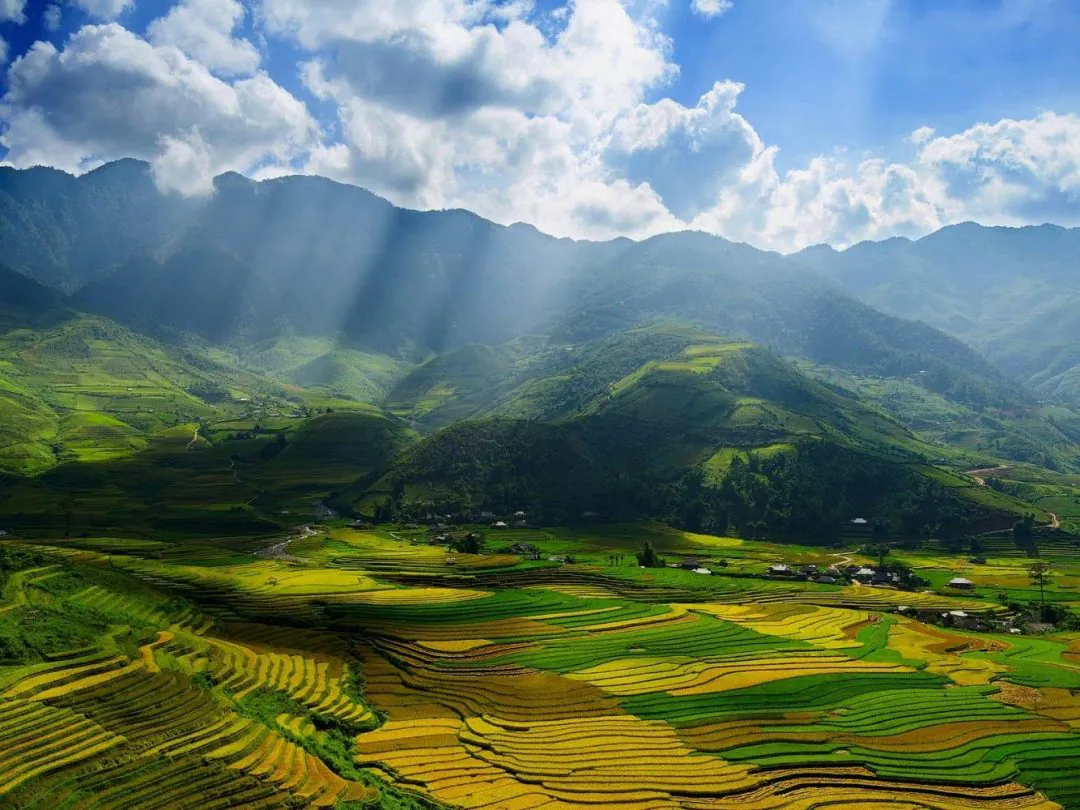
Packing for Sapa, Ha Giang and high mountain routes
Mountain weather changes over short distances and elevations. Carry the warm and waterproof layers in the daypack, not at the bottom of luggage transported separately.
- Warm mid-layer and windproof shell.
- Closed shoes with grip.
- Spare dry socks.
- Sun and rain protection.
- Small first-aid and blister kit.
- Offline map and accommodation details.
- Power bank and charging cable.
- Enough cash for remote stops without carrying an excessive amount.
A warm sunny valley does not guarantee a warm pass. Fog and rain can make the perceived temperature much lower, especially on a motorcycle.
Packing for a motorbike loop
Protective equipment matters more than wardrobe variety. Ride only with a licence and insurance valid for the motorcycle in Vietnam. Confirm what the operator supplies and inspect the actual gear.
- Properly fitting certified helmet.
- Protective jacket, long trousers, gloves and closed footwear.
- Compact waterproof outer layer that cannot reach moving parts.
- Dry pouch for documents and electronics.
- Small bag secured without loose cords or straps.
- Clear eye protection if the helmet does not provide it.
- Warm layer for high passes.
Large suitcases usually stay at the operator’s base or hotel. Confirm storage, liability and the maximum loop bag before arrival. An easy-rider passenger still needs protective clothing and secure luggage.
Packing for trekking and homestays
Ask whether bedding, towels, drinking water, trekking poles, rain gear and bag transfer are included. “Homestay” ranges from a family room with modern facilities to shared sleeping in a simple house.
- Daypack fitted to your torso.
- Rain jacket and protected spare layer.
- Trail food only when meals are not included.
- Small headlamp.
- Earplugs and sleep mask for shared rooms.
- Light sleep layer and socks.
- Toiletries in small containers.
- Blister treatment and personal medication.
Do not bring sleeping bags, heavy poles or camping gear unless the operator confirms a need. Extra weight increases fatigue and may burden porters or bag-transfer staff.
Documents and offline copies
Keep the original passport where accommodation and transport rules require it, and store a secure digital copy separately. Save the following offline:
- passport identity page;
- visa or entry approval where applicable;
- insurance policy and emergency-assistance number;
- flight, train, cruise and transfer details;
- hotel names, addresses and phone numbers in English and Vietnamese;
- driving documents if riding;
- prescriptions or medical letters for controlled or unusual medication.
Entry, visa, driving and medicine rules can change. Verify them with the relevant authority, insurer, airline and transport provider before departure rather than relying on a packing checklist.
Medication and health supplies
Carry enough regular medication for the trip plus a reasonable delay margin, subject to customs and prescription rules. Keep it in cabin baggage and retain original labels. Split critical supplies only when doing so remains legal and medically safe.
A small route-appropriate kit can include dressings, antiseptic, blister treatment and any familiar over-the-counter medicine safe for you. Medical advice should come from a qualified clinician who knows your conditions and itinerary.
Use insect repellent and physical coverage where mosquitoes or other biting insects are active. Reapply sunscreen and repellent according to their labels rather than assuming one morning application lasts all day.
Phone, data and power
Use an unlocked phone and activate roaming, a physical SIM or an eSIM before a critical transfer. Coverage can weaken in mountains, on islands and inside limestone terrain, so download maps and booking details.
Pack no more than two power banks per person for flights in Vietnam, and keep them in cabin baggage, never checked luggage. Choose clearly labeled lithium-ion units rated at 100 Wh or less. Units above 100 Wh and up to 160 Wh require advance airline approval; do not pack a larger unit. Check every operating airline on your itinerary, since its limits can be stricter.
On board, remove the power bank from your bag and keep it where you and the crew can monitor it, following the crew’s placement instructions. Do not use it to charge any device or recharge the bank itself at any time while on the aircraft. Protect each unit against short circuits with its own protective pouch or insulated exposed terminals. Charge your devices before boarding, and remove power banks if your cabin bag is taken for checking.
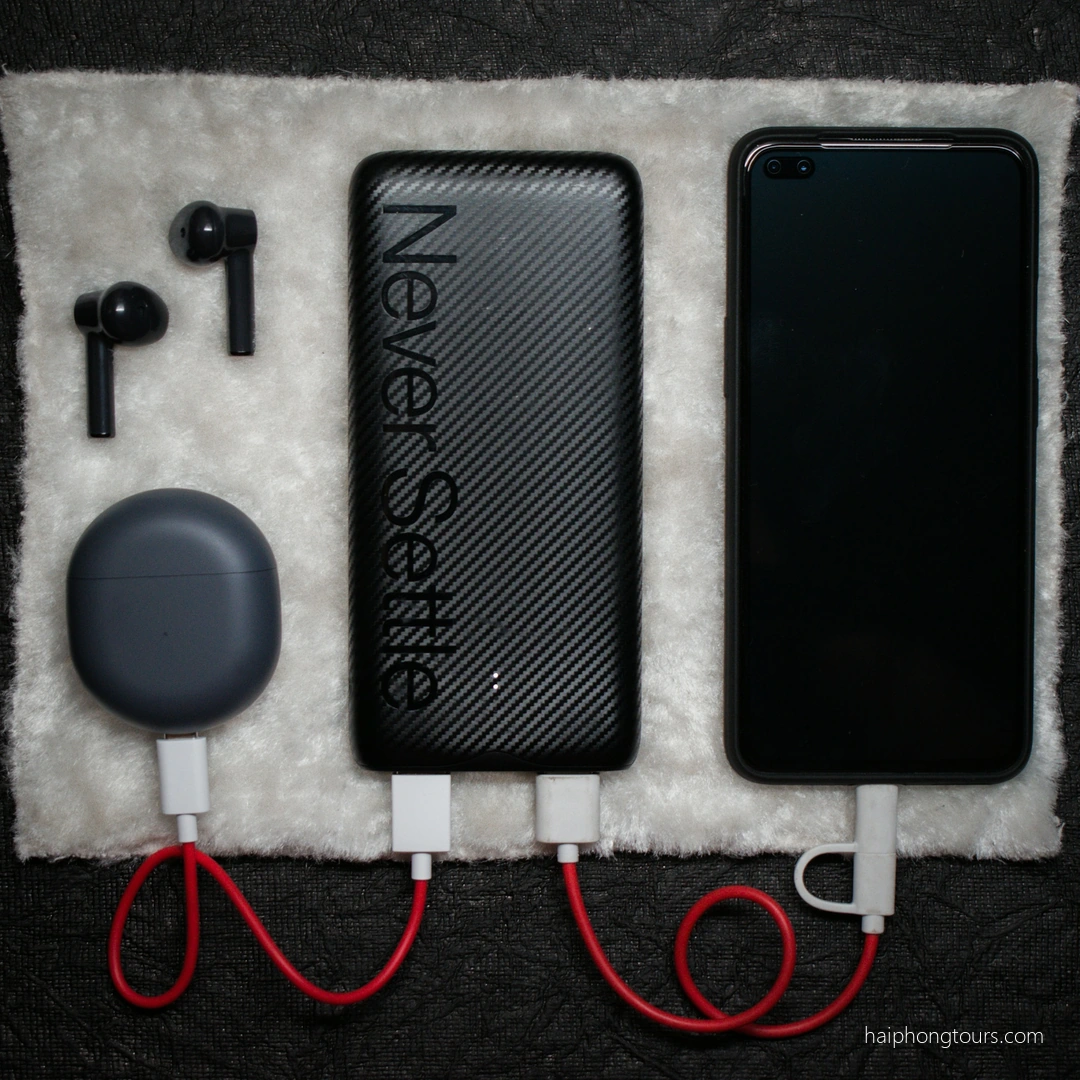 A phone and earbuds connected to a portable power bank.
A universal adapter is useful across mixed accommodation. Check the voltage range printed on your device charger. High-power appliances such as hair tools require more attention than phones and laptops.
Money and valuables
Use two payment methods and keep them in separate secure places. Carry enough cash for rural meals, small tickets and outages, then replenish in larger towns rather than carrying the entire trip budget.
Do not leave passport, cash, phone or medication in luggage transferred separately. Use hotel safes thoughtfully and record card-cancellation information away from the card.
Laundry and repeating clothes
North Vietnam has widespread laundry service in tourist centers, but drying time increases in cold or wet weather. Plan one extra day before a flight or remote departure and confirm whether charges are per kilogram or per item.
Quick-dry clothing reduces the total wardrobe. Three coordinated tops and two bottoms can create several outfits. Wash delicate technical or silk items only according to their labels.
Temple and cultural clothing
Carry one outfit that covers shoulders and knees without requiring a rental wrap. Light long trousers and a loose shirt work in heat and can also protect from sun and insects.
Remove hats where appropriate, keep footwear easy to take off and avoid transparent wet clothing in sacred spaces. A scarf is useful, but it should not be the only plan for a site that requests fuller coverage.
What not to pack
- A different outfit for every day: use laundry and repeat layers.
- A heavy winter coat for all seasons: build adjustable layers unless the forecast shows severe cold.
- New hiking boots: break footwear in before travel.
- Large bottles: decant permitted toiletries and buy ordinary supplies locally.
- Unverified motorbike equipment: fit and certification matter more than appearance.
- Loose ponchos or straps for riding: they can catch moving parts.
- Valuables with no planned use: reduce the items you must protect.
- Single-use “just in case” gear: rent or confirm specialized equipment where practical.
A 24-hour final packing check
- Check the forecast for every destination, not only Hanoi.
- Confirm luggage limits with the airline, cruise, sleeper vehicle and loop operator.
- Move passport, medicine, valuables and one dry layer into the daypack.
- Download maps, bookings, insurance details and Vietnamese addresses.
- Charge devices and place the power bank in cabin baggage.
- Waterproof documents and electronics.
- Remove duplicate clothing and equipment the route will not use.
- Test whether you can lift and carry the packed main bag.
Frequently asked questions
Do I need a winter coat in North Vietnam?
It depends on month, elevation and activity. Winter mountain routes can be cold, windy and damp, while Hanoi may be milder. A base layer, warm mid-layer and windproof waterproof shell are more adaptable than one bulky coat.
Are hiking boots necessary?
Not for a city, cruise and standard sightseeing itinerary. Closed walking shoes with grip are usually enough. Use trail footwear for trekking, muddy routes or demanding mountain days after checking the terrain.
Should I bring a suitcase or backpack?
Either works for hotels and private transfers. A soft backpack or duffel handles stairs and small vehicles better; a hard suitcase protects fragile items. Choose the bag you can lift and add a small overnight bag for boats or loops.
Can I buy warm clothing in Hanoi?
Yes, but fit, quality and technical performance vary. Bring critical footwear, medication and protective gear from home. Ordinary layers and umbrellas are easy to replace in larger cities.
Do I need a waterproof phone case?
A sealed pouch or dry bag is useful for boat, rain and motorcycle days even when the phone itself has water resistance. Device ratings decline with damage and do not protect documents or charging ports from every condition.
How much cash should I carry?
Carry enough for the next rural segment and a payment outage, not the entire trip budget. The right amount depends on included meals, tickets and accommodation. Replenish in larger towns and separate backup money.
Can I leave my suitcase in Hanoi?
Often, if you return to the same hotel and it confirms secure storage. Label the bag, remove valuables and medication, obtain a claim record if provided, and confirm collection hours.
Pack for change, not every possibility
The most useful North Vietnam bag contains a flexible layer system, dependable footwear, protected documents, necessary medicine and a small daypack. Everything else should earn its place through a named route or activity.
Check destination weather, luggage rules and operator inclusions just before departure. Removing one duplicate item is often more valuable than adding another precaution, because the bag must still move through the journey you packed it for.
After reducing what you pack, use the North Vietnam luggage logistics guide to plan hotel storage, train and bus space, cruise overnight bags and one-way transfer handoffs.
Useful guides for your trip
Would you like help fitting this experience into your trip? Contact us with your travel dates, starting point, available time and group size. Tell us about walking limits or special interests so we can suggest a practical itinerary.