
Shopping in North Vietnam is most rewarding when you buy an object whose material, maker and use you understand. Hanoi offers the widest choice, while Bat Trang, Van Phuc, Hai Phong and northern mountain towns add pottery, silk, food, textiles and regional products. A market is convenient for browsing; a workshop or specialist shop is often better when provenance matters.

Good purchases include compact ceramics, documented silk, lacquerware, tea, packaged coffee, prints and practical textiles. Avoid wildlife products, poorly documented antiques, unsealed food and plants or seeds that may be restricted at your next border. Ask how an item was made, check the final condition and plan the luggage before paying.
Quick shopping decisions
- Best all-round base: Hanoi, for markets, boutiques, craft streets and specialist shops.
- Best for pottery: Bat Trang, where workshops, retail displays and hands-on activities can be compared in one trip.
- Best for silk: Van Phuc, provided you ask about fiber, weave and production rather than trusting the village name alone.
- Best for highland textiles: a cooperative, workshop or seller who can identify the maker and technique.
- Best easy gifts: sealed tea, coffee, postcards, prints and small fabric items.
- Best for browsing: Old Quarter streets and the markets described in the North Vietnam markets guide.
- Best rule for authenticity: buy the explanation and documentation with the object, not a claim based only on location or appearance.
Where to shop in North Vietnam
Hanoi Old Quarter
The Old Quarter offers the highest concentration of accessible shopping. Individual streets retain links with former craft and trading specializations, while today’s stock mixes everyday goods, souvenirs, fashion, jewelry, food and household products. This is useful for comparison because you can inspect several sellers without a separate day trip.
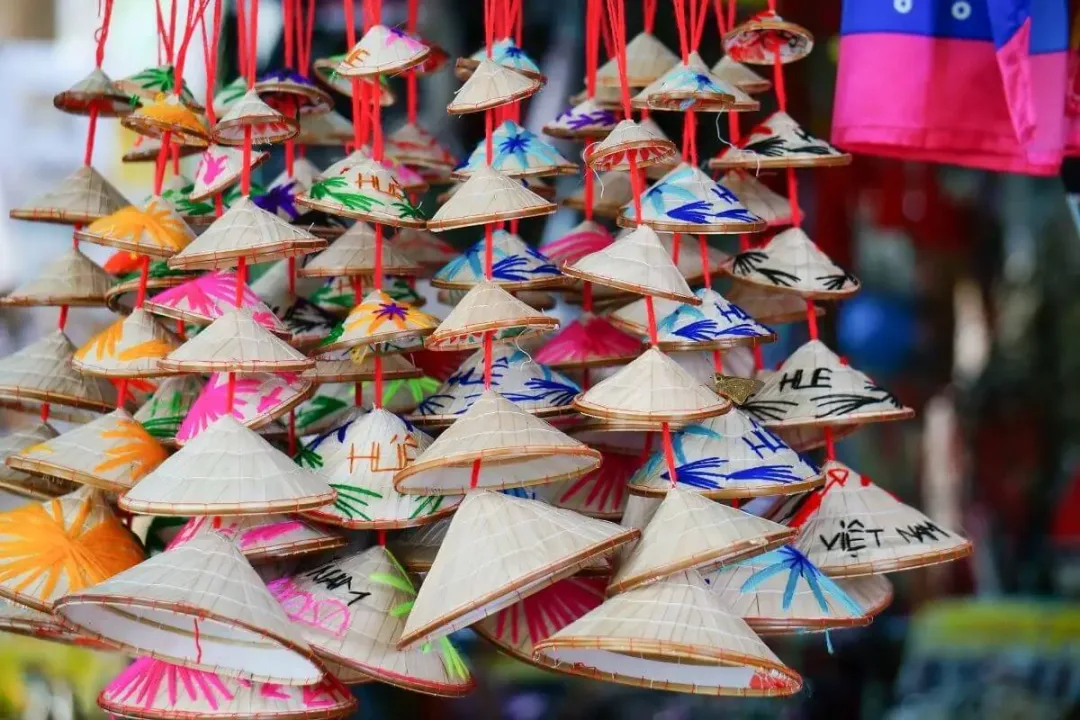
Use Dong Xuan and its surrounding streets for broad browsing. Use fixed boutiques or workshops for items whose origin and materials matter. A higher price or polished display does not prove authenticity, but a seller who explains the maker, technique, care and return terms gives you more evidence than a generic label.
Bat Trang pottery village
Bat Trang, east of central Hanoi, brings together ceramics shops, studios, kilns, workshops and museums. It is a practical half-day or longer trip for travelers who want to compare tableware, decorative work and pottery activities. The village name covers a wide range of price and production levels.
Before buying functional ceramics, ask whether the glaze and item are intended for food use, microwave use and dishwashing. Inspect the rim, foot and handle for chips or cracks. For detailed transport and workshop planning, use the Bat Trang Pottery Village guide.
Van Phuc silk village
Van Phuc is the convenient specialist stop for silk and textile shopping near Hanoi. Stores sell fabric, scarves, clothing, bedding and accessories, but not every item displayed in the village has the same fiber content or production story.
Ask whether the piece is pure silk, a silk blend or another fabric. Request written fiber and care information for an expensive purchase. The Van Phuc Silk Village guide explains how to compare weaving, labels and visitor experiences without relying on a destructive “silk test.”
Hai Phong
Hai Phong suits practical food gifts, city-branded items, independent design and local-market browsing. It is not necessary to search for one official souvenir district. Start with a reliable food producer or fixed shop when packaging and shelf life matter, then use neighborhood markets for ingredients and everyday context.
Hang Market is distinctive for plants, gardening goods and secondhand objects, but many of these are poor international souvenirs because of weight, customs rules or uncertain history. The Hang Market visitor guide explains what the Sunday fair is useful for.
Sapa, Bac Ha and mountain towns
Mountain destinations offer embroidered bags, scarves, clothing, jewelry and other patterned goods. Some pieces involve local handwork; others are factory-made or assembled from mixed materials. A seller’s ethnicity, clothing or location does not establish who made an item.
Ask who produced the piece, where it was made and whether the pattern was woven, embroidered, appliquéd or printed. Cooperatives and workshops may provide clearer provenance, though each claim still deserves a specific answer. Buy respectfully and avoid treating a close portrait as part of the purchase.
Ha Long, Cat Ba and Ninh Binh
Tourist centers provide convenient last-minute gifts, but much of the stock is not unique to the destination. Choose compact, well-packed items and compare a few shops. Products made from shells, coral, wildlife, plants or poorly identified natural material can create conservation and customs problems.
A destination label is most useful when the product has a clear local connection, such as a documented maker, local design or properly packaged food. It is less useful when identical goods appear in every major tourist stop.
Vietnamese ceramics: what to check
Ceramics range from inexpensive molded souvenirs to studio pieces and functional tableware. Decide first whether the item will be decorative or used for food and drink. Functional use requires more information than appearance.
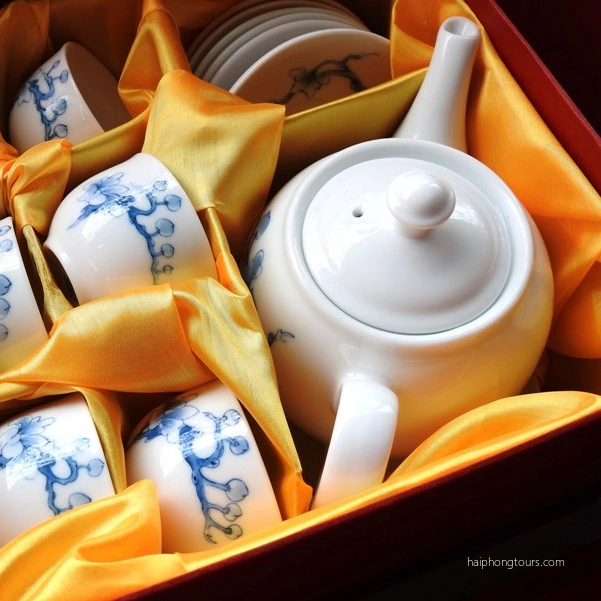
- Inspect the rim, handle, base and corners in good light.
- Look for fine cracks in the body or glaze and ask whether visible crackle is intentional.
- Place a cup or bowl on a flat surface to check stability.
- Ask whether the glaze is intended for food contact.
- Confirm microwave, oven and dishwasher suitability separately; one does not imply the others.
- Request a box and individual wrapping before paying.
- Carry valuable or delicate pieces in hand luggage only if airline security and cabin-bag rules allow them.
A workshop demonstration can explain shaping, decoration and firing, but it does not prove that every product in the attached shop was made there. Ask about the specific piece you are buying.
Silk and textiles: material before pattern
“Silk” is often used loosely in visitor-facing sales. Pure silk, silk blends, viscose and polyester can all feel smooth. Touch and shine are not reliable enough for an expensive purchase, and burning a loose thread in a shop is unsafe and inappropriate.
Ask for the fiber composition in writing. Check the weave, hems, seams and color consistency. For clothing, inspect the lining and allow time for alterations before the final day of the trip. Confirm whether the quoted price includes tailoring and how many fittings are expected.
For a custom order, the Hanoi tailoring guide covers shop locations and fitting schedules.
Natural dyes and handwoven fabrics may show small variations. These can be part of the process, but variation alone does not prove hand production. Ask who made the fabric, who assembled the final item and how it should be washed.
Lacquerware: distinguish finish from story
Lacquerware can include bowls, trays, boxes, panels and decorative objects. Traditional processes involve repeated layers and substantial labor, while inexpensive souvenir pieces may use faster coatings or printed decoration. Both can be useful purchases when sold honestly.
Check the surface under angled light for scratches, bubbles or unfinished edges. Open boxes and test hinges or lids. Ask what the base is made from, how the surface was produced and whether it is intended only for decoration. Do not assume a decorative lacquer bowl is food-safe.
Keep lacquerware away from direct heat and strong sunlight during travel. Wrap it so hard objects cannot rub the finish.
Tea and coffee: easy gifts that still need labels
Tea and coffee are compact, useful gifts when packaging matches your journey. Choose sealed products with the product name, producer, net weight and a usable date or batch reference. Ask about storage and preparation.
For tea, origin may refer to the province, district, cooperative or seller. Ask which it means. Loose leaves in an unmarked bag are difficult to explain at a border and give the recipient no brewing guidance.
For coffee, check whether the package contains whole beans or ground coffee, the roast level and whether flavorings or other ingredients are added. Ground size matters: coffee prepared for a Vietnamese phin may not suit every espresso machine. The North Vietnam coffee guide explains the drinks and brewing culture behind the gift.
Packaged food: shelf life and border rules
Dried fruit, sweets, tea, coffee, spices and factory-sealed snacks are usually easier to carry than fresh or homemade food. Read the ingredient list and check the seal, expiry information and storage instructions. A decorative gift box does not guarantee that every ingredient is labeled in a language your recipient can use.
Meat, fresh produce, seeds, plants, unprocessed wood and some animal products face strict restrictions in many countries. Rules depend on your destination and transit points. Check the official customs or biosecurity guidance for the country where you will enter, then declare items when required.
Do not rely on a seller’s assurance that “tourists take it home all the time.” The traveler is responsible at the border.
Prints, posters and small design objects
Art prints, illustrated maps, postcards, notebooks and locally designed accessories travel well. Ask whether a print is an original edition, a reproduction or a mass-produced poster. None is inherently wrong, but the description should match the price.
For an expensive work, request the artist’s name, medium, dimensions and a receipt. Use a rigid tube or flat protective board and check that the packaging fits your luggage. Avoid rolling a piece when the medium may crack.
For a personalized object, consider commissioning a hand-carved stamp in Hanoi.
Bamboo, rattan and wood
Basketry and lightweight bamboo products can be practical, but inspect for splinters, mold, insect holes and weak joints. Ask what finish or glue was used if the object will touch food.
Wooden products may be heavy, poorly dried or made from material whose species and legal origin are unclear. Do not buy wildlife-derived or protected natural material. For a valuable carved object, documentation matters more than the seller’s verbal age estimate.
Jewelry and metalwork
Buy precious metal or stones only from a business prepared to document weight, metal fineness, stones and return terms. Color and a stamped mark are not enough for a visitor to verify value. Keep the receipt separate from the item during travel.
For inexpensive fashion jewelry, inspect clasps, sharp edges and skin-contact surfaces. Ask what the metal is if you have a nickel or other contact allergy.
For a watch that needs attention during your stay, use the Hanoi watch repair guide.
How to tell whether a souvenir is handmade
No single visual trick proves handmade origin. Use several pieces of evidence together:
- The seller can identify the maker or workshop.
- The production location is more specific than “Vietnam.”
- The technique is explained in a way that matches the object.
- You can see part of the process or supporting workshop material.
- Fiber, clay, wood or other material is identified clearly.
- The time required and price are plausible for the stated amount of labor.
- A receipt or product card records the claim.
Demonstrations can be abbreviated for visitors, and shops may sell outside products beside their own work. Ask about the exact item rather than assuming the whole room has one origin.
For a wearable souvenir, the Hanoi tire-sandal guide explains buying, fit checks and arranging a separate sandal-making workshop.
Bargaining and payment
Markets may allow polite bargaining; fixed boutiques, museums and workshops often use displayed prices. Watch whether local customers negotiate and ask the price before committing. Make one reasonable counteroffer when appropriate, then increase gradually or leave politely.
Do not bargain after food is prepared, clothing is altered or an item is personalized. A small difference that is insignificant to your travel budget may matter more to an independent maker. The aim is a clear agreement, not the lowest possible number.
Carry small Vietnamese-dong notes for markets. For a high-value card payment, check the amount and currency on the terminal before authorizing it. Ask for an itemized receipt showing the business and product.
For eligible purchases you will carry out of Vietnam, see the VAT refund guide for Noi Bai Airport.
Shipping a purchase home
International shipping is useful for large ceramics, artwork or furniture only when the seller can provide a complete written quote. Confirm:
- the packed dimensions and final weight;
- the carrier and tracking method;
- whether the service stops at the airport, port, depot or your address;
- who pays customs duty, tax and handling fees;
- the declared value and insurance limit;
- the damage claim procedure and required photographs;
- which documents identify materials and origin.
Photograph the item before packing and again after the packing method is visible. Keep the invoice, shipping document and seller contact details. “Free shipping” is not useful if duties, local delivery or damage responsibility remain unclear.
If you prefer to arrange the shipment yourself, use the Hanoi guide to sending a parcel home with DHL for a walk-in option.
What not to buy
- Wildlife products: avoid ivory, coral, turtle shell, protected skins, horns and products with unclear animal origin.
- Undocumented antiques: age claims and export eligibility require evidence.
- Plants, seeds and soil: these often trigger strict biosecurity rules.
- Unsealed animal products: border restrictions and storage risks are high.
- Counterfeit brands: low price does not remove intellectual-property or customs issues.
- Oversize fragile pieces without a packing plan: the purchase price is only one part of the cost.
- Products you cannot identify: unclear materials create problems with allergies, use, care and customs declarations.
A practical shopping plan
- Browse first in Hanoi. Learn common products and price ranges without buying the first item.
- Choose one craft destination. Use Bat Trang for ceramics or Van Phuc for silk when the production context matters.
- Buy regional items during the route. Ask about maker, material and storage while you are still near the source.
- Leave luggage space. Weigh and protect purchases before the final transfer.
- Complete food shopping near departure. Choose sealed products after confirming customs rules and shelf life.
A souvenir can also be something you make during a class. The Hanoi perfume workshops guide compares Muoi Studio and Cleopatra by process, bottle size and location. Reserve the actual session and keep the finished bottle’s label and packing instructions.
Buy fewer things with better information
A useful souvenir should survive the journey and retain a clear connection with the place. Choose a piece you can describe: who made it, what it contains, how it is used and why it belongs in your home.
Markets are strong for comparison and everyday context. Craft villages and specialist shops are stronger when you need provenance, care instructions or safe packing. Check border rules before buying natural materials or food, and keep documentation for anything valuable.
For sealed snacks, tea, coffee and food gifts, use the North Vietnam grocery guide to check labels, allergens, storage, luggage and customs before buying.
Older objects need more due diligence than ordinary souvenirs. Use the North Vietnam antiques and vintage shopping guide for provenance, condition, export and replica checks.
Would you like help fitting this experience into your trip? Contact us with your travel dates, starting point, available time and group size. Tell us about walking limits or special interests so we can suggest a practical itinerary.