Stargazing in North Vietnam depends more on cloud, haze, moonlight and local lighting than on a famous viewpoint. Choose a rural property with an open horizon, ask whether outdoor space is accessible after dark and stay at least two nights so one cloudy evening does not end the plan.
No northern destination guarantees a dark or clear sky. Mountain areas can be cloudy, valleys can trap mist, and coastal weather can change quickly. Plan the night as a quiet part of a broader nature stay rather than traveling only for one predicted photograph.
Check these five conditions
- Cloud cover: a low cloud layer can hide the entire sky even when the day was bright.
- Moonlight: a bright moon helps a landscape walk but reduces the visibility of faint stars.
- Haze and humidity: both reduce contrast, especially near cities, valleys and the coast.
- Artificial light: property lights, roads, karaoke and neighboring buildings matter at the exact observation point.
- Safe access: the best-looking dark location is unsuitable if it requires an unlit road, cliff or unfamiliar trail.
Check a short-range weather forecast and the moon phase close to the date. Treat a clear-sky app as planning support, not a guarantee.
Where night-sky planning can work
Ha Giang and the northern highlands
Highland landscapes can offer wide horizons away from large urban centers. The limitation is access: mountain roads, changing visibility and long transfers make a late-night self-drive unsafe. Observe from the accommodation or a location arranged with a local guide, then remain there for the night.
Choose at least three nights in the region. A single overnight leaves little flexibility if fog or rain arrives.
Sapa and nearby valleys
Sapa is easy to reach and has a broad accommodation range, but town lighting and frequent cloud can limit the sky. A valley lodge may reduce artificial light while adding steep paths, animal sounds and transport dependence.
Ask whether the property has a level terrace or garden and whether staff permit lights to be reduced. Do not walk onto rice terraces or village paths after dark without local guidance.
Mai Chau and Pu Luong
Rural stays can provide open valley or hillside views and a relaxed evening routine. Property selection is decisive. A room with a view may face decorative lighting, an event lawn or another building.
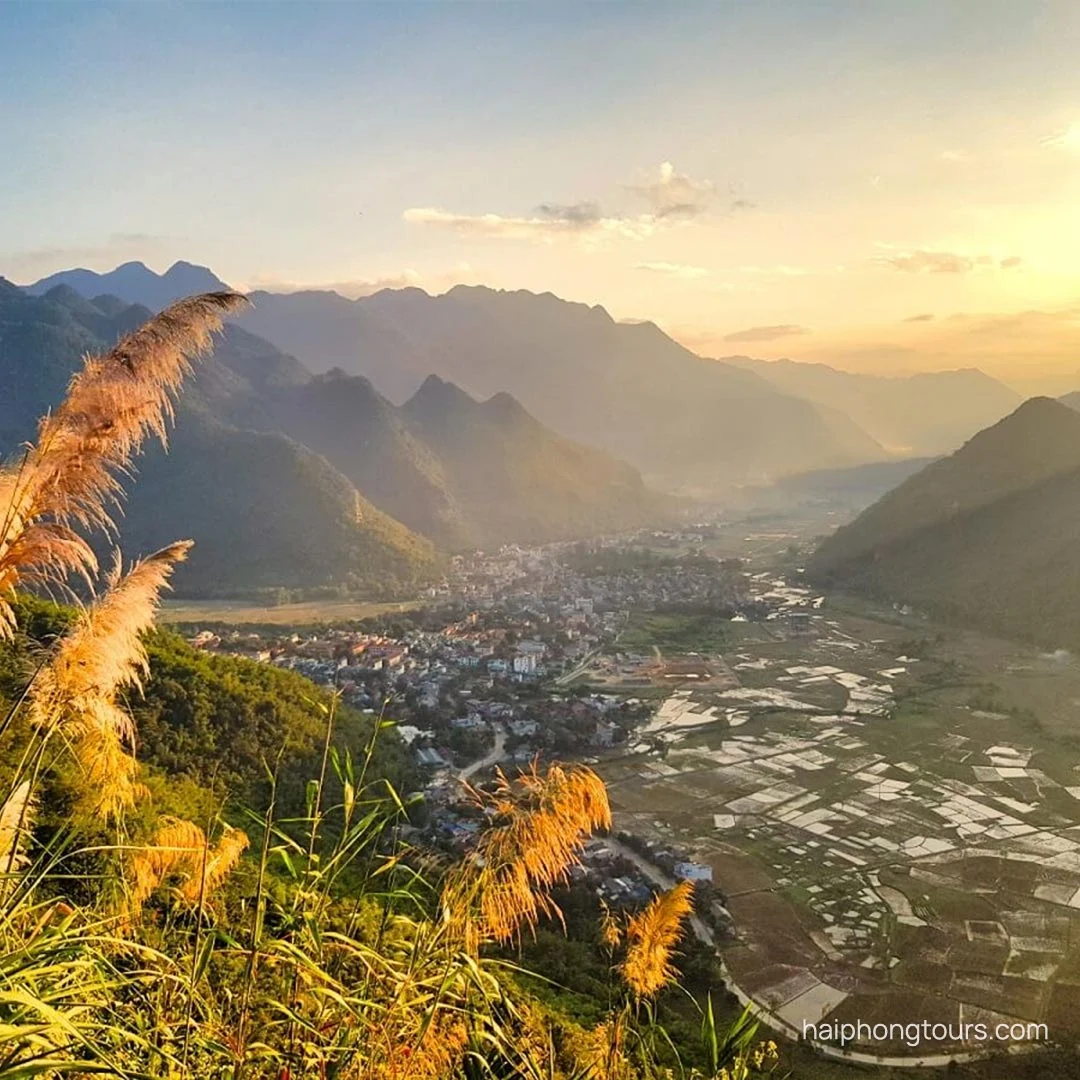
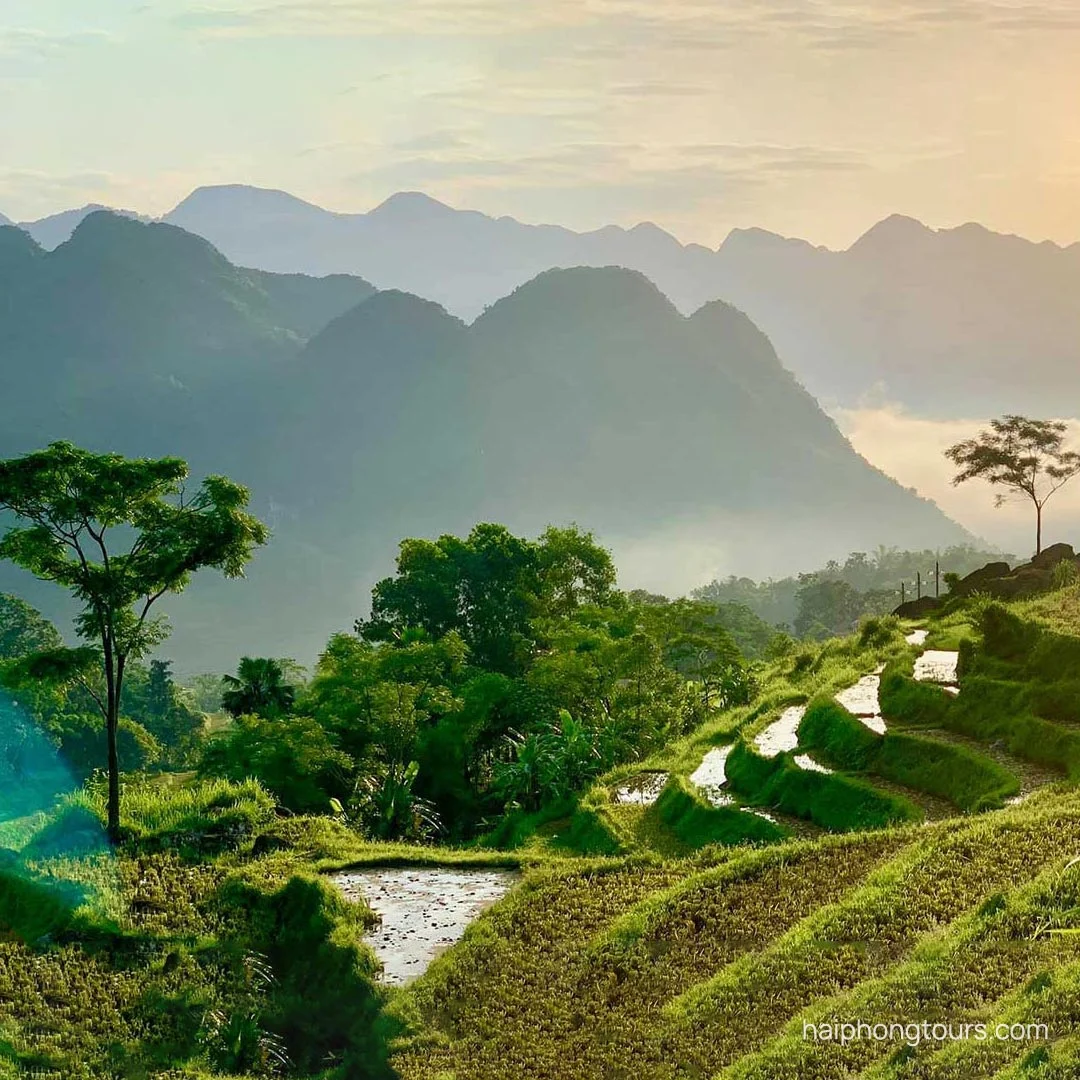
Confirm the direction of the open view, evening events, outdoor access and the time gates or common areas close. Three nights create a useful weather buffer.
Ba Be
Ba Be suits a slower lake-and-forest stay with limited urban lighting. Trees and mountain sides can restrict the horizon, while water and vegetation increase insects and humidity. Observe from an approved open area near the accommodation rather than entering forest or boat routes at night.
Cat Ba and the coast
Cat Ba can combine a night-sky attempt with forest, beach and bay activities. Cat Ba Town has substantial lighting; remote properties and quieter coastlines may offer a darker setting but require transport and weather planning.
Never choose an exposed cliff, empty beach or boat deck without permission and safe access. Tides, wind and wet rock remain hazards after dark.
Choose the accommodation before the viewpoint
Ask the property these questions:
- Is there a level outdoor area guests may use after dinner?
- Which direction has the clearest horizon?
- What time are gates, terraces and common areas closed?
- Are weddings, karaoke or group events scheduled?
- Can nearby decorative lights be reduced without affecting safety?
- Is staff assistance available if an animal, weather or medical issue occurs?
- Does the path have steps, water, traffic or an unprotected edge?
A designated observation space at the property is usually safer than searching for a darker roadside point.
Moon phase changes the experience
A darker period around the new moon favors faint stars, but paths and landscapes are harder to see. A brighter moon reduces faint-star visibility while illuminating mountains, water and buildings. Choose according to the experience you want.
The moon may rise or set during the evening, so the phase alone is not enough. Check local rise and set times, then keep expectations flexible if cloud changes the plan.
Beginner equipment
- A warm layer even when the day was hot.
- Closed footwear with grip.
- A small red light used at low brightness.
- A mat or chair only where the property permits it.
- Binoculars with a neck strap if you already know how to use them.
- Offline star information and one charged phone for safety.
- Insect protection suitable for your needs and the setting.
Give your eyes time to adapt. Repeatedly checking a bright phone screen makes faint objects harder to see. Avoid laser pointers because they can create safety problems for people, wildlife and aircraft.
Astrophotography without overpacking
A stable tripod, a wide lens and a manual camera mode are the usual starting points. Humidity can fog lenses, while wind and unstable ground create blur. Keep equipment inside a sealed bag while moving between different temperatures, then allow it to adjust gradually.
Do not place a tripod across a road, temple route, jetty or emergency path. Ask before using private terraces. Artificially lighting buildings, fields or wildlife can disturb residents and change other guests’ experience.
The North Vietnam photography guide covers weather protection, drones and respectful image-making.
Night safety
- Tell the host where you will be and when you will return.
- Observe with a companion in remote areas.
- Do not ride a motorbike on an unfamiliar mountain road to chase a forecast gap.
- Stay away from cliff edges, wet steps, rice-field banks and unlit boat landings.
- Stop when thunder, strong wind, heavy rain or fog approaches.
- Keep noise low and never attract wildlife with food, calls or lights.
If the safe observation area is lit, accept the reduced darkness. Safety lighting should not be disabled without the property operator’s approval.
Stargazing with children
Use a short session close to the room. Let children identify the moon, one bright planet or a simple pattern rather than staying up for a long technical program. Keep one adult responsible for steps, water and traffic while another handles equipment.
Children need warm clothing, familiar insect protection and an immediate return option. A canceled session should not become a late drive to another location.
Camping is a separate decision
A dark sky does not make wild camping permitted or safe. Land ownership, fire rules, weather, water, sanitation and protected-area restrictions still apply. Use an established site or a locally arranged program that identifies the permitted area and emergency plan.
The North Vietnam camping guide explains the questions to ask before sleeping outdoors.
Protect darkness and wildlife
Use the minimum light needed for safe movement, point it down and switch it off when it is no longer required. A dim red light helps preserve dark adaptation, but it should still be kept away from nearby homes, other observers and wildlife.
Avoid lasers, repeated light painting and shining torches into trees or cliffs. Do not use animal-call playback to make a night session feel more active, and do not publish precise coordinates for a sensitive habitat or private viewing site.
A realistic three-night plan
- Night 1: arrive before dark, inspect the observation area and learn the safe route back to the room.
- Night 2: use the best forecast window for a sixty- to ninety-minute session.
- Night 3: keep as weather backup or use for a moonlit landscape rather than faint stars.
Keep daytime activity light after a late evening. Do not combine a long night with an early mountain drive.
If the sky stays cloudy
Use the evening for reading, sketching, tea or a quiet meal. The quiet hobbies guide gives alternatives that do not depend on a clear sky.
A successful night-sky trip is a safe nature stay with a chance to observe. Choose a property that works in daylight, stay long enough for weather flexibility and let conditions decide whether the stars become the main event.
Would you like help fitting this experience into your trip? Contact us with your travel dates, starting point, available time and group size. Tell us about walking limits or special interests so we can suggest a practical itinerary.