
A traditional-music trip in North Vietnam should combine one reliable Hanoi performance with one regional tradition whose calendar has been confirmed. Ca tru, quan ho and Xoan belong to different communities and settings; they are not interchangeable versions of a nightly tourist show.
Build the route around actual performances, rehearsals or community access. UNESCO recognition identifies cultural significance, but it does not guarantee a public program on your travel date. Contact the venue or local cultural organizer shortly before committing transport.
Three traditions to understand first
Ca tru
Ca tru is a northern form of sung poetry built around a female singer, wooden clappers, a three-stringed lute and a praise drum. Its small ensemble and text-centered performance reward close listening. It was inscribed by UNESCO in 2009 on the list of intangible heritage in need of urgent safeguarding.
Hanoi is the easiest place to seek a programmed introduction. Confirm the venue, start time, duration and whether any explanation is offered in English. A short formal presentation can provide access, but it is still a curated performance rather than the whole social history of the form.
If your route includes Hai Phong, the Hai Phong ca tru guide compares restaurant performances with Dong Mon community events. Hai Phong Tours recommends confirming that musicians will perform live on your date: an open restaurant may substitute recordings when the artists are away.
Quan ho Bac Ninh
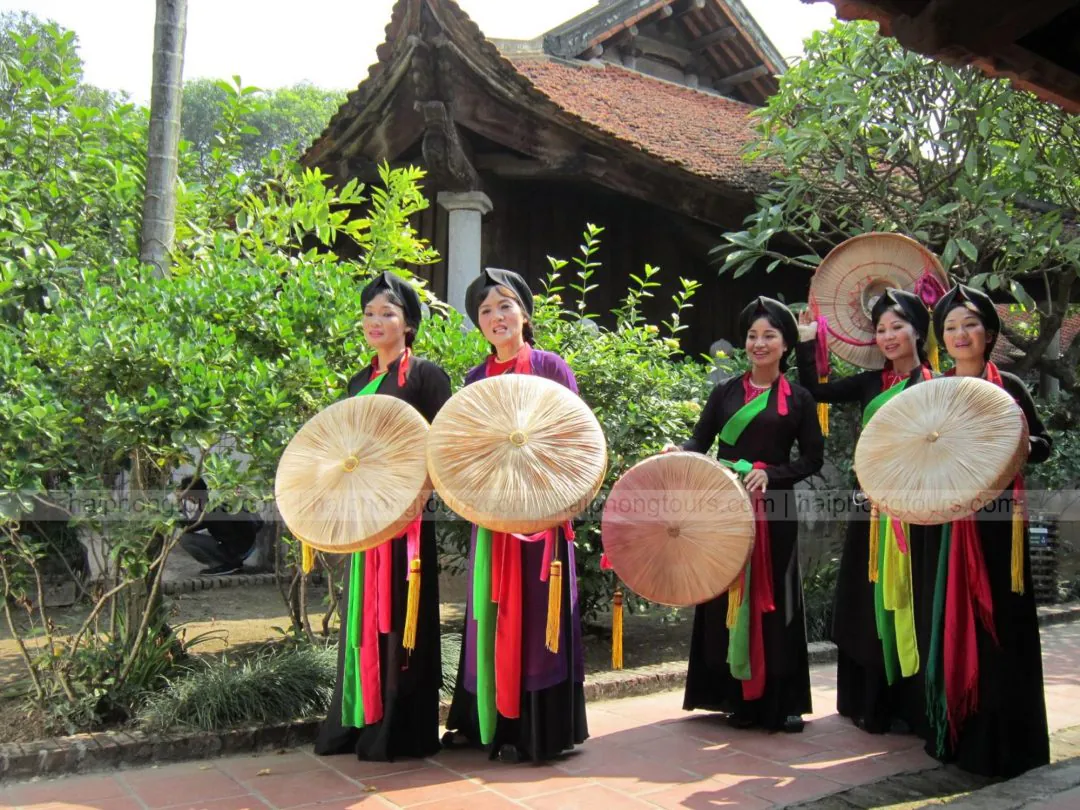
Quan ho is associated especially with communities in Bac Ninh and Bac Giang. UNESCO describes an exchange of verses between paired singers from twinned villages, with musical, social and ceremonial meaning. The tradition is strongly visible around festivals, but a festival crowd is not the only or automatically the best way to listen.
A village or cultural-center visit needs current local coordination. Ask whether you will attend a public performance, a club session or a visitor demonstration. Do not promise yourself a private household performance merely because a village is associated with quan ho.
For a specific village outing, the Diem Village quan ho and heritage guide connects a deliberately arranged singing encounter with Vua Ba Temple, Dinh Diem’s carved sanctuary screen and the Jade Well. Confirm the host or dated performance first; the village and theater do not share a guaranteed daily show.
Xoan singing
Xoan singing in Phu Tho combines singing, dance, drumming and clapper playing and is closely linked to worship of the Hung Kings. UNESCO transferred it to the Representative List in 2017 after safeguarding efforts strengthened the tradition.
Its ritual context matters. A visit to a communal house or temple is not permission to interrupt worship, stage portraits or request a song. Arrange interpretation when the relationship between the place, calendar and repertoire is central to the trip.
What a traveler can realistically book
- Scheduled stage performance: easiest to verify, fixed duration, less community context.
- Club or cultural-center program: potentially more explanation, but dates may be irregular.
- Festival performance: strong public context, with crowds, traffic and schedule changes.
- Workshop or lesson: useful only when the teacher, technique, level and translation are clear.
- Community visit: requires a real host and should not be treated as guaranteed entertainment.
The North Vietnam festivals guide explains how lunar dates, crowd controls and local announcements affect planning.
To spend time playing an instrument yourself, use the Hanoi dan bau lesson guide. Arrange the teaching language and a session suited to your stay before reserving; a lesson and a performance are separate experiences.
To buy an instrument, compare Hanoi bamboo-flute sellers.
For a seated Old Quarter evening, Thang Long Music and Dance Theater offers a Hanoi-themed contemporary music experience and separate concerts with changing themes. Choose the dated program carefully: these are distinct from an unamplified ca tru recital and from Thang Long water puppets.
For a full theatrical story rather than a music recital, explore Hong Ha Theatre’s traditional drama programs. Tuong, cheo and cai luong offer different styles of singing and acting; choose a dated production, confirm its venue and arrange any English synopsis you need.
At CADAO Collective in Tay Ho, choose a specific singing or puppetry ticket.
Prepare your ears before the trip
Listen to one reliable recording of each form and learn the names of the main instruments or roles. The goal is not to become an expert. It is to notice the difference between responsive singing, sung poetry, ritual sequence and a modern medley created for visitors.
Lyrics may use older poetic language, regional pronunciation or cultural references that a direct translation cannot fully carry. Read a short program note before the performance, then focus on phrasing, interaction, rhythm and setting instead of expecting line-by-line English.
Performance etiquette
- Arrive before the stated start and silence the phone.
- Ask whether photography or recording is allowed.
- Do not use flash near performers or worship spaces.
- Wait for a clear pause before entering or leaving a small venue.
- Do not handle instruments, costumes or ritual objects without invitation.
- Pay the published ticket or agreed hosting fee without turning the visit into a bargaining exercise.
When a performance takes place in a temple or communal house, dress and behave for the sacred setting even if other visitors are casual. The North Vietnam culture and etiquette guide covers basic conduct in community and religious spaces.
For a contemporary listening evening while you are based in the capital, the Hanoi live-jazz guide compares a dedicated club with a hotel dinner-and-music setting. Keep that as a separate choice from the heritage performances above, with its own program and reservation.
A five-day music route
- Day 1, Hanoi: arrival, a music-related museum display or instrument introduction.
- Day 2: one confirmed ca tru or other traditional performance.
- Day 3: travel to Bac Ninh only for a confirmed quan ho program or a wider heritage day.
- Day 4: return to Hanoi, listen again and keep the evening free.
- Day 5: add Phu Tho only if a Xoan-related visit has been properly arranged; otherwise use another Hanoi cultural program.
Phu Tho should normally be a separate extension rather than a rushed addition to Bac Ninh. Travel time, translation and waiting can consume the day even when the performance itself is short.
Avoid the common planning errors
Do not rely on a blog post that lists a weekly show without checking the current organizer. Do not label any singer in traditional clothing as quan ho or any plucked-lute performance as ca tru. Do not ask a village resident to perform simply because tourism material associates the place with music.
The strongest music trip has fewer, better-confirmed encounters. Learn what kind of event you are attending, understand the community connection and leave enough time to listen without treating living heritage as a soundtrack for a checklist.