
Traditional sports festivals in North Vietnam are community events first and visitor attractions second. They can be rewarding if you want to see ritual, local identity and competition in the same setting, but the date, venue and public-access arrangements often follow the lunar calendar and may change from one edition to the next.
The practical approach is to choose one event, confirm its current program through the local authority, and build a flexible day around it. Do not plan a tight connection immediately after the main contest: crowds, road controls and ceremonies can make departure slower than a normal sightseeing day.
Which event fits your interests?
- For symbolic performance and mythology: the Giong Festival at Phu Dong or Soc temples near Hanoi.
- For a maritime village atmosphere: the Quan Lan Festival and its boat-race tradition in Quang Ninh.
- For an unusual participatory folk sport: Van Village water-ball wrestling in the Kinh Bac cultural region.
- For traditional grappling: village wrestling festivals held around the Red River Delta.
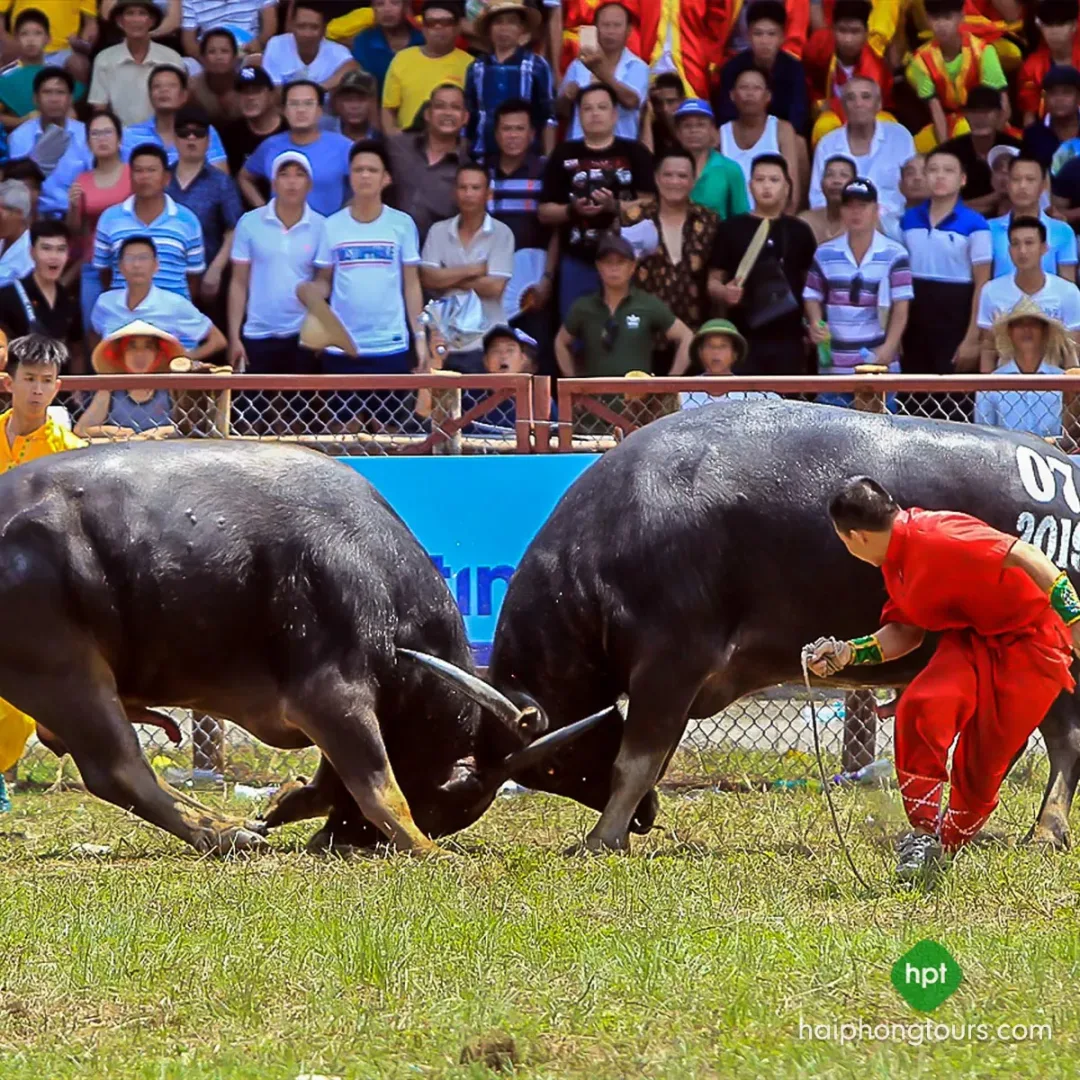
- For a large, intense arena event: the Do Son Buffalo Fighting Festival in Hai Phong, after considering the animal-welfare issue and crowd conditions.
Giong Festival: ritual battle rather than a modern sports match
The Giong Festival commemorates the legendary hero Thanh Giong. At Phu Dong, the festival includes a symbolic battle expressed through a white-horse procession, flag movements, drums, gongs and community roles prepared well in advance. At Soc Temple, the celebration has a different sequence, including a procession of bamboo flowers.

The two locations and their festival periods are not interchangeable. Soc Temple celebrations take place in the first lunar month, while the main Phu Dong events are associated with the fourth lunar month. Convert the lunar date for the year you will travel, then verify the public program rather than copying a date from an old travel article.
Best for: travelers interested in living heritage, processions, mythology and community performance. It is less suitable for someone expecting a continuous spectator sport with numbered seats and a fixed start-to-finish match schedule.
Quan Lan Festival: a boat race with island logistics
Quan Lan Festival commemorates resistance to Mongol invaders, and its best-known public spectacle is a boat race in which teams represent opposing sides. The setting on Quan Lan Island makes the journey part of the experience, but it also creates the main planning constraint.
Do not rely on the last normal boat connection after a major festival event. Passenger services, sea conditions, local traffic and the event timetable can all affect your return. An overnight stay on the island gives you more margin and lets you see the community atmosphere outside the race itself. Confirm both ferry arrangements and accommodation before committing to the trip.
Best for: travelers who can give the event at least one night and are comfortable planning around marine transport. A same-day outing is fragile if the festival program or boats run later than expected.
Van Village water-ball wrestling: a rare Kinh Bac tradition
Van Village water-ball wrestling combines grappling, teamwork and a muddy, water-filled arena. The event is connected with local legend and worship, so the match cannot be understood only as a novelty sport. The ceremony, village setting and rules are part of its meaning.
Expect splashing, mud, dense standing crowds and limited unobstructed sightlines. Wear footwear that tolerates wet ground, protect electronics from water and avoid blocking local participants or ritual routes. The event is better for travelers who accept an informal village viewing environment than for anyone who needs assigned seating, step-free access or a predictable finish time.
Traditional wrestling: easier to encounter, harder to schedule
Traditional Vietnamese wrestling appears at a number of spring festivals in the northern delta. The format, field, number of bouts and visitor facilities vary by host community. Some competitions are the main event; elsewhere wrestling is one part of a larger temple or village festival.
For a specific Hai Phong option, the Vinh Khe wrestling festival centers on the seventh day of the first lunar month. Its elder-wrestling ritual and competitive bouts need different timing; confirm the current program before traveling.

Search using the current administrative place name as well as the traditional village name. Province and ward boundaries may change, while residents and event announcements continue to use older local names. Confirm the exact arena on a map or with your accommodation before leaving.
Do Son buffalo fighting: understand the trade-off before attending
The Do Son Buffalo Fighting Festival is a major Hai Phong tradition with ritual stages as well as public contests. Current editions may include qualifying activity before the main festival, so the phrase “festival date” does not always identify the only day with an event.
This event involves animals fighting and will not suit every traveler. Decide on that basis before arranging transport, especially when traveling with children. If you attend, use the designated spectator areas, follow crowd-control instructions and never approach animals or restricted preparation zones.
The detailed visitor issues, schedule checks and ethical considerations are covered in the Do Son Buffalo Fighting Festival guide.
How to verify a festival date correctly
- Identify the exact event and venue. Similar names can refer to different temples, villages or stages of one festival.
- Find the lunar date. Record it first; do not treat a previous Gregorian date as annual.
- Convert it for your travel year. Check that the conversion uses Vietnam time.
- Confirm the current public program. Use a local government, cultural authority or official organizer notice.
- Recheck shortly before travel. Weather, safety arrangements and local decisions can alter timings.
A poster or social-media image can help identify the program, but confirm who published it. An old image may continue circulating after the year, location or qualifying round has changed.
Build a festival day that can absorb delays
Stay near the event the night before when the most important ceremony begins early or the destination depends on a ferry. Carry water, sun or rain protection, cash in small denominations and a fully charged phone. Food stalls and toilets may be temporary, busy or limited compared with a normal tourist site.
Choose one fixed priority: the procession, opening ritual or main contest. Treat secondary activities as optional. This keeps the day useful even if the published sequence runs late.
Etiquette and photography
Keep entrances, offering routes and performance spaces clear. Ask before photographing people at close range, and avoid flash during worship or indoor ceremonies. A telephoto view from outside the working area is usually less intrusive than moving closer for a dramatic image.
Dress for a religious and community setting even when the athletic event is outdoors. Shoulders and knees covered is a safe default for temple sections. Follow instructions from local volunteers; barriers may protect performers, animals or spectators rather than indicate a general sightseeing route.
Is a traditional sports festival worth adding to your trip?
Add one when you can travel for the event itself, tolerate changes and stay long enough to understand its ritual context. Skip it when you have a same-day flight, a rigid transfer or a strong need for accessible seating and predictable facilities that the organizer has not confirmed.
For a broader choice of seasonal celebrations, use the North Vietnam festivals planning guide. Select the event first, verify the current-year program second, and only then book the route around it.
Would you like help fitting this experience into your trip? Contact us with your travel dates, starting point, available time and group size. Tell us about walking limits or special interests so we can suggest a practical itinerary.