
A train-first North Vietnam itinerary can connect Hanoi with Hai Phong, Ninh Binh and Lao Cai, but rail does not reach every major attraction. Build the trip around stations that serve useful bases, then use a short road transfer for the final segment instead of forcing the railway to solve the whole route.
Check the official Vietnam Railways booking system for your exact date. Timetables, train numbers, seat types and station stops can change, especially around holidays or operational disruption.
Routes that fit a train-first plan
Hanoi to Hai Phong
This regional line is useful for a port-city stay and can be part of a Cat Ba or coastal journey. Confirm which Hanoi-area station your train uses and where the Hai Phong arrival sits relative to the hotel or onward pier transport.
For an intermediate city stop, use the Hai Duong train day-trip guide to plan the station café, museum and optional cake stop around two separately booked train journeys.
Do not book a tight ferry or flight connection immediately after the train. A delay, station transfer or traffic on the final road leg can erase the apparent margin.
Hanoi to Ninh Binh
Ninh Binh lies on the north–south railway, but the main visitor areas around Tam Coc and Trang An require onward transport from the station. A train works best for a two-night stay rather than a tightly timed same-day return.
Hanoi to Lao Cai
Lao Cai station is the rail gateway for Sapa, not the mountain town itself. The final road transfer still contains curves and elevation. Confirm arrival time, pickup location and whether the room is available when you reach Sapa.
An overnight train saves a hotel night on paper but may not provide equivalent sleep. Choose it for the travel experience and route logic, not as guaranteed rest.
Destinations that still need road or water transport
Ha Long Bay cruise ports, much of Ha Giang, Cao Bang, rural Ninh Binh and many national parks are not reached directly by a convenient passenger train from central Hanoi. A rail-first itinerary is still valid when one final transfer completes the journey.
The North Vietnam transport guide compares train, bus and car strengths by leg. Use it to identify the point where changing modes saves time or removes unnecessary backtracking.
Choose the right seat or berth
Seat and berth categories vary by service. Check the official description, carriage layout and what is included before payment. A lower berth may be easier to access; a soft seat may suit a short daytime route; a private tourist carriage can have different rules from the main operator.
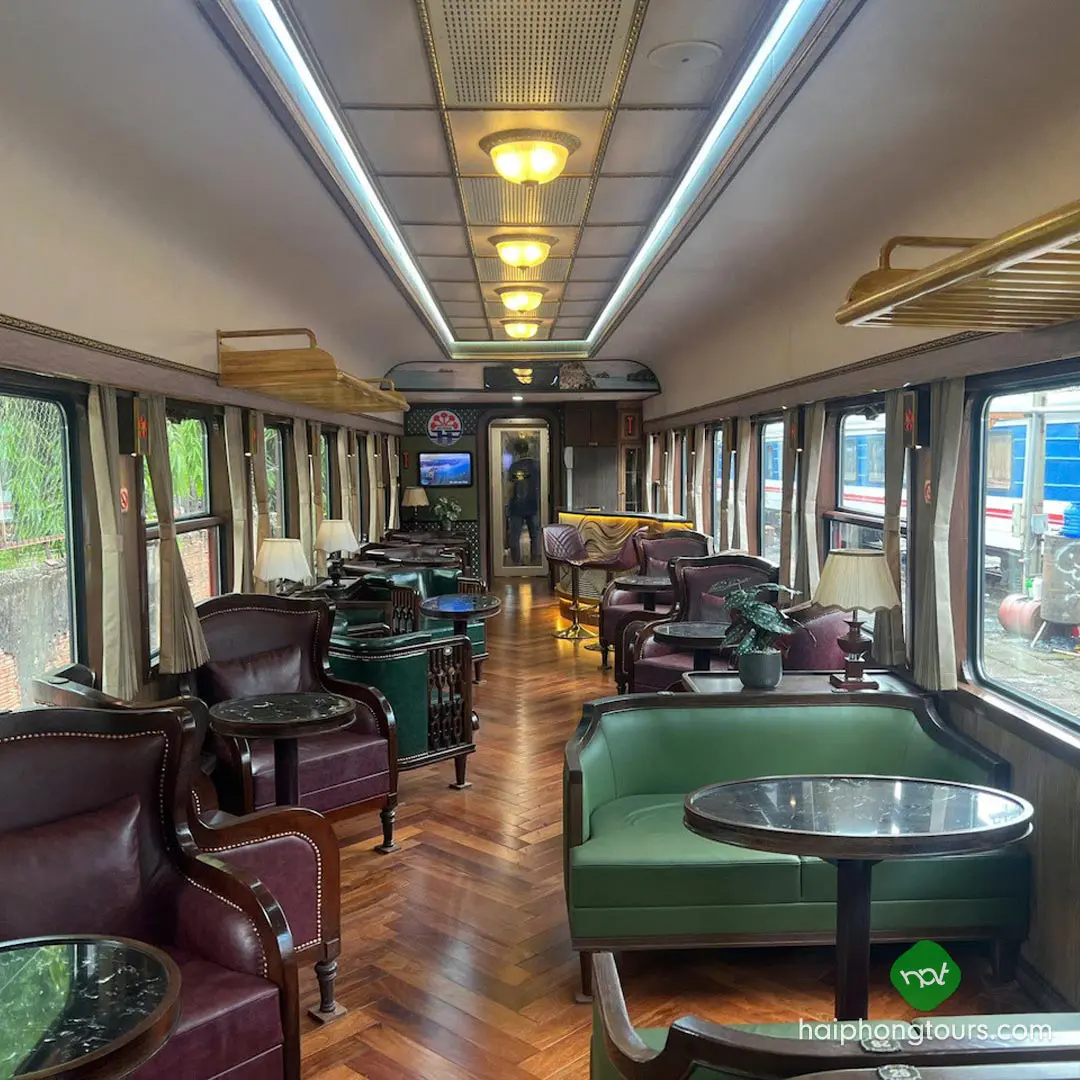
Travel companions may not be assigned together unless the booking confirms it. Verify names and identification details because the official ticket must match the passenger.
Station and luggage planning
- Confirm the exact station name, not only the city.
- Arrive with enough time to find the platform and carriage.
- Keep valuables, medicine and documents in a small bag with you.
- Know whether you can lift your main bag into the carriage and storage space.
- Carry water and a simple snack without depending on onboard availability.
- Arrange the final transfer before a late-night or early-morning arrival.
A practical eight-day rail-led route
- Days 1–2, Hanoi: arrive, rest and verify the first ticket.
- Days 3–4, Ninh Binh: daytime train, two local nights and one main boat or heritage day.
- Days 5–6, Hai Phong: return via Hanoi or use the current practical connection; central city and one coastal or bay plan.
- Days 7–8, Hanoi: return with a full buffer before departure.
Use Lao Cai and Sapa instead of Hai Phong when mountain travel is the priority, and add at least one extra night for the road transfer and recovery.
Continuing from Ninh Binh to Sapa via Hanoi
For the Sapa version, plan a northbound train from Ninh Binh to Hanoi, a Hanoi–Lao Cai sleeper and a road transfer to Sapa. SP3 runs on the Hanoi–Lao Cai route; it is not a train you board in Ninh Binh. Choose this combination for the overnight rail experience, allowing for the extra change in Hanoi.
Hai Phong Tours recommends choosing the onward sleeper first, then working backward to a suitable Ninh Binh departure. Compare the private cabin layouts and operator reception points if you want a tourist carriage. For the short first leg, compare seated places rather than automatically buying a second sleeper.
- Search the two rail legs separately: use Ninh Bình → Hà Nội and Hà Nội → Lào Cai. Check that both chosen services operate on your dates and that suitable places remain before paying for either. Buying through one agent should still produce clear details for each train.
- Build the connection around check-in: allow for leaving the first train, carrying your bags, finding the onward reception, collecting tickets and eating. Add room for a late arrival. If the available connection leaves little flexibility, reach Hanoi the previous day or choose road transport.
- Write out the calendar dates: an overnight departure from Hanoi on Day 5 means the Lao Cai pickup belongs on Day 6. Check the departure date at your boarding station on each ticket, rather than assuming all parts of the journey share one date.
- Settle the final arrival: send the Lao Cai train number and arrival date to your pickup provider, together with the exact Sapa hotel pin. Confirm how to contact the driver if the train is late and whether your accommodation can receive you before room check-in.
For example, Chapa receives passengers on the second floor of Hanoi station at 120 Le Duan and asks them to arrive 45–60 minutes before departure. That is its check-in allowance, not a safe minimum gap between your two trains. Follow your own operator’s meeting instructions and confirm both stations; do not assume that arriving in Hanoi completes the next check-in.

Before buying separate tickets, ask what each seller will do if the first train runs late and you miss the sleeper. Do not treat two confirmations as a promise of automatic rebooking.
For fewer rail connections, compare G8’s Ninh Binh–Sapa road service, with Tam Coc Office and Sapa Office on N2 Street among its listed stops. Confirm your actual pickup, every vehicle change and final drop-off for the selected departure. Compare the complete trip to your hotel, including the Hanoi wait and Lao Cai transfer when pricing the rail option.
Book from the official source
Use the official Vietnam Railways timetable and ticket system or an authorized seller you can verify. Check the change and refund terms before payment, keep the e-ticket accessible offline and confirm any third-party voucher must be exchanged.
A good train-first route uses rail where the station and schedule genuinely support the trip. It accepts a short last-mile transfer and protects connections instead of turning a transport preference into a fragile itinerary.
Travelers who want to combine rail with buses, metro and short local rides can use the North Vietnam public-transport itinerary.
Would a private transfer make this journey easier? Contact us with your travel date, exact pickup and drop-off, number of travelers and bags. Include any flight, train or cruise deadline so we can assess a suitable plan and quotation.