
You can travel through North Vietnam without taking a sleeper bus. Use daytime trains on suitable corridors, daytime vans or buses for major hubs, and private cars for mountain or fixed-time connections. The route may need more hotel nights, but it protects sleep and makes early arrivals easier.
The main rule is to count transport as part of the day. Do not replace a night bus with a daytime vehicle and then keep a full sightseeing schedule. Choose fewer bases, travel after breakfast, and arrive while reception, food and local transport are still available.
Quick daytime route choices
- Hanoi to Ninh Binh: daytime train, shared road transport or private car.
- Hanoi to Hai Phong: daytime train or road transfer.
- Hanoi to Ha Long: daytime shared transport or private car matched to the hotel or cruise port.
- Hanoi to Sapa: daytime bus, van or private car; the train ends in Lao Cai and requires a road connection.
- Hanoi to Ha Giang: daytime bus or private car, followed by a proper night in Ha Giang City.
- Hanoi to Cao Bang: daytime bus or private car, with the first night in Cao Bang City.
- Ninh Binh to Cat Ba: daytime combined road-and-ferry service or private transfer.
- Ninh Binh to Ha Long: daytime shared or private road transfer after confirming the exact destination.
Why travelers avoid sleeper buses
A sleeper can save a hotel night, but the benefit disappears when you do not sleep, arrive before check-in or begin a demanding activity exhausted. Some travelers also find the berth length, upper level, curves, horns or lack of control uncomfortable.
Daytime travel is especially useful for:
- families with young children;
- seniors;
- light sleepers;
- travelers prone to motion sickness;
- people who need regular medication, meals or bathroom access;
- travelers carrying valuable or large luggage;
- anyone riding, trekking or flying the next day.
What changes when you travel by day
A day journey consumes visible itinerary time. This is helpful because the plan becomes honest. A five-hour road trip normally needs checkout, pickup, stops, traffic, final drop-off and check-in as well.
Plan one light activity after arrival, not a fixed tour. Eat, walk near the hotel and prepare for the next day. If the journey arrives earlier than expected, treat the extra time as a benefit.
Use trains where the corridor works
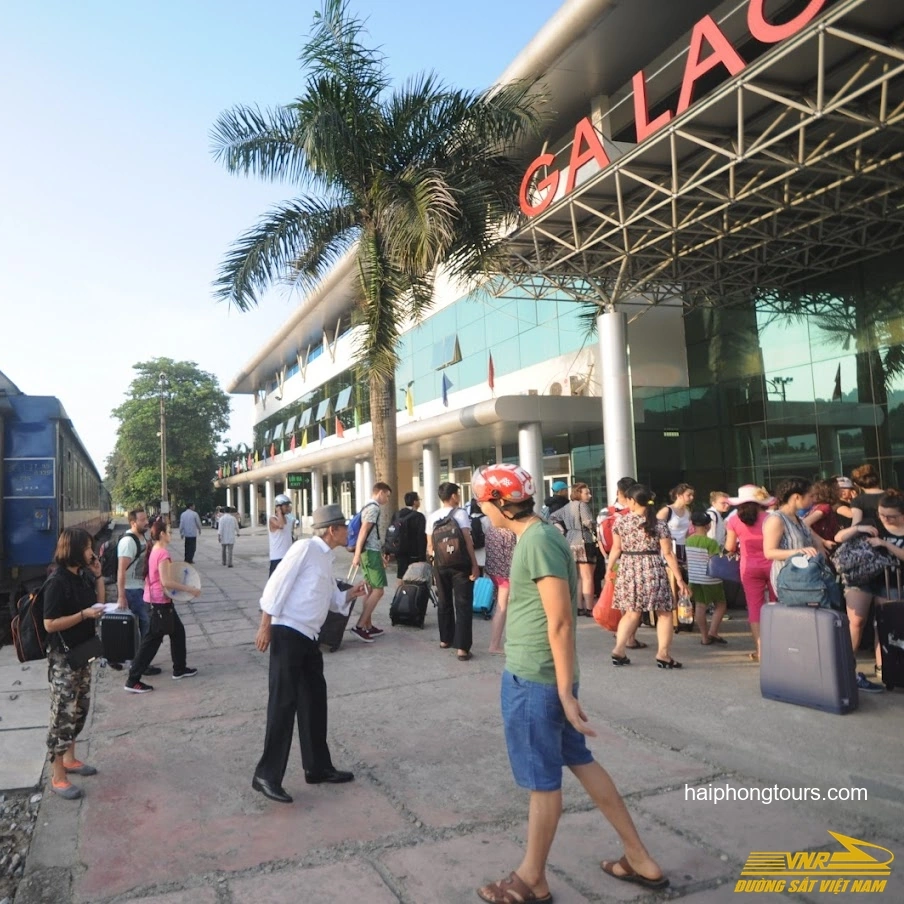
Vietnam Railways serves selected northern routes, including Hanoi–Ninh Binh, Hanoi–Hai Phong and Hanoi–Lao Cai. Schedules change, and not every train runs at a useful daytime hour on every date. Check the official railway booking system before building the next hotel or transfer.
Hanoi to Ninh Binh
A daytime train is useful when the station times suit the route and the final accommodation is accessible by taxi or car. Ninh Binh station is in the city, not in Tam Coc or Trang An countryside.
Hanoi to Hai Phong
The daytime railway can be a comfortable city-to-city choice. Confirm which Hanoi station the train uses and arrange the final hotel transfer in Hai Phong.
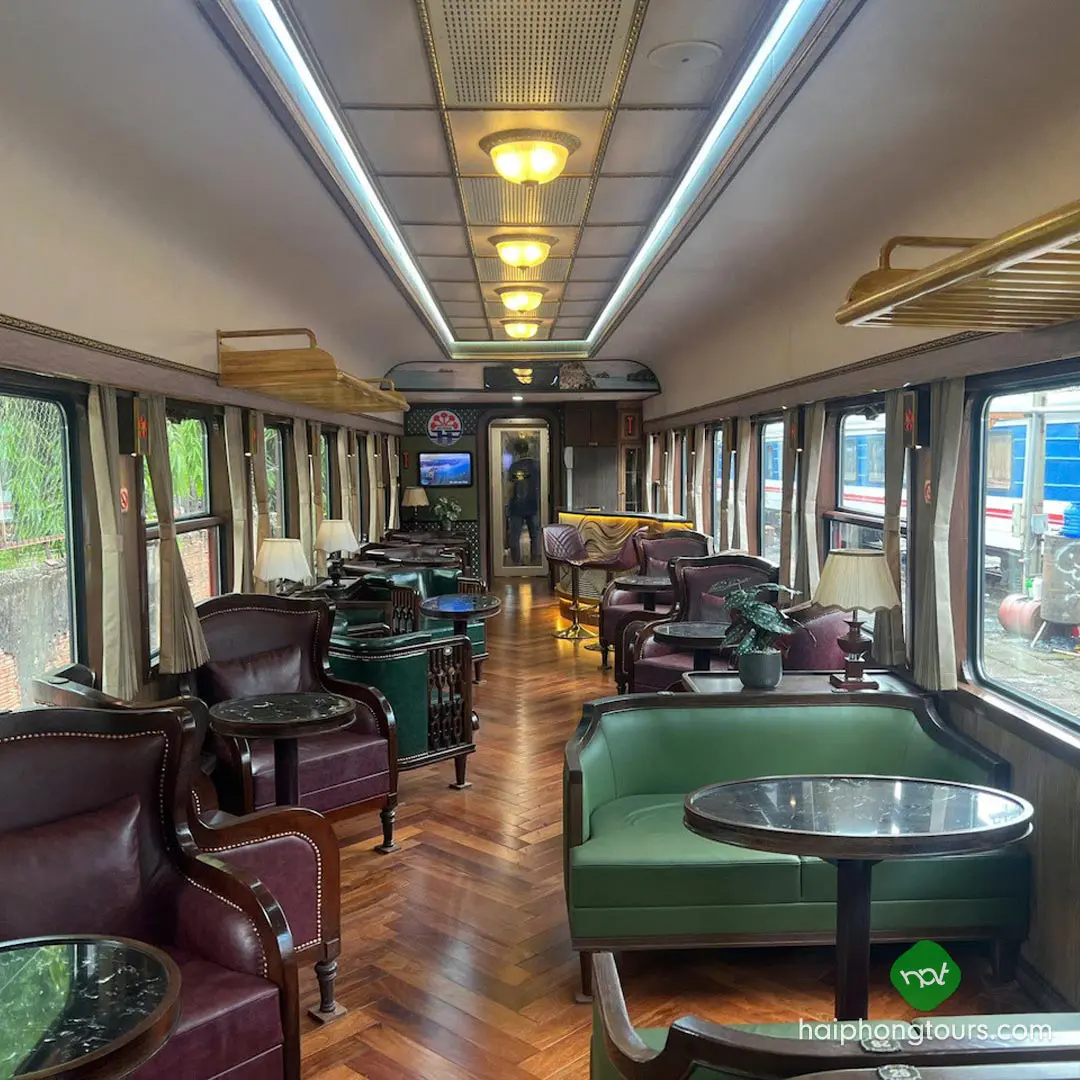 Lounge-style seating in a Hanoi–Hai Phong VIP coach.
Hanoi to Sapa by rail and road
The train reaches Lao Cai, not Sapa. Many passenger services on this corridor are designed around overnight travel. If the available timing does not fit a daytime plan, use a daytime road vehicle instead of forcing a poor rail connection.
The North Vietnam train guide explains stations, seat types, booking and final connections.
Returning from Sapa by daytime train
For the return to Hanoi, check SP8 from Lao Cai as a daytime rail option. Search the exact date and confirm the departure, arrival and available class before arranging your Sapa pickup. A discount search with no promotional seats does not establish that ordinary tickets are sold out; check standard ticket availability separately.
The train starts in Lao Cai, so arrange the mountain-road transfer from your Sapa accommodation and reach the station by your issuer’s check-in deadline. Allow time for bags and a meal. A shared transfer or private car to the station is a separate booking unless your package explicitly includes it.
Hai Phong Tours recommends treating this as a travel day and planning a Hanoi hotel night afterward. Compare the complete arrival time with a direct daytime road journey before choosing the rail experience. Keep any flight or fixed onward activity separate from the train’s scheduled arrival.
Use shared daytime road transport for simple hub routes
Shared buses and limousine vans can work well between major visitor bases. Before paying, confirm:
- daytime departure rather than a service that arrives after midnight;
- operator and vehicle;
- pickup point;
- final drop-off point;
- whether another vehicle completes the trip;
- luggage allowance;
- rest stops;
- arrival window;
- contact on travel day.
A hotel pickup claim may mean a neighborhood collection or a feeder vehicle. A destination name may refer to a bus office outside the area where you sleep.
Use a private car when timing or access matters
A private car is useful for families, groups, larger luggage, rural accommodation and cruise connections. It lets you choose a daytime pickup and normally provides direct drop-off, but it does not automatically include sightseeing or unlimited waiting.
The live North Vietnam transfer directory lists direction-specific routes. Use the exact origin and destination. Confirm vehicle capacity against both passengers and luggage.
Hanoi to Ninh Binh without a night vehicle
This is one of the easiest daytime legs. Choose the train when the schedule and city station suit you, a shared van when the pickup and Tam Coc drop-off are clear, or a private car for a chosen hotel and departure time.
The current Hanoi to Ninh Binh private transfer lists direct pickup in Hanoi and drop-off in Ninh Binh. Provide the actual hotel or Tam Coc address because “Ninh Binh” covers several accommodation areas.
Hanoi to Sapa without an overnight train or bus
Use a daytime bus, van or private car and keep the arrival afternoon light. Sapa’s steep streets can add effort after the road journey. Confirm whether the vehicle drops at the hotel, a central office or another meeting point.
If you return by private car, the current Sapa to Hanoi transfer gives a direction-specific daytime option. Do not schedule an international flight immediately after the estimated road arrival.
Hanoi to Ha Giang without a sleeper bus
Book a daytime bus or private car and sleep in Ha Giang City before the loop. Do not start self-driving or a full mountain stage after a long transfer.
A car-based loop avoids motorcycle travel entirely. If riding, verify licence, insurance, helmet, driver, weather and daily road time. The saved hotel night is not worth beginning a high-risk road activity fatigued.
Hanoi to Cao Bang and Ba Be
Travel to Cao Bang City during the day, then begin Ban Gioc or geopark sightseeing the next morning. For Ba Be, confirm the exact village or lakeside drop-off; “Ba Be” can still leave a significant last-mile journey.
A combined Ba Be–Cao Bang route is easier with arranged transport. Treat the cross-region day as travel rather than trying to add a full lake or waterfall visit.
Ninh Binh to Cat Ba by day
This connection includes road and island access. The current Ninh Binh to Cat Ba transfer lists a one-way combined journey with the ferry included. Confirm the ferry arrangement, vehicle changes, luggage handling and Cat Ba hotel drop-off.
Do not book a fixed bay activity on the arrival afternoon. Ferry queues, weather or road traffic can change the arrival.
Ninh Binh to Ha Long or a cruise port
A daytime direct road transfer can remove a return through Hanoi. It only works safely when the cruise voucher identifies the port and check-in time.
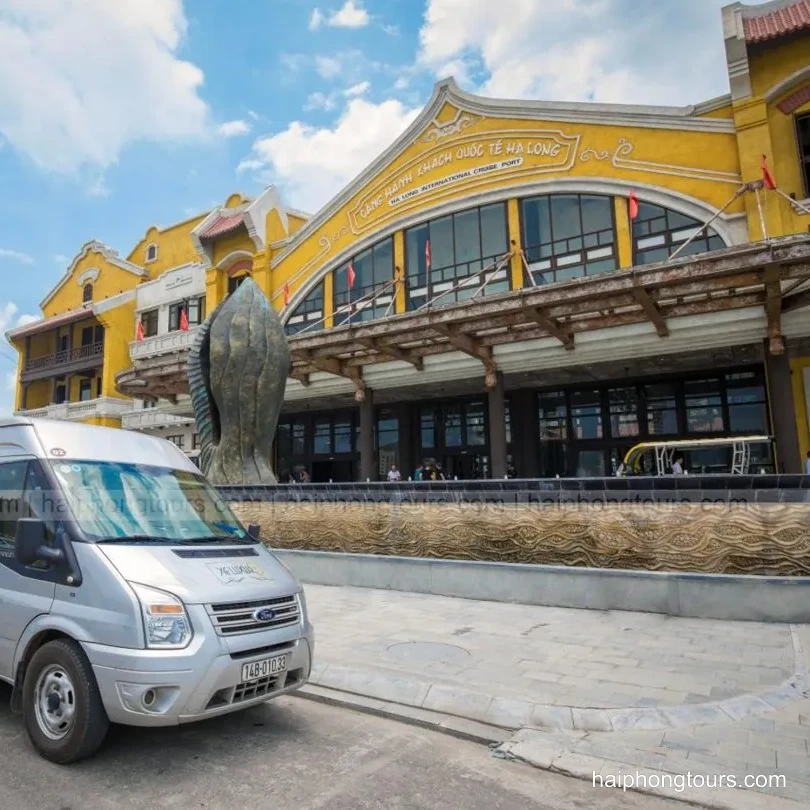
Leave Ninh Binh early enough for the route, traffic and terminal check-in. Do not use a general “Ha Long” drop-off for a vessel departing from Tuan Chau, Ha Long International Cruise Port, Hon Gai or Cat Ba.
Mountain to coast without overnight travel
Sapa to Ha Long or Cat Ba is a long road day. A direct private transfer can save backtracking, but it remains tiring. Shared services may involve vehicle changes or wide arrival windows.
Use one of two strategies:
- Travel from the mountain to Hanoi, sleep, then continue to the coast.
- Use a confirmed daytime private transfer and sleep near the coast before the cruise.
Do not depend on a long mountain-to-port road journey on the same morning as embarkation.
For the full arrival plan, compare the Sapa to Cat Ba route and island handoffs with the Sapa to Hai Phong mainland journey. Staying in Hai Phong and continuing straight to an island hotel are different travel days.
A ten-day route without sleeper buses
- Days 1–2: Hanoi.
- Day 3: daytime Hanoi to Sapa transfer.
- Days 4–5: Sapa.
- Day 6: daytime return to Hanoi and hotel night.
- Day 7: daytime Hanoi to Ninh Binh.
- Day 8: Ninh Binh.
- Day 9: return to Hanoi or travel to the correct cruise area and sleep.
- Day 10: departure buffer or bay day.
For an overnight cruise, add at least one more night. Do not compress Sapa, Ninh Binh and a cruise into the same ten days by turning every evening into transport.
A fourteen-day route without sleeper buses
- Days 1–2: Hanoi.
- Day 3: daytime transfer to Ha Giang.
- Days 4–7: four-day Ha Giang route.
- Day 8: daytime return to Hanoi.
- Day 9: recovery night and flexible Hanoi day.
- Day 10: daytime Hanoi to Ninh Binh.
- Day 11: Ninh Binh.
- Day 12: daytime transfer to the confirmed cruise port and embark only if the timing is protected; otherwise sleep near the port.
- Day 13: cruise or coast.
- Day 14: Hanoi buffer or departure.
Add a fifteenth day when the international flight timing is unforgiving.
Hotel planning for daytime travel
- Ask the hotel to store luggage before check-in.
- Send the expected arrival window.
- Confirm reception hours in remote areas.
- Book the previous night if immediate morning room access is essential.
- Choose accommodation reachable by the booked vehicle.
- Keep the address in Vietnamese and a map pin offline.
The North Vietnam accommodation guide helps match each base to transport and pickup access.
Motion sickness and comfort
Day travel does not remove curves. Sit where the vehicle feels most stable, avoid reading on mountain roads, eat appropriately and discuss medication with a qualified clinician before travel if needed.
Ask about rest stops and vehicle type. A smaller vehicle can feel more motion but may provide door-to-door access; a larger bus may be stable but use a fixed terminal.
Cost trade-offs
A sleeper can save one hotel night. Daytime travel may add accommodation but reduce early check-in fees, recovery time and the risk of losing a booked activity through exhaustion.
Compare the full chain: ticket, station taxi, luggage, hotel access, food during the wait and the value of the following day. For two or more travelers, a private car can narrow the difference on selected routes.
Booking checklist
- State that you want a daytime departure and acceptable arrival window.
- Confirm the exact pickup and drop-off.
- Ask whether vehicles change.
- Confirm luggage and seat arrangements.
- Protect fixed cruise, train and flight check-ins.
- Keep arrival day light.
- Sleep before riding, trekking or flying.
- Save the operator contact and booking offline.
Protect sleep by simplifying the route
A sleeper-free North Vietnam trip is realistic when you accept that road journeys use daytime. Choose one mountain region, use Hanoi as a recovery hub when necessary, and connect Ninh Binh with the coast only after verifying the next destination. The result has fewer nominal sightseeing hours but more usable days.
Would you like help fitting this experience into your trip? Contact us with your travel dates, starting point, available time and group size. Tell us about walking limits or special interests so we can suggest a practical itinerary.