
Choose a private vehicle in northern Vietnam by passengers, luggage, mobility equipment and journey length, not by the advertised seat number alone. A “7-seat car” normally counts the driver in the vehicle category, and using the rear seats can remove much of the luggage area. Seven travelers with suitcases do not fit safely in a normal 7-seat vehicle.
Send a complete load list before accepting a quote. The provider should confirm a specific vehicle class that keeps every passenger in a normal seat with a seat belt and every bag secured away from the passenger area.
Send a load list, not “five people with luggage”
Give the number of adults, teenagers, children and infants. Then list large checked cases, medium cases, cabin bags, backpacks, strollers, wheelchairs, golf bags, bicycles and other equipment. Include the longest or heaviest item where fit is uncertain.
A useful request looks like this: “Four adults, one child in a requested child seat, three 28-inch cases, two cabin bags and one folding stroller.” The provider can compare that load with a real vehicle rather than guessing from the passenger count.
Photographs of the assembled luggage help when cases vary. Ask for a vehicle or luggage-area photo in return if the fit is close.
How vehicle labels work in practice
4-seat sedan
The category usually includes the driver, leaving up to three passenger positions before luggage is considered. It can suit one or two travelers with normal cases, or three with light luggage. Three adults and several large checked bags may need a larger vehicle.

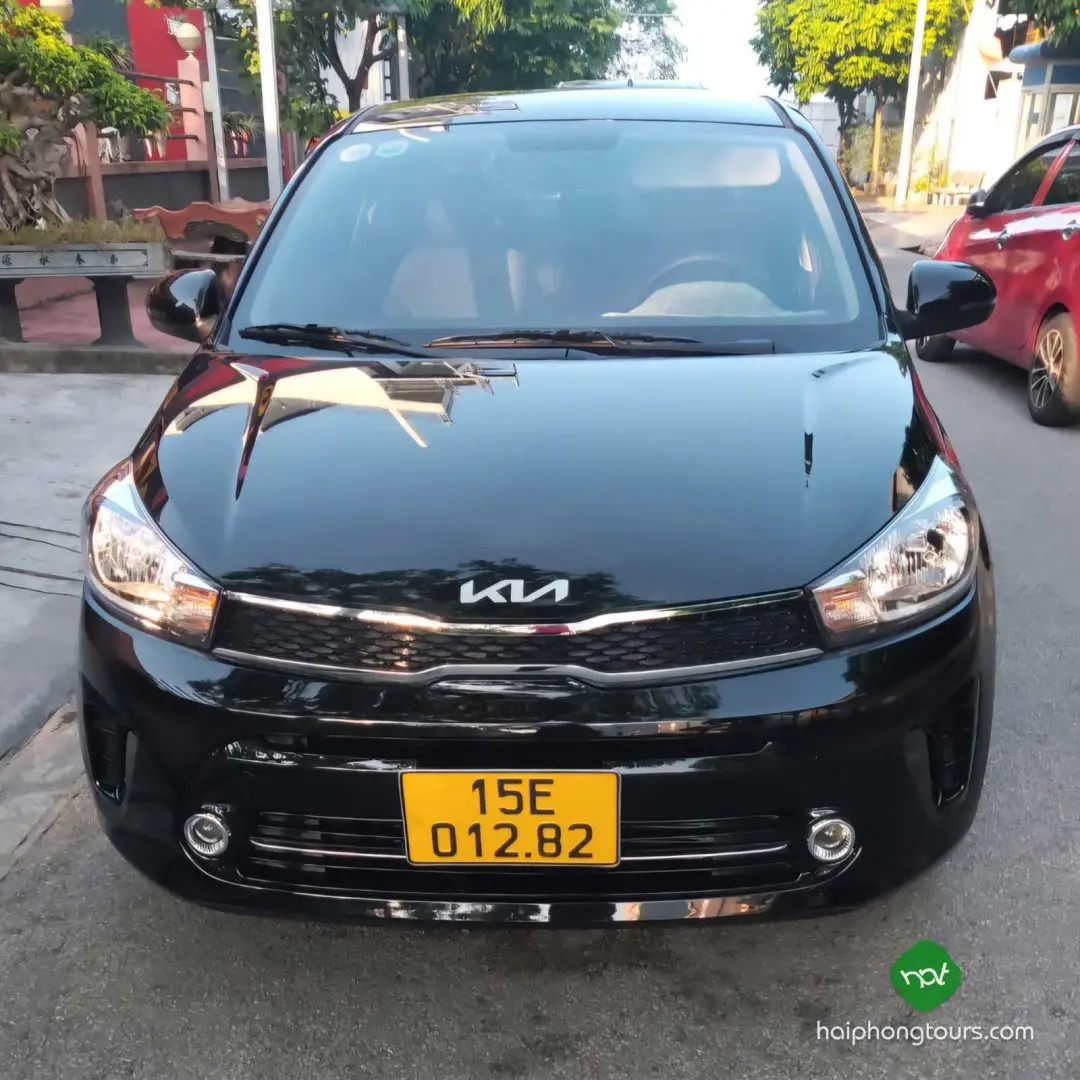
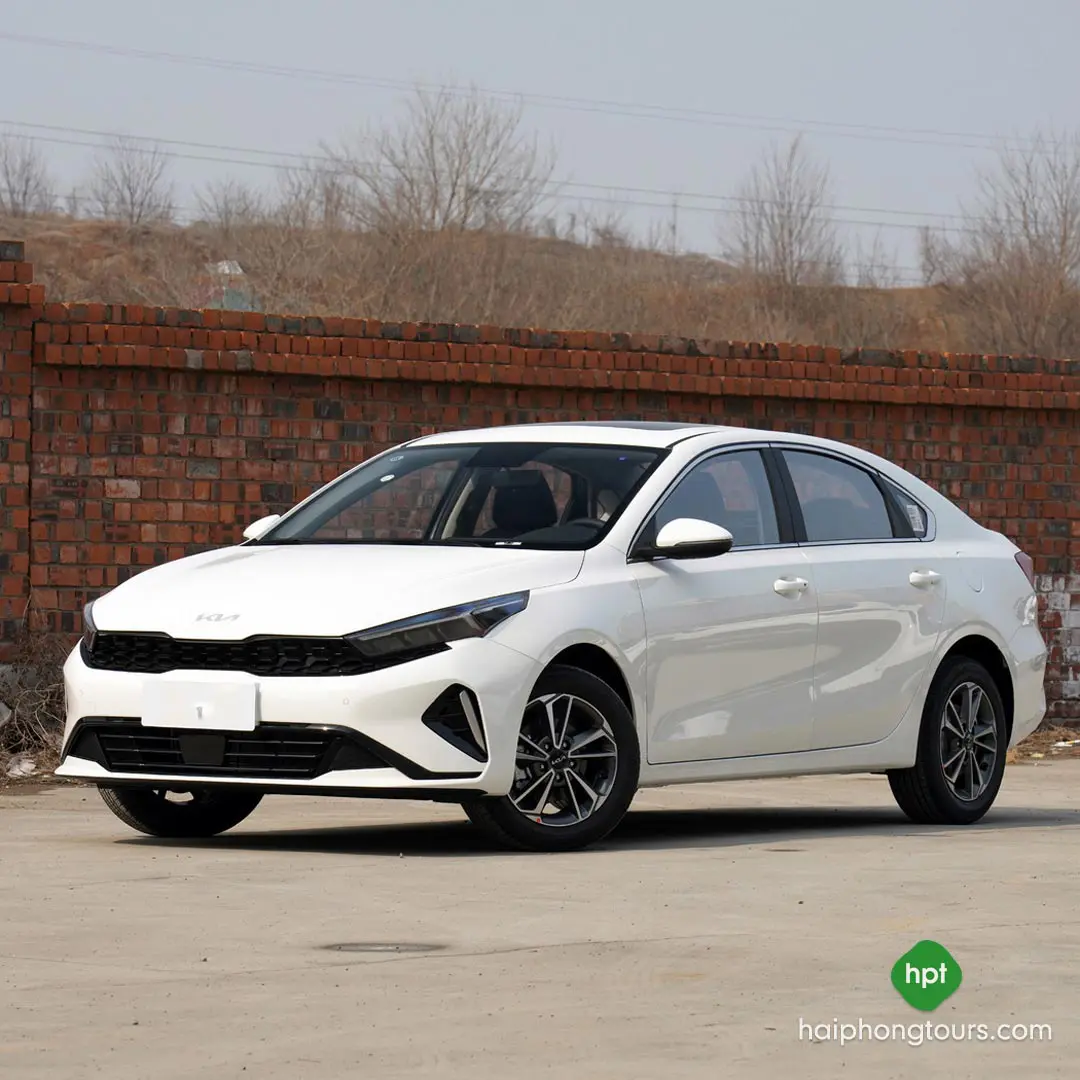
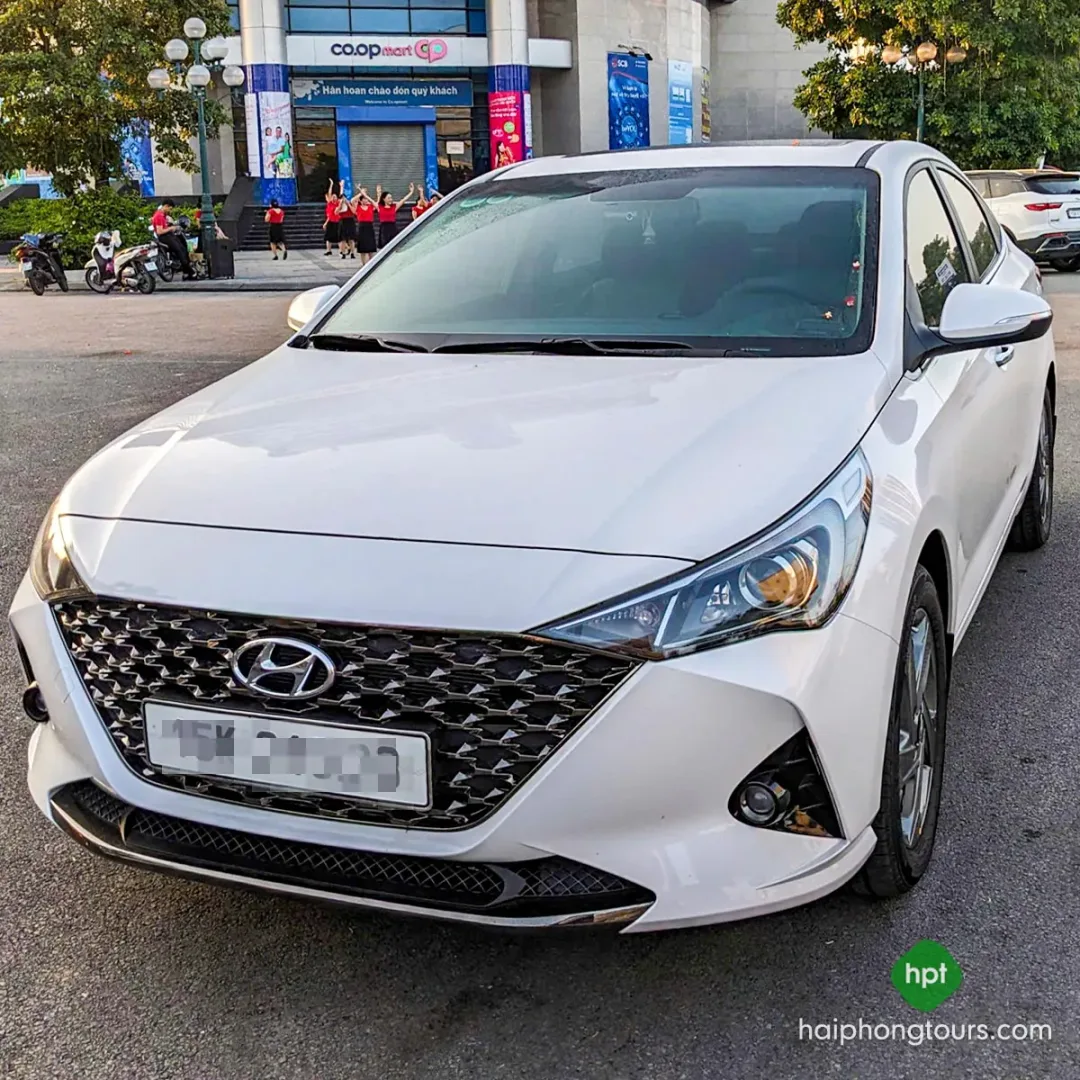

Examples of sedan interiors and models; the assigned car and luggage capacity require confirmation.
7-seat MPV or SUV
This category can carry more people, but raising the third row often reduces the trunk sharply. It is commonly practical for a small group with luggage when some rear seats remain folded. The exact model matters: an SUV may be high to enter, while an MPV can have a different door and cargo layout.

Do not reserve it for seven passengers. Because the driver occupies one seat, the theoretical passenger maximum is already lower, and a full cabin leaves little space for cases.
9-seat limousine
A converted limousine can provide comfortable individual seats, but the conversion may reduce luggage space. Some vehicles use a separate rear area; others do not. Confirm passenger positions and bags from the actual layout rather than assuming “9-seat” means eight passengers plus all luggage.
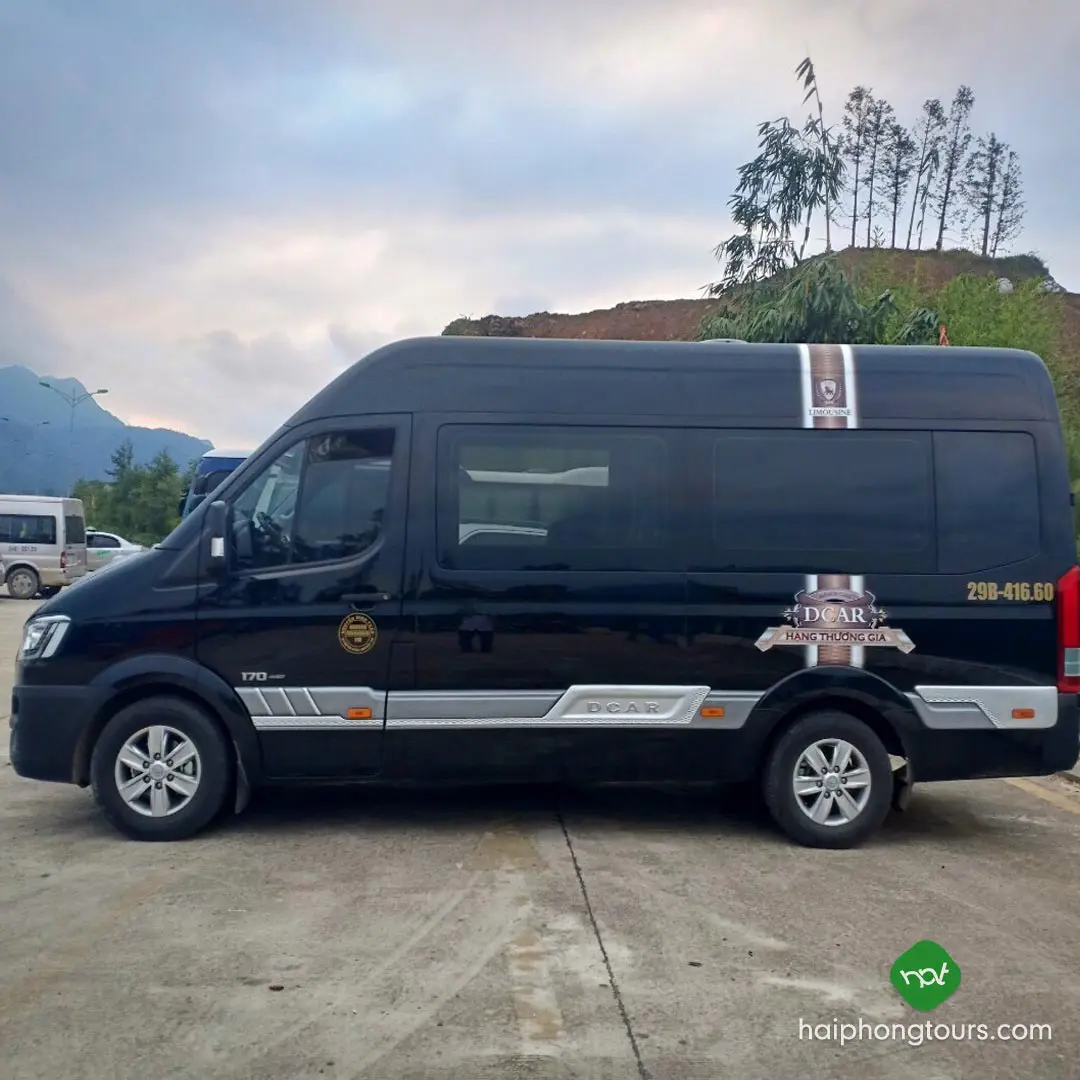
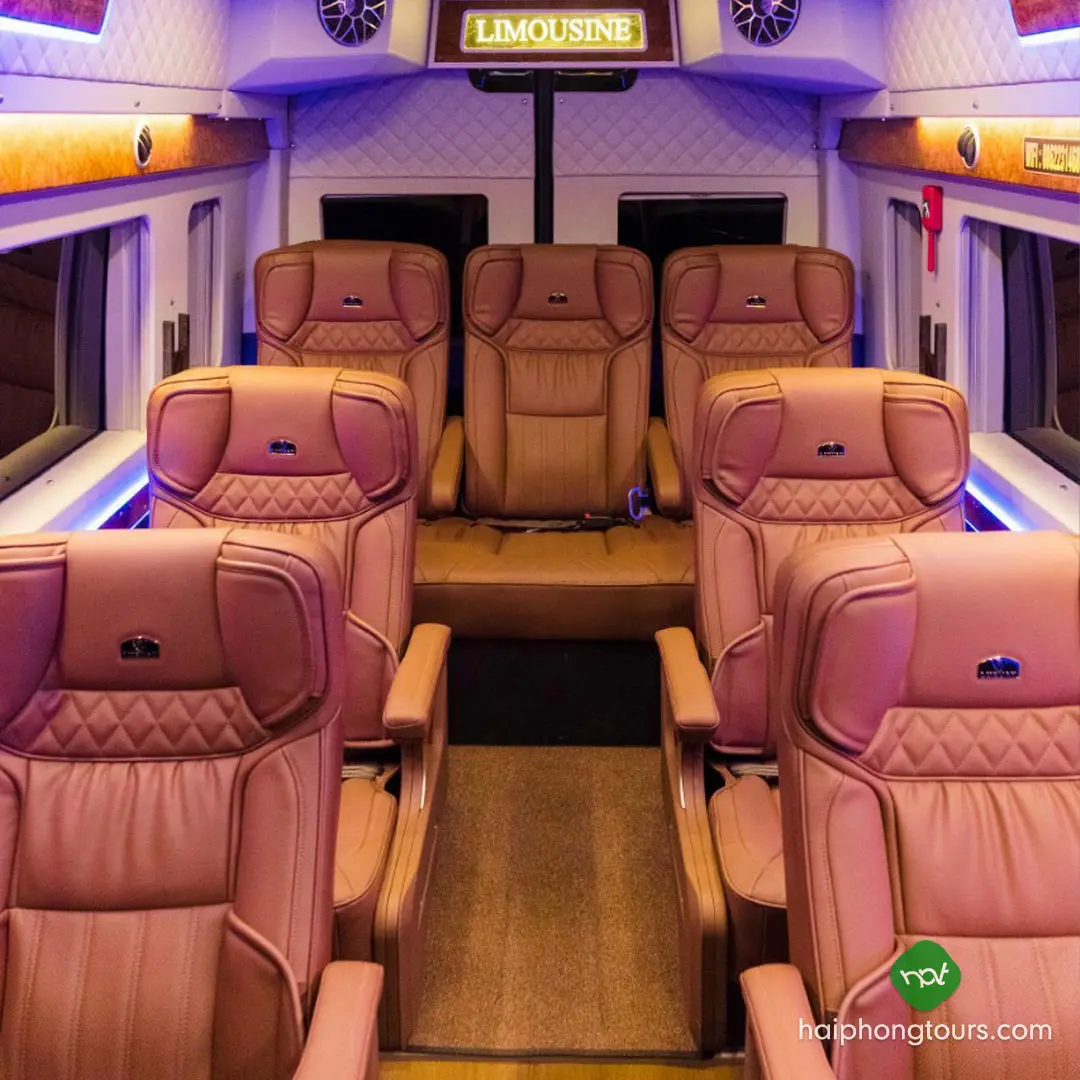
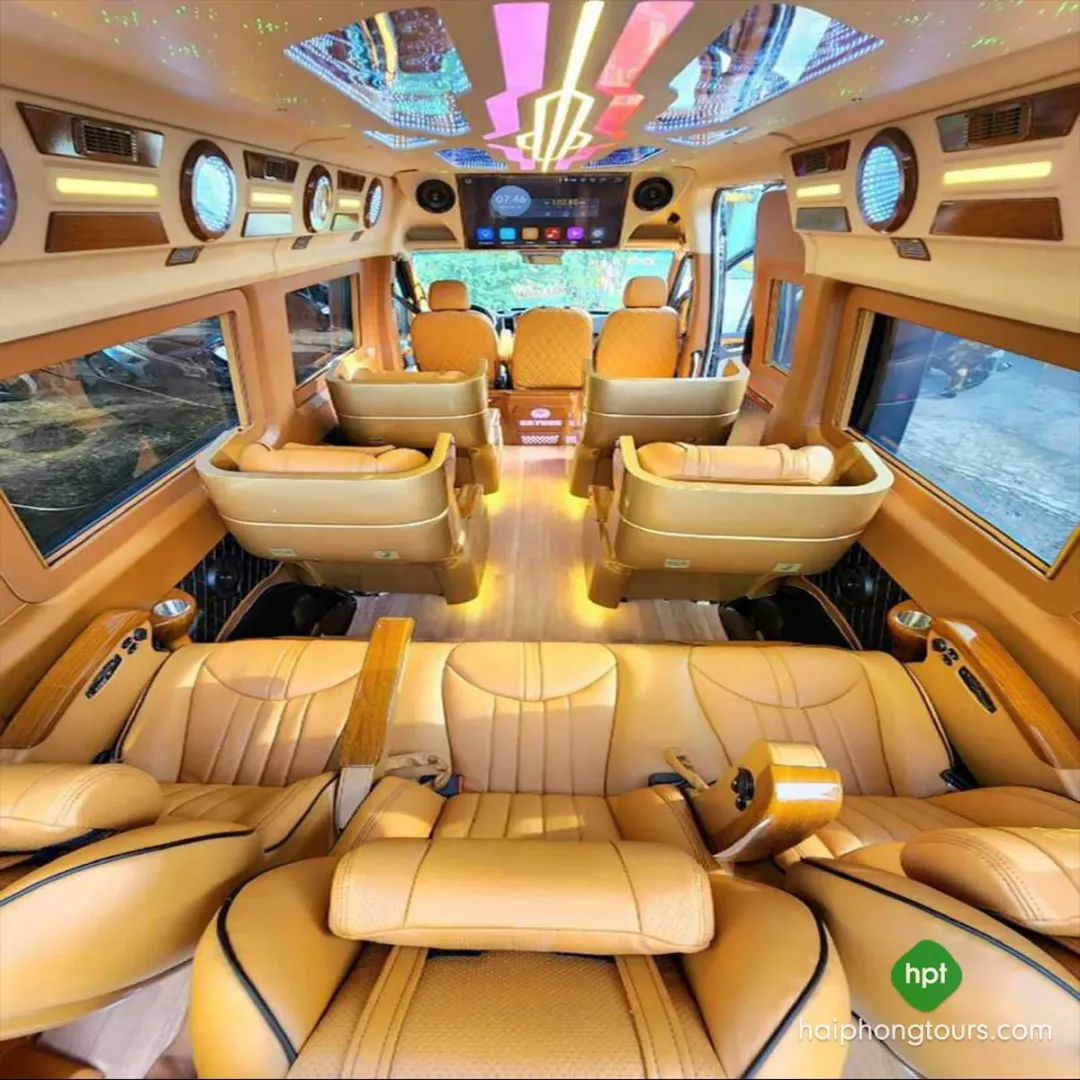
Limousine exterior and seating examples, not a guarantee of the assigned vehicle’s layout.
16-seat minibus
This is useful for a larger group or a smaller group with substantial luggage. It still needs a capacity check because a passenger van may not have the underfloor luggage bay of a coach. Narrow Old Quarter lanes, village roads, hotel gates and island restrictions can also limit access.
Journey length changes the right answer
A vehicle that is acceptable for a short city ride can be uncomfortable on a six-hour road journey. Leave space for legs, a warm layer and access to water. Do not use every nominal seat and then place hard cases around passengers.
For Sapa, Ha Giang, Cao Bang, Pu Luong and other mountain routes, consider motion sickness, road curves and safe rest stops. A larger vehicle can improve comfort but may be less suitable for the final narrow road. The plan may require a minibus to a town and a smaller local vehicle for the last mile.
For an airport or cruise connection, luggage fit and punctual loading matter more than having the smallest possible car. One bag that cannot be secured can delay departure or require a second vehicle at the curb.
Child seats use real space
A child restraint occupies a passenger position and may affect the neighboring seat. Send the child’s age and approximate size and request the seat before payment. Do not assume every private vehicle carries an appropriate seat.
Confirm who supplies and installs it. If the group brings a seat, state its type and whether it uses a vehicle belt or another attachment. Keep enough space to install it correctly rather than forcing it beside luggage.
Strollers must be included in the luggage list. A folding travel stroller and a full-size stroller are different cargo problems.
Wheelchairs and mobility equipment
State whether the traveler transfers into a normal seat and whether the chair folds. Send dimensions and weight. A standard car is not an adapted vehicle merely because a folded chair fits in the trunk.
A power chair or a traveler who remains in the chair needs specific ramp or lift access and proper restraints. Require explicit vehicle evidence. Do not plan for the driver to lift the traveler or heavy equipment unless specialized assistance is confirmed.
Do not create luggage solutions inside the cabin
Cases should not block doors, aisles or visibility, and passengers should not hold heavy luggage on their laps during an intercity trip. Avoid unverified roof loading; weather, security and height restrictions can make it unsuitable.
If the bags do not fit, choose a larger vehicle, reduce luggage or use a second luggage vehicle. Ask how bags are secured and whether every piece remains with the group during stops or vehicle changes.
When two vehicles are better than one
Two cars can be practical when the group starts at different hotels, has conflicting flight times or ends at separate addresses. They can also solve a large luggage load when no suitable minibus is available.
The disadvantages are higher cost, two drivers to coordinate and the possibility that the group becomes separated. Put one trip leader and working phone in each car. Share the same route and destination pin, then decide whether the cars must stay together or may arrive independently.
One larger vehicle is usually simpler when the group wants to travel and stop together. Check road access and parking at both ends before choosing it.
Match the vehicle to the entrance
Send hotel, airport, port or homestay entrance pins. A 16-seat van may not reach a narrow Hanoi lane, steep village track or restricted pier. Agree on a legal main-road pickup and luggage handover when door access is impossible.
At Ha Long or Tuan Chau, provide the exact port, marina, cruise lounge and check-in time. At Noi Bai, provide T1 or T2 and the meeting point. Vehicle size does not solve an incorrect endpoint.
Compare the complete quote
Confirm vehicle class, actual passenger and bag fit, route, both pins, fuel, tolls, parking, normal waiting and requested stops. Ask what creates extra charges, such as a changed endpoint, holiday, overnight driver stay or long waiting.
Hai Phong Tours recommends using the current transfer directory to select the exact route and direction before requesting the vehicle. The listed route establishes the transport problem; the passenger and load details determine which vehicle can perform it safely.
Common group examples
Two adults with two medium cases
A sedan may work, subject to the exact case size and model. A larger car can be worthwhile for a long journey or additional carry-ons.
Four adults with four large cases
A normal 7-seat vehicle can still be tight. Send dimensions and request confirmation from the actual model. A minivan or larger vehicle may be more practical.
Six travelers with luggage
Do not book a normal 7-seat car. Compare a properly sized van with two cars, considering road access, group coordination and every suitcase.
Family with stroller and child seat
Count the child seat as occupied passenger space and the stroller as luggage. Leave room for diaper or medicine bags that must remain accessible.
Copy this vehicle request
“We have [adults], [children with ages] and [infants]. Luggage: [large cases], [medium/cabin bags], plus [stroller/wheelchair/equipment with dimensions]. The route is [pickup pin] to [drop-off pin] on [date/time], with [stops or fixed connection]. Please confirm the exact vehicle category or model, passenger seating, where every bag fits, child-seat availability, road access at both entrances and the complete included price.”
Do not accept “it should fit” when the load is close. A clear vehicle-and-luggage plan prevents the group from discovering the real capacity at the airport, hotel or cruise-port curb.
Would a private transfer make this journey easier? Contact us with your travel date, exact pickup and drop-off, number of travelers and bags. Include any flight, train or cruise deadline so we can assess a suitable plan and quotation.