
If you leave an item in a private car in northern Vietnam, contact the booking operator immediately and protect any sensitive accounts at the same time. The vehicle search and security steps should run in parallel. Do not wait for the driver to return before locking a phone, freezing a card or beginning the lost-passport process.

Give a short factual timeline: booking name, route, pickup and drop-off times, vehicle plate or driver, item description and the last place it was used. A precise report lets the operator check the correct car before it begins another journey.

What to do in the first ten minutes
- Call or message the booking operator, then keep the same conversation thread.
- Send the trip date, route, pickup and drop-off times, passenger name and working phone.
- Send the plate or driver name if available and describe the seat or luggage area.
- Describe the item by color, brand, size, case and a distinctive mark; attach a photograph when possible.
- Ask the operator to contact the driver before the next passenger boards.
- Check the hotel lobby, reception, terminal, restaurant and rest stop at the same time.
Do not send only “I lost a black bag.” A useful message is: “Blue passport wallet with two zippers, last used in the rear-left seat at 14:20, dropped at Hotel X at 14:45 in vehicle plate [number].”
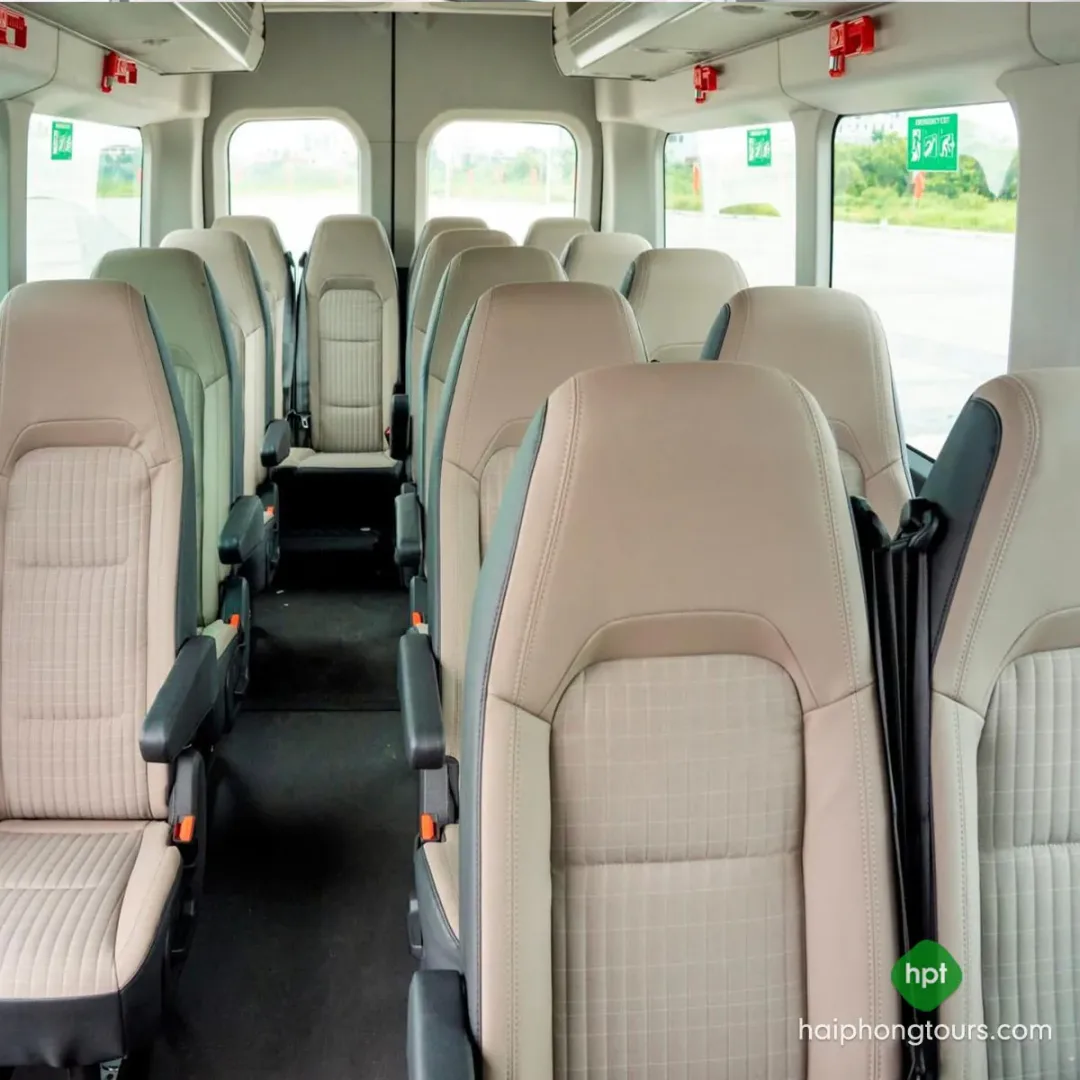
Hai Phong Tours recommends asking the driver to check under and between seats, door pockets, seat-back pockets, cup holders, charging areas and the luggage compartment. An item can slide away from the seat where it was last used.
Protect the item while the car is being searched
Phone or tablet
For an iPhone or iPad, use Apple’s Find My service and mark the device as lost. Lost Mode locks the device and suspends supported payment cards. For Android, use Google Find Hub to locate, play a sound or mark the device as lost. Add a safe contact number to the lock-screen message.
Take screenshots of the location and time. A location dot can be approximate, especially indoors or near dense buildings, so do not accuse the driver based on one map position. Ask the operator to coordinate a safe check. If theft is suspected, use official police assistance rather than confronting someone.
Remote erasing is a last resort because it can remove the data needed to locate the device. Follow the device maker’s current instructions and protect the related email, cloud and mobile accounts. Contact the mobile carrier if the SIM must be blocked.
Bank card or wallet
Freeze or block payment cards through the issuer’s official app or number. Review recent transactions and keep enough information to identify the account without sending a full card number in chat. Cash is unlikely to be traceable, so record the approximate amount without making an unsupported accusation.
If the wallet also contains identification, list each document separately. Recovery of one card does not prove that every item in the wallet is present; verify contents at handover.
Passport
A passport requires urgent action even when the driver is checking the car. Contact your embassy or consular authority and follow its lost-passport guidance. A replacement passport or emergency travel document may also require Vietnamese immigration steps before departure from Vietnam, so a same-day flight can become impossible.
Ask the appropriate authority whether a police report is required and how to protect an upcoming visa or flight. Do not report a passport lost and then try to travel with it if it is later found without first checking the authority’s instructions; a reported document may no longer be valid.
Medication or medical equipment
Tell the operator that the item is medically urgent and state how long the remaining supply will last. Contact a clinic, hospital, pharmacy or insurer for replacement advice rather than waiting only for the car. Keep the prescription, generic medicine name or equipment specification if available.
Build a reliable trip timeline
Write down the last confirmed use of the item, every place you stopped and when bags changed hands. Review photos, payment receipts, map history and messages. A photograph taken at a rest stop can show whether the bag or phone was still present.
Check with the hotel or attraction where you were collected, the drop-off reception, any restaurant and every rest area. Ask for a lost-property check using the local date and approximate time. The item may have fallen before you entered the car or after you stepped out.
Keep the vehicle search factual. “Please check the rear door pocket before the next trip” is more effective than an accusation. The driver may already be carrying another passenger and may need to stop safely before searching.
Confirm that the found item is yours
Ask for a photograph that shows a distinctive feature without exposing sensitive contents. For a locked phone, confirm the case, wallpaper or serial detail; do not send the passcode. For luggage, describe a tag, strap or item inside that the finder can verify without opening private documents unnecessarily.
Do not publish passport scans, card numbers or home addresses in a public group. Send only the minimum evidence through the verified booking contact. If a new person claims to have the item, confirm that person with the original operator before sharing details or payment.
Choose a return method
Collect from the operator’s office
This is usually the simplest option when the vehicle will return to the same city. Confirm the office address, opening time, contact name and what identification the collector must show. Do not go to a bus station merely because it is near the route if the operator has not confirmed the item is there.
Driver handover on a later route
The item may be carried back by the same or another company vehicle. Record the new plate, driver contact, meeting pin and time. Use a staffed hotel reception when possible so neither party waits at an unsafe roadside location.
Tracked parcel or courier
Use a named, trackable service for ordinary belongings. Confirm the recipient’s full name, local phone and address in Vietnamese, then ask for the tracking reference. Compare the delivery cost with the item’s value before dispatch.
A passport, bank card, expensive electronic device or essential medicine needs more careful handling than clothing. Follow consular, bank or insurer advice and avoid sending a sensitive item through an unnamed informal courier.
Direct delivery
A driver detour may be possible, but it is a separate journey rather than an automatic part of the completed transfer. Agree on the fee, delivery pin, recipient and expected window before the vehicle moves. Never send money to an unrelated account based only on a message claiming the item was found.
Avoid recovery scams
- Keep communication through the original operator or verified driver contact.
- Ask for proof of the item before paying a return cost.
- Do not share phone passcodes, banking passwords or one-time codes.
- Do not pay an invented “police release fee” without official documentation.
- Meet in a staffed public place or use a hotel reception for handover.
- Check the complete contents before confirming recovery.
If location tracking shows unexpected movement, preserve screenshots and times. Do not chase the device or arrange a private confrontation. Give the evidence to the operator and police when official assistance is appropriate.
If the item is not found
Ask the operator for a final written response after the vehicle, office and luggage area have been checked. Save the booking, receipt, messages and any police report for travel insurance. An insurer may require proof of ownership and timely reporting.
Replace the item according to urgency. Protect financial accounts, arrange a working phone or SIM, start the travel-document process and obtain essential medication. Change onward plans if a passport issue prevents a border crossing or flight.
A missing item is not proof that the driver has it. Continue checking the hotel, station, attraction and rest stop until the timeline rules them out. Keep the report factual throughout.
Prevent the same problem on the next transfer
- Keep passport, wallet, phone and medicine in one small valuables bag.
- Use a bright charging cable or tag that is easy to see.
- Do not place a phone in a door or seat-back pocket.
- Photograph the plate and keep the booking contact until the trip is closed.
- Before leaving, check the seat, floor, door pocket, charging cable and luggage area.
- Count bags with another passenger while the driver is still present.
For a future journey, choose the exact route and direction in the Hai Phong Tours transfer directory, then keep the written confirmation until every bag and sensitive item has been accounted for at the destination.
Would a private transfer make this journey easier? Contact us with your travel date, exact pickup and drop-off, number of travelers and bags. Include any flight, train or cruise deadline so we can assess a suitable plan and quotation.