
A useful multi-stop car itinerary groups places on the same corridor and leaves enough time to visit them. Adding attractions to a map does not make them practical “quick stops,” especially when parking, tickets, walking and meals are involved.
Start with overnight locations, fixed departures and the exact final drop. Then add only the stops that fit the road and daylight available.
Separate transport stops from visits
A toilet break may take 15 minutes. A viewpoint can require finding safe parking. A temple, cave, market or village may need one to three hours. Write an intended duration beside every stop so the driver and traveler mean the same thing.
“Stop in Ninh Binh” is too vague. Trang An, Tam Coc, Bai Dinh and a hotel in Ninh Binh use different roads and visit times.
Order the route around geography
Avoid crossing the same city repeatedly. Place morning markets, timed boats and attractions with closing hours first, then arrange flexible viewpoints and meals around them. In the mountains, keep demanding roads and unfamiliar property arrivals in daylight.
Do not add Ban Gioc, Phia Oac and Ba Be to one transfer merely because all are in the northeast. They form a circuit requiring separate days, not roadside stops on one direct journey.
The same rule applies around the western mountains: Mai Chau, Pu Luong, Moc Chau and Ninh Binh can form a useful circuit, but the best order depends on where the trip begins and ends. Avoid returning to Hanoi between every stop.
Protect fixed connections
Flights, ferries, cruise check-ins and trains should not sit after optional sightseeing. Either visit first on a previous day or place a large buffer before the connection. If missing it would materially damage the trip, treat the transfer as direct.
Hai Phong Tours recommends one decision point in the plan: if the vehicle reaches a named place after a set time, skip the next optional stop. This is easier than negotiating under pressure on the road.
Match the vehicle to people and bags
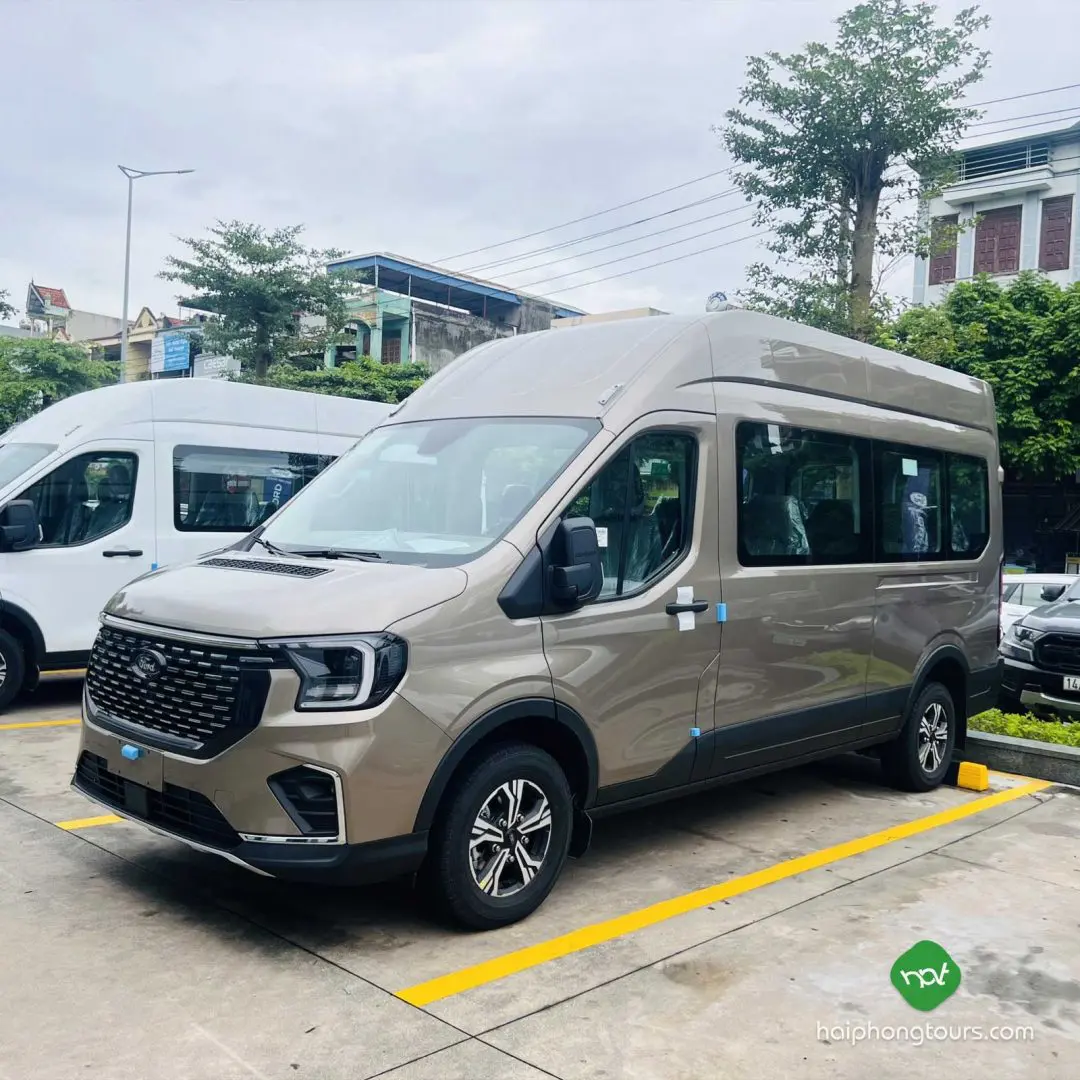
Seat count alone is misleading. A full seven-seat vehicle may not hold seven travelers and seven large suitcases. Send a bag count, stroller or wheelchair dimensions, and any bicycles or sports equipment. Decide whether luggage remains in the car during visits and avoid leaving passports, cash or electronics unattended.
Define the driver’s working day
Long scenic days still require breaks and rest. Put expected start and finish times, waiting, overnight location and driver expenses into the quote. A retained vehicle does not mean unlimited hours, and an exhausted driver should not be asked to continue to protect a hotel reservation.
Create a weather version of the route
Mountain viewpoints, boat trips and trekking starts can fail in heavy rain or fog. Choose one lower-risk alternative near the same corridor and decide which bookings can move. Never replace an officially closed road with an improvised shortcut.
Send one clear itinerary
- Date, pickup time and pickup pin.
- Every stop in driving order with intended duration.
- Every overnight property pin.
- Passenger and luggage details.
- Fixed check-in or departure deadlines.
- Stops that may be skipped if delayed.
- Final drop pin and required arrival time.
Use exact direction pages in the HPT transfer directory for simple legs. A multi-day, multi-stop circuit needs a single custom itinerary so empty mileage, waiting and driver accommodation are priced coherently.
Make the decision before the travel day
A multi-stop car should be planned from daily driving hours and overnight bases, not from a list of pins. Separate essential transfers from optional sightseeing.
For every day, record start, finish, latest acceptable arrival, major stops, luggage status and driver accommodation. Group nearby stops and remove detours that force mountain driving after dark. Tell hotels when the same car stays overnight and where it can park.
Compare the complete outcome
One retained car gives continuity and luggage control. Separate local transfers can reduce empty mileage but add coordination and handovers. Compare the full itinerary, including driver meals, lodging, parking, waiting and days when the car is unused.
Test the plan against three moments: the earliest realistic pickup, a moderate delay on the main road and the latest useful arrival. If the journey fails under the middle case, add time, remove a connection or change the travel structure. This simple check is more useful than relying on the fastest map estimate, especially for airports, ports, mountain stays and late-night arrivals.
Put the agreed details in one booking thread: date, local time, route, both pins, passenger names, working phone, luggage and any fixed connection. Ask what is included, what creates an added charge and who to contact if the plan changes outside office hours. A screenshot of a vague price is not a complete booking record.
Use a two-layer safety plan
The first layer is prevention: verified operator, correct vehicle, seat belts, realistic driver hours, accurate pins and enough connection time. The second is recovery: charged phone, offline contacts, travel insurance where useful, emergency money and a fallback hotel or later connection. Both layers matter because even a well-planned transfer can meet weather, traffic or an airline change.
Keep passports, money, medication and electronics in one small bag that stays with the traveler. Count larger bags before departure and after every vehicle change. Share the plate and route with a trusted contact when traveling alone, at night or to a remote address.
Information the operator needs
- Exact pickup and drop-off entrances, not only city or district names.
- Date, local pickup time and the latest acceptable arrival.
- Adult and child passenger count plus any mobility requirement.
- Number and size of suitcases, strollers, wheelchairs or special equipment.
- Flight, train, ferry, cruise or trek details when timing depends on them.
- A passenger contact that will work in Vietnam on the travel day.
What to confirm in the written response
- Vehicle class and whether the luggage fits with all seats occupied.
- Price inclusions such as tolls, parking and normal waiting.
- Driver-rest, overnight or replacement-driver plan on long routes.
- Meeting procedure and the name or phone of the dispatch contact.
- Rules for delays, added stops, cancellation and a changed endpoint.
- Any part of the journey that requires a separate local vehicle or ticket.
If the original plan stops working
Tell the operator what changed and what remains fixed. Remove optional stops, protect the most expensive onward connection and agree on a new pin or time in writing. Do not accept an unknown substitute vehicle without checking the plate and dispatch confirmation. If weather or fatigue makes the final section unsafe, use an earlier overnight instead of forcing arrival.
After the journey, check the seat, charging cable, door pocket and luggage area before the car leaves. Keep the confirmation until every bag is accounted for and any deposit or additional charge is resolved.
Frequently asked question
How many attractions fit in one transfer day?
There is no safe fixed count. Use driving time, opening hours and daylight, then keep at least one stop optional so a delay does not destroy the arrival.
What is the best single message to send?
Send both pins, date, pickup time, required arrival, passenger and bag count, special needs and the fixed connection in one message. Then ask the operator to repeat the vehicle, scope, included costs and delay rule. This short exchange prevents most avoidable misunderstandings.
Would a private transfer make this journey easier? Contact us with your travel date, exact pickup and drop-off, number of travelers and bags. Include any flight, train or cruise deadline so we can assess a suitable plan and quotation.