
For a solo traveler in northern Vietnam, shared transport is usually the practical default on established city-to-city corridors; a private car is worth considering when the trip begins late, ends at a remote property or protects an expensive connection. Compare the entire door-to-door journey, not only the main ticket price.
A cheap bus that leaves you at a highway stop after dark can cost more time and stress than a planned car. A private transfer between two central hotels may be unnecessary when a reliable train or coach serves both ends.

Use shared transport on strong corridors
Trains, fixed-route coaches and tourist shuttles are usually sensible where both endpoints are established transport hubs. Common examples include Hanoi–Hai Phong, Hanoi–Ninh Binh, Hanoi–Ha Long, Hanoi–Sapa and tourist routes linking Ninh Binh or Hanoi with Cat Ba. The actual operator, pickup and timetable must still be checked for the date.
Shared transport suits a solo traveler when:
- the pickup is a known station or office you can reach easily;
- the final stop is central and arrives during useful hours;
- luggage fits the operator’s allowance;
- there is no tight flight, cruise, ferry or train connection;
- a delay of an hour or more would not damage the itinerary.
Open the individual journey rather than relying on a route search result. Confirm the operating company, reporting time, vehicle, assigned seat or berth, luggage rule and exact drop-off.
Understand the shared options
Train
Rail gives a fixed station and space to move around, which many solo travelers prefer. It works best when the line serves both cities directly and the station-to-hotel rides are simple. Check the official timetable and station because a familiar route can use a different train or platform arrangement.
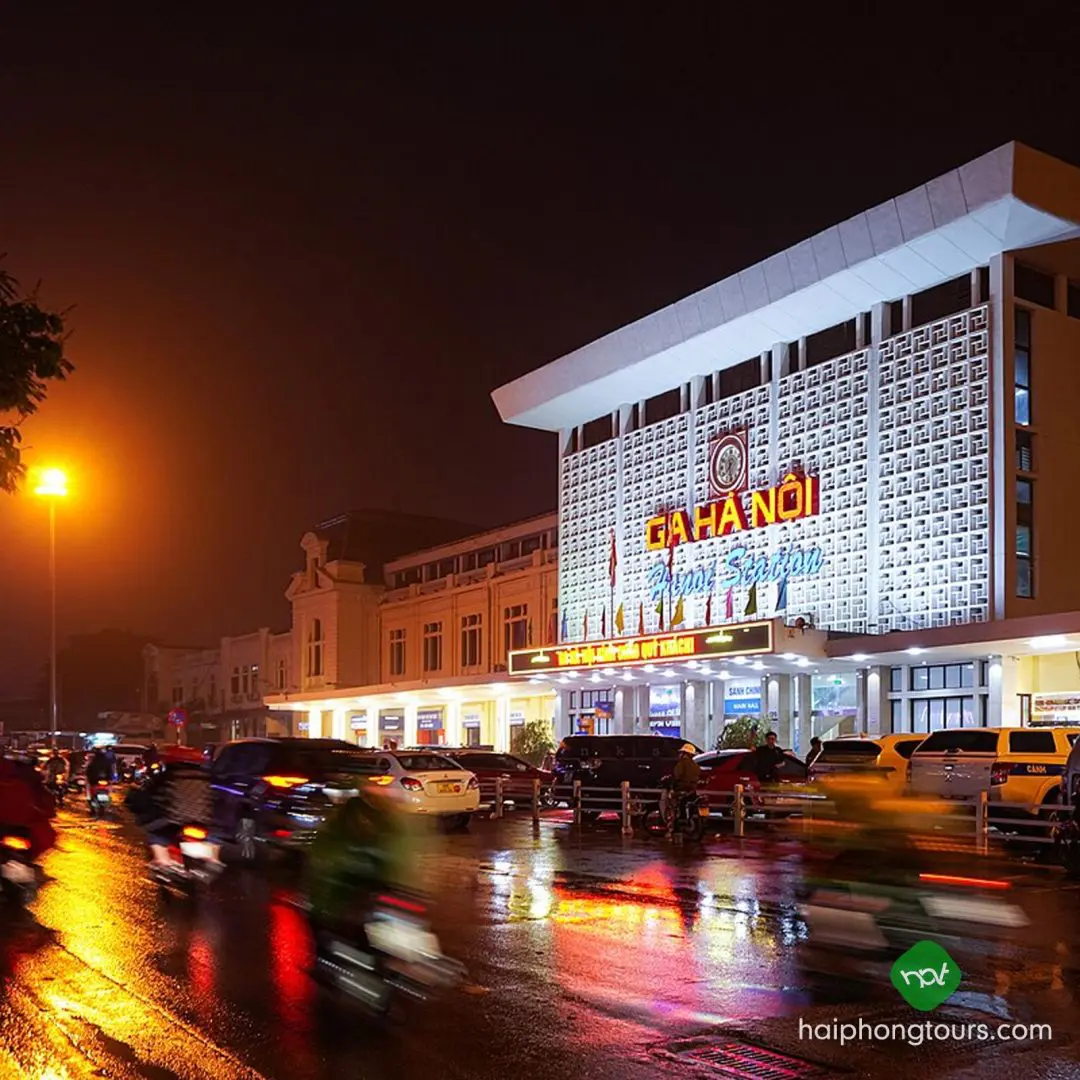
Keep the ticket and identification accessible. Arrive with enough time to find the carriage without accepting unsolicited help with bags. At night, arrange the ride from the arrival station before the train reaches its final stop.
Scheduled coach or limousine van
These can be faster and reach more destinations than rail. The weaknesses are variable pickup points, multiple passenger stops and less space for luggage. “Door-to-door” often means an area-limited feeder, not every hotel in a province.
Ask whether the final stop is a terminal, office or highway point. A solo traveler should know the last-mile price and availability before boarding, particularly for an early-morning or late-night arrival.
Sleeper bus
A sleeper can save a hotel night on a long corridor, but the berth may not provide normal sleep. Confirm single or double occupancy, usable berth length, boarding footwear routine and arrival time. Keep valuables in a small bag at the berth rather than in the luggage hold.

When a private car solves a real problem
A private transfer is not excessive merely because there is one passenger. It becomes rational when it removes a risky transfer, protects a flight or cruise, reaches a remote property, carries bulky equipment or avoids a night arrival at an unstaffed stop.
Typical situations include:
- a late flight followed by a destination outside Hanoi;
- a cruise-port check-in that cannot wait for a shared vehicle;
- a mountain homestay beyond the coach route;
- a photographer carrying several cases or fragile equipment;
- a traveler with limited mobility or a folding wheelchair;
- a route with two or three uncertain public connections.
Compare the private quote with the complete shared cost: taxi to the first station, ticket, food or hotel during a connection, final taxi and the value of lost time. The car may still cost more, but the comparison becomes honest.
Do not buy private transport by city names alone
Send both map pins, date, local pickup time, passenger name, luggage and any fixed connection. Confirm the vehicle, price inclusions, waiting, stops and cancellation. A quote from “Hanoi to Sapa” does not prove collection from Noi Bai Airport or delivery to Ta Van village.
The Hai Phong Tours transfer directory lists current direction-specific routes. Use an exact route when present; do not turn a city transfer into an airport, island or remote-village job after booking.
For a long route, ask about safe driver rest. One passenger does not justify asking a driver to run overnight without breaks to save time.
Protect a night arrival
Tell the hotel the arrival window and ask whether reception is staffed. Save the address in Vietnamese and the entrance pin offline. If the property is in a lane, gated complex or mountain village, agree where the vehicle can stop.
For shared transport, arrange the final taxi through a reputable app, hotel or operator. Do not accept an unplanned ride from someone who approaches with vague information about your route. Check the plate before entering.
For a private booking, request the driver or dispatch contact and plate when the operator assigns them. If a substitute vehicle appears, require confirmation in the original booking thread. Share the plate and route with a trusted contact.
Remote routes: plan the last mile first
In Pu Luong, Mu Cang Chai, Ha Giang, Cao Bang, Sapa villages and lake districts, a destination name can cover a wide area. A bus may reach the town while the homestay is another hour away or down a road unsuitable for a large vehicle.
Ask the host:
- where normal coaches or cars stop;
- whether the last road is accessible in current weather;
- who provides the local vehicle;
- how luggage is moved;
- the latest safe arrival time;
- the fallback if the main bus is late.
A town hotel for the first night can be safer than reaching a remote village after dark. Move onward in daylight when the handover is uncertain.
Luggage and valuables
Keep passport, money, phone, medicine and electronics in one small bag that stays with you. Place only replaceable clothing and ordinary items in the hold. Photograph the luggage tag or vehicle plate when bags change vehicles.
Tell the operator about a large hard-shell case, bicycle, surfboard, tripod or trekking pack before buying. A small shared van may reject bulky equipment even when the route itself is available.
Before leaving any vehicle, check the seat, floor, door pocket, charging cable and luggage area. Keep the booking contact until every bag is present.
Solo safety without overcomplicating the trip
- Use the operating company and pickup shown on the ticket.
- Wait in a lit public place or staffed lobby.
- Verify the plate and booking name.
- Keep a charged phone, power bank and offline contact.
- Share the route and expected arrival with one trusted person.
- Do not announce cash, passport location or room number publicly.
- Leave a vehicle or seek staff assistance if the confirmed plan changes in a way that feels unsafe.
These steps are useful for every traveler. Traveling alone mainly means you must perform the cross-checks that a companion might otherwise share.
Three example decisions
Central Hanoi to central Hai Phong in daytime
Train or scheduled road transport is usually the efficient solo choice. A private car is mainly useful for an airport, unusual luggage, exact appointment or noncentral address.
Late Noi Bai arrival to Ha Long hotel
A confirmed private car may be worth the cost because it removes a city transfer and protects a night arrival. Confirm flight tracking, waiting, terminal, hotel reception and safe overnight driver arrangements.
Sapa Town to a remote homestay
Use shared transport to Sapa only if the host has a reliable final pickup. Otherwise price the complete door-to-door car. The decision turns on the village road and arrival time, not the main corridor.
A booking message for one traveler
“I am one passenger traveling from [exact pin] to [exact pin] on [date] at [local time], with [bags/equipment]. My fixed connection is [details, if any]. Please confirm the operating company or driver, vehicle, pickup procedure, every handover, exact drop-off, included costs, delay contact and cancellation rule.”
Choose shared transport when the corridor is strong and both ends are easy. Choose a private car when it removes a specific last-mile, timing, luggage or safety problem. The useful question is not whether one person “deserves” a car; it is which plan completes the journey with acceptable cost and risk.
Would you like help fitting this experience into your trip? Contact us with your travel dates, starting point, available time and group size. Tell us about walking limits or special interests so we can suggest a practical itinerary.