
Pho Chieu Pagoda is a working Buddhist temple in Hai Phong’s Le Chan area, worth a short visit for its pond-side One Pillar pavilion, nine-tier lotus tower and connection with the city’s wartime history. It is a twentieth-century religious complex, distinct from the older Du Hang Pagoda and from Hanoi’s One Pillar Pagoda.
Allow roughly 30–60 minutes as a planning estimate, depending on which public areas are open and whether you have someone to explain the buildings. Choose a daylight visit within a city outing. Religious activities take priority, so keep your route flexible rather than booking a tightly timed photo stop.
Find the right Pho Chieu Pagoda
Save the Vietnamese name Chùa Phổ Chiếu, phường Lê Chân, Hải Phòng. It is also called Chùa Chiếu and Tổ đình Phổ Chiếu. Older directions place it in Dư Hàng Kênh Ward, Le Chan District, in the Quán Nải area.
Show the exact temple pin to your driver before setting off. A map search for “One Pillar Pagoda” alone can send you toward the Hanoi attraction. Agree on a legal stopping place and a return pickup point rather than expecting the car to remain at the temple gate.
For a casual visit, ask on arrival which spaces you may enter. If you are bringing a group or need access at a particular time, have your accommodation confirm arrangements beforehand. Check any parking or admission charge separately from a voluntary donation; do not treat a donation request as a published ticket tariff.
Three things to notice in the grounds
The One Pillar pavilion over the pond
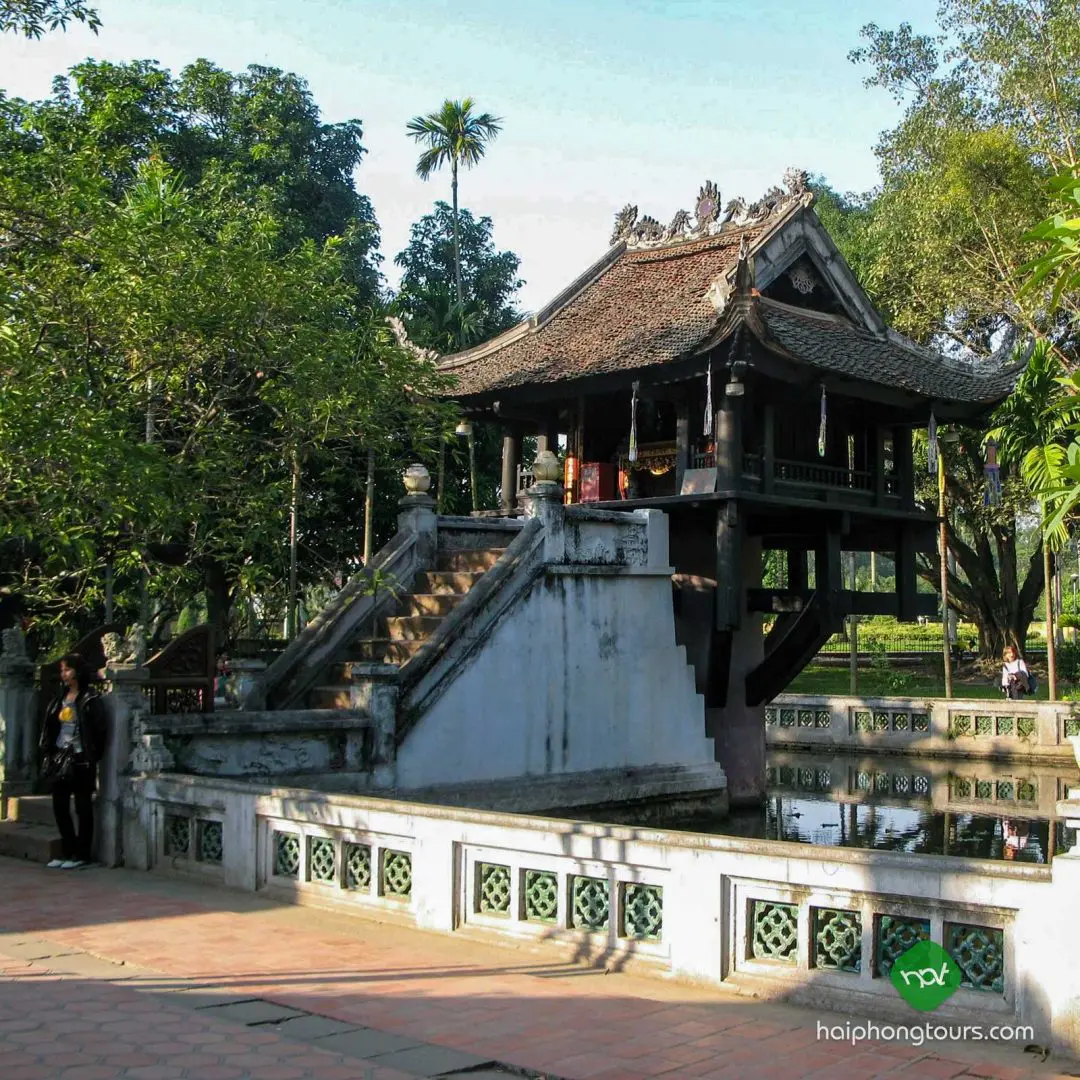
The small pavilion takes its architectural cue from Hanoi’s One Pillar Pagoda. Dragon sculptures rise around the pond, creating a composition you can appreciate from the surrounding paths. This is a local interpretation within a larger Hai Phong temple compound, not the Hanoi monument itself.
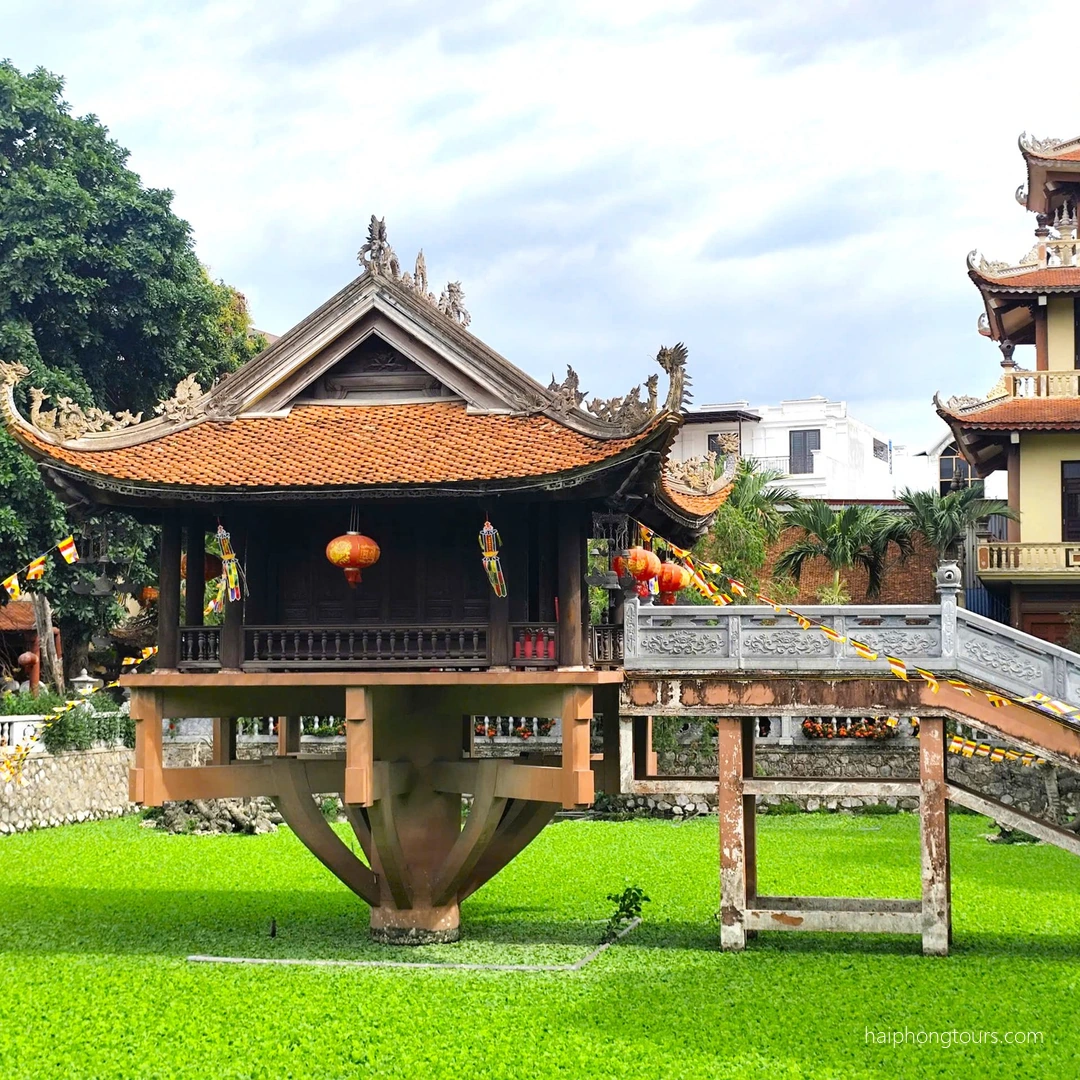 The One Pillar pavilion at Pho Chieu Pagoda.
Look at the roof’s reflection and how the supporting column appears above the water. Move around only where paths are open; do not climb barriers or enter a worship space to obtain a photograph. Reflections depend on light and wind, and the presence of a pond does not guarantee flowering lotus during your visit.
The lotus tower and worship buildings
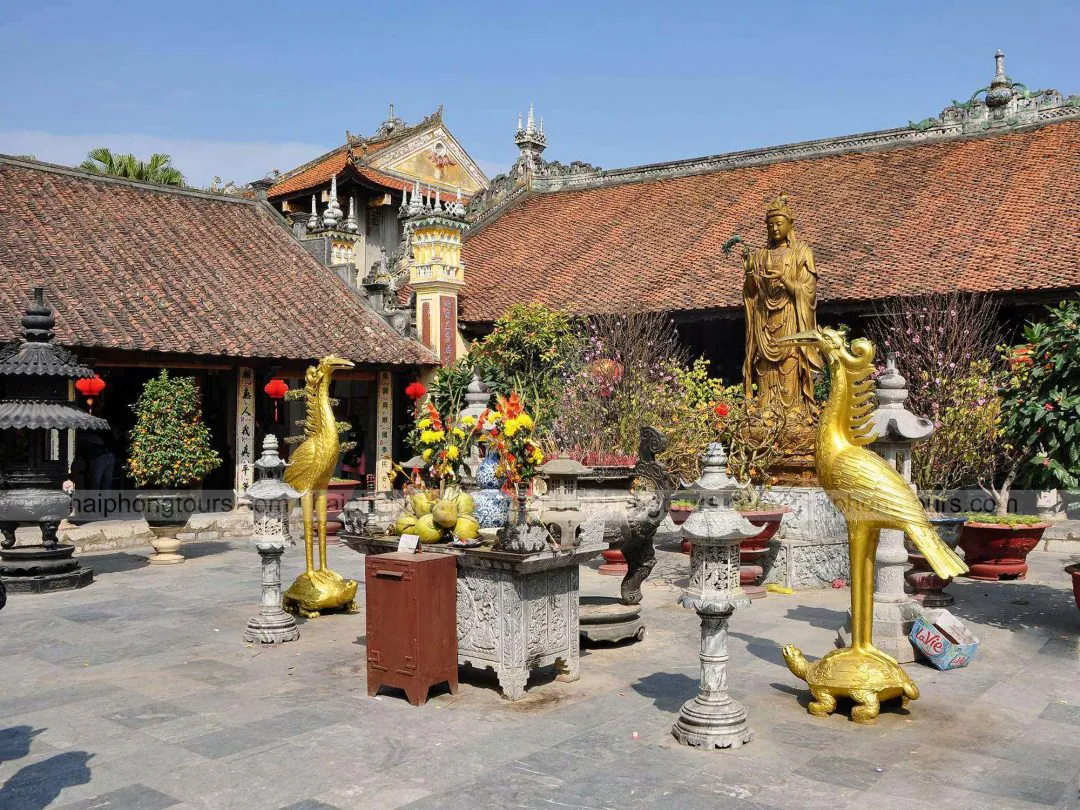
The nine-tier Cửu Phẩm Liên Hoa tower stands beside the main worship area. The compound also includes memorial stupas for deceased religious figures. Notice the difference between the tall symbolic tower and those commemorative structures rather than treating every tower as a viewpoint.
The front hall’s roof decoration includes vessel-shaped finials. The pagoda began in 1953 as Tam Giáo Đường, associated with Buddhism, Confucianism and Taoism; it took the name Pho Chieu after becoming a Buddhist pagoda in 1954. That relatively recent history is part of its character.
The historical memorial
The site is connected with Hai Phong’s resistance history as well as Buddhist practice. The surrounding area sheltered revolutionary personnel before the pagoda’s construction, and the temple later served as a meeting place. During the war against the United States, it was associated with an underground shelter used by city leadership.
Pho Chieu received city-level recognition as a resistance historical site in 2005. Look for the memorial and ask for an explanation if that history interests you. Historical use of an underground space does not mean it is open as a visitor attraction today; keep your visit to the areas identified by an attendant.
A living temple, with room for a quiet visit
Pho Chieu continues to host Buddhist worship and community activities, including celebrations honoring elderly residents. A busy gathering is part of its purpose, so do not expect the grounds to remain silent or empty for photography.
- Wear clothing covering shoulders and knees, and follow instructions about shoes at individual buildings.
- Ask before photographing inside a hall or taking close pictures of monks, worshippers or ceremony participants.
- Keep children close beside the pond and steps. Avoid touching altar objects, bells or offerings.
- If a ceremony occupies the space you planned to see, wait quietly or shorten the visit.
For visitors with limited mobility, check the entrance, thresholds and seating needed for the particular route. A car drop-off near the temple does not establish step-free access to every building. A companion can check the path before you commit to the full circuit.
Fit Pho Chieu into a Hai Phong morning
On Sunday, browse Hang Market’s weekly fair first, then consider a short temple visit while your schedule remains flexible. The market and pagoda offer different perspectives on local life; a meal and a rest afterward can be more satisfying than adding several more attractions.
If Buddhist architecture is the main interest, compare Pho Chieu with Du Hang Pagoda. Pho Chieu emphasizes a newer compound with a pond pavilion and lotus tower; Du Hang has a much older religious lineage, traditional timber halls and a distinctive bell tower.
Hai Phong Tours suggests choosing the site that matches what you want to understand, then leaving enough time to look closely. Visit both only if the comparison interests you. For a contrasting heritage stop, Hang Kenh Communal House focuses on carved timber and the worship of Ngo Quyen.
Useful guides for your trip
Would you like help fitting this experience into your trip? Contact us with your travel dates, starting point, available time and group size. Tell us about walking limits or special interests so we can suggest a practical itinerary.