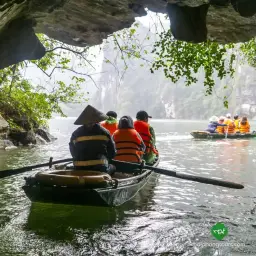
For photography in Ninh Binh, start with the boats on the Ngo Dong River at Tam Coc, the elevated view from Hang Mua and the entrance to Bich Dong Pagoda. Add Hoa Lu Ancient Capital for temple architecture and the surrounding villages for a closer look at local life. These five areas give you a varied set of photographs without spending your visit moving between distant attractions.
Stay around Tam Coc or the nearby countryside for one night if light and timing matter to you. A day trip can cover several landmarks, but an overnight stay gives you an early morning locally and more freedom to wait for changing conditions. Golden rice and lotus flowers are seasonal; choose your dates around the subject you want to photograph.
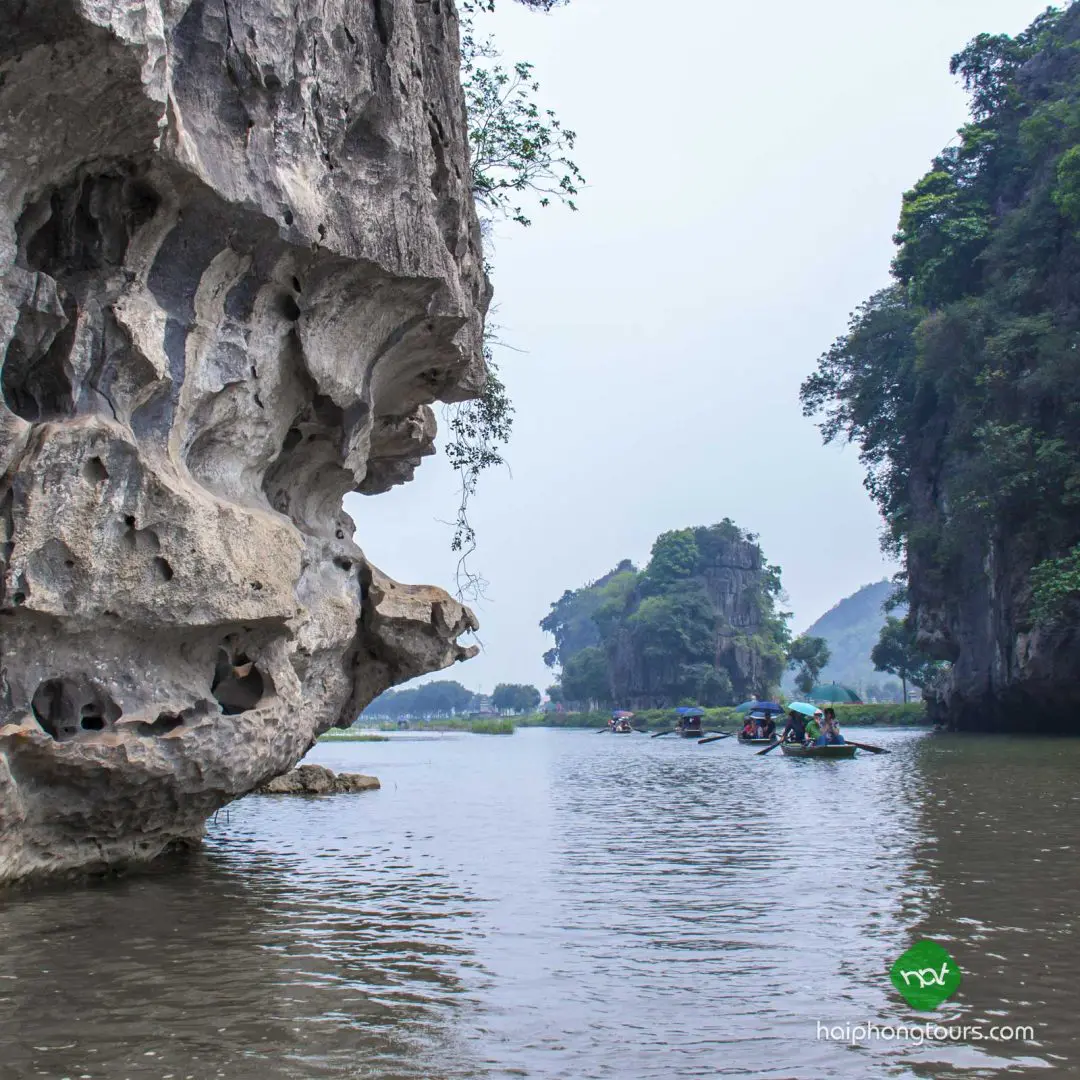
Choose your Ninh Binh photography stops
- Tam Coc: boats, river bends, cave entrances and rice fields seen from water level.
- Hang Mua: a broad view over the limestone landscape, plus seasonal lotus photographs at the base.
- Bich Dong Pagoda: the entrance bridge, layered roofs, stone steps and the meeting of buildings and rock.
- Hoa Lu Ancient Capital: temple gates, courtyards and architectural details.
- Tam Coc countryside and Van Lam: field-edge landscapes, village streets and embroidery, with permission when photographing people at work.
1. Tam Coc: the river journey and boat wharf
Tam Coc boat trips follow the Ngo Dong River through three caves: Hang Ca, Hang Hai and Hang Ba. Limestone outcrops rise beside the water, with cultivated fields along parts of the route. Allow around two hours for the boat journey itself, plus time for tickets, boarding and photographs around the wharf.
For golden rice beside the river, aim broadly for late May to early June. Harvest timing changes, and one field may already be cut while another remains standing. Ask your accommodation about the current color of the Tam Coc fields shortly before traveling, especially if you are planning a special photography trip.
What to photograph from the boat
Use the bow of your boat or a curve in the river to lead the eye toward the limestone hills. A boat farther ahead can give a sense of scale without requiring someone to pose. Near cave exits, the bright opening can frame the landscape beyond; be ready before you emerge into the light.
The boat keeps moving, so a short exposure is more useful than a tripod or long exposure. On a phone, take several frames as the composition changes. Stay seated, wear the provided life jacket and follow your rower’s instructions rather than leaning out or asking for an awkward stop.
Photographs around the wharf
The boats gathered near the departure area provide a different subject from the river landscape. Look for repeating shapes, reflections and the activity of boarding. Keep the working edge clear, and ask before making a close portrait of a rower or vendor. You can photograph the wider scene without turning someone’s working day into a staged performance.
2. Hang Mua: the high viewpoint and lotus pond
At Hang Mua, also called Mua Cave, the main landscape photograph comes from the mountain climb above the attraction. The stone staircase has about 500 steps, with steep sections. From the upper viewpoints, the river, fields and limestone peaks form a much wider composition than you can see from a boat.
Set aside enough time to climb slowly, pause for photographs and come down without rushing. The staircase can be demanding in heat, and wet stone changes the footing considerably. Carry water and keep your camera bag light; anyone uncomfortable with the climb can concentrate on the grounds below.
Morning or late-afternoon light can give the hills more definition, but haze, cloud and the season will change the result. Check admission and closing arrangements before planning around sunrise or sunset. For a late visit, leave enough daylight for the descent. Stay on the established route and viewing areas, even if a photograph online appears to have been taken from a rock edge or the dragon sculpture.
The pond at the base
The lotus pond offers a lower-level composition, with flowers and leaves in front of the limestone backdrop. Early summer, particularly around June, is a useful period to consider for lotus photographs. The actual bloom and access to paths through the pond vary, so check recent conditions instead of expecting flowers throughout the year.
Try a close view of a flower as well as a wider landscape. On narrow walkways, take your photograph and move aside for other visitors. This area also gives you something to photograph if you decide against the staircase, although it does not replace the elevated river view.
3. Bich Dong Pagoda: the bridge, roofs and hillside
Bich Dong combines three pagodas at different levels: Ha, Trung and Thuong. The entrance bridge and gate make a useful starting composition, with the hillside behind them. Farther inside, the relationship between the temple buildings, cave and rock is the distinctive feature.
You do not need to complete the upper climb to photograph the entrance and lower buildings. Reaching the higher levels involves more steps and a cave passage; move carefully where the ground is damp or the light changes. A smaller camera setup is easier to manage here than equipment that needs space to assemble.
Frame rooflines against the rock, or use a doorway to isolate a detail without including every visitor in the scene. This remains a place of worship. Dress respectfully, follow any photography restrictions and leave people praying undisturbed. Do not assume the entrance will be empty, especially during holidays and religious occasions.
4. Hoa Lu Ancient Capital: temple architecture
Hoa Lu was Vietnam’s capital in the 10th and early 11th centuries. For a photography visit, focus on the temples dedicated to King Dinh Tien Hoang and King Le Dai Hanh, their gateways and the landscape around the historic site. Expect a visit centered on temples and surviving heritage rather than an intact royal palace.
Start with a wider view that shows how a gate or roof sits against the surrounding hills. Then look for smaller subjects: a carved detail, an arrangement of doors or the transition from a bright courtyard into a shaded building. Avoid flattening the whole visit into a single photograph taken at the entrance.
Architecture can still be rewarding when the sky is overcast and the distant mountain view is less clear. Check opening arrangements and follow signs about interior photography. Keep tripods and bags out of thresholds and worship areas.
5. Tam Coc countryside and Van Lam village
The roads around Tam Coc and toward Bich Dong give you opportunities to stop for smaller landscape scenes: a field beside a limestone outcrop, reflections in a channel or houses at the edge of the cultivated land. Walk or cycle at a pace that allows you to notice these details, choosing roads that suit your confidence and the traffic.
Stop completely and pull clear of the road before taking a photograph. Stay on public routes, and ask before entering a field or using a narrow farm embankment. A rice field is someone’s crop; walking through it for a portrait can damage both the plants and the access path.
Van Lam, in the Tam Coc area, is known for embroidery. If a workshop or shop welcomes you, the stitching, fabric and hands at work offer a different subject from the surrounding scenery. Ask whether photography is welcome and whether anyone is available to demonstrate the craft. Do not count on an unannounced visit finding a workshop in progress.
Optional detour: the Dong Giao pineapple fields at Tam Diep
The pineapple-growing landscape around Dong Giao, Tam Diep offers repeating rows of spiky leaves across low hills. Treat it as a separate road outing from the Tam Coc circuit. Ask your accommodation to help identify a grower willing to receive you, then obtain an exact meeting point and permission for the part of the field you intend to photograph.
May to July is a useful initial period to ask about fruit and harvesting, but plots do not all ripen together. Growers also stagger production. Some fields may have leaves tied around the fruit, straw protection or dark netting to reduce sun damage, so an open view of exposed ripe pineapples is not guaranteed.
Hai Phong Tours suggests requesting a recent photograph of the actual plot before arranging a dedicated shoot. Keep your composition within the route the grower allows; do not remove protective material, walk over plants or pick a pineapple for a prop. If you want fruit for a photograph, ask to buy or borrow an already harvested one.
Use softer early or late light only when it fits the host’s receiving time. Wear closed shoes and clothing that protects your legs from the leaves, keep clear of farm vehicles and agree on the return ride. If access is not confirmed, retain the five main areas above rather than driving out expecting a ticketed attraction or a scheduled harvest demonstration.
A practical overnight photography route
Day 1: Bich Dong, countryside and Hang Mua
Arrive around Tam Coc by late morning, leave your luggage and have lunch. Visit Bich Dong and take a short countryside walk or ride, then head to Hang Mua for the later afternoon if conditions suit the climb. Allow time to descend before dark. If the journey runs late, drop the countryside stop rather than compressing the staircase into a hurried visit.
Day 2: Tam Coc boat trip and Hoa Lu
Start with the wharf and an early boat departure once services are operating. After the river trip, have lunch and collect your luggage, then visit Hoa Lu before your onward journey. Leave extra time if you have a fixed train, flight or transfer connection; a full boat trip cannot be shortened simply because your departure time is approaching.
If rain makes the climb unsuitable, shift your attention to architecture and village details where access remains safe. Choose another time for Hang Mua rather than treating the viewpoint as compulsory in poor conditions.
Getting there from Hanoi and choosing a day tour
For a private road transfer from Hanoi, allow roughly two to three hours as a planning estimate, with extra time for traffic and your exact pickup and destination. A Hanoi to Ninh Binh transfer can take you to your accommodation or the Tam Coc area. Confirm the actual drop-off pin and space for luggage and camera equipment. This is a one-way arrival transfer; a car waiting at photography stops needs a separate arrangement.
If you only have one day, the Ninh Binh day tour from Hanoi has a Hoa Lu, cycling, Tam Coc and Hang Mua option that covers several subjects in this guide. Its shared sightseeing schedule suits travelers who want the main stops with transport arranged. For prolonged shooting, early local starts or waiting for evening light, choose an overnight visit instead.